
Tim Southee, Mike Hesson and the Sunk Cost Fallacy

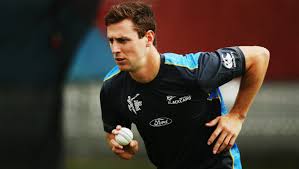
Matt Henry has a better ODI strike rate with the ball than even Shane Bond, but can’t make the current Black Caps ODI side over players with much worse numbers

A sunk cost is an economic concept that refers to an expense that has been already paid for, so that this expense is irrecoverable. It sounds unremarkable, but sunk costs do funny things to the human brain. The Sunk Cost Fallacy, and a little game theory, may help explain why Mike Hesson refuses to make the hard call and drop Tim Southee for Matt Henry in the Black Caps ODI playing XI.

The Sunk Cost Fallacy is an example of a reasoning error that is commonly made when sunk costs are involved. It refers to when people do something irrational because they have sunk costs (in the form of money, time or energy) into a line of reasoning already.

The common example given is the Concorde project, during which the French and British governments realised that the project would never make economic sense, but which they continued with anyway on the grounds that they didn’t want to waste their sunk cost.

This is a well-known phenomenon in economics because it often leads to horrific waste, particularly when people throw good money after bad in the hope that their initial investment will be recouped (it’s also a well-known phenomenon in poker when players go broke). As far as Mike Hesson is concerned, the same psychological process may be occurring with his obstinate refusal to elevate Matt Henry to the opening bowler’s position alongside Trent Boult.

Southee is only 29 years old, but he has been playing for ages. He debuted as a teenager, and looked incredibly promising with a five-wicket haul and a run-a-ball 77 in a Test against England. Since then, New Zealand Cricket have invested substantial resources in him, giving him every opportunity to take the new ball against all comers. No less an authority than Allen Donald touted Southee as potentially a great swing bowler, but it’s hard to deny the raw numbers.

The numbers argue confidently that Southee is not as good as Henry (in ODIs at least), and probably never has been.

Since the loss to Australia in the final of the 2015 Cricket World Cup, Southee has averaged 42.77 with the ball. He has taken 45 wickets in this time frame at an economy rate of 5.72. Henry has taken 44 wickets at an economy rate of 5.81, which is similar, but has an average of 28.13 thanks to a strike rate of 29.

This is, amazingly, a better strike rate than Shane Bond managed over his career (29.2), and means that Henry has been 50% more likely to take a wicket on any given ball than Southee during this time.

Southee is striking at 44.8 since the last Cricket World Cup, and has not taken four wickets in an innings since then, despite playing in 38 games. Henry has only played in 25 matches since the final loss but has already managed three four-wicket bags and one five-wicket bag in that time – only one of each fewer than Southee has managed in a 132-match career.

In fact, Southee has not managed to get four wickets in an innings one time in the last three years, whereas Henry took four wickets in his last match.

Mike Hesson might be thinking here in terms of potential, in that, theoretically, Southee has the potential to be another Jimmy Anderson. Like Southee, Anderson is also tall, bowls with an open stance and relies on swinging the ball to nick batsmen out. Also like Southee, the Englishman didn’t achieve anything particularly special in his first 132 ODIs, returning an average of 30.18 for his 179 wickets.

But in 43 matches since the start of 2012, Anderson has taken 65 wickets at an average of 23.97. Hesson might be expecting a similar transformation to come over Southee, but it’s also very possible that he has invested so much time and energy in Southee that he sees this investment as a sunk cost that he is compelled to recoup.

A solution that would save everyone’s face would be to demote Southee to third seamer. This would be the best of all worlds for everyone except for Lockie Ferguson, who would then struggle for a starting berth.

The positives are that it would allow Boult and Henry, with the best strike rates, to bowl with the new ball when they are the most effective, and it would allow Southee to utilise his skill set of varied deliveries at the death while minimising his weaknesses of being slow and inaccurate. Southee also has 33 wickets as third seamer, averaging an entirely acceptable 28.18 (compared to over 35 while opening). It seems like a solution whose time has come.

*

If you enjoyed reading this essay, you can get a compilation of the Best VJMP Essays and Articles of 2017 from Amazon for Kindle or Amazon for CreateSpace (for international readers), or TradeMe (for Kiwis).
VJMP Reads: Julius Evola’s Ride the Tiger III

This reading continues on from here.

The sixth essay in Ride The Tiger is called “Active Nihilism – Nietzsche”, and continues to deal with the problem of the Death of God. Also continuing with the esoteric theme of this book, Evola appears to insist that the solution is alchemical. The negative is overwhelming and ascendant; it cannot be resisted. So the question becomes “how far the negative can be transformed into something positive.”

Here we are concerned with “the transition to the postnihilist stage.” Modern man is free, free from the strictures of Abrahamism – but free for what? We have striven against our enslavement for so long that we don’t know what to do with freedom. We invented God to assuage our existential anxiety, and, now that we are “free” from this God, that anxiety has rushed back with a vengeance. Evola cites Sartre here: “We are condemned to be free.”

Evola contends that Nietzsche’s conception of the Superman is not sufficient to avoid this nihilism. His reasoning is that the Superman theory is not sufficiently different from the other eschatologies, such as the Marxist one, and therefore cannot be more than a pseudosolution to the problem of nihilism.

As was true for Marxism, the Superman theory could potentially be used to justify all manner of horrors in the present by promising paradise in the future. However, Nietzsche’s theory of eternal recurrence strikes much closer to what might be described as a perennial philosophy.

The seventh essay is called “Being Oneself.” It seems as if that, once the pseudosolutions and outright false philosophies are abandoned, what one is left with is oneself. This something is beyond morality (indeed, morality is considered something to be liberated from), and internal, instead of imposed from without as if by God or King.

Nietzsche comes in for some criticism here. Evola considers his attitude to the human spirit “materialistic”, but concedes that Nietzsche must have seen beyond because he is capable of distinguishing the “Self” from the “I”. Other thinkers, such as Guyau, are considered, but dismissed for not offering anything truly new, merely “restrictions that more or less return to one οf the systems οf the old morality.”

Evola concludes that the answer, as ever, is to “Know Thyself”. However, there’s a caveat. In the past, it was easier to know thyself because one was defined by strictures of class, religion, nation, caste and many other things. Modern man is free, so he cannot fall back on these now-abandoned strictures.

Modern man is, in fact, so free that it is as if he has been shattered to pieces. His soul “contains multitudes”. This shattering, Evola contends, can be most easily observed in remorse, which is an emotion that mostly affects divided people and which is characteristic of our time.

The eighth essay is called “The Transcendent Dimension – ‘Life’ and ‘More Than Life'”. The man who gets it, Evola contends, is one who possesses a transcendental dimension, a spiritual dimension. Here he distances himself further from Nietzsche, who for Evola was more of a vessel that history acted through than a genuine actor in his own right. Nietzsche’s great error was “confusion of the sacred with the profane”.

Evola, through quoting Nietzsche, gives us a prescription for a man of gold, although without using alchemical terms: a man who has great passions (clay), but who holds them in check (iron), and who hold them in check with apparent ease (silver) and who, last of all, does not draw any particular egoic satisfaction from doing so (gold). Here, the highest sort of man is one who overcomes great dangers, for it is only in doing so that all these qualities can be expressed.

Evola mentions the common interest in Zen philosophy among the Beat Generation that was heavily influenced by the existentialists. Here, religious belief (of any kind) is rejected as a failure of the human spirit, of the sort of person who did not have the character to survive the tension of the Age of Nihilism, and who hence surrendered to easy answers.

*

If you enjoyed reading this essay, you can get a compilation of the Best VJMP Essays and Articles of 2017 from Amazon for Kindle or Amazon for CreateSpace (for international readers), or TradeMe (for Kiwis).
Smart and Dumb Are Best Measured Not On One Spectrum, But Two

The usual way for people to think about intelligence is as a single spectrum, where we start dumb and – if we’re lucky – grow to become smart. This seems to fit neatly into the dominant thought paradigm, which is that of materialist, empiricist science. This paradigm contends that single-celled organisms evolved to become intelligent and the more intelligent the better.

This is certainly one way of looking at things and it’s a valid perspective. It’s just a little simplistic. Intelligence is so multivariate and nebulous a concept that trying to reduce it to a single number is like trying to rank all of the world’s great works of art along a single scale. It might make some kind of sense, but it’s not really meaningful.

A better way to think about intelligence is that there’s a smart spectrum and there’s a dumb spectrum. The two have some overlap, but it’s minor. These two spectrums have been generally considered to overlap entirely, in that the more dumb a person is the less smart they must be and vice versa, but anyone who has met a decent range of other people in their life will know that this isn’t true.

The most obvious counterpoint to the single spectrum of intelligence argument is the large number of hopeless nerds and autists out there. There is an archetypal absent-minded professor who knows everything about their area of expertise and nothing about any other aspect of life – someone who could lecture a class of a hundred postgraduates but can’t change a lightbulb. Always these people dominate IQ tests, but it’s not as simple as declaring them intelligent.

These people, usually men, exhibit a high reading on the smart spectrum as well as a high reading on the dumb spectrum. So they aren’t intelligent in the same way as people who are high on the smart spectrum and low on the dumb spectrum.

This is not a dig at the university sort. A majority of smart people have made themselves less dumb for the reason that they have realised how much suffering their own dumbness causes and have acted to mitigate it. After all, what other use is being smart in the first place?

Another type of person who exhibits a high reading on both the smart and dumb spectrums is someone who wastes the intelligence they were born with. Being high on the smart spectrum isn’t by itself enough to succeed in life – there are all kinds of personal qualities like perseverance, diligence and honesty to consider.

People who are high on the smart spectrum and low on the dumb spectrum are rare, and are also difficult to recognise. After all, the average person is fairly dumb, and are therefore prone to assume that truly intelligent people are themselves dumb if they disagree with that average person on anything.

In many ways, these people are compelled to hide away, because being high on the smart spectrum isn’t necessarily a good thing, especially if someone else becomes envious of it and wants to challenge you.

Likewise, being low on the smart spectrum isn’t the worst thing either, because as long as one is also low on the dumb spectrum one can often just chip away at goals until they were completed, especially if one has been taught the right methodology. Being high on the smart spectrum can lead to distractions, and can lead to a person becoming impractical.

People low on the dumb spectrum and low on the smart spectrum might be the old-fashioned kind of person who never had a full education available to them, but who is nevertheless wise and not easy to fool. They can’t really fool others because they’re not smart enough to spin bullshit quickly enough, but it’s hard to fool them because they’re not greedy or gullible.

You could find a lot of this sort of person among farmers and agriculturalists, as well as members of traditionalist religions, and especially among old people.

The last sort of person is one who is low on the smart spectrum and high on the dumb spectrum. These people most effectively embody the chaos principle, because they are not as passive as people who are low on the dumb spectrum.

People high on the dumb spectrum have the tendency to do impulsive, mindless and destructive things, but if they’re also low on the smart spectrum they don’t tend to learn from their errors and gladly commit them over and over again. Driving drunk is a classic behavioural expression for a person in this quadrant.

These four personality types can be mapped onto an elementalist framework. The high-smart, low-dumb person can be thought of as gold, the high-smart, high-dumb person can be thought of as silver, the low-smart, low-dumb person can be thought of as iron and the low-smart, high-dumb person can be thought of as clay.

Whichever has the most value depends on what one is trying to achieve. If the important thing is to avoid errors, then the priority is to be low on the dumb spectrum. If the important thing is to be creative and to react quickly to changing environments, then the priority is to be high on the smart spectrum.

*

If you enjoyed reading this essay, you can get a compilation of the Best VJMP Essays and Articles of 2017 from Amazon for Kindle or Amazon for CreateSpace (for international readers), or TradeMe (for Kiwis).