The Transmutation Of Tin Into Lead

The sixth, and final, stage of the Katabasis is the transmutation of tin into lead. This completes the process of spiritual descent and makes an animal out of that which was once divine. Lead is the lowest level of the Mithraic Ladder, and in the context of Katabasis reflects a person who has not only lost touch with their divinity, but also with their basic humanity.

Shrinking is the process by which tin transmutes to lead. This reflects the fact that, in transmuting down to lead, a character exchanges vastness of soul for pettiness. The character becomes what Confucius called a xiaoren, or small man. Metaphorically, a character’s consciousness shrinks, and that divine energy is replaced by animal energy. The character becomes a monster.

A character of tin might be degenerate, but they are still often fun to be around. In transmuting to lead, the character of tin loses the good humour and sociability that makes the character of tin so fun. They become dark and serious, even sinister. The realm of lead is the realm of the extreme resentment that makes truly horrendous crimes possible.

Extreme stress is a common catalyst for the transmutation to lead. One major trauma, enough to cause thorough bitterness, is typical. Here one can see how the Katabasis is structurally similar to the Anabasis, even if the overall movement is in different directions, as both begin with large numbers of acts of subtle emotional energy, and both are completed with singular acts of extreme emotional energy.

A major traumatic experience, such as getting stabbed almost to death, can create a permanent fear response that robs life of joy. The collapse of a character’s environment, from peacetime to wartime, can manifest a constant joyless state. Becoming a refugee or an orphan, or getting caught in a natural disaster, can achieve the same effect.

Stress and suffering make it impossible to relax and enjoy oneself. Therefore, increasing the stress and suffering a character undergoes will generally push them down the Mithraic Ladder. For these unwanted feelings to push a character as far as the realm of lead – which is to say, to the subhuman level – they have to be inhumane. They must involve extreme misery, or misery extended for an extreme length of time, or extreme callousness (or all three).

In the mind of a character undergoing the process, transmuting from tin to lead can feel like losing one’s mind completely. Being at the level of tin already suggests that a person has given up on most ambitions and is willing to degenerate. Descending to lead is the end result of that degeneration process. It’s the rock bottom spoken about by alcoholics.

Another common example of this process occurs when a character is broken by early childhood stress. Perhaps they were abandoned as a child, and, despite being able to battle their way up to the realm of copper or even silver, the structural damage done to their brain by the neglect leaves them vulnerable to tragedy later in life (most stories about the descent from tin to lead will be tragedies in some form).

Extreme stress often leads to low-frequency behaviour on the battlefield, and the deprivations of war have driven many a character into the realm of lead, both in fiction and in real life. War might be the preserve of the realm of iron or copper if one is writing in a heroic sense, but if the object is to portray the kind of stresses that break a person, the realm of lead is particularly relevant.

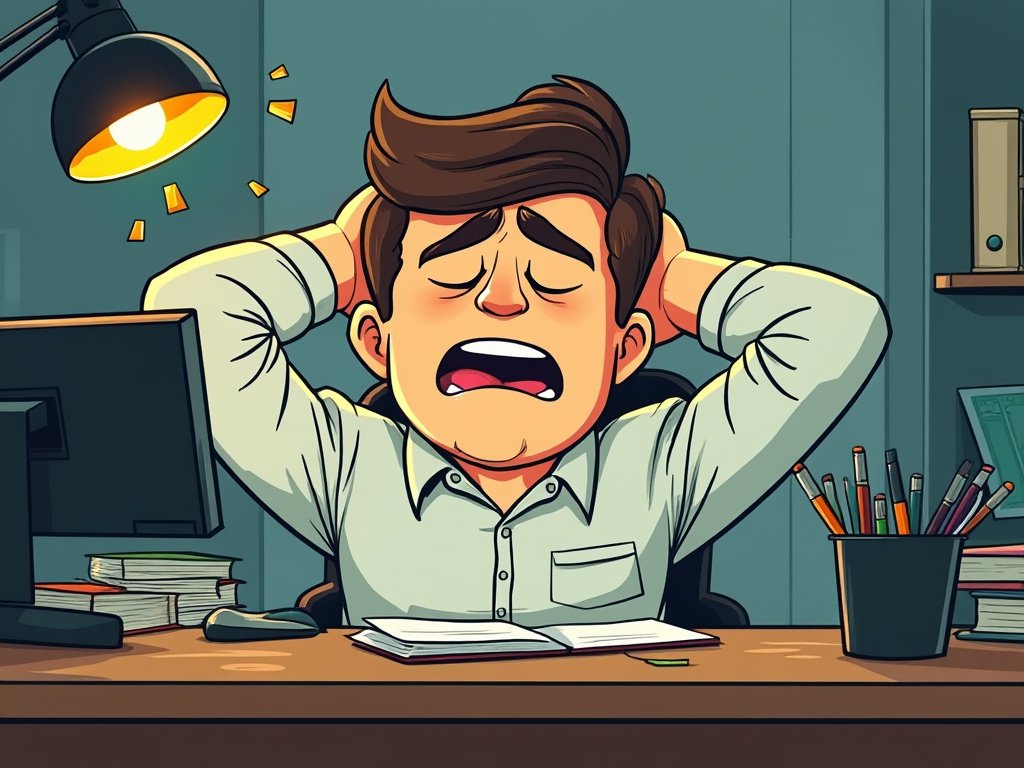
Chronic insomnia is archetypal of the nagging stress conditions that can drive a person from tin to lead. A person might be trying to enjoy their life, but, due to an inability to sleep, they eventually crack. Chronic pain is a related condition.

Morally speaking, there is no deed too low for the character of lead, which can be a function of either malice or insanity. Characters of iron might be brutish and characters of tin degenerate, but the grosser crimes are the preserve of the characters of lead. The murderers, rapists, traitors that other characters regret ever having known are usually characters of lead. So are the genuinely wretched cases of mental illness. Thus, in descending to lead, a character will plumb new moral depths.

Physically, the transition to lead can be marked by physically shrinking. Lead is the realm of desperation to survive. To transmute from tin to iron is to lose weight in becoming fit; to transmute from tin to lead is to lose weight in becoming weak. The kind of thinness that comes with extreme stress is perhaps the most obvious marker of a descent into the realm of lead.

In real life, people can become skinny after suffering extended stress because they have less appetite, or have started throwing up. A character who regularly throws up from stress is almost certainly on a path to losing all joy in their life.

Socially, lead is marked by ostracisation. To transmute from tin to lead in this context is to fall out even with one’s degenerate friends. To be an alcoholic, and to have even other alcoholics start not wanting to be around you, is to descend to lead. Starting a fight with a barman and getting an assault conviction is a common example, as is your ex-partner taking a restraining order out on you.

The more extreme and dramatic forms of ostracisation are often readily symbolic, such as ending up in prison or in a mental health ward. A character who ends up incarcerated has very much shut themselves off from higher frequencies. Anyone who takes a happy-go-lucky attitude into a prison or a mental health unit will soon lose it.

This ostracisation could lead to a mass shooter story (or some other crime tale).

Mentally, the transition from tin to lead is marked by a loss of pro-social thoughts and attitudes. If the descent from iron to tin involves becoming apathetic, the descent to lead involves becoming cruel. A character descending to lead learns to take pleasure in the misery of others. Where they may have once found mirth in common cheer, they now find it in more selfish perspectives.

The character of tin might be unhealthy and under a lot of stress, but they generally enjoy themselves. In transmuting to lead, such characters lose that ability. They start wishing they weren’t alive. They may even develop the sense that the gods are laughing at them. Moreover, and most critical from a dramatic perspective, they start taking their misery out on others.

Spiritually, the descent to lead implies the abandonment of all idea of spirituality. Concerns about earning an auspicious rebirth are jettisoned from consciousness. The character descending to lead loses all belief in reincarnation and karma. Like an animal, they only care about satisfying impulses. The descent to lead, then, is very much the final victory of the beast over the higher self.

One classic depiction of the process of transmuting to lead is in the story of Private Pyle from Full Metal Jacket. Werewolf tales are related to this. The general idea is that the transmutation from tin into lead unleashes the beast. Thus the Katabasis is completed and the character either dies or begins the Anabasis again.

*

This is an excerpt from Vince McLeod’s The Alchemy of Character Development, the sixth book in VJM Publishing’s Writing With Psychology series. This book will show you how to use alchemy to create deep, realistic and engaging characters for your creative fiction.

*

If you enjoyed reading this piece, buy a compilation of our best pieces from previous years!

Best VJMP Essays and Articles of 2023
Best VJMP Essays and Articles of 2022
Best VJMP Essays and Articles of 2021
Best VJMP Essays and Articles of 2020
Best VJMP Essays and Articles of 2019
Best VJMP Essays and Articles of 2018
Best VJMP Essays and Articles of 2017

*

If you would like to support our work in other ways, make a donation to our Paypal! Even better, buy any one of our books!

The Inevitability Of The Maori Party, And Of Race Politics

This month’s Roy Morgan poll didn’t appear to contain any major news. There were no significant shifts since last time. But, buried two-thirds of the way down the page, some highly interesting facts lurked: evidence of a remorseless trend towards social discord in New Zealand. This trend is the rise of racial consciousness, and its replacement of class consciousness.

It can be seen from the above image that, among Kiwis younger than 50, the Maori Party has close to 10% support. This is an astonishing level of support for an ethnonationalist party, especially considering that Maoris make up less than 20% of the population. Even if one allows for 25% of the population aged between 18 and 49 being Maori, and one assumes that almost no non-Maoris vote Maori Party, 10% total support means some 40% Maori Party support among Maoris aged 18-49.

Dedicated Roy Morgan poll watchers might have already noticed the trend towards Maori Party support increasing among the young over recent years. It has not only increased, but is unstoppable.

All over the Western World, class consciousness is dying, and getting replaced by race consciousness. VJM Publishing has written about this phenomenon before, noting that it’s the result of a deliberate effort by the ruling class to shatter any potential bonds of solidarity among the lower classes.

Applying the Orwellian maxim War is Peace, the ruling classes have deliberately set the lower classes of New Zealand against each other by encouraging them to divide themselves among racial lines. They have done this by suggesting that the average Maori is the victim of the order of society and the average white is the beneficiary. The resentment thus created has seen some Maoris and whites turn on each other, ignoring the hand of the ruling class behind all the discord.

This schedule of suggestion is mostly applied through the education system and popular culture. As a result, the younger a resident of the Western World, the more likely that they see the world through the lens of race, and not class. Young people have been conditioned to think in terms of race, and that’s why so many of them support the Maori Party.

40% support within a major demographic for an ethnonationalist party is something that few Kiwis would have anticipated, had they been asked 25 years ago. Few Kiwis will have anticipated what’s next: the inevitable rise of white racial consciousness.

It’s very bad news for those who wish for unity and stability among the New Zealand populace.

The New Zealand political establishment has done everything it can to pre-empt the rise of white racial consciousness. Their intent to do this was made clear when they sent the Police to my house to intimidate me after I sold ‘It’s Okay To Be White’ t-shirts on TradeMe.

But if working-class white people see the Maori Party getting 10%, they will start asking “Why not us?”.

Working-class white people will not remain slavishly supporting the ruling class if they see Maori people coming together as a Maori race, and getting concessions from the Government on the basis of that racial identity. There are already great numbers of working-class whites who resent that the ruling class helps Maoris more than them, and who would vote for a white identitarian party if one ever stood up.

Already we can see from the table above that the Labour Party – one of the two major parties – polls a mere 18% among the under 50s. Their support base is Boomer women. Among women under 50, Labour gets less support than the Greens. This suggests that support for Labour will continue to decline as the Boomers die off and get replaced by more alternative young people.

If the Maori contingent among those alternative young people vote for an ethnonationalist party that represents them on identitarian lines, the white contingent will also want that. After all, young working-class whites are getting representation as working-class whites all over Europe.

VJM Publishing has been following the rise of the Sweden Democrats for a long time, and the frustration and sense of injustice that impels young working-class whites in Europe to vote for identitarian parties is shared by young working-class whites in New Zealand. They just don’t have a good option yet.

It’s possible that wealthy whites (along with wealthy Asians, Jews and others) keep supporting National and ACT, which collectively develop into a broad ruling class movement. The Maori Party might keep growing, Labour might keep declining into a Pacific Islander party, and then a new, working-class white party will rise to fill the gap.

Whether this will be a good thing or a bad thing cannot be known in advance.

The real solution to all the problems mentioned here: Kiwi nationalism. A fresh formulation of nationalism which saw young Maoris and young white Kiwis as the yin and the yang of a glorious new civilisation whose best time was yet to come. This would allow young Kiwis to come together in support of a common goal, with a understanding of common heritage, free of the petty bickering that has characterised recent decades in New Zealand.

*

For more of VJM’s ideas, see his work on other platforms!
For even more of VJM’s ideas, buy one of his books!

*

If you enjoyed reading this piece, buy a compilation of our best pieces from previous years!

Best VJMP Essays and Articles of 2023
Best VJMP Essays and Articles of 2022
Best VJMP Essays and Articles of 2021
Best VJMP Essays and Articles of 2020
Best VJMP Essays and Articles of 2019
Best VJMP Essays and Articles of 2018
Best VJMP Essays and Articles of 2017

*

If you would like to support our work in other ways, make a donation to our Paypal! Even better, buy any one of our books!

The Transmutation Of Iron Into Tin

The transmutation of iron into tin is the fifth stage of the Katabasis. This process is a process of softening. The hard edges of iron soften to become the smooth edges of tin. The colour doesn’t change, and neither does any subtle quality, because this transformation is primarily a physical one. This makes it easy for others to notice and understand.

In everyday terms, this transmutation is usually the result of becoming lazy. If the descent from mercury and silver down to copper and iron is a matter of losing the spark, the descent from iron to tin is a matter of losing the drive. The get-up-and-go is gone. A character descending to tin will lose the raw, vital energy that characterises the warrior class.

The frequency of a character undergoing this transmutation is the frequency of a character deciding to take it easy. It’s the energy of kicking back with a cigarette and a pina colada, listening to lounge music and watching golf or cricket on the television. It’s the energy of Dionysus in his role as the Grand Daddy of Festivities. It’s McDonalds on a Saturday morning with a hangover.

In descending from iron, tin becomes fat and slow.

Being a chiefly physical transmutation, the softening to tin is readily noticable to all other characters, even children. A formerly fit character will become fat, whether through gluttony, inactivity or a combination of the two.

There is a strong metaphorical connection between tin and fat. The well-shaped man of iron, in becoming a man of tin, becomes physically shapeless. His physical centre of gravity becomes much lower.

In this physical realm, a stark loss of energy is also noticable. The character of iron can bound up a set of stairs; the character of tin huffs and puffs. Where the man of iron or copper wants to push on, the man of tin wants to stop and have a rest. It’s not just that characters of tin are unfit – by descending from iron to tin, they also lose the will to remain fit, and become easily-satisfied slobs.

Gluttony is the chief vice of the realm of tin, and a character of iron can come to descend through becoming gluttonous. Perhaps they trained hard for a specific sporting event – a league final or a regional tournament – and now, without a particular reason to stay physically disciplined, they pig out.

The descent from iron to tin, and the gluttony associated, doesn’t only apply to food. A character who decided to consume enormous amounts of alcohol or cannabis, such that they became a slob, would also fit the pattern of iron descending to tin. The key element of this transmutation is overconsumption.

Socially, this transformation often occurs immediately after marriage. Many a person will make a special effort to stay trim and fit only as long as they’re trying to attract a romantic partner. Once that partner’s loyalties are secured the blobbening begins. This is similar to the transmutation of iron up to copper in the sense that the priority shifts away from physical fitness. The difference is that, in transmuting to copper, iron concerns itself with higher matters, whereas in transmuting to tin it concerns itself with lower ones.

Mentally, this transmutation is marked by excuse-making. A character descending to tin becomes soft in the head as well as in the body. As the sharp edge of iron is lost, the sharpness of decision-making is also lost. So as a character descends to tin, they start to dither and hesitate. This is, to a major extent, the result of increased levels of fear in comparison to the level of iron.

Putting everything off for another day, and neglecting one’s physical duties, is typical of this transformation. If the descent from copper to iron is marked by a character neglecting their social duties, the descent from iron to tin is marked by a neglect of physical duties. This doesn’t so much refer to personal hygiene (loss of hygiene falls under the final stage of the Katabasis) as neglect of duties such as keeping one’s house clean.

Occupationally, a character might descend to tin when they decide they don’t really care any more. A character who manages a bar might decide, after repeated harassment from local authorities, that they no longer care about obeying alcohol licensing laws. Iron is usually seen as honourable but, from the perspective of tin, it can be seen as rule-bound and rigid. In descending to tin, a character might feel motivated by a will to relax and let go of the stresses of trying to conform to a higher frequency.

This transmutation could also be reflected by a change in occupations. A soldier might decide to become an innkeeper. A hitman might decide to become a musician. A professional boxer might decide to become a chef. In any case, the character would give up a job involved with domination and take on a job concerned with sensual pleasure.

A sudden physical trauma can set in motion the transformation from iron to tin. A major injury, such as a broken leg, could precipitate a mental and spiritual change from an active person to a passive one. The time spent recovering from an injury could make anyone physically soft, but if that time makes the character mentally and spiritually soft as well, then a transition to tin is underway.

Social traumas causing a character to fall down the Mithraic Ladder are generally the preserve of the descent from copper to iron. But, in extreme cases, they can ruin a character’s will, such that they give up and allow themselves to become gluttonous. Getting kicked out of a sports team might be the catalyst to a bout of prolonged gluttony, but a social trauma that led to a descent into the realm of tin would usually be a major one, such as a divorce.

Spiritually, this transmutation can occur when a character stops appreciating the value of action. In successful cases of turning inward, a character might develop higher, spiritual qualities and transmute into mercury or gold. In unsuccessful cases, a character might develop lower, more bestial qualities and transmute into tin. These unsuccessful cases could involve a character taking massive action, only to fail, hence the loss of motivation.

From a literary point of view, this transmutation is understood by all. Everyone who reads your story will be able to understand the basic dilemma of fitness vs. laziness. Stories about this transmutation can therefore have a wide range of themes: they could be moral fables about laziness for children, or grim dissections of a mind falling to pieces for adults.

One of the best-known depictions of this transmutations in popular culture is that of Rocky in the Rocky series of films. As is ever the case, this transmutation need not imply a straight course to the bottom of the Mithraic Ladder. As Rocky was fit, then got fat and lazy, then got fit again, a character who transmutes from iron to tin can always transmute to iron again.

*

This is an excerpt from Vince McLeod’s The Alchemy of Character Development, the sixth book in VJM Publishing’s Writing With Psychology series. This book will show you how to use alchemy to create deep, realistic and engaging characters for your creative fiction.

*

For more of VJM’s ideas, see his work on other platforms!
For even more of VJM’s ideas, buy one of his books!

*

If you enjoyed reading this piece, buy a compilation of our best pieces from previous years!

Best VJMP Essays and Articles of 2023
Best VJMP Essays and Articles of 2022
Best VJMP Essays and Articles of 2021
Best VJMP Essays and Articles of 2020
Best VJMP Essays and Articles of 2019
Best VJMP Essays and Articles of 2018
Best VJMP Essays and Articles of 2017

*

If you would like to support our work in other ways, make a donation to our Paypal! Even better, buy any one of our books!

How A Skilled Alchemist Would Use Cannabis

Now that cannabis is replacing alcohol among several demographics, many people are experimenting with how it is best used. Unfortunately, because of a century of prohibition, much of the common knowledge about how to best use cannabis has been lost. But it’s possible to reconstruct some of that lost knowledge, and in this essay I attempt to do so.

The best way, in my estimation, of asking how to best use cannabis is to ask: how would a skilled alchemist use it? This is to say: how would a master of the human psyche use it? Here we can learn from past masters.

Timothy Leary’s phrase “set and setting” is as relevant to cannabis use today as it was to psychedelic use 50 years ago, combining the mental and the physical considerations of psychonautics into one catchphrase.

The first part of this is the mindset, i.e. the mindset of the user. A skilled alchemist will make sure that they are in the right headspace before using cannabis. This doesn’t necessarily mean that they have to be happy. It means to be mentally prepared for a radical change in perceptions. Don’t use it while mentally preoccupied with something else.

Also, be positive. Don’t use it fearing instant schizophrenia forever – this is how people become paranoid. People use cannabis primarily to feel joy. That’s what it’s about. Cannabis is best used to bring colour and flavour to what would otherwise be greyness and dullness. Use it knowing that it has been used all over the world, for thousands of years, to bring happiness.

A great mindset is to use cannabis understanding it’s a medicine: partly a physiological one, partly a spiritual one. Therefore, focus on its healing aspects rather than potential destructive aspects. If you are already primed to relax because of a positive mindset, you are much more likely to have a good time than someone primed to anxiety.

The second part of Leary’s advice refers to the setting in which cannabis is used. This is primarily a matter of social environment and not physical.

Regarding the social environment, the most important thing is to not use it around dickheads. Cannabis will make you more sensitive to other people’s frequencies and vibrations, unlike alcohol, which makes you less sensitive. Therefore, on cannabis, it’s more important to be choosy about your companions. Don’t use it around anyone who is liable to send bad energy your way, because you will be extra sensitive to that energy.

Regarding the physical environment, the goal is to use it somewhere you won’t be disturbed. It’s best not to be in a crowded place where people will bump into you or trip over you. Possibly the best place to use cannabis is somewhere you can lie back and relax, but not fall asleep: a couch, a day bed, a bean bag etc. Possibly the worst is in public, at night, when drunks and law enforcement are everywhere.

Skilfully combining set and setting, the master alchemist can achieve several mental transformations using cannabis.

One of the most common is, as mentioned above, joy. Through using cannabis it’s possible to transmute all kinds of low-frequency (e.g. angry, sad, bored) emotional states into something higher, something appreciative. The power of cannabis to have this effect is well-known today: Kamala Harris said of it “It gives a lot of people joy, and we need more joy”.

A lesser-known transformation is increased creativity. As Bill Hicks liked to point out, an enormous proportion of the world’s creative output has been fuelled by drugs. Cannabis, in particular, is known for breaking the thought loops and preoccupations that hinder creative expression. The author of this article is, in fact, stoned right now!

Related to this is the use of cannabis as an aphrodisiac. Many of the common reasons for failure to perform sexually – excessive stress or tension, deficient desire – are psychosomatic in origin and can be alleviated with cannabis. It can also serve to empower the creativity that can transform mere sex-having into lovemaking. Magically speaking, it can help make the user more receptive to the casting of glamours, which intensifies the romantic experience.

The most incredible transformation achievable on cannabis, as well as the least understood, is enlightenment. Cannabis truly is a spiritual sacrament, and its use can lead to spiritual insights unattainable by Normies. Countless millions have, over the millennia, come to believe in reincarnation and karma thanks to spiritual receptivity granted by cannabis use.

The simple act of smoking some weed and staring at the Moon or the stars, and listening to the wind (or even the traffic), can be enough to transmute a lower frequency of consciousness into something touched by divinity.

*

If you enjoyed reading this piece, buy a compilation of our best pieces from previous years!

Best VJMP Essays and Articles of 2023
Best VJMP Essays and Articles of 2022
Best VJMP Essays and Articles of 2021
Best VJMP Essays and Articles of 2020
Best VJMP Essays and Articles of 2019
Best VJMP Essays and Articles of 2018
Best VJMP Essays and Articles of 2017

*

If you would like to support our work in other ways, make a donation to our Paypal! Even better, buy any one of our books!