

New Swear Words For A New Digital Age
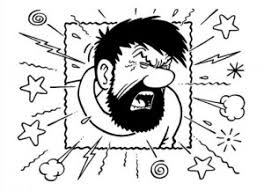
“I got in trouble for saying the F-word,” goes the common lament of schoolboys across the Anglosphere. Just about everyone understands the quoted sentence – but few realise that it has two different meanings.
For most of the modern history of the English-speaking people “the F-word” meant ‘fuck’. Swear words are usually taboo because of their association with a sacred subject, so it’s not surprising that a culture subjected to the sexual repression of Abrahamism would make a swear word out of the sexual act.
However, we’re no longer in a sexually repressed age. Far from it – arguably no other cultural tradition has ever found within itself the range of sexual expression and alternative identities as the modern West.
In fact, if anything we have swung the other way (no pun intended). Now it’s seen as deeply immoral and aggressive to criticise anyone for any sexual expression, even those undertaken in front of children in broad daylight.
And so, the F-word isn’t ‘fuck’ any more. The F-word is now ‘faggot’.
If you don’t believe this, just try using either word on social media and see what sort of response you get.
People use ‘fuck’ all the time on FaceBook and nothing bad ever happens to them. No-one reports it, no-one cares, and no-one appears to be seriously suggesting that it breaches what community standards FaceBook has.
However, people calling each other ‘faggots’ is strictly discouraged by means of bans – even though the word was barely considered a profanity 15 years ago.
Even better, observe a young person when something undesired happens to them, like stubbing a toe: chances are that they will cry out ‘faggot!’ rather than any variant of ‘fuck’.
They are also much more likely to tease their friends by calling them faggots than by calling them fuckwits or fuckheads. This is now also true of ‘nigger’ and various epithets for Jews, such as ‘kike’ etc.
So any young person trying to be edgy isn’t going to bother saying the old F-word. That’s so passe that even our grandmothers use it without blushing.
The swear words of this century will reflect this century’s social mores – casual sex is in, setting boundaries is out.
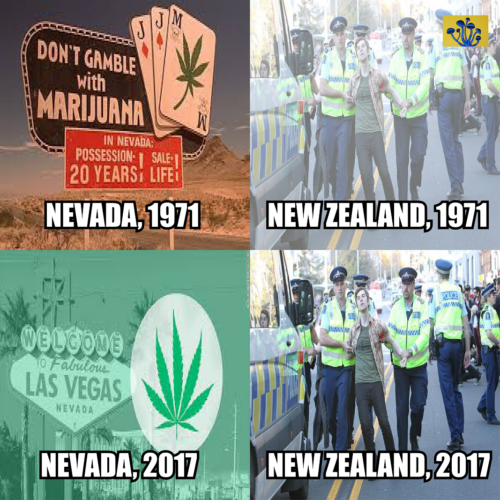
New Zealand Is More Backwards Than Nevada
The Peacock’s Tale: The Fundamentals of Alchemical Transmutation
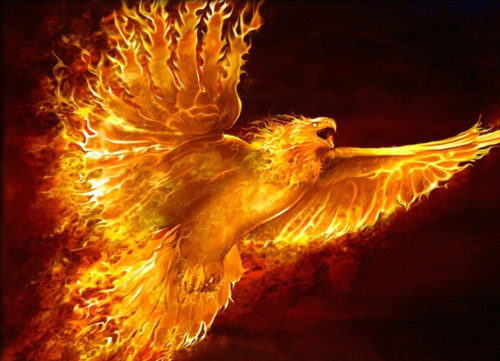
Science would have us believe that it has debunked alchemy. The narrative we are given is that the discipline of alchemy was a fundamentally flawed and erroneous form of primitive chemistry that has been ‘disproven’on account of failing to physically transmute lead into gold.
Therefore, so one stream of popular wisdom concludes, the value of alchemy is reduced to zero, and it is to be discarded as pseudoscience and relegated to the annals of weird illustrations and woodcuts.
This view is exceptionally narrow. What else does the process of transmutation have to teach us? What about at the level of the phenomenal, the level of mental space?
Esoteric alchemy refers to the inner meaning of the alchemical project. This refers to the state of consciousness. This is where all true alchemy takes place. This is the beating heart of the Hermetic philosophy. This is the centre to which all alchemical mythologies point.
There are many ways to explain or mythologise this, but look at the primary objective of alchemy, which is to transmute the lower into the higher. Lower into higher vibrations, one polarity into another, one substance or form into another. This is represented allegorically in the traditional depictions of the alchemist in his laboratory with various chemicals, flasks and equipment.
The common practice in any culture is to discard what is seen as without value, the chaff, the dregs. This is seen as common wisdom, but it is also entrenched in duality, the frame of the world being divided into poles of value and experience.
We take what we call ‘negative’ energy, and we try to relieve ourselves of it by throwing it away, condemning it, ignoring it or repressing it.
This is unwise, according to the practice of alchemy. You do not discard the lower, you transmute it. This may have been what Jesus meant when he said “Show me the stone that the builder has rejected, that is the cornerstone”.
You do not seek outside of yourself for what you imagine to offer you reprieve or salvation. You begin where you are, with what you have.
If you discard the lower, you will simply continue to receive more of it and nothing will ever change. The alchemist who does nothing with the lead bars he is regularly delivered packs it away into his steadily growing warehouse and sits idle without tending his furnace, ready for his children to inherit his hoard, and so on ad infinitum.
What we do not attend to alchemically is passed on in one way or another. It can be the thoughts, habits, and behaviours we pass on, or it may be the mark we have left upon the world in the form of how we treated others, how we approached problems, or the structures we reinforced and lent our support to during our time on the planet.
This is immediately evident to us because this is what we are confronted with, a world of inherited structures and agreements, things that those before us have gone into accord with and left for others to navigate.
When you are given lead bars, you are not being gifted with chaff and dregs. You are being gifted with the energy of life, the building blocks that you have the option of transmuting through a little know-how and a lot of persistence.
We are not merely talking of positive thinking or making lemons into lemonade. Alchemy does not put a ‘positive spin’ on things, it transforms them.
Imagine someone who has acquired a lot of rubbish in their backyard. A person in a low state of consciousness might discount personal responsibility for the mess. There is a level of consciousness at which others are viewed as separate and that you can better yourself at the expense of others.
Someone at this level of consciousness may attempt to relieve their mess by throwing rubbish over the fence for the neighbour to deal with. The mess hasn’t been dealt with but has only been temporarily relocated, and at someone else’s expense.
This is essentially what happens on an energetic level when you do not take direct responsibility for the management of your vibration.
For example, when you experience feelings of anger and you choose to ‘vent’ this by polluting others with your energy by giving them ‘a piece of your mind’, or at the least, attacking them energetically with resentment and anger, or at an even lower level, physically assaulting someone.
All you are doing is unloading your energy elsewhere, claiming implicitly that you are not personally responsible and that others ought to be made accountable. This is literally insane.
How can our lead become gold? After all, this is the esoteric meaning of alchemy, the lifeblood within the flasks and vials. The philosopher’s stone is not some ancient artifact buried beneath the desert somewhere, waiting to be discovered and exploited. It is a tool integral to the self. You are your own alchemical laboratory, and you have all the tools at your disposal that you need to commence work. Everything that appears within your phenomenal space are the various reagents and elements you work with.
What does the work look like, you may ask?
It is deceptively simple, but it does require understanding, vigilance and persistence. For any of this to take place at all you need to be in your laboratory, your workshop with a primed furnace.
The requirement is conscious vigilance. This is variously referred to as occupying the witness state, the seat of awareness, or ‘to keep one’s lamp burning’. In the simplest of terms, this means: stay awake.
The next most important component of this is the power of intent. In other words, in order for this process to begin, you need to care enough to attend to it. If you do not care enough about transmutation, it will not happen until you are prepared.
Here is where the real magic happens: that which arises in a state of vigilant awareness is transmuted form lower into higher. There is only one state in which this can occur, and that is the state of burning awakeness. St. John referred to this eloquently when he said: “anything which is shown up to the light will itself becomes light”.
You cannot be in two states at once, the higher and the lower simultaneously. This is the reason that Jesus said that an archer cannot bend two bows, nor can a servant serve two masters. If these lower energies are active in a lower state of mind, then they will remain unaffected and they will perpetuate.
This is the state humans are almost always in, so of course there will be no transformative change. The witness state, the third order of awareness, changes everything it comes in contact with.
It is called, in the Eastern traditions, the burning sword of Prajna, the wisdom that cuts through any deceit that is given up to it.
In order for this to work, you must be willing to subject what you perceive as your darkest idols of mind before the light of awareness. If there is anger, jealousy or arrogance, do not give it half-heartedly, but feel it expressed all the way through. Feel it not as a victim, but as a witness sacrificing everything to the light of scrutiny.
Some have said that to arrive at this point of preparation may not be entirely in your control. It may have been borne of great suffering or the persistence of a burning question. Suffering is a great teacher in alchemy, because it shows you how all of the lead you are inheriting continues to impinge upon your well being until you discover that you can align the direction of your energy and begin to transmute.
In any case, you will not arrive at a point of readiness until you are genuinely ready, and finally that rests with you.
Where does the peacock fit into this?
There is a Chinese myth that the peacock lives in the deepest part of the forest where no other creatures dwell, where there is nothing to eat but poisonous plants. The peacocks eat what is available to them, and their ingestion of the plants does not poison them, but sustains them because they are employing a process of transmutation. They are taking what has been rejected by others.
What the peacock does in eating this poison is to turn it into a magnificent tail. One form of energy is translated into another.
This is a simple but powerful alchemical myth. Confronting rather than avoiding or displacing your lower vibrational energy may seem from the outside like eating poison. This includes all of your hatred, anger, depression, anxiety, and every other possible byproduct of fear and separation. But if you exert the power of will, it can be transmuted.
What then happens is that the power that has been processed is reclaimed and reborn in the heat of the refiner’s fire.
When science discounts the value of alchemy as a legitimate scientific endeavor, what it is really saying is that there is nothing that the scientific enterprise can gain from it. This may very well be true. A roadworks crew cutting out a culvert in a hill do not care about whether they destroy any rare fossils that they should happen to dig up, because the only thing that is within their purview is cutting out a path for a new road.
Of course, a paleontologist or museum curator might be mortified by the lack of respect shown, but that is only because they see a value there that the roadworkers do not. It simply doesn’t fall within their brief to make allowance to preserving the rare and delicate.
Science has a tendency to see what it values and discard the rest, which makes for a poor alchemical exercise. Of course, this does not mean there cannot ever be a roadworker who values fossils, or a scientist who values spiritual alchemy – only that the institutions that they are operating within as cultural frames of reference have a limited field of value and interest. They have quite different objectives.
The claim of science is to have debunked alchemy on the point that it has failed to turn lead into gold. This is no more conclusive or meaningful than saying science has debunked the efficacy of 12-step program because the building where the AA meeting took place did not have 12 steps at the door.
The power of alchemy as I would argue lies in its being what I refer to as an instructional mythology of transformational psychology. It is not compromised by any material objection regarding the physics or chemistry of alchemy.
Similarly, Plato’s myth of the cave is not rendered redundant because there is proof that humans do not physically live in caves, or that Michelangelo’s Sistine frescoes are worthless because there is no evidence of the Biblical account of creation.
Again, science has a limited range within its values. It can astonish with its design of spacecraft and captivate with its production of taxonomical charts, but success in these endeavours, or any serious endeavor, for that matter, tend to come at the cost of wearing blinkers.
To achieve these things, it is true that there must be ambition, dedication and methodology to be sure. However, science simply cannot afford to dive into the many questions that a spiritual psychology such as alchemy raises. It is a different undertaking, demanding a different application of one’s talents and energies.
I would further argue that alchemy is essentially a kind of roadmap to spiritual awakening. In this respect, it is no different to mystical Christianity or Buddhism, or any disciplined regimen of self-inquiry or meditation, only that it represents a map in a different language. The Buddha cautioned against mistaking the finger pointing at the moon for the moon itself. All of the obscure reagents and paraphernalia of alchemy may be seen as the finger pointing at the moon – there is no need to get caught up in it.
If you’re reading this, chances are you have a burning furnace you might want tend to. Why not go and see for yourself what significance alchemy might have in your own life.
*
Simon P. Murphy is the author of His Master’s Wretched Organ.