Understanding New Zealand: Demographics of Beneficiaries

The four benefits split neatly into a well-spaced hierarchy of disenfranchisement, with the unemployed being the most disenfranchised, the invalids the next most, the students the next most, and the pensioners the least.

The stereotype about high numbers of Maoris being on the unemployment benefit is true to a degree – the correlation between being Maori and being on the unemployment benefit was an extremely strong 0.91. The correlation between being Maori and being on the invalid’s benefit was also very strong – this was 0.77.

Of course, these stereotypes also exist for Pacific Islanders, but here the correlations are not so strong. The correlations between being a Pacific Islander and being on the invalid’s benefit is -0.00, and with being on the unemployment benefit it is 0.25.

Probably the reason why these two correlations are weaker is that the immigration system prioritises the sort of person who can work and pay taxes for a long time into the future, and these people generally have not been here long enough to claim a pension yet.

A strong correlation exists between being of European descent and being on the pension – this was 0.65. This is very curious if one considers the commonly held belief that Maoris and Islanders are responsible for a disproportionate amount of welfare spending.

In fact, a tremendous amount of welfare spending goes to paying Pakeha people a pension, and if one considers that many of these people are taking advantage of the system by retiring well before they become incapable of further productive work, it has to be asked in which direction the stereotypes really ought to go.

Interestingly, although being Asian has a weaker negative correlation with being on the unemployment benefit (-0.25) than being of European descent and being on the unemployment benefit (-0.53), the negative correlation between being Asian and being on the invalid’s benefit (-0.56) is much stronger than for being of European descent and being on the invalid’s benefit (-0.12).

Probably the reason for this is an invalid is unlikely to be granted clearance to move to New Zealand, and so the Asian population in New Zealand, a large number of who are foreign-born, will have had a number of invalids selected out of them.

The unemployed and invalids love to smoke cigarettes. This is perhaps obvious to anyone who has spent a lot of time on a benefit, for a number of reasons. For one, there isn’t much else to do; for another, all of the other beneficiaries probably smoke tobacco or heavier.

The correlation between being on the unemployment benefit and being a regular tobacco smoker is an extremely strong 0.87, and between being on the invalid’s benefit and being a regular tobacco smoker is, at 0.85, almost as strong.

Part of the untold story is the fact that people smoke tobacco primarily for mental health reasons (this has been covered elsewhere by VJM Publishing). So it’s not surprising that the unemployed and the invalid’s beneficiaries – the two groups that collectively suffer the majority of the severe mental illness in this country – use the most mental health medicine.

A statistic that many will find surprising is that there is a positive correlation with being female and being on any of the benefit types. The correlation between being female and being on the pension is the weakest, at 0.03, and the correlation between being female and being on the student allowance is, at 0.21, also not significant.

There were significant correlations between being female and being on either the unemployment benefit (0.39) or the invalid’s benefit (0.26). These correlations are both strong enough that a considerable amount of the wage gap between men and women could be explained by them alone.

As mentioned above, it’s difficult for invalids to get into New Zealand as immigrants because the points system prioritises those who are capable of working and paying the greatest amount of taxes. As a consequence, there is a strong positive correlation of 0.74 between being born in New Zealand and being on the invalid’s benefit.

South Islanders are significantly less likely to be on the unemployment benefit. The correlation between living on the South Island and being on the unemployment benefit was 0.30, which probably reflects a cultural appreciation of industriousness, as none of the correlations with other benefit types were significant.

There is a striking curiosity when it comes to benefits and median age. The correlation between median age and being on the unemployment benefit (-0.73) is actually stronger than the correlation between median age and being on the student allowance (-0.70).

This tells is that, as young as students tend to be, the unemployed tend to be even younger. This probably reflects the fact that it takes a certain amount of time to learn the life skills needed to be employable.

*

This article is an excerpt from Understanding New Zealand, by Dan McGlashan, published by VJM Publishing in the winter of 2017.
Understanding New Zealand: Demographics of Turnout Rate

Examining the demographics of the turnout rate in 2014 gives us an opportunity to look closely at the general disenfranchisement rule. If it holds true, as we have suggested so far, that the turnout rate of any given demographic will be proportionate to the degree that this demographic can expect to have its wishes met by the political establishment, then this section ought to tell us a lot about the sort of person who runs New Zealand.

Commensurate with the fact that all Kiwi Prime Ministers up until now have been Pakeha, there is a very strong correlation of 0.71 with being of European descent and turnout rate in 2014. This was not only the strongest but the only correlation of its kind that was positive.

The correlation with turnout rate in 2014 was -0.10 for being Asian, -0.44 for being a Pacific Islander and -0.77 for being Maori. The correlation between turnout rate in 2014 and being Maori is so strongly negative that barely half of all eligible Maoris voted in 2014.

Pacific Islanders are disenfranchised by poverty and poor education to a similar degree to Maoris, but as a consequence of being relatively recent immigrants they do not have the intergenerational trauma that Maoris do.

Predictably, then, the correlations between turnout rate and religion reflects the religious proclivities of the various ethnicities.

The religious beliefs that had the strongest positive correlations with turnout rate in 2014 were Anglicanism (0.41), Presbytarianism (0.32), Brethren (0.32) and Judaism (0.30).

The religious beliefs that had the strongest negative correlations with turnout rate in 2014 were Mormonism (-0.68), Ratana (-0.68), Maori Christian (-0.64) and Jehovah’s Witness (-0.57).

Interestingly, there was a significant positive correlation of 0.24 between having no religion and turnout rate in 2014. This contradicts the glibly accepted wisdom that the religious like to vote and the irreligious do not – in reality there are more fundamental factors in play.

What supports the accepted wisdom is the very strong positive correlation of 0.77 between turnout rate in 2014 and median age. Old people love to vote: indeed, for many of them it is the very highlight of their year. It should, however, be noted that the strength of this correlation is mostly an artifact of needing to be eighteen years old in order to cast a vote.

In fact, for people in the 20 to 29 age bracket, the correlation with turnout rate in 2014 was -0.21, which was negative but not significant.

One trend is very clear: that the more educated a person is the more likely they are to be engaged with the political system. This directly follows the general enfranchisement rule, considering that a Kiwi with a degree is vastly more likely to work in the higher levels of government, and one with an advanced degree even more so.

The correlation between turnout rate in 2014 and having no qualifications was -0.46. This is not particularly strong, but if one considers that most people with no qualifications are old and that old people love to vote, one can guess that very few young people with no qualifications vote at all.

On the other hand, the correlations between turnout rate in 2014 and having a degree were significantly positive for all degrees. Between turnout rate in 2014 and having a doctorate the correlation was 0.45. As for no qualifications, this correlation is partially an artifact of the relatively recent expansion of the tertiary education system, one consequence of which is the relative youth of higher degree holders.

The correlation between turnout rate in 2014 and being on the pension ws 0.51, which, as mentioned above, reflects that many pensioners still command a considerable amount of wealth and are very engaged in the direction of the political system, despite no longer working.

One result that some might find surprising is that the correlation between turnout rate in 2014 and being on the invalid’s benefit (-0.53) is not as strong as the correlation between turnout rate in 2014 and being on the unemployment benefit (-0.76). This could be surprising because it could reasonably be expected that an invalid is more severely disenfranchised than someone who could conceivably have a full-time job next week.

The difference is that the class of unemployed in New Zealand are disproportionately drawn from the generally disenfranchised – the poor, the young, the Maori etc. The class of invalids, by contrast, are generally more average people who have fallen ill due to injury, an unfortunate genetic condition or mental illness. This means that they are drawn more evenly from all social classes and ethnic groups.

The correlation between being on the pension and turnout rate in 2014 is so strong, and these pensioners so numerous, that there are negative correlations between turnout rate in 2014 and working in most industries. The strongest were in transport, postal and warehousing (-0.64), manufacturing (-0.51) and administrative and support services (-0.44).

The only significant positive correlation between turnout rate in 2014 and working in any industry was with the exceptionally not disenfranchised professional, scientific and technical services, which was 0.28.

Men vote significantly more than women, which follows the general disenfranchisement rule. The correlation between turnout rate in 2014 and being male was 0.29, which perhaps reflects a weakly-held folk belief that politics is a man’s business and a man’s world.

Curiously, being born in New Zealand had a significant negative correlation of -0.24 with turnout rate in 2014. That the foreign-born vote more than Kiwis might surprise many. However, if one considers that being born in Britain has a correlation of 0.81 with turnout rate in 2014, and that almost all Maoris in New Zealand are New Zealand-born, the reasons why become apparent.

Predictably, the poor do not vote as often as the wealthy. All of the income bands from $0-50K had significant negative correlations without turnout rate in 2014, except for the student bands of $15-25K. All of the income bands above $70K had significant positive correlations with turnout rate in 2014.

The above statistic might be the single most important correlation detailed in this study.

If the most basic division of New Zealand society is into haves and have-nots, the next most basic might be into the have-a-lots, the have-a-littles, and the have-bugger-alls. This neatly reflects the three basic kinds of land tenure: freehold, mortgage, and renting.

As a consequence, the correlations between turnout rate in 2014 and tenure of dwelling are 0.72 for freehold land, -0.66 for rented land and an even -0.00 for mortgaged land.

One final curiousity is the correlation of 0.21 between turnout rate in 2014 and living in the South Island. This is much stronger than most people might expect, and possibly reflects the degree to which old money from the early settlement of the South Island still enfranchises the inheritors of it.

*

This article is an excerpt from Understanding New Zealand, by Dan McGlashan, published by VJM Publishing in the winter of 2017.
The Lesson of ANZAC Day is to Not Follow Leaders

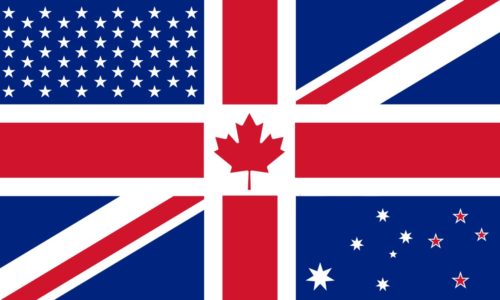
The reason why ANZAC Day is so important to the nations of Australia and New Zealand was that it was the day we became aware of exactly how little regard we were held by the British commanders. It was therefore the day we decided to look to ourselves for self-regard: the birth of the national consciousness.

This is why ANZAC Day is celebrated to the degree that it is in both New Zealand and Australia even today, a century after the landings at ANZAC Cove.

The day marks the moment that we decided we were good enough to stand on our own merits as New Zealand and Australia, and not merely as colonies of Britain, because the British did not hold us in the regard we deserved.

The difficulty is this – a century later, our own leaders, despite being elected from among ourselves, treat us with equally little regard. In fact, our own leaders treat us so poorly that we’re now doing worse than many of the countries we have defeated in war within the past century.

Germany and Japan today both have a higher standard of living than the Anglosphere – their defeat in World War Two made it possible to clean out the entrenched corruption in the political systems of these countries, laying the foundation for socio-economic success.

Contrast that to the West, where the victory of World War Two was taken as a sign that God had blessed us. Not only were we correct, but our entire social order was perfect, right down to the degree to which labour relations favoured capital interests.

The symbol of ANZAC Day is the poppy, the reason being that the poppy is used to make morphine, and morphine was raised to an almost holy status after World War One because for an injured soldier its administration was like a gift from heaven.

For the soldiers who risked so much to bring freedom to people, and who felt first-hand the degree to which medicine can prevent human misery, it must be a bitter pill to swallow that the governments they fought for are putting their descendants in cages for exercising their right to use medicinal plants.

In much the same way that morphine brought relief to those whose bodies had been shattered by bullets and shrapnel, other plant medicines bring relief to those whose minds have been shattered by abuse and neglect.

Cannabis is now legal in 29 American states as a recognised medicine, including for post-traumatic stress disorder, the mental illness that the ANZACs would have called shellshock. But the New Zealand Government will not even discuss changing the cannabis laws here.

MDMA is also being currently trialled after showing promise in treating PTSD, psilocybin is currently being trialled after showing promise in treating death anxiety, ibogaine is currently being trialled after showing promise in treating drug addiction and ayahuasca is currently being trialled after showing promise in treating depression. But anyone using any of these plant medicines in New Zealand risks getting put in a cage for many years by the Government.

It’s hardly plausible that the men that signed up to fight Hitler did so to protect a political system that would put their grandchildren in cages for using medicinal cannabis. Yet, here we are. We would have more freedom today if the ANZACs had shot a few of their own politicians.

The lesson of ANZAC Day is this. Never, ever follow the dictates of people who claim to rule you and who claim to be in charge of you, no matter how urgent the need is claimed to be, no matter how many flags they wave, no matter what authority they claim to be speaking with, no matter how malicious the enemy is claimed to be, no matter how much jeering, threatening, mocking, insulting and coercing they do.

Anyone who is not willing to treat you as an equal is your enemy.