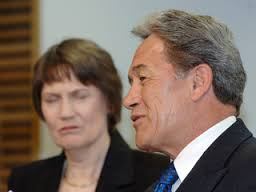
For Those Ignored By The Political Class, The Only Real Protest Is Not Voting

Several opinion pieces have appeared in the mainstream media in recent days exhorting Kiwis to vote in next month’s election. With choice phrases like “not voting won’t solve anything”, “the 2014 result was determined by the people who turned up” and “Voting builds our political power”, all mainstream propaganda organs are doing their best to get you to consent to the status quo.

Because that is all that voting is – you giving your consent for things to carry on pretty much exactly as they already are. The political class will interpret the fact that you voted as a sign that you are content with the overall system – and therefore as a sign that nothing need be changed.

And so, your vote has a zero percent chance of changing anything. You might as well dance naked in a thunderstorm praying for the lightning gods to strike down the enemies of the nation.

How the country will be run for the next three years has already been decided by the mutual agreement of the sort of person who politicians really do listen to – rich old people, who have got together long ago with those politicians and hashed out the precise details of how things are going to be, whether the masses like it or not.

If you’re not a wealthy Baby Boomer, the politicians couldn’t give a fuck what you think. But they do want your consent for what they’re going to do to you.

If they don’t have that then they run the risk of provoking the rise of some kind of revolutionary movement that might actually make a difference to how society is run. Such as: a movement that campaigned on an expensive universal basic income, or on an equally expensive capital gains tax, or on an immigration policy that reflected the will of all Kiwis instead of just multiple property owners and those looking for cheap labour.

And this is the reason why there is all the propaganda right now to get people to vote. Voting in a democratic system is the same as you giving your consent to how the country is governed – and to the people who own both sides of the political system, the consent of the population they’re exploiting is the only thing left that they don’t already have.

If you do vote, then politicians of both the left and right wings of the ruling party tend to naturally assume that you’re more or less happy with the direction of things.

Knowing in advance that the winner of the election is going to ignore your will in favour of those who have money, your only means of protest is to not vote at all. Past a certain level of disenfranchisement, the only action one can take to affect the system is to not vote. A refusal to vote is the only way your voice can really be heard.

If the turnout rate in next month’s General Election was less than 50%, the measured degree of public discontent would be too great to just shrug off, it would then become possible for some hard questions to be asked about the direction the country was going. The mainstream media would be forced to ask whether or not the political system was really a democracy or just an oligarchy masquerading as one.

The higher it is, the more likely it becomes that political discourse is replaced with photos of spaghetti on pizzas, videos of dropping in to London for a sister’s wedding, and witch-hunts against outsider candidates.

You can help force New Zealand politicians to take the will of New Zealanders seriously by withholding your vote this September 23rd.

VJMP Reads: Anders Breivik’s Manifesto V

This reading carries on from here.

This section (pages c. 286-415) is entitled “Europe Burning” and details a deliberate strategy, on the part of Breivik’s enemies, to destablise the European continent. This is achieved through a variety of political and sociological means.

Breivik appears to be an ardent believer in the Eurabia theory. This theory has it that the elites of the European and Muslim spheres have secretly agreed to come together in order to act as a counterweight to the influence of America and Israel.

The Eurabia theory sounds plausible on the face of it. But much of the rhetoric around it is misleading. A cynic might argue that the Eurabia rhetoric was deliberately dishonest.

Mass Muslim immigration to France happened not because of a conspiracy but because of economic reasons. We can surmise this because other Western nations also saw an influx of poorly educated third-worlders to work the jobs that the natives had become too highly educated to want to do.

Likewise, European prejudice against Jews and Israel did not arise as a consequence of Muslim and Arab leverage on European politicians. Anyone with so much as a passing knowledge of European history will be aware that native Europeans were more than capable of hating Jews without outside encouragement.

This document exhaustively references antisocial actions taken on behalf of certain Muslims and explains them in terms of collective Islamic anti-Western action. It’s certainly true that if a person would read a several hundred page list of crimes committed by Muslims they could come away thinking that such an agenda existed, but the document does not make an effort to determine whether such a list of crimes is unusual.

Another place in which the document makes implausible assertions is with regards to the sentiment that Judaism and Christianity are traditional European religions and Islam is not. Why Christianity and Judaism should be considered any more European than Islam, when all three Abrahamic sects come from the same place and exhibit similar characteristics, is not discussed by Breivik.

Neither does Breivik explain why he can so ardently attack Communism, Marxism, liberalism, globalism and feminism, but defend the very same Judaism that is most commonly associated with those ideologies.

This unusually benevolent stance towards Judaism is underlined by the multiple references to the work of Bat Ye’or, – who is the most energetic proponent of the Eurabia conspiracy theory – and the claim that Israel is a “cultural cousin” to Europe.

It is, true, however, that Breivik’s grasp of history is much deeper than those of the mainstream commentators whose political opinions inform the masses. He points out that the advent of the nation state, this enemy of the globalist, was itself a reaction to the religious wars that plagued Europe until the mid 17th century, and that wars predated the nation state by thousands of years.

Therefore, there is no reason to agree with the lazy consensus pushed by mainstream leftists that the end of the nation state will bring about a greater level of peace.

Ironically, Breivik “the neo-Nazi” comes across as decidedly less totalitarian than some of his enemies in certain regards. His dislike of the European Union is based in part on the phenomenon of unelected Eurocrats having more power than elected representatives of national governments.

He is correct to point out that critics of the unelected Eurocrats are often dismissed as “anti-democratic” elements – an absurdity on its face.

Although Europe has many enemies in Breivik’s analysis of the world, from the European Union to the mainstream media to mainstream academia to right-wing libertarians who deny the pull of culture, the major enemy is undoubtedly Islam: “The Islamic world always has been our enemy and always will be.”

Throughout this section, Breivik demonstrates an acute historical knowledge on the one hand, and a tendency to rapidly jump over several logic steps on the other. This leads to a number of uneasy conclusions.

Why Anarcho-Homicidalism Is Not Terrorism

The obvious reaction of someone trapped in a slave mindset, when told that they have the right to kill anyone who is trying to enslave them, is to protest that such a thing must be “terrorism” or some other crime against good order. Learning to think like a free person means learning when your rights have to be defended, and an anarcho-homicidalist has taken steps to ensure that his actions are legitimate resistance and not terrorism.

They might overlap in a lot of ways, because both use violence to bring about a vision of correct order in the world, but anarcho-homicidalism is very distinct from terrorism.

The primary difference is that anarcho-homicidalism, being a branch of anarchy, does not tolerate either hierarchy or forced collectivism. This means that, not only is the anarcho-homicidalist forbidden from killing on command, but he is also forbidden from justifying an act of anarcho-homicidalism on the grounds that his target merely shared a demographic category with someone trying to enslave him.

Both of these qualities are distinct from terrorism. Although there are terrorists who act on their own initiative, the majority of terrorist deeds are carried out by individuals who have been coerced, intimidated or tricked into action.

Also, a clear majority of terrorist actions are carried out to further one side in some “us vs. them” narrative. The Muslims who kill themselves in suicide bombings are able to motivate themselves to take action by rationalising that the collective benefit to Islam of killing many of Islam’s enemies outweighs the individual loss of life.

The anarcho-homicidalist is different from these in that he must arrive at the decision to kill out of his own philosophical reasoning, and that his efforts must be targeted upwards at an authority figure, not sideways at the lackeys of one.

The secondary difference is that anarcho-homicidalism leads to less violence – in contrast to terrorism, which leads to more violence.

In fact, a crucial element of anarcho-homicidalism is that the action ought to decrease the amount of suffering in the world. Therefore, it is legitimate to kill a politician whose actions are causing suffering, but not to start a blood feud between one group and another group that the politician just happens to belong to.

The usual example given when arguing for the merits of anarcho-homicidalism is that of conscription. It’s trivially easy to see how widespread anarcho-homicidalism would make raising slave armies impossible, because an anarcho-homicidalist would simply shoot any conscription officer that came to their house.

A terrorist, by contrast, is unlikely to shoot a conscription officer. This is because nothing about terrorism explicitly goes against the idea of hierarchy. A terrorist is more likely to bend the knee and take orders from a conscription officer, in the hope that they will get the chance to kill the enemies of whatever collective the terrorist considers themselves part of.

Another stark difference is that a terrorist is usually happy to create collateral damage. Bombing a civilian airliner is a common terrorist act, for the reason that it makes people afraid to get into planes, and because the targeted country tends to waste enormous resources on security in the aftermath.

All of these terrorist actions have the effect of causing more violence to happen, because they will either provoke the authorities into crackdowns or provoke the groups whose members were killed to violently retaliate.

An anarcho-homicidalist, by contrast, will not cross the boundary into terrorism. His action is surgical, clinical, unpredictable, unstoppable. The only terror created by the anarcho-homicidalist is in the hearts of those who would rule, and the effectiveness of his action is not determined by the destruction of an enemy but by whether it persuades the ruling authorities to treat their subjects correctly.

How Well Did The Economy Do Under John Key?

John Key: made New Zealand wealthier compared to other nations, but not by as much as Helen Clark did

This article starts with a very straightforward proposition: that the prosperity of an economy and of the people in that economy is primarily a question of GDP per capita. Given that, we can measure the increase in New Zealand prosperity (if any) under John Key’s tenure by looking at the change in GDP per capita during that time.

The figures that this article uses are taken from the International Monetary Database. Here we calculate GDP on a price purchasing parity basis because we are ultimately trying to measure the change in standard of living.

In 2009, the GDP per capita of New Zealand was USD30,572. This placed us 37th in the world, just behind Italy, Japan and Spain, and just ahead of Greece, South Korea and Israel.

In 2016, the GDP per capita of New Zealand was USD37,294. This placed us 35th in the world, just behind South Korea (who leapfrogged us), Japan and Finland, and just ahead of Italy and Spain (who we leapfrogged) and Israel.

This makes for an increase of 22% over 7 years, which is about 2.9% per year if calculated on a compounding basis.

2.9% over a seven-year period can rightly be considered a decent effort of national economic stewardship from Mr. Key. That level of growth is far from remarkable, but it was enough to move us past a Southern European level of wealth and close to a Far East Asian level.

By way of comparison, the GDP per capita of New Zealand in 2000 was USD21,807, which makes for a 40% increase over the nine years of Helen Clark and Michael Cullen. This works out to just over 3.7% per annum.

Measured that way, the performance of the John Key economy was markedly poorer than the Clark/Cullen economy. However, one has to take into account that Key inherited a global financial crisis, and so it’s worthwhile comparing New Zealand to other nations instead of looking at absolute growth.

In the year 2000, New Zealand was considerably less wealthy than Italy (which had a GDP per capita of USD28,602), Japan (USD26,850) and Spain (USD24,053). It was also less wealthy than Australia (USD28,801), Britain (USD26,425) and America (USD36,433).

By 2009, the GDP per capita of New Zealand had increased from 76% of that of Italy to 89%; from 81% of that of Japan to 92%; and from 91% of that of Spain to 96%. Against other Anglo nations, the GDP per capita of New Zealand had decreased from 76% of that of Australia to 75%; had increased from 83% to 87% of that of Britain; and increased from 60% to 65% of that of America.

This means that under the Fifth Labour Government, New Zealand improved its position strongly against comparable countries, with the exception of the booming Australia.

By 2016, the GDP per capita of New Zealand had increased from 89% to 101% of that of Italy; had decreased from 92% to 90% of that of Japan; and had increased from 96% to 102% of that of Spain. Against other Anglo nations, the GDP per capita of New Zealand had increased from 75% of that of Australia back up to 76%; had increased from 87% to 88% of that of Britain; and remained at 65% of that of America.

This tells us that under the Fifth National Government, New Zealand improved its position against the Southern European countries but stayed the same compared to other Anglo ones.

Ultimately, therefore, we can see that New Zealand’s economic standing in the world is marginally better, in relative terms, after the Key Administration. Apart from the decline of Italy, New Zealand didn’t really improve in relative wealth. This contrasts sharply with the years under Helen Clark, during which time New Zealand improved strongly.