The World That Sober People Built

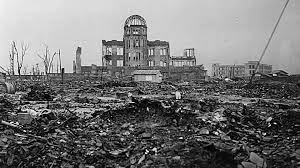
Sober minds built the atomic bomb that fell on Hiroshima; sober minds gave the orders to drop that bomb; sober minds followed those orders

“That person must have been on drugs” is a common response to observing all kinds of wacked-out behaviour, as if taking a psychoactive drug inevitably brings about false kinds of thinking – a cognitive bias this column has previously described as Sobriety Bias Syndrome. But if we look around the world that sober people built, and the moral values agreed upon by sober people, things really didn’t turn out that great.

It was pious and sober people who decided, a few thousand years ago, that mutilating the genitals of baby boys was a legitimate expression of God’s will. It was sober people who decided to adopt this tradition from the foreigners who practiced it, and people are sober when they argue for the “health benefits” of the mutilation.

George W. Bush, completely sober, decided that sending the firepower of the US military after Saddam Hussein’s Iraq was a great idea, even though it led directly to the deaths of over a million people. The US Congress, elected to represent the American people, also soberly decided that this was a great idea.

In the 1930s we created and watched “documentaries” such as Reefer Madness, which exhorted us to tell our children that smoking cannabis will turn them into murderers; a dozen years later, with god-fearing sobriety, we built nuclear weapons and dropped them on Japanese civilians, killing hundreds of thousands in one hit.

These are the actions of sober minds. So clearly a person doesn’t have to be intoxicated in order to do terrible things to someone else.

Far from it. In many ways, sobriety can be seen as a kind of virus. Its presence in a person’s mind tends to work to drive out periods of non-sobriety, usually because of egoistic religious delusions about achieving purity of thought. The sober mind tends to have thoughts repeating in it over and over again, and this repetition can lead to a powerful commitment to some ideas.

This is a fact long understood by television programmers, who appreciate how repeated exposure to a short, powerful stimulus is more likely to induce purchasing behaviour in a potential consumer than a single exposure to e.g. a lecture about the qualities of a product.

Because novel psychoactive experiences tend to destroy this conditioning by allowing the conditioned person to see things from new perspectives, if you want to get everyone marching in lockstep then these psychoactive experiences need to be either discouraged or made illegal.

Consequently, entirely sober people have decided, presumably using sober logic, that putting another human being in a cage is a fair punishment for being caught growing a medicinal plant without permission.

Maybe there’s an argument that too much sobriety makes an individual mean from a lack of levity, and a society dumb from a lack of questioning?

After all, the mass shooters making the front pages recently are definitely not smoking weed, taking ecstasy or tripping on mushrooms or LSD, and neither are the genital mutilators, military warhawks and brainwashers that are responsible for most of the world’s evil.

The truth is that the world needs a diversity of ideas if humans are to survive the challenges of coming years. Never mind a diversity of skin colour – such superficial qualities do not constitute real diversity. Real diversity is diversity of ideas, even outlandish ones, even crazy ones, because that is the kind of diversity that saves us from groupthink and prevents us from making the kind of error that arises from self-righteous conviction about one’s correctness.

To that end, sobriety is our enemy and getting wasted is our friend.
The Big Lie of Our Age

Many pseudoscientific writings speak of the parts of the brain that give rise to consciousness, as if the question of whether the brain does generate consciousness had already been answered in the affirmative

The Big Lie of our age is that the brain generates consciousness. It’s a lie characteristic of our exceptionally materialistic age, because in most other times in human history people have retained their intuitive awareness of the primacy of consciousness. In the modern West, however, it’s simply taken for granted that the brain generates consciousness, and the deleterious consequences of this belief are denied or explained away.

This Big Lie has come about as a result of a reasoning error that became fashionable in the wake of the Enlightenment. The idea was that religion had held humanity back during the Dark Ages by making scientific research impractical, and therefore religious dogma had to be discarded from the scientific reasoning process, and therefore all talk of a world beyond the material had to be abandoned, and therefore consciousness simply had to be a material property.

From this Big Lie a number of falsehoods arise. Many of these falsehoods are encouraged by the ruling classes because they make the plebs easier to rule.

For instance, the belief that the brain generates consciousness leads immediately to the belief that the death of the brain (alongside the inevitable death of the physical body) must inevitably mean the “end” of consciousness. Because if the body dies, and the brain dies with it, then the brain must logically lose its capacity for ‘generating’ or ‘maintaining’ consciousness and thus that consciousness must disappear.

This belief, while predicated entirely on a falsehood, leads to a number of other beliefs.

The most powerful of these is the belief that this life is all that there is. If the death of this physical body means the death of consciousness, then I cannot be held responsible for anything I do while in this place (i.e. Earth, more or less). Therefore, if I take money now in exchange for attacking another person, or if I murder, rob or rape, then I only have to get away with it for as long as this physical life endures.

Another odd idea that follows naturally from the Big Lie is that only creatures with brain structures similar to that which knows itself to be conscious can also be conscious. If the brain generates consciousness by means of some property inherent to it (such as a critical mass of complexity) then other creatures can only be considered conscious to the degree that they share these brain structures with the person thinking up the consciousness theory (after all, that person knows themselves 100% to be conscious).

One delusion is that mortal terror is an appropriately dignified response to mortal threats for a civilised human. It is if you believe that the brain generates consciousness, but if you don’t believe this it becomes possible to be genuinely courageous. After all, why subject yourself to mortal terror if you know that the contents of consciousness are ephemeral and transient?

Of course, the ruling classes are generally happy to have people believe that this life is all there is, for a variety of reasons. Not least of these reasons are because it discourages anarcho-homicidalist action by making people afraid of execution, and because it makes people greedy, aggressive and acquisitive as they try to cram an eternity’s worth of pleasures into one mortal incarnation.

It is ultimately because of this Big Lie that cannabis and the psychedelics are illegal. These drugs modify behaviour by making the user aware, however fleetingly, of a world beyond the material. In this world beyond are immutable moral principles, and it’s harder to pull the strings of people who are aware of these principles and believe in them. Such people tend to make their own decisions.

A common experience on psychedelics is to feel the material world slipping out of consciousness and to become aware of an entirely different world as seen through an entirely different set of eyes, but which is ultimately comprehended by the same consciousness. This often results in the tripper learning the lesson of the primacy of consciousness and how conceptions of time and space are illusions brought about by temporary separation from God.

It is because of the Big Lie that people who become privy to such revelations about the true nature of reality – whether by taking psychedelic drugs or through other means – are seen as having gone insane, and their revelations seen as chaotic nonsense of no value. After all, if a psychonaut comes to realise that the Big Lie is a big lie, then that psychonaut must be dismissed as a space cadet or schizophrenic lest this realisation catch on.

Writing the Schizophrenic

The literary medium offers vast scope for portraying the perceptual and cognitive oddities characteristic of schizophrenia

There are a tremendous number of misconceptions about schizophrenia – a combination of a cultural reluctance to confront the reality of mental illness and prior inaccurate portrayals in popular media. Avoiding these misconceptions and cliches is crucial to creating a believable and engaging schizophrenic character.

Perhaps the most glaring misconception is the belief that having schizophrenia means having multiple personality disorder. Many people still seem to believe that having schizophrenia is like Strange Case of Dr. Jekyll and Mr. Hyde, in which a powerfully suppressed evil nature sometimes breaks through to the surface and takes over the mind of the patient.

It’s certainly possible that a schizophrenic might have powerful struggles with inner demons, but they are not werewolves. A psychopathic alter ego is more characteristic of the psychopath. Powerful mood swings might make the schizophrenic seem like different people, and might make them difficult to deal with, but the characteristic of multiple personality disorder is that the personalities are not aware of each other, and schizophrenics are not afflicted by this.

It’s also not true that a schizophrenic will just babble nonsense all the time. Although psychological disorganisation is characteristic of schizophrenia, and although this disorganisation makes it more difficult to speak and converse coherently, speaking in word salad is more characteristic of an acute state of psychosis. This is a common state for a schizophrenic to fall into, but is different to schizophrenia itself.

Schizophrenics usually spend much more time in non-psychotic states than psychotic ones because it’s extremely difficult to maintain the state of acute agitation necessary to become psychotic. This state requires so much emotion and energy that in practical cases the sufferer either wears themselves out or ends up becoming convinced (or forced) to take medication.

So it’s relatively rare for a schizophrenic to act truly crazy all of the time.

What is characteristic of schizophrenia are what is called positive and negative symptoms. These don’t mean ‘good’ and ‘bad’ symptoms but whether the loss of touch with reality is the result of something being added to the “normal” experience of reality or something being taken away from it.

Dramatic visions, delusions and hallucinations, such as those portrayed in the film A Beautiful Mind, fall under the rubric of positive symptoms. The most common form of positive symptom is that of hearing voices. This is very difficult to imagine for anyone who has not experienced it, but a character who suffers this symptom might think that someone is talking to them when no-one is really there.

Sometimes when a schizophrenic appears to be rambling, they are having a coherent conversation with someone who doesn’t appear to be there. This naturally sounds like rambling to an outside observer although the schizophrenic themselves might believe that they are having a perfectly reasonable conversation with someone right next to them.

Likewise, when a schizophrenic appears to be staring into space, it may be because they believe themselves to be in a part of the Great Fractal that is different to where the outside observer is. Much like in a dream, the material world might not be making much of an impact on the consciousness of the schizophrenic.

This means that writing a story from the perspective of the schizophrenic is likely to be a cross between surreal and terrifying. Because what other people take for granted as firm laws of reality do not seem to apply to the conscious experience of the schizophrenic, it’s very difficult for any other character to understand what the experience of a schizophrenic is like.

It’s also terrifying because having original ideas about the nature of reality brings out some powerful emotional responses in other people. It isn’t easy to have other people profoundly disagree with you about things that you take for granted. Experiences like this might go some way to explaining why a schizophrenic character would also suffer from negative symptoms.

Disengagement with society, flattened emotions and an inability to maintain routines are the characteristic negative symptoms of schizophrenia, and if you can present realistic positive symptoms to your reader then some of these negative symptoms should be easy to believe.

For example, the reader might understand why a schizophrenic character feels the need to disengage with society if they read about how frustrating and frightening is to constantly be told, by everyone that character meets, that reality is actually very different to how that character perceives it.

Likewise, they might understand why schizophrenics have flattened emotions when they read about how a schizophrenic character has to compensate for the apparent fact that many of the things they perceive to exist aren’t really there. There are good reasons to not react strongly to things, even when those things are extremely bizarre or unusual, if one ordinarily sees a series of bizarre things that aren’t really happening.

The experience of being unable to maintain routines is a natural consequence of having an unusual amount of chaos in the mind, and it could be the routines in a character’s life falling to pieces that gives the first sign to those around them that a mental illness is developing.

Generally speaking, schizophrenia is an extremely difficult condition to portray accurately because of its complexity and because the experience of a schizophrenic is often fundamentally different to the experience of other people. Often the schizophrenic character will react reasonably and logically to the impressions that come into their mind and it is how those impressions get there which is the truly strange thing.

*

This article is an excerpt from Writing With The DSM (Writing With Psychology Book 5), edited by Vince McLeod and due for release by VJM Publishing in the summer of 2017/18.

VJMP Reads: Anders Breivik’s Manifesto XII

This reading carries on from here.

In this section (pages 949-1067), Breivik continues to evaluate strategies and tactics for terrorist acts. Chillingly, here he writes specifically about the benefits of targeting a party conference of social democrats, for the reason that security will probably be poor, as well as expounding on why this would be so excellent a propaganda move for the cultural conservatives.

This section continues the high detail discussion about how to best carry about a terror attack. Given the comprehensive nature of the rest of the document when it comes to listing Islamic crimes, one is left with the impression that an extreme amount of thought went into the planning for the massacre that Breivik did carry out.

The idea that the ends justify the means comes through very clearly in this section. On the subject of attacking a left-wing party gathering with a flamethrower, he writes that “A severely burned category A or B traitor will in reality become a living symbol of what awaits individuals guilty of trying to sell their own people into Islamic slavery.”

There is something grimly medieval about mutilating living people to let them serve as a reminder of what befalls traitors, and this section is much darker and more demented than the sections about history. One is reminded of the admonition not to lose one’s own humanity in the course of warfare.

Again the paranoid nature of the rest of the document shines through when Breivik writes, of the largest annual conference of Norwegian investigative journalists, “98% of them are considered quality category B traitor targets”. With a worldview like this, Breivik could justify killing almost anyone.

Unsettlingly for us at VJM Publishing, this explicitly includes us – “90%+ of [writers] support multiculturalism and usually portray their world view through their works.” So we would also be marked for death if Breivik had his way, as those who work in the arts and recreational services tend to have broadly leftist sympathies.

The descriptions of how to break out from being pinned down by Police forces during an operation read like Breivik is writing about a video game. One passage describes how a car can be stolen and driven through any cordon that the first wave of Police officers might set up. This gives the impression that Breivik must have spent countless hours in dark plotting and fantasising.

Reassuringly, Breivik is able to demonstrate a sense of moderation. On the subject of using nuclear weapons in terrorism he writes that this “would normally inflict too many civilian casualties and it is therefore hard to imagine how nuclear weapons could benefit our cause.”

Breivik emphasises in this section the need to keep “civilian” casualties at a minimum. By this, of course, he means people who are not leftists. One is further reminded of the paranoid and oppositional nature of the document. It is also grandiose, which comes through in passages such as the description of how to blow up a nuclear reactor for the sake of financial damage to the “mutilculturalist regime”.

An unappreciated irony, at least on Breivik’s part, is that the document repeatedly emphasises how important it is that any prospective “operative” avoid getting flagged by the domestic security and intelligence services, yet it is possession of this document itself, with its voluminous advice for how to carry out terror attacks, which is most likely to get a person flagged by said spooks.

In fact, given that Breivik actually did go on to carry out a mass shooting, possession of this document is possibly the biggest red flag one could raise to the security services. Instead of being titled “A European Declaration of Independence” it could just as well be titled “A European Declaration of War.”