
The Four Alchemical Realms of Law

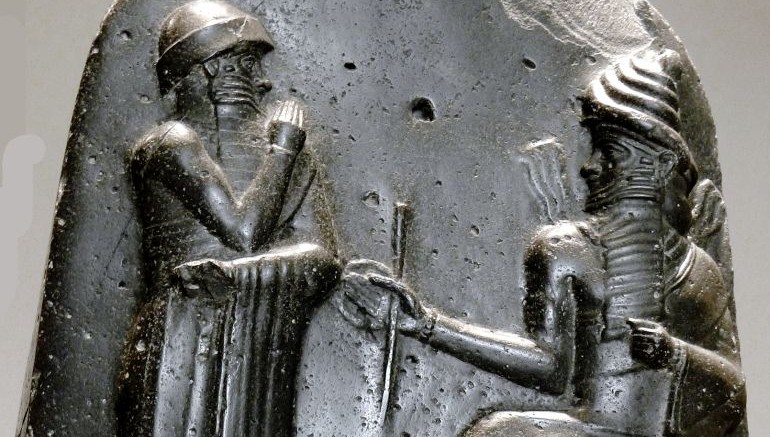
When people talk about whether or not something is illegal, they’re talking about whether or not something is against the law. The problem with this logic is that there are several different kinds of laws, and some of them override others. As this article will examine, there is a realm of law corresponding to each of the four masculine elements of clay, iron, silver and gold.

The realm of clay corresponds to natural laws. These laws are fundamental, and therefore they underpin all the laws of iron, silver and gold. Like the clay, these laws are so fundamental that they don’t need to be written down, and they don’t need to be understood. They are simply Nature doing its thing, and they have applied long before any human laws existed, and still apply to the vast, vast majority of the Earth’s creatures.

In a state of Nature, most people are barely aware that these laws exist, until they feel the pleasure or pain that comes with acceding to, or violating, those laws. But the laws of Nature exist no matter whether a person is aware of them or not. Fall off a cliff, you die. Eat poison, you die. Get too close to the big animal with the sharp teeth, you die.

Although the basic laws of Nature are physical laws, and then chemical laws, some of them are also biological laws. Laws of clay that start to approach the realm of the laws of iron are those like “Don’t try to have sex with female X or male A will thump you over the head.” These are essentially the same laws that non-human creatures use to defend their territory or resources. “Might is right” is an example of the laws of clay.

The realm of iron corresponds to the the laws that are enforced by organised human violence. When civilisation began, all offences against the sensibilities of property owners were written down into a code of laws, and penalties for transgressing them proscribed. An entire class of judges and jailers came into being to enforce these laws, paid for by the surplus wealth generated by the order that came with civilisation.

These are laws of iron because the Police will beat you up or put you in a cage if you disobey them. You may even get your head chopped off with an iron axe. Unlike natural laws, legal laws are written down, and therefore can be enunciated very clearly (although some will always quibble). The point of this was to distinguish them from the laws of clay, which were never any more than simple animal instincts.

Like iron, the laws of iron are unyielding. The Justice System doesn’t care if you knew it was illegal or not, or if you really meant to do it or not. Justice is blind, which is another way of saying that it is merciless. Laws degrade into laws of clay once money starts getting involved in the justice system and better lawyers get lighter sentences. But when they don’t degrade, the edges of them become gilt with silver.

The realm of silver corresponds to the laws that are enforced by society. These are the laws that relate to social status, i.e. whether or not a person is considered high value by their community. Violating laws of silver doesn’t carry a risk of arrest like violating laws of iron does, but they can lead to people being less friendly towards you, and giving you fewer employment, social or romantic opportunities. Obeying laws of silver tends to lead to the opposite.

As silver is softer and brighter than iron, so are the laws that fall under the realm of silver more malleable than those that fall under the realm of iron. A person who has transgressed a law of silver, and who has earned some enmity from his fellows, can escape punishment by making a sufficient compensatory effort. Therefore, the laws of silver are more subtle than the laws of iron, and can also change on a whim.

However, like iron, they are cold and sharp enough, in their own way. Many a man has been found innocent at trial but nevertheless destroyed by whispering and gossiping. Social exclusion might be more subtle than an axe, and the consequences less permanent, but it is still enough to cause suffering, and therefore enough to modify social behaviour.

The realm of gold corresponds to the laws that are enforced by God. In this sense, the laws pertaining to the realm of gold are similar to those pertaining to clay, in that they are not written down, and neither are they social. Although other people might be able to help a person understand the laws of clay and gold, they can’t force that person to abide by them, unlike the laws of iron and silver. They can only instruct and leave it up to that person’s true will.

It isn’t easy to speak about what the laws of gold are, but it can be said that they are even more subtle than those of silver and iron. Here we are speaking of laws like the law of karma and the law of attraction. It has to be understood at this point that the realm of gold is the realm of consciousness, and its laws relate to how to alter the frequency of one’s consciousness.

Much of alchemy is the art of playing higher laws off against lower ones, so that one causes change in accordance with one’s will despite being bound by laws the entire time. This is a subject of its own and deserves its own essay, but there are some things that can be said about it here.

One can alter one’s consciousness by obeying laws in higher realms at the expense of laws in lower realms. The most powerful example of such a thing was the example of Socrates. By obeying the laws of gold, and completely ignoring all of the laws of silver, iron and clay to the point of causing his own death, Socrates made himself immortal in this world. Likewise, gathering with friends to break unjust laws of iron (such as drug laws) can create magically powerful bonds of solidarity.

This is another possible interpretation of Aleister Crowley’s saying that “The key to joy is disobedience”. By disobeying the cruder laws, such as the law of biological entropy, unjust statutory laws and by prising the truth above social fashion, it’s possible to raise the level of one’s consciousness. A skilled alchemist can therefore reduce the level of their suffering, and the level of the suffering around them, even as they disobey laws, and even though disobeying those lower laws consistently brings suffering.

*

If you enjoyed reading this essay, you can get a compilation of the Best VJMP Essays and Articles of 2018 from Amazon for Kindle or Amazon for CreateSpace (for international readers), or TradeMe (for Kiwis). A compilation of the Best VJMP Essays and Articles of 2017 is also available.
A Sevenfold Conception of Inherent Human Rights

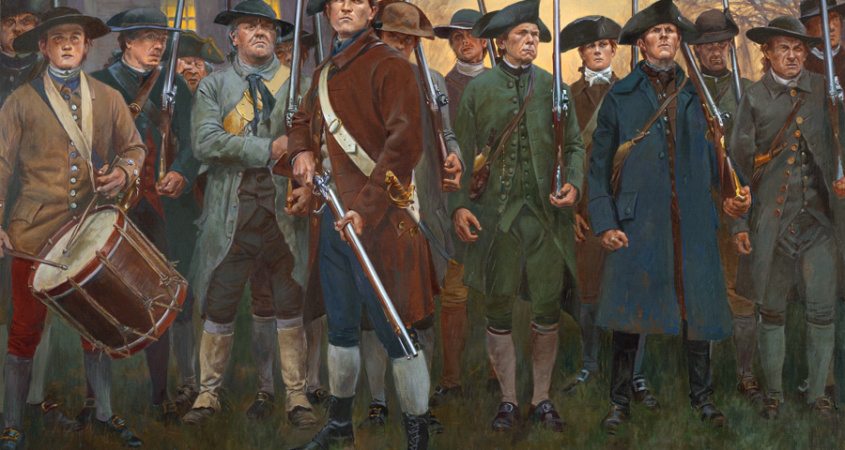
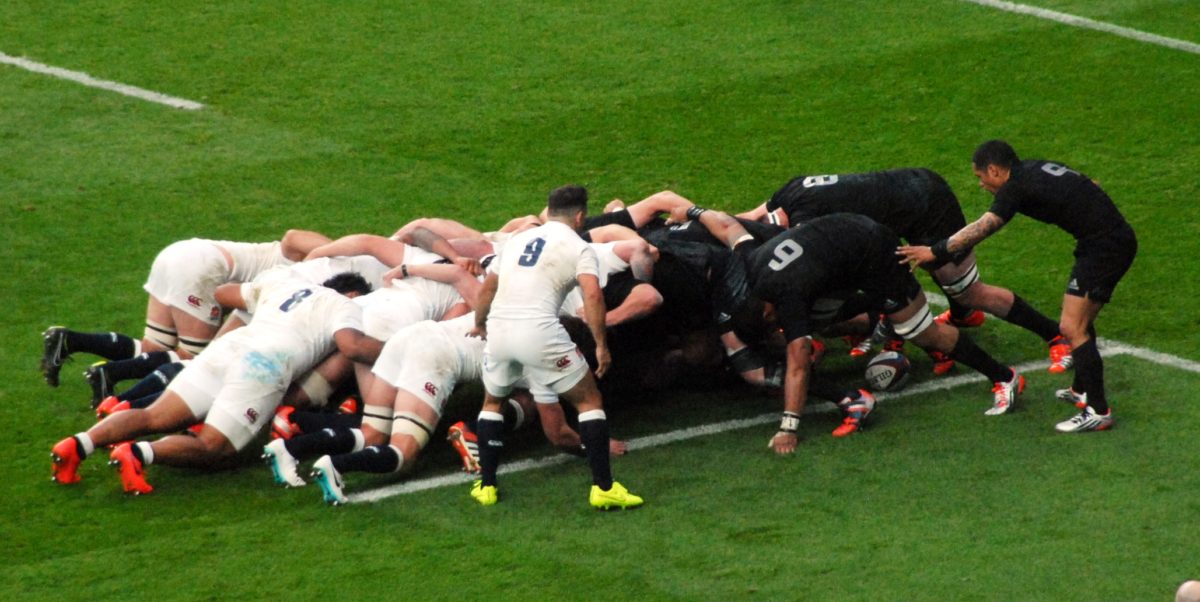
In this age of tyranny and chaos, many people have lost their natural understanding of the inherent rights of human beings. Many of us have strayed so far from reality, and drifted so far into slave morality, that we honestly believe that rights are granted by the goodwill of the Government. This essay will argue that human rights are not only inherent, and necessary for any civilisation to exist, but also that they are sevenfold, at three different levels of resolution.

To understand our inherent rights, it is necessary to turn to a philosophy that accurately describes reality. We do so here with reference to elementalism, in particular the hierarchy of the four masculine elements. The four masculine elements are clay, iron, silver and gold, in ascending order of rarity and value.

Clay is the most fundamental of the masculine elements, and represents the feminine realm of Nature. In this sense, it represents the rights relating to a person’s life, their right to life and their right to self-ownership. Inherent human rights in the realm of clay means that people inherently have the right to life.

Applying the paradigm of clay to human rights tells us that the State does not have the right to kill its citizens, and neither may it claim right over a person’s body without that person’s consent. The Government may not use the people for medical experimentation, and neither may they be conscripted, whether as soldiers or labourers.

More specifically, the Government ought not to levy taxes on basic food produce, and neither should they interrupt the right of people to gather food and water from the wilderness, because both processes are essential for life. Some would go as far as to argue that the State ought to supply a universal basic income to compensate for the imposition of private property.

Iron is the next most fundamental element, and refers to the masculine realm of war and defence. Inherent human rights in the realm of iron means that people inherently have the right to physical self-defence. They have the right to own and carry weapons, both to protect their own person and their home. They also have the right to expect that the State will act to defend the physical integrity of the nation, and that it will act to protect their private property.

It is also recognised here that the people themselves are the ultimate guarantor of their rights. The realm of iron is the realm of masculine wisdom, and here it is understood that the Government is not always the friend of the people, and is all too often its enemy. Being wisdom, and not excess, there are limits here: people may only harm others if those others are posing a direct, immediate and actionable threat.

Anarcho-homicidalism is enshrined as a right under the realm of iron. The people are never obliged to be slaves – this right is absolute and fundamental. Therefore, they have the right to take any measures necessary to resist enslavement – up to, and including, killing their enslavers. The point at which it is necessary to do so is a question for the people themselves, and never a question for their government.

Silver is the first of the precious masculine elements, and refers to the realm of the mind and intellect. Inherent human rights in the realm of silver means that people inherently have the right to pursue and to discuss the truth. This is otherwise known as the “right to free inquiry” because it is in the nature of gentlemen, when their baser duties are discharged, to discuss such things.

This implies that the rights of the people to freely research, read, discuss and impart information shall not be restricted, except in cases where there is an immediate risk of physical suffering (i.e. incitement of violence). People must always have the right to gather to discuss subjects and to impart information to each other. The State has no right to interfere with a person’s life because they expressed a certain piece of information, whether fact or opinion.

These rights mean that institutions like the Office of Chief Censor are to immediately be abolished. Nothing is to be censored, however certain information might be classified as unsuitable for some audiences, in that exposure to it may cause them harm. Note that, with the realm of iron, there are limits to rights here: the right to free speech does not legalise fraud, nor outright lying for the sake of defamation.

Gold is the most precious of the masculine elements, and refers to the realm of consciousness and God. Because God is more fundamental than language, and therefore cannot be spoken of, it’s not easy to speak about what inherent rights a person has in the realm of gold. Like gold, these rights are precious, and sometimes very rare. In principle, the paradigm of gold here relates to the rights to religious and spiritual freedom.

Inherent human rights in the realm of gold means that people inherently have the right to conduct any ritual, and to consume any spiritual sacrament, that they believe will get them closer to God. These rights are subject to the three more fundamental rights, in that they cannot infringe on any other person’s free speech (i.e. no blasphemy laws), they cannot infringe on any other person’s bodily integrity (i.e. no infant genital mutilation) and they cannot infringe on any other person’s right to life (i.e. no convert or die).

This means that the State has absolutely no right to restrict the consumption and sharing of spiritual sacraments such as cannabis, psilocybin and DMT. No-one has to go through a court and argue that these substances are part of any recognised religious tradition – they simply have the inherent right to use them. Citizens inherently have the right to take any action they feel will bring them closer to God, as long as it does not cause suffering to others.

It is also recognised here that rights are granted by the Will of God, which is more fundamental than the right of any human institution, whether governmental, ecclesiastical, military or otherwise. Therefore, because these rights are granted by God, no such institution can rightly take them away. If it tries to, the people have the right to resist, and they have God’s approval to do so. These rights are inherent to the nature of reality, which is something more fundamental than human governments.

There is another layer behind these four masculine elements. It could be said that, in the same way that the four masculine elements divide into base and precious, so too do our rights divide into a base right that can easily be understood by all people, no matter their intellect, and a precious right that that is harder to grasp but which must be fought for with a determination befitting its value.

The fundamental feminine right, then, relates to the physical world. It is the right to not suffer physically at the hands of the State; the right to physical liberty. What this means in practice can be seen be examining the realms of iron and clay. We can summarise it as the right to bodily integrity, or the right to not have one’s bodily integrity harmed by the State.

The right to physical liberty means that people have the fundamental right to decide how their bodies are used, and what goes into them, and what stays in them – this is known as the Base Right because even animals intuitively understand it. The State does not have the right to impede the physical security or harm the physical integrity of its citizens, whether at the group or individual level. Neither does it have the right to impede their access to territory, unless suffering should be caused by doing so.

In practice, this means that the State does not have the right to interfere with the reproductive rights of its citizens. It cannot mandate a limit to family size, for example, and neither can it prohibit abortion. Nor can it force vaccinations on people, or any health treatment on people, without their consent – the Base Right forbids it. It also means that people, at the group level, have the right to free assembly.

The fundamental masculine right, on the other hand, relates to the metaphysical world. It is the right not to suffer metaphysically at the hands of the State. What this means in practice can be seen by examining the realms of silver and gold. It can be summarised as the right to metaphysical integrity, or the right to not have one’s metaphysical integrity harmed by the state.

In much the same way that people have the right to decide what goes into their bodies and how their bodies are used, they also have the right to decide what goes into their minds and how their minds are used. This right is called the Precious Right because, like masculinity itself, it isn’t always clearly understood.

It means that people have the right to cognitive liberty. Although much of this is already covered under the realm of silver and its rights to free speech, there is more here. The State may not infringe on the rights of the people to express themselves, and may not interfere with the psychological integrity of its citizens, whether at a group or individual level. Neither may it decide that certain practices are legitimate spiritual ones and others not.

There is a third and final level, a right even more fundamental than the Base and Precious Rights, the seventh right that ties all the others together. It is, simply put, the right not to suffer at the hands of the State. This is known as the Fundamental Right and is to be used as the guiding principle whenever it is not clear how to proceed.

The right not to suffer at the hands of the State underpins all of the Base Right, the Precious Right, the right to life, the right to self-defence, the right to free inquiry and the right to spiritual exploration. The Fundamental Right recognises that the State may not cause suffering to people in any of the physical, metaphysical, spiritual, intellectual, martial or biological realms.

Describing our rights like this, in elemental terms, is now necessary owing to the confusion that has arisen from the meshing together of hundreds of incompatible value systems. Our current governmental models have refused to recognise our rights as human beings, and so it has become necessary for us to rally around a new conception of those rights and to see that it is enforced in the space around us. This sevenfold elemental conception of human rights is the way forward.

*

If you enjoyed reading this essay, you can get a compilation of the Best VJMP Essays and Articles of 2018 from Amazon for Kindle or Amazon for CreateSpace (for international readers), or TradeMe (for Kiwis). A compilation of the Best VJMP Essays and Articles of 2017 is also available.
The Tao of Rugby

The Tao is in everything. More fundamental than words, more fundamental than forms, the eternal interplay of yin and yang is one powerful way of understanding the reality we are presented with. As the Super Rugby season begins, and in a year of fixtures that contains a Rugby World Cup, we take a look at the Tao of rugby.

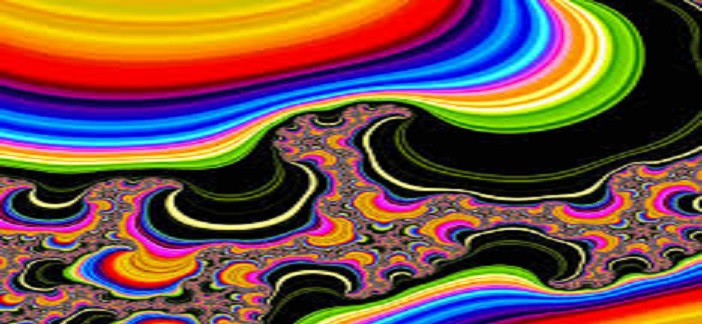
The flowing blitzkrieg of an All Blacks backline move is often the first thing a person sees when they are new to the game. It’s impressive because it’s high skill executed at high pace. It’s all very yang and masculine, because it’s fast and dynamic, but there’s another side to the game, because the backs can’t do anything without the ball.

The forwards might be slow, but without the ball the team can only really go backwards. So it doesn’t matter that these players are slow, as long as they are strong, because strength is the main factor that determines who wins a contest for ball possession. The forwards are therefore like the yin: underappreciated, but just as necessary as the rest.

In this sense, a rugby team is like a taijitu. The backs as yang, and the forwards as yin. Both are entirely necessary for the correct operation of a rugby team, because the backs can score points but have trouble winning the ball, and the forwards can win the ball but have trouble scoring points. Neither is superior to the other, and neither can be complete without the other.

There is a deep spiritual truth in this. One solution to the question of the meaning of life is just to play one’s role, whatever that should be. A prop might envy the fitness and speed of the backs, and a winger might envy the strength of the forwards, but at the end of the day all either can do is just to play their role.

The rugby ball, being shaped in such a manner as to prevent it being passed along the ground soccer-style, represents the very centre of the taijitu. This is the position that Taoists refer to as the “unwobbling pivot”, on account of that the rest of the system revolves around it. Without a ball that can bounce in unpredictable ways, there is no game of rugby.

This ball is a very chaotic element, as can be seen on every occasion when a high ball is allowed to hit the ground (and often when it isn’t). In this sense, it also represents Fortune. For a New Zealander of the 21st century, instead of saying “The Lord giveth, the Lord taketh”, we say “That’s just the bounce of the ball.” The sentiment is precisely the same.

These patterns within patterns are part of the reason why rugby is now more of a religion in New Zealand than religion is.

The purpose of religion is not anything to do with any spiritual insights that it may confer. This is merely a ruse. The real purpose of religion is to bind a society together by bringing all of the disparate groups together in a state of equality before something absolute. God knows no division of class or race, and therefore all are equal before God, whether rich or poor.

Coming together in the name of God is an extremely powerful tool for creating social bonds, but New Zealand can no longer attempt to do this in the name of Christianity. That tradition is dead, but it’s not the only way that Kiwis can come together as one.

Rugby also serves this purpose. Rugby serves to bring Kiwis together in a way that no religion or Government enterprise can. At an All Blacks game, one sits in the stand, and it doesn’t matter if the person next to you if of a different class or gender – you are there for the same purpose, to give your energy to the same spectacle. You are all equal before something greater: the ritualised warfare that is rugby.

All of this goes double for those who actually play the game. Because mainstream religion is not inspiring to New Zealanders, we have to learn our moral lessons elsewhere – and historically this has been on the sports field.

On the sports field, we learn that sometimes you win and sometimes you lose. Sometimes you play well and lose, and sometimes you play poorly and win. We learn that arrogance usually leads to a comeuppance of some sort. We learn that a hard tackle is no less hard because the person delivering it was white or brown, or because the person receiving it was rich or poor.

We learn that the bounce of the ball favours neither the international superstar nor the 8-year old. All are equal before the whims of the prolate spheroid, which is, to the Kiwi, the form of God, distributing blessings according to a pattern that cannot be understood by mere mortals. We learn to adopt the humility that is the only correct response to such an almighty force.

So when people say that rugby is a religion to Kiwis, they’re more accurate than even they might realise. Rugby is to us what Taoism was to the everyday folk of ancient China, both bonding the community together and instructing its members about the mysteries of life, luck and death.

*

If you enjoyed reading this essay, you can get a compilation of the Best VJMP Essays and Articles of 2018 from Amazon for Kindle or Amazon for CreateSpace (for international readers), or TradeMe (for Kiwis). A compilation of the Best VJMP Essays and Articles of 2017 is also available.

Thoughts of a Luciferian Occultist Upon the Tenth Anniversary of His Apotheosis

On Boxing Day, 2008, I took a heavy dose of psilocybin mushrooms for the first time. It wasn’t a reckless decision. I had been a heavy cannabis user for some years already, and as a schizophrenic I was well accustomed to strange and sometimes terrifying thought patterns. It was about six o’clock in the evening.

Perhaps forty minutes later, I started to feel unusually good. The come-up had already become more pleasant than was possible with cannabis alone (much less alcohol). I felt so good that I decided to go over to my neighbour’s house to split the rest of the mushrooms.

Standing on the road outside my house, on my way to my neighbour’s, I started to feel unusually good. I was certain that this was the best I had ever felt in my life. It was a sense of exhilarating peace, in that all of my suffering had been abolished, replaced with an overwhelmingly confident sense that everything was going to be alright.

My neighbour and I divided up the rest of the mushrooms. After a while, he suggested that we smoke some weed to “kick it on a bit”. So we did. At about 8 p.m. the experience started to become unusual – I started to enter psychedelic space for real.

My ordinary vision started to be replaced by a shimmering field of reds, yellows, greens and blues. These colours took on more and more of my view, but when someone spoke, or if I moved my head suddenly, the room I was in would become apparent again. These colours were not simply placed on top of my ordinary vision, but were a higher-order interpretation of it, as if I was seeing elemental fire, air, earth and water.

Soon this vision collapsed from four colours into two: an electric neon blue, and black darkness. The neon blue was alive, and it seemed to reach out into the darkness as if by sexual impulse. It reached out with tendrils that curved into every available space, but not merely three-dimensionally – the electricity reached into every available space in a countless number of higher dimensions.

What I was seeing was the material world represented as masculine and feminine. This was an ancient Taoist secret: that the world is yang and yin, interdependent and meshed together so tightly that it is impossible to ever see pure masculine or pure feminine in a state of Nature. That I was able to see it was because my mind was rising through the dimensions, into metaphysical space.

Soon this vision also faded, and I was left with no sensations at all, just pure awareness. My mind no longer contained words, until I was asked how much of it I wanted to see. In my mind, I responded: “The full measure.” This is the Luciferian in me – I had waited my entire life, perhaps even several lifetimes, for this exact moment, and I knew what to do.

As if by lightningbolt, the Veils of Isis were lifted, and I looked directly into the face of God. What was seen cannot be described, for reasons that will shortly be explained. It is sufficient to say that the ancient Vedics were correct when they claimed that there is no such thing as space or time, and that behind Maya is absolution.

Looking into the face of God, I realised that everything I knew was wrong. It wasn’t that everything I knew was factually wrong, it was that reality was so fundamentally different to what I thought it was that every assumption had to be revisited. I was open to all possibilities – and in that state of maximum receptivity, and in the presence of God, some things were revealed to me.

There is no such thing as time and space. In the same way that twenty-five still frames a second gives the impression of a moving image, what we think of as time is closer to multiple universes flashing in and out of awareness. This happens so quickly that we think we’re actually moving around, but we’re really just jumping through the multiverse.

The multiverse is not merely a large number of universes. It is, in fact, a practically infinite number of universes, that are related to each other by way of a fractal pattern. This was called the Great Fractal, for the simple reason that it contained all possible perceptions. Maya, or the material world, is a fractal that contains every single possible universe, in every single configuration. Every universe that can exist, exists somewhere in the Great Fractal.

Now aware of this, I felt so profoundly different that I knew I had opened a door that would not be closed again on this side of the death of my physical body. I was now a master of the physical world, in that I could explain it from first principles of yin and yang. But there was more. Eventually I realised that it was necessary to spend some time with God – perhaps years.

As if on cue, knowledge came, about God. I had more-or-less been a materialist atheist up until then, despite considerable dabbling in Eastern traditions, so what came was shocking.

Consciousness is God. This is why it can fairly be said that God is all-knowing, all-powerful and all-wise. God is all knowing because everything that is known is perceived by consciousness, and God is consciousness. God is all-powerful because everything that exists has been created by consciousness, and God is consciousness. God is all-wise on account of the combination of the previous two.

It is true that consciousness cannot be described empirically. It cannot be sensed, and therefore cannot be described in terms of appearance, sound, taste or touch. Neither can it be measured. There is no instrument that can detect its presence or absence. Therefore, it cannot be a material phenomenon.

In understanding this, I understood the first line of the Tao Te Ching: “The Tao that can be spoken of is not the Eternal Tao.” God, as consciousness, is the prima materia of reality. Therefore, God is more fundamental than any human conceptions that may be dreamed up, such as words and language. God is even more fundamental than yin and yang, and therefore there is nothing about God that can be said. Therefore, all the claims of organised religion as to the nature of God are false.

Consciousness is more fundamental than the physical world because consciousness is the prima materia. God is the prima materia. The first thing ever to exist was consciousness, and it is more fundamental than time, and therefore does not need a cause. Therefore, it is not necessary to suppose some kind of “creator” that “willed” consciousness into being.

The only thing that really exists is consciousness, and this is eternal and without blemish. Everything else is merely something that consciousness is aware of, and, because no two consciousnesses are the same, that which is apparent to one is not necessarily apparent to any other. Therefore, nothing material can meaningfully be said to definitely exist.

Because there is no material world, there is also no death. The realisation of this brought me immense elation; I realised that I had suffered awfully under the delusion that the death of my physical body meant the cessation of my consciousness. In reality, it is the consciousness that creates the material body, and therefore the death of that body – like the death of all bodies – does not impact consciousness.

The persuasiveness of the illusion of the material world is the reason for the so-called “hard problem of consciousness”. The hard problem only makes sense if you already assume the presence of a solid material world, inside of which consciousness arose. Explaining how consciousness arose within a material world is, indeed, a hard problem, because it’s impossible. The reality is that consciousness exists, and has dreamed up a world that is as close to plausible as possible, when viewed from the perspective of the conscious present moment.

All that exists is consciousness and the contents of consciousness. Consciousness is more fundamental than the contents of consciousness; the latter is dreamed up by the former. The contents of consciousness, for every individual, is a slice of the Great Fractal. Therefore, it is possible for any individual consciousness to experience anything whatsoever that is possible – it’s just a matter of navigating to that part of the Great Fractal, which may take several lifetimes.

Every possible arrangement of the contents of consciousness is being experienced by God right now, because God is split into an infinite number of consciousnesses. These are not inferior in any way to the original, or to each other. God is experiencing your life ten seconds ago, and ten days ago, and whatever decisions you will make ten days or ten years in the future are already being experienced by God, and forever will be.

Therefore, all of the other people in life are also God, in exactly the same way that you are. They all are consciousness, an extrusion of God into the material world, so that God might experience something. It is true that All is One. We may be separate – and even competitors – in the material world, but behind it all, everything that exists is on the same team, God playing at the experience of being God.

Becoming God is not a question of growing in power as if life were some kind of game of Dungeons and Dragons. There is no spiritual progress to be made, and there are no spiritual points to be earned. You are already God, perfect and complete; you just forgot. Apotheosis is nothing more than anamnesia, remembering something that has been forgotten.

The reason why you forgot – why we all forgot – is clear, if you consider what it means to never forget. Being God is a state of perfect bliss. It is the absence of all suffering and longing. Looking into the face of God, I also felt this complete absence of desire – and realised its drawbacks.

Sitting for eternity in a state of perfect bliss is extremely limited from an experiential point of view. It is boring. It is so painfully boring that it makes sense to dream up the material world, for the sake of having something novel to experience. Thus, you chose to forget that you were God because it’s more interesting that way.

The problem is that, because God is perfect and complete, any change to this must necessarily be a desecration. Because God is a state of perfect knowledge and bliss, the process of individuation into a human consciousness necessary implies the introduction of ignorance and misery. Awareness of this is why so many religious traditions have a conception of a “Fall of Man”.

This is also true of the Great Fractal. There is an ideal life, and there are a practically infinite number of fractally similar lives. All of the fractally similar lives involves imperfections in comparison to the ideal one. Each one of us has a unique pattern of suffering, much like how the fractal forms of other things within Nature are variations of one ideal.

The real mind-bender is that it’s better this way, with all the suffering, than without. Existence as God is so painfully boring that all the misery in the entire Great Fractal is preferable (at least temporarily, and for a change). This means that there is a higher order of morality than mere pleasure and suffering. God seeks relief from boredom, and therefore the suffering of individuals is a good thing, as long as that suffering entertains God.

Therefore, it makes sense for individual consciousness to get slung into the material world (or, at least, to appear to have been) and to fully adopt the illusion of being a particular creature, separate from the wider whole and with desires that work against that whole.

All of this knowledge was downloaded into my mind in an infinitely small passage of time, because God is more fundamental than time and therefore not subject to its laws. Had I not already been a Luciferian, and therefore somewhat prepared, this downloading of knowledge probably would have fried my brains completely.

As it was, it took four years for me to make any sense of it all, six years before I could think about it calmly, eight years before I could be happy about it and ten years before I could write it down. The distillation of the wisdom of those ten years with God is the essay that you have just read.

*

If you enjoyed reading this essay, you can get a compilation of the Best VJMP Essays and Articles of 2017 from Amazon for Kindle or Amazon for CreateSpace (for international readers), or TradeMe (for Kiwis)