Clown World Chronicles: What Is A ‘NEET’?

As mentioned in the chapter about behavioural sinks, one of the common phenomena of Clown World is withdrawal. When society just seems absolutely fucked, and no effort to fix it seems like it could pay off, the logical thing to do is to withdraw. This article discusses the modern phenomenon of the NEET, and where it might lead.

‘NEET’ stands for ‘Not in Employment, Education or Training.’ It refers to people who don’t have an occupation. There are essentially two ways to be a NEET: live off your parents or live off welfare.

Living off your parents is the middle-class way to be a NEET. Usually, if your parents are stable and successful, they have a spare room at their house that you can live in rent-free. If they have enough income of their own they might even pay for your board. In such situations, a person can live almost indefinitely.

Living off welfare is the lower-class option, on account of the extra grief that comes with it. This is known as “receiving NEETbux”. One way to achieve this involves going on the dole, or unemployment benefit. This is not an easy option, because it doesn’t offer anywhere near enough money to be happy. It’s also not easy to make it permanent, and a permanent passive income is the holy grail of NEET life.

The increasingly popular option is to claim a disability allowance on the grounds of having a mental illness. The bizarre paradox here is that any genuinely sane person, when exposed to Clown World, will become insane. The only people that can cope with Clown World are the ones that were defective from the beginning. Consequently, an element of Catch-22 exists when it comes to who’s sane.

Some kind of “mental illness” accounts for most NEETs. Although these people are labelled mentally ill, their thoughts and behaviours are often rational and logical reactions to living in Clown World. The demands of the modern workplace are such that not everyone’s mental health can cope, and many people don’t even make it that far, having been driven insane by the school system.

A NEET is very similar to what used to be called a recluse. In Japan, where the phenomenon is very common, such people are known as hikikomoris. It’s someone who has withdrawn so much from society that they’re hardly even part of it anymore. Not in employment, education or training is another way of saying “dropped out”. It’s for people who no longer give a fuck.

In practice, most NEETs are men, for a variety of reasons. For one thing, society values young men less than young women, which incentivises young men to withdraw. For another, young men are much more likely to suffer from the autism that is commonly the ultimate reason for NEETdom.

Although the NEET is stereotyped as having a great life, sitting comfortable while wagies slog their gutses out, in reality NEETlife is mostly wretched.

On a metaphysical level, it’s extremely difficult to live without a sense of purpose. The NEET spends much of his time watching porn and playing vidya, and neither of these activities are fulfilling in any sense. NEETlife is kind of like an extended childhood, particularly when it’s adopted by a young person who never gave adult life a serious crack.

On a psychological level, NEETlife doesn’t provide that which is known to make people happy. Sigmund Freud once said that the formula for happiness was to love and to work. The NEET has extreme difficulty on both counts.

Not working makes it really hard to attract women. Consequently, very few NEETs have quality lovelives. It’s possible to tinderwhore as a NEET but, because the vast majority of sexual encounters happen between people in at least semi-committed relationships, and because women don’t like to form relationships with unemployed men, quality sexual encounters are rare.

Not working also makes it hard to have a social life. Because human existence in Clown World has been reduced to little more than an economic production engine, people are defined by their jobs, and social circles are commonly restricted to workmates only. These two difficulties strongly interplay with each other – a great many relationships form through friends of workmates.

The ultimate question for the NEET is: have I dropped out of society because I am too weak to cope with it, or because society is too shit to be worth engaging in? Either answer could be correct, depending on the individual in question. Some people just don’t give a fuck, others make a genuine and prolonged effort to fit in but just find society too fucked.

The NEET epidemic, like the incel epidemic, shows no sign of abating. As Clown World becomes ever more ridiculous, and as society drifts ever further from reason, an increasingly large number of people will end up dropping out. As shown by the behavioural sink studies mentioned in the opening paragraph, Clown World will probably get worse and worse until one final, glorious climax. The NEET epidemic may play a contributory role here.

*

This article is an excerpt from Clown World Chronicles, a book about the insanity of life in the post-Industrial West. This is being compiled by Vince McLeod for an expected release in the middle of 2020.

*

If you would like to support our work in other ways, please consider subscribing to our SubscribeStar fund.

The Establishment Right, The Far Right And The Alt Right

A recent comment on the VJM Publishing FaceBook page asked us to define far-right. This was in response to an article on the company page that had used this adjective in reference to the rising far-right populist movements in Europe. It was not our intent to use far-right as a pejorative, but simply to use it with precision. This essay elucidates.

Politics, correctly practised, is the successful pre-emption of violence. Way back in the biological past, a wise primate realised that if he ensured the bananas were fairly distributed, there was much less fighting. The great advantage with such an arrangement was that the troop became much better able to resist intrusions from other primate troops. Thus, the genes of the primates belonging to the wise one’s troop proliferated.

Human politics is not meaningfully different to monkeys fighting over bananas. As with primates, we don’t really fight over bananas, but rather over the land on which the bananas grow. More specifically, we fight for the right to ownership of land, which amounts to the right to tax the land of its bananas and anything else that grows or is produced on it.

Most of human history is the story of people killing each other over this right to ownership. Politics, when practiced well, is the art of avoiding this killing. Today, instead of the landowners and the peasantry violently fighting over who keeps what, we compromise through things like Parliamentary representation and democratic elections.

The Establishment Right are the remnants of those who first laid down the law. The Establishment Right started with the ancient kings, and membership of it is usually inherited. They naturally clash with those who inherit positions of weakness and poverty. The Establishment Right are those who don’t want any change at all, because they’re sitting sweet already.

On the right wing, there are two alternatives to the Establishment Right: the alt right and the far right. These two groups have several things in common, and overlap to a major degree. However, the distinction between the two is important, and the failure to clearly understand this is why there is so much confusion when it comes to use of the term ‘far right’.

The alt right, like the far right, are those who reject the Establishment Right on the grounds that the latter have compromised too much with the left. However, the alt right still seeks an accommodation with the Establishment. Rather than destroying the Establishment as the far right wishes to, the alt right wants to replace the Establishment Right. This they attempt to do by presenting a superior set of policies.

The far right also seeks to replace the Establishment Right – but as one step in the replacement of the entire Establishment. They’d rather rebuild the entire system from the ground up than merely replace one part of it. The far right is not interested in compromise at all – they would rather build a concentration camp network and put their opponents in there at gunpoint.

The far right, then, is that element of the right wing that prefers violence to compromise. This is different from the alt right. ‘Far-right’ is really another term for ‘extremist’. This follows naturally from the fact that they see their opponents as inherently evil. Because their opponents are evil, no compromise is possible – they have to be smashed.

One distinguishing characteristic of the far right is that their skewed perceptions leads them to see other right-wingers as leftists. People on the far right consider everyone in the Establishment Right and the alt right to be some kind of leftist. The far right operates on a “with us or against us” mentality.

‘Alt-right’, by contrast, is a term for right-wingers who want an alternative to the way things are currently practised. The alt right is separate to the far right, although they are not mutually exclusive. As mentioned in a previous essay from this column, there are two major strains to the alt right: the libertarian and the authoritarian strain.

The libertarian strain of the alt right is exemplified by David Seymour’s ACT Party. They’re not interested in carrying on the stupidities of the Establishment Right, such as the War on Drugs. Neither do they want a prohibition on abortion, prostitution, pornography or euthanasia. These libertarian alt-rightists agree with the Establishment Right that taxes should be low, but that’s about it.

The authoritarian strain of the alt right is very much far-right.

The New Conservative Party want to continue the War on Drugs, and to use violence to put drug users in cages. They are not at all interested in hearing why recreational cannabis users choose to use that substance instead of alcohol. They’re not interested in any compromise with recreational cannabis users – these people are scum to be destroyed.

Therefore, it’s entirely legitimate to refer to them as far-right extremists. All extremists gain power from hate, and the New Conservatives could be accurately placed alongside neo-Nazis in this category of hate-fuelled, authoritarian alt right (the only meaningful difference between the neo-Conservatives and the neo-Nazis is that the former are Abrahamist, the latter not).

These people are very different to alt-rightists such as David Seymour and other right-wing libertarians. If anything, they have more in common with the Establishment Right. The far right can at least agree with the Establishment Right that liberty is bad. Arguably, this means the far right is more accurately considered an extension of the Establishment Right rather than an alternative to it, as is the alt right.

In summary, the lines between the Establishment Right, the far right and the alt right can be drawn thusly: the Establishment Right are the foremost defenders of the Establishment and abhor change, the far right are those conservatives and reactionaries who do not want to compromise and the alt right are those who oppose the both the left and the Establishment Right, the latter who they hope to supplant.

*

If you enjoyed reading this essay, you can get a compilation of the Best VJMP Essays and Articles of 2019 from Amazon for Kindle or Amazon for CreateSpace (for international readers), or TradeMe (for Kiwis). A compilation of the Best VJMP Essays and Articles of 2018 and the Best VJMP Essays and Articles of 2017 are also available.

*

If you would like to support our work in other ways, please consider subscribing to our SubscribeStar fund.

Island Tameness And New Zealand Society

Island tameness is a concept within behavioural ecology that explains some of the behavioural phenomena observed in animals who live on islands separate from any mainland. As the name suggests, it refers to a form of docility that regularly afflicts animals who adapt to island environments. This essay makes a frightening suggestion: that New Zealand culture might itself be afflicted by island tameness.

The most famous example of island tameness might have been the Dodo birds of Mauritius, hunted to extinction less than a century after their discovery by European sailors. This is only the most famous case of what is a widespread phenomenon.

New Zealand itself offers many excellent examples of island tameness. When Maori explorers discovered the archipelago some 800 years ago, they were astonished to find that they could simply walk up to the giant birds that lived there and club them on the head. Having been separate from the Australian mainland for tens of millions of years, the megafauna of New Zealand had developed extreme island tameness.

Much like the moas and other giant birds of ancient days, modern New Zealanders have also forgotten how to recognise predators. This has been a feature of the New Zealand psyche ever since people started being born on these islands.

People old enough to remember World War II can remember how completely unprepared New Zealand was to deal with the Japanese threat, and the utter disbelief that was felt at the Fall of Singapore in 1942. They tell stories of a Home Guard that trained with broomsticks because no firearms were available, and coastal batteries that were outranged by Japanese naval vessels. So green were we that the vast majority of our troops were sent to Europe.

This naivety is a fundamental part of our culture. In other words, it’s impossible to understand New Zealand culture without understanding how island tameness has influenced our attitudes and behaviour. Perhaps the best place to look for examples of this is the lamb-like docility with which Kiwis treat their politicians.

Although less naive nations overseas have fought horrific, bloody wars to keep international bankers from controlling them, New Zealanders voted one into power. Then, when that banker opened the borders at the same time as slashing the welfare safety net, leading to hundreds of extra deaths from the despair he created, Kiwis voted him back into power – twice.

He’d still be the Prime Minister now if he wanted to be, because the mainstream media is owned by international banking and finance interests, and these interests simply directed their media lackeys to tell Kiwis that they lived in a “rockstar economy” and were wealthier than ever. Those interests were the same ones that benefitted the most from mass immigration and slashing welfare, and they gleefully did the cheerleading for Key and for the Fifth National Government.

Likewise, less naive nations overseas have fought horrific, bloody wars to keep Communists from controlling them. But Jacinda Ardern can get elected to Parliament while sitting as President of the International Union of Socialist Youth (credit to those calling Ardern a Communist in that linked article from 2008). Despite having once given a speech in which she addressed the assembled Marxists as “Comrades”, she was elected as Prime Minister.

Imagine voting for a Prime Minister who addressed a hall full of Nazis as “Comrades”!

Nek minnit, our rights to free speech, free assembly and firearms are gone. Even though a blind man could have foreseen that voting for an unrepentant Communist was going to lead to our human rights disappearing, New Zealanders did it anyway. Island tameness has meant that New Zealanders are incapable of recognising the danger of psychopathic individuals or groups in their midst.

Island tameness has also meant that New Zealanders are incapable of recognising the danger of the mainstream media. Just as the Dodo birds naively approached the Portuguese sailors, New Zealanders sit naively before the television, entirely trusting. This explains why a predatory class of rulers can control the minds of the New Zealand populace with the ease of a puppet-master pulling the strings of his mannequin.

The New Zealand ruling class can say anything it wants to the New Zealand people through the television, and the people will believe it. Island tameness has led to a total inability to detect untruths, even when someone is blatantly lying to our faces. We’re so tame that people like John Key and Jacinda Ardern can come to power, destroy the nation for the sake of the profit of their fellows, and we vote them back in because we’re told to.

Unfortunately, the future for New Zealanders seems like it will be similar to that of the Dodo birds.

Island tameness has left us completely incapable of recognising the threats of the new century. Not only do we sheepishly follow the fashions in other nations, but we’re willing to follow them to our own destruction.

We adopted wholesale the neoliberal experiment conducted by our fellow Anglo nations, forever wrecking the societies that our ancestors had built. We exchanged most of our rights and freedoms for a vapid, plastic, McDisney world that we only interact with through screens. Meanwhile, our ruling classes engorged themselves on profit from importing cheap labour.

In Europe, mass Muslim and African immigration has caused sufficient misery to cause the rise of far-right populist parties who promise to bring even more misery. But instead of learning from the grim example of Europe, we’re doing everything we can to replicate it here. Our ruling classes want more cheap labour, and we will sit idly by and watch as they open the gates.

Not only is it impossible to understand New Zealand ecology without reference to the phenomenon of island tameness, it’s impossible to understand our culture either. Island tameness is so deeply ingrained into our psyche that, much like at the Battle of Passchendale a century ago, we will happily throw ourselves into slaughter if commanded to do so. Only by understanding this phenomenon can we begin to be free.

*

If you enjoyed reading this essay, you can get a compilation of the Best VJMP Essays and Articles of 2019 from Amazon for Kindle or Amazon for CreateSpace (for international readers), or TradeMe (for Kiwis). A compilation of the Best VJMP Essays and Articles of 2018 and the Best VJMP Essays and Articles of 2017 are also available.

*

If you would like to support our work in other ways, please consider subscribing to our SubscribeStar fund.

Why The New Conservatives Could Get 5% In September

Following overseas trends, it’s apparent that an intense degree of discontentment exists among Western voters. There are protests all over the West – some violent, most confined to the ballot boxes for now. This article explores the possibility that discontentment in New Zealand could see the New Conservative Party get 5% of the vote in this year’s election.

It’s all but official that the neo-Nazi Sweden Democrats are the most popular party in Sweden now. Five opinion polls in a row, all from different polling companies, have established that the Sweden Democrats have more current support than any other party. A moving average of recent polls suggests that their support is at least 25%.

The Sweden Democrats might be the most aggressive of the European alt-right parties, having been founded by former Waffen-SS members. Although it’s not an official position, prominent elements within their membership speak of repatriating everyone of a non-Swedish background. They are taking full advantage of the fact that support for the Social Democrats is at its lowest ever level.

In France, opinion polls suggest that the National Rally’s Marine Le Pen, long decried as an extremist, is threatening to win the French Presidential election in 2022. She is polling equal to Emmanuel Macron on the first round, and is polling at 45% to his 55% on the second. This is well up from Le Pen’s 33% result in the second round of the previous Presidential election.

In Germany, the Alternative fuer Deutschland is polling at around 15%. In the Netherlands, Thierry Baudet’s Forum for Democracy is the second-strongest party right now, having briefly been the strongest earlier this year. In Italy, the nationalist Lega Nord is now dominant. In Spain, the right-wing populist bloc is now polling at 17%, up from 10% in the general election less than a year ago.

The mainstream New Zealand media will never report on any of this.

The reason for all this discontent is the increasingly apparent failure of the Establishment to manage the Western World in a way that reduces the suffering of the Western people. The ruling class of the West transparently stopped giving a fuck about their people’s suffering many years ago, and the ensuing resentment has become bitter.

The mass immigration to Europe of Muslims and Africans over recent decades has heavily lowered the standard of living of the average European citizen. On the flipside, however, it has generated immense profits for those who benefit from this suffering. Those with an interest in hiring cheap labour, selling accommodation to the highest bidder or profiting from ethnic strife and division have seen their stocks rise handsomely.

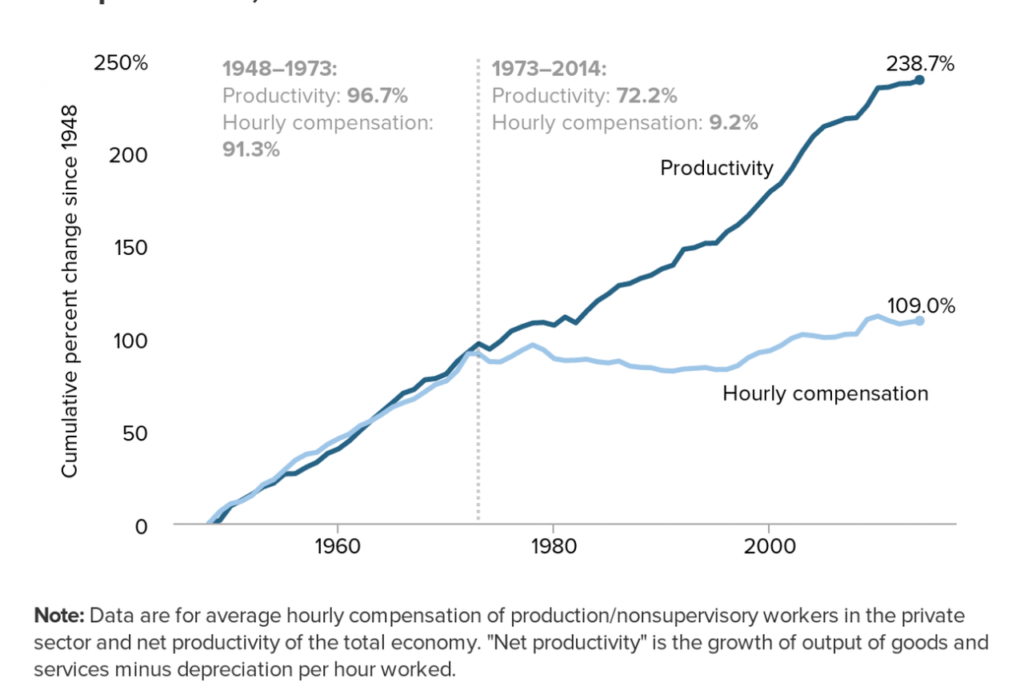
This oversupply of cheap labour has made it all but impossible for young, working-class people to get into a position where they own a home suitable to raise a family in. Young people in New Zealand have less than 40% of the house-buying power that their parents had, and it’s getting worse. Most aggravating of all, the Western Establishment has shown no interest in changing this state of affairs.

This refusal to change course, when the current course only benefits 5-10% of the population, is the ultimate reason for most of the current discontent in the Western World. We can conclude from the examples in Europe that any party taking a meaningful stand against the New Zealand Establishment has the potential to win up to 25% of the vote.

The New Conservatives are the most prominent of the parties on the right that oppose the Establishment. Therefore, they are the only party appealing to the Kiwi equivalents of the Sweden Democrats, National Rally, Liga Nord etc. voters. Their constituency is angry, white, rural and male – the same demographic that won the World Wars.

It’s obvious to most by now that there is no meaningful difference between National and Labour, both being business-as-usual neoliberals whose overriding concern is keeping the economy going at full tilt.

The big problem is that there’s no meaningful difference between these two parties and any of the Greens, ACT or New Zealand First. The Greens are even more globalist than Labour, and ACT are even more globalist than National. For anyone who opposes globalism the traditional choice has been New Zealand First, but their close co-operation with Labour and the Greens has now made clear to all that they are as globalist as the rest.

In the minds of most dissenters, this leaves few options. Leftist discontents have been fond of throwing a vote towards the Aotearoa Legalise Cannabis Party, and no doubt many who turn out for the cannabis referendum will do so again this year. Most of the discontent at the moment, however, is inspired by right-wing sentiments, and people motivated by this tend to despise cannabis users and consider them subhuman.

For the right-wing discontents, the realistic options are ACT and New Conservative.

As this column has previously argued, ACT could get 5% if they were willing to step into the alt-right niche, instead of merely following puppy-like behind the National Party. However, they are clearly not willing. ACT is perfectly comfortable being the party of big-money corporate neoliberals, because that ensures that they get plenty of funding. David Seymour flirts with anti-Establishment positions, but his heart isn’t in it.

For this reason, the New Conservatives are the only party that are primed to take advantage of the wave of discontent that is sweeping the West.

At the time of the most recent poll, the New Conservatives apparently had less than 1% support. However, that poll was almost two months ago. Since then, several things have happened, and all of them follow the general trend of stoking discontentment towards the Establishment. If they keep happening – if that great wave of populist discontent reaches New Zealand – the New Conservatives might rise all the way to 5% before September 19.

As Dan McGlashan showed in Understanding New Zealand, there is a very strong correlation between voting Conservative and voting National (0.77), and therefore a strong New Conservative vote is likely to significantly weaken the National vote. If it does, it will not shift the balance of power in 2020. In fact, it could even strengthen Labour’s position if the New Conservatives get less than 5%, thereby causing the votes of many people who would otherwise have voted National to be wasted.

The far-right populists have shown in Europe that, in times of high discontentment, it’s possible for them to attract voters from otherwise left-wing demographics. New Conservative will attract anti-Establishment voters from National, but they could also attract a significant number of voters from those who would otherwise have cast their lot in with Labour, New Zealand First or ACT. If they succeed at this, New Zealand could be in for an electoral surprise in September.

*

If you enjoyed reading this essay, you can get a compilation of the Best VJMP Essays and Articles of 2019 from Amazon for Kindle or Amazon for CreateSpace (for international readers), or TradeMe (for Kiwis). A compilation of the Best VJMP Essays and Articles of 2018 and the Best VJMP Essays and Articles of 2017 are also available.

*

If you would like to support our work in other ways, please consider subscribing to our SubscribeStar fund.