New Zealand Should Celebrate Halloween on ANZAC Day

Halloween is an autumn festival that recalls the spirits of the dead. There’s no sense in New Zealand celebrating it at the end of spring

All Hallow’s Eve, modernly known as Halloween, is a festival that marks a time of death and dying in the yearly cycle. In some rituals, the dead are invited to partake in the celebrations, either through being summoned by music or remembered in prayer. Commonly, stories are told about people who have passed. All of this makes sense on the Northern Hemisphere calendar, but not so much in New Zealand.

The purpose of the Halloween festival, befitting the harvest, is to remember the dead. This is fitting because it occurs at the end of October, which is near the end of autumn in the Northern Hemisphere, where the leaves have fallen dead from the trees and the nights are quickly becoming longer, colder and darker.

This is why it is associated with graveyards and skeletons and cobwebs and spiders and mummies, and any other symbol of death that one can think of. At the end of October in the Northern Hemisphere it’s closer to the midwinter to come than it is to the midsummer gone, and is only getting darker and colder, which naturally feels like death for those experiencing it.

What is understood by few, in New Zealand at least, is that the old festival schedule represents a deep natural understanding of the connections between the physical and the metaphysical world. Celebrating Halloween near the end of autumn when Nature is dying is the kind of tradition that deepens the connections of people to the natural world and gives their lives meaning.

This means that we in New Zealand shouldn’t celebrate Halloween on the 31st of October, when it’s light until almost 9p.m. and is sometimes as warm as summer (if the winds are blowing from the North or from Australia). Seven weeks before the summer solstice is a time when we should be conducting a fire festival to celebrate the return of light and warmth into the world at the apogee of the yearly solar cycle.

New Zealand already celebrates these natural traditions at the correct time in the yearly solar cycle in the form of ANZAC Day and Guy Fawkes’s Day.

ANZAC Day has become a de facto national festival with an emphasis on the remembrance of the dead and a dawn ceremony – exactly as Halloween was practiced at the end of autumn in old times. On this day we listen to a bugle call that is the same as that our ancestors would have heard a century ago, and we stand in silence to make it as evocative as possible, which symbolically summons those ancestors to stand by our side once again.

Seeing the world as a Great Fractal, this is analogous to how people like us celebrate Halloween in the Northern Hemisphere. It’s also around this day – April 25th – that the trees are either bare or yellow and red as Nature falls into the peak yin part of the cycle.

Guy Fawkes, while not a national holiday, nevertheless involves a public display of fire in a very similar fashion to Beltane in the Northern Hemisphere, or the bonfires of Walborgafton in Uppsala and Walpurgisnacht in Northern Europe. The purpose of the fireworks and bonfires in either case is to celebrate how the Sun itself will soon be lighting up the night as it approaches the zenith of its yearly cycle.

In other words, ANZAC Day and Guy Fawkes’s Day have become the Southern Hemisphere equivalents of Samhain/Halloween and Beltane/Walpurgisnacht respectively. These festivals occur at almost exactly the same times of the seasonal cycle, and feature the same themes of death and fire respectively, but if a person in the Southern Hemisphere was primarily following the calendar they could easily fail to notice this.

Not Kiwi Enough? If You Don’t Have Roots Here You’re Not a Kiwi At All

Very few New Zealanders would have the arrogance to move to another country and then lecture those people about who they are, and we shouldn’t accept it when it’s done to us

Three years as an immigrant in Europe taught me a lot about the concept of roots. This is a familiar concept to Maori people, who for a couple of centuries have had to tell the difference between Pakeha who were loyal to New Zealand and Pakeha who weren’t. The short of it is that one’s degree of belonging to a nation is a function of the roots that you have there.

In Sweden, like almost everywhere in the Old World, there is little question about who counts as a Swede. If you are Swedish then you have Swedish ancestors going back to the dawn of time, like all other Swedes. This is the common bond that gives rise to the Swedish nation.

If you do not have these roots you are not Swedish. This is a very simple and near-universally accepted belief. You can get a Swedish passport and become a ‘paper Swede’, and if you also speak Swedish this will entitle you to be treated with full dignity and as if your presence has as much value as anyone else – but you still won’t be Swedish.

Maoris in New Zealand have a similar concept. The depth of your roots tell you whether or not you can be trusted to stick around, or if you’re the sort of person who just wants to make a quick buck and then disappear (for obvious historical reasons, Maoris tend to be exceptionally wary of the latter sort of person).

The only real way to determine if a person is a Kiwi or not is whether or not they would stick by other Kiwis should a calamity befall the nation. This is a measure of the amount of solidarity that person has with other Kiwis. Would they stay to defend the country if it was attacked by foreign military forces? Or would they run away and leave Kiwis to their fate?

Fundamentally this is a question of solidarity. People with roots in New Zealand have cousins here, they have family friends in other cities, they have stories of how their great-great-grandparents or earlier descendants tamed the land, and this naturally leads to solidarity with other people who have similar roots and similar stories.

Golriz Ghahraman, who made the headlines today for lecturing Kiwis about our “internalised self-hate”, has no roots in New Zealand in any case, which is part of the explanation for the lack of solidarity she feels that she has received. Everything suggests that if the Kiwi people were ever truly in danger, she would rather move to another country than to stay and help out. If things got tough here, she would rather abandon us than face personal disadvantage by remaining here.

After all, she and her family have already done this once, so they have a track record of it.

She has no moral right to turn up in New Zealand as a migrant and then start lecturing us about what a Kiwi is or isn’t. The thought of a Kiwi moving to Iran and then presuming to tell the Iranians what’s what about who they are is ludicrous – so why do we accept the same in reverse? For someone with no roots in the country to act as if their verdict about our true nature has any weight represents an incredible arrogance and sense of entitlement.

Moreover, her implication that a refusal to allow New Zealand to become a dumping ground for the world’s human refuse is “race supremacy” is disgusting in light of the strong bonds of solidarity that exist between the descendants of British colonists and Maoris. These two groups get along as well as they do because they have shared roots in the country – it has nothing to do with race.

Obviously Ghahraman has spoken to very few Maoris in her lifetime, for if she had she would be aware that the strongest nationalist and anti-refugee sentiments in the country are harboured by them.

None of this is to argue that the National Front are correct or that they represent an appealing face of New Zealand. A New Zealand identity must not be based on a hatred of the other.

But for a Kiwi identity to exist, a certain degree of exclusivity is necessary. There is no other way of achieving this but to declare that people without roots in New Zealand are not Kiwis.

To make the argument that Kiwis with hundreds of years of roots in New Zealand are in the same category as people who just stepped off a plane and got a passport is preposterous. For one thing, it presumes to decide for those long-established New Zealanders who they are permitted to feel solidarity with. For another, it ignores the fact that almost every other culture in the world does the opposite.

Kiwis who are either Maoris or descended from colonists have a couple of centuries of family lore that relates to New Zealand that newcomers simply cannot have. They can tell you stories about how their great-grandmother cut her thumb off with an axe here, or how their grandmother broke her arm falling off a bicycle here, or how their grandfather used to go pig hunting here. Newcomers do not and cannot represent this culture.

At the end of the day, if people with deep roots in New Zealand want to exclude those who don’t, that’s their prerogative, and Iranian social justice warriors admonishing us to hate ourselves for it won’t make a mouseshit of difference.

Why the Religious Oppose Drug Use

The religious are closed-minded about a lot of things, and drug use is one of them

One oddity about the Western political landscape is taken for granted with no explanation given. It is that the religious, especially the fundamentally religious, oppose all drug law reform measures. Considering that drug prohibition does immense harm to drug users by subjecting them to a justice system built for murderers, rapists and thieves, it’s not clear why the religions would oppose this. This essay looks at why.

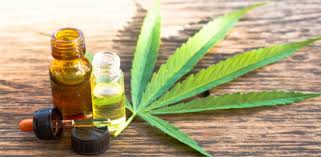
The religious prohibitions against drug use seem doubly strange if one considers that many of the world’s oldest religious traditions involve the use of cannabis. This is particularly true of the South Asian religions like Hinduism, which arose in the same general area in which cannabis was cultivated. Why would a tradition of behaviour intended to get one closer to God oppose the legalisation of an entheogen?

The truth is that religion, insofar as it’s practiced in our modern times, has degraded into the opposite of a spiritual practice. 21st century religion in the West no longer has anything to do with apotheosis or sharing any genuine insight into the nature of God that a person might have had.

21st century Western religion is just a sham, selling a communal sense of moral superiority, to people with low self esteem, for money. The people selling it don’t want their flock asking too many questions. They just want them regularly returning to be fleeced for a steady passive income.

In order for this ancient scam to be possible, people have to be separated from true spirituality. If a person is connected to true spirituality then they will instinctively understand that ridiculous stories like the need to mutilate the genitals of new-born babies, or that failure to worship God in the correct manner would doom someone to eternal punishment, or that a desert full of inbreds in Asia Minor was the holy land, are all ludicrous superstitions that serve only to distract people from genuine communion with God.

So religions need to deny people their spiritual birthright in order to make them confused enough to exploit them. Therefore, they need to deny them the entheogenic sacraments that the people have used since prehistory to connect themselves with God.

Entheogenic drug use leads to novel states of consciousness, which lead to original perspectives, which have a deconditioning effect on previous brainwashing, obsession or delusion. In this sense it is very similar to meditation, which also leads to novel states of consciousness that have a deconditioning effect (and it’s no coincidence that the religious have also tried to replace meditation with ineffective lizard-brain rituals such as prayer, chanting, contemplation etc.).

The religious oppose entheogenic drug use because it leads to genuine spirituality, because once this is achieved a person can no longer be scammed with fairy tales that are only convincing to the ignorant. It’s just a rehash of the many-thousands of years old story of wealth and power and the lies told to secure them.

Who Voted for the Ban 1080 Party?

Of all the smaller parties in the 2017 election, the Ban 1080 Party might be the strangest of them. There are other small single-issue parties – the Aotearoa Legalise Cannabis Party being foremost of these – but even these other parties have equivalents overseas. Who are the Ban 1080 Party, and what do we know about their 3,005 voters?

The Ban 1080 Party website argues for the need to stop making aerial poison drops that use sodium monofluoroacetate (1080) in New Zealand’s national parks and forests. The website’s tagline is “Protect our native birds” and they believe that aerial 1080 drops are a risk to the wellbeing of New Zealand’s birdlife.

A strong South Island focus was evident from the correlation matrix – the correlation between voting Ban 1080 Party in 2017 and living on the South Island was 0.37. The reason for this is probably because a greater proportion of South Islanders will live in the vicinity of a national park or a forest than North Islanders, who are much more urban on the whole, and it’s these people who access the outdoors who are most concerned about things like aerial poison drops.

This explain why the Ban 1080 Party also correlates strongly with other demographics that are well-represented on the South Island. The correlations between voting Ban 1080 in 2017 and other demographic categories were 0.34 for being a Kiwi of European descent, and 0.22 with median age. The only age bracket with a significant positive correlation with voting for the Ban 1080 Party was the 50-64 age bracket – the correlation here was 0.38.

If we examine measures of class we can see that Ban 1080 Party voters are poorer and less educated than the national average, which is especially striking if one considers that they otherwise belong to demographics that are positively correlated with wealth.

The correlation between voting Ban 1080 Party in 2017 and median personal income was -0.23, and the correlation between voting Ban 1080 Party in 2017 and having no NZQA qualifications was 0.44. Related to this is a correlation of 0.30 between voting Ban 1080 Party in 2017 and being a regular tobacco smoker. This paints a picture of a section of the community who are relatively simple people and who perhaps have been taken in by the hysteria a bit.

The rural nature of Ban 1080 Party voters is demonstrated starkly when it comes to the correlations between voting for them in 2017 and working in the agriculture, fishing and forestry (0.67) or mining (0.69) industries. There was also a significant positive correlation of 0.35 between voting for Ban 1080 Party in 2017 and working in the hospitality industry.

These three correlations reflect the high proportion of Ban 1080 Party voters who were enrolled in either the West Coast-Tasman or Clutha-Southland electorates.

Underlying that Ban 1080 Party voters are comprised of the outdoorsy kind of person who spends a lot of time in national parks and forests, there are significant positive correlations between voting Ban 1080 Party in 2017 and both being born in New Zealand (0.46) and being male (0.35).

Ironically, given their heavy conservation focus, the Ban 1080 Party does not attract followers who are like the Green followers. The correlation between voting Ban 1080 Party in 2017 and voting Green in 2017 was -0.09.

People who voted Ban 1080 Party tended to overlap with those who voted New Zealand First and, oddly, Aotearoa Legalise Cannabis Party. Voting for the Ban 1080 Party in 2017 had a positive correlation with voting for either of these parties: 0.41 for New Zealand First and 0.28 for the ALCP.

Part of the reason for this is the high level of Maori support for the party. This might sound contradictory, given that most Maoris live on the North Island, but a couple of statistics make this association clear. The first is the correlation between voting Ban 1080 Party and being Maori, which was 0.16, and the correlation between living on the South Island and being Maori, which was -0.26.

This tells us that South Island Maori were proportionately big supporters of the Ban 1080 Party, which is fitting considering that this demographic is extremely active in the outdoors with hunting and food gathering.