The Yin-Yang of History

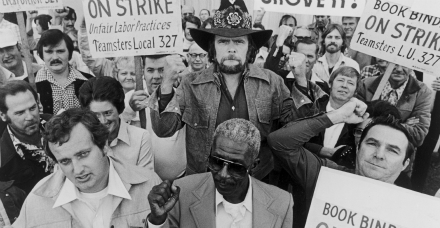
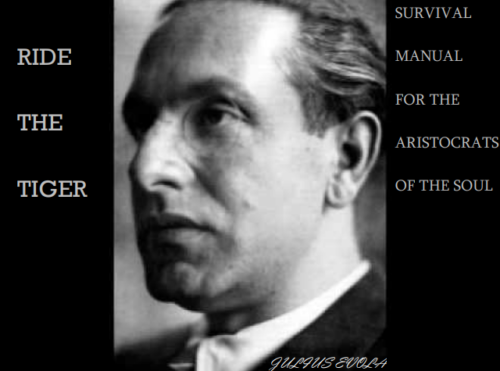
Traditionally speaking, when men like this start appearing among your youth, it’s the beginning of the end

The postwar period was a good one for the West. The major Anglo powers had seen all the challengers and potential challengers to their world hegemony bombed flat – partially by them, mostly by each other. With Nazism and Communism both falling to their knees, the liberal democratic order ushered in some good times for the people of the world. Peace and prosperity reigned… but the yin-yang of history tells us that nothing lasts.

The 1990s might be seen, from the vantagepoint of history, as the apogee of these good times. The Soviet Union had fallen, and China and India were yet to rise. Those of us who knew the course of history, however, knew this: good times create weak men. Weak mean create hard times. Hard times create strong men. Strong men create good times.

This is the yin-yang of history.

Good times are the equivalent of summer. Here, people don’t have to think very hard about how to survive and thrive. In the same way that it’s warm and sunny in summertime and so people don’t have to think very hard about what clothing to put on before they go outside, political conditions are favourable in the sense that the ruling class doesn’t have to think very hard about security without and solidarity within.

In the summertime of history, wealth abounds from the increased energy in the atmosphere. To most, these good times seem like they’re going to last forever. The more perceptive of people, however, even if they don’t know about the yin-yang of history, can often see the signs of collapse coming in advance.

The problem with good times, as Plato observed in The Republic, is that they create weak men. When times are good, the tendency is to let minor infractions slide, and although this can lead to an atmosphere of joy it also leads to indiscipline. This indiscipline is why the weak men are weak, and it’s this indiscipline that leads to the hard times.

It might be argued that this is the stage that the West finds itself in 2018 A.D. Our Baby Boomer leaders, who were raised with all the laxness of a generation that had got its fill of violence in World War II and had decided to bring up the Boomers with as little harshness as possible, clearly do not possess the mental discipline to educate themselves properly about the matters of the world.

In our age, it’s entirely possible to find a Western minister or higher who doesn’t know the basics about history or science. There is ample opportunity to learn about such things, of course, but our leaders would rather drink alcohol and watch television. Some, like the Belgian Minister of Health, have lost control of their weight entirely.

These weak men cast a shadow on their nations: the same as the shadows of autumn, who they represent. Their enemies observe this absence of intellectual power, and they move to take advantage.

Because the leaders have no discipline to educate themselves properly, they don’t understand what’s really happening in the world. This results in decisions getting made on the basis of how things used to be a long time ago (but no longer are), or how things might be in some idealised future world (instead of how they now are).

These poor decisions lead naturally to hard times. This stage in the cycle of history corresponds to the wintertime. Leaders lead the people in the wrong direction, causing them to dissipate their energies on follies or to spill them on battlefields for no reward. Here there is poverty – in fact, there is never enough of anything, and people learn to live with want.

Hard times can lead to bitterness, but in the same way that the bitterest cold of winter leads to a hardening in the form of ice, so too do the bitterest lows of life lead to a hardening of the heart. These hard men do not, at first, bode well for the people who they live among. To the contrary – the pitiless, ruthless nature of hard men make them natural criminals and killers.

But the hardness of hard men leads to discipline in those who come after them. This discipline – true iron discipline – is a matter of Will and therefore it is ultimately generated from within. These disciplined men are the opposite of the men we have in 2018 A.D. These disciplined men impose order upon their minds by devoting themselves to the correct course of study and behaviour.

Disciplined people who study hard represent the springtime of a people. It is for these people that VJM Publishing exists. These are the people who will rise up and make good decisions. They will come to occupy positions of leadership not because their backers paid for the best advertising, but because they are asked by their peers to occupy these positions on the basis of demonstrated wisdom.

Because of this wisdom, these leaders are not afraid to shy away from the knowledge necessary to make the correct decisions. This leads to increasing wealth and prosperity. So when the men of gold are recognised as such and are placed into positions of leadership on account of this, then the people will enter another golden age, or another age of summer.

*

If you enjoyed reading this essay, you can get a compilation of the Best VJMP Essays and Articles of 2017 from Amazon for Kindle or Amazon for CreateSpace (for international readers), or TradeMe (for Kiwis).

The Left Are the New Christians – For Better or Worse

The essence of Jesus Christ, as he appears to the modern Left, can be summed up in the word ‘nice’

In the West, most of us associate Christianity with the political right. It’s the right – especially in America – that makes the most overt appeals to the Bible and to Jesus. But if one looks past these appeals to the Christian religion, it seems that the political left is more interested in virtue signalling in general. Have they become the new Christians?

People profess Christian beliefs in order to virtue signal. The idea is that Jesus Christ was the perfect man and without blame, and therefore the more Christ-like a person appears to be the more perfect they are.

The problem with this mentality is that a people’s perception of what Jesus was like – and therefore, their conception of what entails moral perfection – is an artifact of the time and place they live in. Even worse, the popular perception of what Jesus was like is usually fabricated wholesale to suit the needs of the ruling classes.

It has now become fashionable to associate Jesus with socialism. Pope Francis, when not covering up for the numerous child abusers within his institution, makes a concerted effort to link his church with progressive attitudes to refugees, homosexuals and climate change. These are all trendy, left-wing issues that promote globalist solutions – which is what Francis really wants.

The idea is to recast Jesus as the “Lord of Nice,” and since it would be really nice to open your borders to anyone who wanted to wander in and claim welfare for the next 50 years, it’s presumed to be the sort of thing Jesus would have done. Jesus wouldn’t let refugees into his actual home, of course, or even his neighbourhood, because of the imperative to keep house prices up, and he definitely wouldn’t have opened the doors of his church to them, but he surely would have at least dumped them in poor neighbourhoods and offered to pay some tax to go towards their upkeep.

When Jesus was cast as the Lord of morally upstanding and wholesome, then it was the right wing that virtue signalled about how much they were like this. Now, the Baby Boomers that comprise the right don’t care about anything other than money, and Generation X don’t even care about that, so it’s left to the Millennials to virtue signal about how much they are like Christ.

In much the same way that the Biblical Christ taught people to give up concerns for pleasure in this material life, so does 21st-Century Jesus teach that we give up concern for maintaining basic law and order in our societies and protecting our women from rape and our vulnerable youth from physical abuse.

These are mere physical, material concerns, and will naturally dissipate. So it doesn’t matter if Muslims and Africans flood into the country in their millions and rape and destroy everything in sight – the fools simply don’t understand that the real pleasures are in the afterlife!

Of course, this is the reason why the Romans threw Christians to the lions in the Colosseum – the presence of any Abrahamic cult will inevitably cause the society that hosts it to rot from within unless action is taken. The left do not realise that they are controlled by whoever controls their perception of what Jesus Christ was like – and these people tend to be the major moneyed interests who control the mass media.

In other words, their sworn enemies.

The purity spiral of the neo-Christian Left has led to them breathlessly supporting the importation of rapists and religious fanatics into the West, in the hope that this masochistic niceness will be seen and appreciated as Christ-like and rewarded. In this sense, they are much like the original Christians who were too concerned with moral posturing to do anything about the hordes of Germanic invaders that ended up destroying the Roman Empire.

*

If you enjoyed reading this essay, you can get a compilation of the Best VJMP Essays and Articles of 2017 from Amazon for Kindle or Amazon for CreateSpace (for international readers), or TradeMe (for Kiwis).

A Person’s Politics Follow From Their Conception of Human Nature

People who believe that humans are more like bonobos than chimpanzees tend to be left-wing, and vice-versa

Most people with strong political opinions like to think that their opinions are perfectly logical, and derive directly from natural principles. Although most people are correct and reasonable in that their political opinions follow logically from their perception of human nature, the problem is that people have an extremely varied range of beliefs when it comes to their perceptions of human nature. In some cases, there’s no way of knowing who’s right.

Take, for example, the question of nature versus nurture. This is another way of asking: how much of a person’s behaviour can be attributed to natural causes that they were born with, such as genes, and how much can be attributed to environmental causes, such as how they were raised?

All positions on this extremely important question fall somewhere between 100% nature and 100% nurture, the former being known as “genetic determinism” and the latter being known as the “tabula rasa” (“blank slate”) theory. This sounds objective and scientific, but it really isn’t, because one’s attitude here will reflect one’s political opinions.

Take the question of Third World immigration and refugees, for example. A person who believes in genetic determinism might be extremely reluctant to open the borders to African or Muslim refugees, because they will tend to believe that these people will never and can never learn to behave in a civilised manner.

A person who believes in the tabula rasa theory, by contrast, will tend to believe that the wealth of Western nations is because of cultural reasons, and therefore African and Muslim refugees will acclimatise to the Western way of doing things, and therefore over time their crime rates and income levels will equalise with the native population.

Another area in which this occurs is with regard to bonobos and chimpanzees. Here we can also see that a person’s belief about the scientific, biological reality of the human species has a profound effect on their political beliefs.

Bonobos and chimpanzees are the two generally accepted chimpanzee species, and some (such as Jared Diamond) have argued that humans are so similar to them that we belong in the same group as them as a third chimpanzee. But from which of the two can we draw more accurate inferences about the true nature of behaviour in the human animal?

The bonobo is a creature of peace, the chimpanzee is a creature of war. This is evident from observing the two species in their natural habitat. The chimpanzee is violent, cruel, loves fighting and tends to cure anxiety by bashing a weaker chimp. The bonobo is hypersexual, loves bonding and grooming and tends to cure anxiety by having sex.

If a person believes that humans are more like the bonobo they will tend towards pacifism and polyamory, and will be left-wing. If a person believes that humans are more like the chimp they will tend towards violence and monogamy, and will be right-wing. This is true even if the person in question knows nothing at all about the ethology of the two species.

A third is whether or not people are naturally lazy. This one is especially difficult because attitudes to industriousness are biological to a major extent.

Few appreciate this, but in a cold environment people evolve to be active because physical activity keeps you warm, and this confers a survival advantage by staving off colds and hypothermia-related conditions. In a warm environment people evolve to be inactive because physical activity gives you heatstroke.

This is why pale-skinned people tend to work hard and dark-skinned people don’t – it’s not because of any moral failure on the part of the latter.

Consider this information in the context of whether or not we should bring in a universal basic income. The fear on the conservative side is that a universal basic income would cause certain demographic groups to become lazy and shiftless, and they would all stop working immediately and live the parasitic lifestyle natural to their kind.

If a person’s conception of human nature is not that people are lazy but rather that people are industrious, they will be much more likely to support a universal basic income out of the hope that it will free people from drudgery and therefore enable them to put their energies into creative endeavours of more benefit to human happiness.

In summary, it’s usually possible to surmise a person’s political opinions from their belief in human nature. Political opinions are not formed in a vacuum – they are informed by many factors, one of which is a person’s belief in how other people naturally behave given a certain schedule of reinforcements and punishments.

*

If you enjoyed reading this essay, you can get a compilation of the Best VJMP Essays and Articles of 2017 from Amazon for Kindle or Amazon for CreateSpace (for international readers), or TradeMe (for Kiwis).

New Zealand First Risks Destruction If It Opposes Medicinal Cannabis Reform

From Jim Anderton to Peter Dunne and now to Winston Peters, New Zealand has always managed to find one piss-soaked old bastard to hold up cannabis law reform

The New Zealand First Party won 8.7% of the votes in the 2014 General Election, which entitled them to 11 Parliamentary seats. Strategic blunders saw them fall to 7.2% of the vote in 2017, still above the 5% threshold but precariously so. New Zealand First is at risk of committing another strategic blunder by opposing Chloe Swarbrick’s Medicinal Cannabis Bill, and this article will explain why.

Dan McGlashan’s Understanding New Zealand provides us with an explanation for what happened here. We can see that the correlation between being Maori and voting New Zealand First was initially very strong, at 0.66 in 2014, when they did very well in the Maori seats. By 2017 the strength of this correlation had fallen to 0.38, as a large proportion of that Maori support abandoned the party.

Between 2014 and the 2017 General Election, New Zealand First came out in opposition to those same Maori seats in which they had done so well. This was a massive error because Maori people are extremely reluctant to cede any kind of political power to the Crown, for the understandable reason that when they have done so in the past, they ended up losing heavily from it.

New Zealand First were punished at the ballot box in 2017, losing 1.5% of their vote, mostly from Maoris who switched back to to Labour.

Between 2017 and the 2020 General Election, we may see another fall in New Zealand First support, and for similar reasons, only this time it may be catastrophic. The difficulty is that Winston Peters risks betraying the wishes of many of the people who support their party by opposing Swarbrick’s Bill.

On the Bill, Peters is quoted as saying “It goes far too far. There’s no restrictions at all, it’s random, it’s haphazard, it’s free for all.” Whether this means New Zealand First will support the Bill through its first reading or not is unclear, but if they vote to dismiss the Bill they run the risk of self-destruction, because they will alienate many of their core supporters.

Invalid’s beneficiaries are heavy supporters of New Zealand First – the correlation between being on an invalid’s benefit and voting New Zealand First in 2017 was 0.47, which is moderately strong. Many of these invalids have found medicinal relief in cannabis, which is reflected in the strong correlation of 0.79 between being on an invalid’s benefit and voting Aotearoa Legalise Cannabis Party in 2017.

These stats suggest that there are a large number of cannabis-using invalids who voted New Zealand First at the last election, and further New Zealand First opposition to cannabis law reform risks alienating these people further.

Although New Zealand First does get more support from older people than younger ones, this is nowhere near as pronounced as most people think it is. The correlation between median age and voting New Zealand First in 2017 was only 0.26, in comparison to the correlation of 0.78 between median age and voting National in 2017.

Therefore, concern about the opinions of elderly Boomers with regard to cannabis ought not factor too heavily in New Zealand First’s calculus. The vast majority of young people support proper cannabis law reform, and New Zealand First risks tarnishing their image among these voters through their conservatism on this issue.

Perhaps the biggest risk that New Zealand First runs by opposing this medicinal cannabis bill is through losing the support of the New Zealand-born, who are not only the biggest New Zealand First supporters by far but also the biggest cannabis law reform supporters by far. The correlation between being New Zealand-born and voting for New Zealand First in 2017 was 0.54, which is moderately strong, but the correlation between being New Zealand-born and voting for the Aotearoa Legalise Cannabis Party in 2017 was 0.73.

Cannabis use is an intrinsic part of Kiwi culture, and it’s not going anywhere. If the New Zealand First Party really wants to make good on its pretensions to represent Kiwis and our culture, they need to accept the fact that we really enjoy using cannabis and are going to keep doing it.

New Zealand First might be tempted by conservative instincts to oppose this bill, but you can’t piss directly in the face of your own supporters in that way and expect that they will turn out to support you when you ask for it at election time. Maoris, young people and invalids are all heavily impacted by our ludicrous cannabis laws, and young Maoris doubly so. They have been crying out for relief, and a recreational alternative to alcohol, for decades.

New Zealand is already 22 years behind California on the medicinal cannabis issue, and New Zealand First is causing this country to fall further and further behind, mostly at the expense of their own long-term voters. If they don’t keep up with the state of play and research in other jurisdictions they risk destruction at the hands of the voters.

*

If you enjoyed reading this essay, you can get a compilation of the Best VJMP Essays and Articles of 2017 from Amazon for Kindle or Amazon for CreateSpace (for international readers), or TradeMe (for Kiwis).