1. The Fundamental Masculine Attitude is the will to impose order upon chaos.
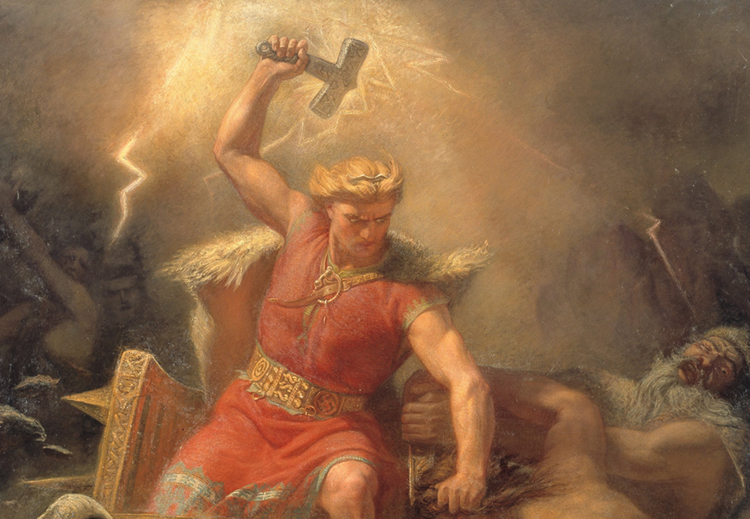
2. Masculinity is depicted as red, which represents the rage arising from the suffering caused by excess chaos.
3. The will to impose order upon chaos is ultimately inspired by the rejection of suffering. The masculine assumes authority of the local environment and imposes an order that keeps the suffering out.
4. The Fundamental Masculine Attitude is expressed in the material world through both the masculine and the feminine elements.
5. Masculinity in the aspect of clay involves determination to survive. This aspect of masculinity imposes order upon death, and thereby upon life.
6. Masculinity in the aspect of iron involves physical rectitude. This aspect of masculinity imposes order upon the body.
7. Masculinity in the aspect of silver involves intellectual rectitude. This aspect of masculinity imposes order upon the mind.
8. Masculinity in the aspect of gold involves spiritual rectitude. This aspect of masculinity imposes order upon the spirit.
9. Masculinity in the aspect of earth involves the fortification of order. This involves making order even more orderly, so that chaos is doubly suppressed.
10. Masculinity in the aspect of water involves the vitalisation of order. This involves strengthening order where it exists but is weakening.
11. Masculinity in the aspect of air involves the refinement of order. This involves smoothing out the cruder aspects of the existing order so that it’s less objectionable.
12. Masculinity in the aspect of fire involves the inspiration of order. This involves the inspiration of the will to impose order upon chaos.
13. For the masculine, even sexual reproduction involves the imposition of order upon chaos, because the sperm cell carries little apart from information.
14. Successful application of the Fundamental Masculine Attitude leads to rectitude.
15. A failure to apply the Fundamental Masculine Attitude leads to the feminine leading the masculine, which leads to chaos and suffering.
16. It can therefore be said that the essence of masculinity is rectitude, which is the same as the will to impose order upon chaos.
17. A respectable man is one who has rectitude. Through this quality, all other good qualities of masculinity are possible.
18. The Fundamental Masculine Atittude is also known as the Overcoming Will, because it’s the energy that leads a person or a group up the right-hand side of the Quadrijitu.
*
This chapter is an excerpt from Elemental Elementalism, the foundational scripture of the new religion of the Age of Aquarius.
1. The masculine elements are waypoints along the Great Masculine Axis.
2. These elements reflect different frequencies.
3. There are an infinite number of ways of dividing the Great Masculine Axis into elements. Some of these configurations make more sense than others. The most popular are the twofold, fourfold and sevenfold divisions.
4. The sevenfold division of the Great Masculine Axis is represented by the Mithraic Ladder, which depicts how lead ascends to tin, how tin ascends to iron, how iron ascends to copper, how copper ascends to silver, how silver ascends to mercury and how mercury ascends to gold.
5. The first element, at the lowermost point of the Great Masculine Axis, is lead, immortalised as Cronus. The frequency of this element is saturnine.
6. Alchemical lead is soft, dull and grey. It represents the lowest possible frequency and the reality that life is fundamentally a battle for survival against the natural world.
7. The second element, immediately above lead on the Great Masculine Axis, is tin, immortalised as Zeus. The frequency of this element is jovial.
8. Lead ascends to tin by becoming brighter. This reflects that winning the battle for survival against the natural world is inherently pleasurable.
9. Alchemical tin is soft, bright and grey. It represents a very low frequency and the will to simple pleasure and entertainment.
10. The third element, immediately above tin on the Great Masculine Axis, is iron, immortalised as Ares. The frequency of this element is martial.
11. Tin ascends to iron by becoming harder. This reflects that anyone who overcomes the natural world must then clash with those others who overcame the natural world.
12. Alchemical iron is hard, dull and blue. It represents a low frequency and the will to dominate physically.
13. The fourth element, immediately above iron on the Great Masculine Axis, is copper, immortalised as Aphrodite. The frequency of this element is capricious.
14. Iron ascends to copper by becoming colourful. This reflects that the purpose of physical domination is to attract women.
15. Alchemical copper is hard, bright and red. It represents a moderate frequency and the will to romance and to make love.
16. The fifth element, immediately above copper on the Great Masculine Axis, is silver, immortalised as Artemis. The frequency of this element is brilliant.
17. Copper ascends to silver by becoming brighter. This reflects that knowledge brings order to the material world.
18. Alchemical silver is hard, bright and white. It represents a high frequency and the will to dominate intellectually.
19. The sixth element, immediately above silver on the Great Masculine Axis, is mercury, immortalised as Hermes and Athena. The frequency of this element is mercurial.
20. Silver ascends to mercury by quickening. This represents how true intelligence readily perceives the divine behind all things, and, by doing so, apotheosises.
21. Alchemical mercury is liquid, bright and grey. It represents a very high frequency and the will to exult oneself.
22. The seventh element, at the uppermost point of the Great Masculine Axis and immediately above mercury, is gold, immortalised as Apollo. The frequency of this element is radiant.
23. Mercury ascends to gold by becoming radiant. This represents how knowledge of the divine, and the will to know the divine, are the greatest of all goods.
24. Alchemical gold is soft, bright and yellow. It represents the highest frequency of all and the will of the divine.
25. Apotheosis is a matter of transforming the lead of one’s station of birth into the gold of unity with the will of the divine. This requires passing through all of the masculine elements, in turn.
26. The will to apotheosise is the most popular of all the Minor Aspirations.
*
This chapter is an excerpt from Elemental Elementalism, the foundational scripture of the new religion of the Age of Aquarius.
1. The Great Masculine Axis is the axis connecting the Summer Pole of the Quadrijitu with the Winter Pole.
2. This axis represents how rectitude enters the material world from the mind of the divine, as a consequence of the will of the divine.
3. The nature of the masculine is to distinguish vertically. This it does by distinguishing between good and bad, valuable and not valuable.
4. The Great Masculine Axis distinguishes all fragments of consciousness from each other on the basis of which has the most rectitude.
5. All of the fragments of consciousness that exist within the Conceivable Universe have their own unique frequency, depending on their degree of rectitude.
6. The higher the frequency a fragment of consciousness has, the higher it is on the Great Masculine Axis.
7. The Great Masculine Axis is a hierarchy of spiritual rectitude.
8. The Summer Pole of the Great Masculine Axis is equivalent to a frequency of 1.
9. The Winter Pole of the Great Masculine Axis is equivalent to a frequency of 0.
10. All frequencies, without exception, can be found somewhere between these two poles.
11. The red and blue dots represent how rectitude and devotion can be found, in varying proportions, all throughout the material world.
12. The red and blue dots also represent how an absence of rectitude and devotion can be found, in varying proportions, all throughout the material world.
13. The Great Masculine Axis is represented materially by the lightningbolt, whose genius lights up the whole world.
14. The Summer Pole of the Great Masculine Axis is superficially understood to be good, the response to which is devotion.
15. The Winter Pole of the Great Masculine Axis is superficially understood to be evil, the solution to which is destruction.
16. The Summer Pole of the Great Masculine Axis is fundamentally understood to be theognosis, the response to which is also devotion.
17. The Winter Pole of the Great Masculine Axis is fundamentally understood to be theoamnesis, the solution to which is rectitude.
18. The Great Masculine Axis explains the different level of will among all beings. Rectitude is understood to be a prerequisite of the capacity to exercise one’s true will.
19. The Great Masculine Axis can be broken into any number of points. The three most common arrangements are twofold (good and evil), threefold (good, neutral and evil), fourfold (gold, silver, iron and clay) and sevenfold (gold, mercury, silver, copper, iron, tin and lead).
20. The purpose of combining the feminine elements at the correct proportions is to climb the Great Masculine Axis. Depending on the physical environment, certain frequencies will be more harmonious than others.
*
This chapter is an excerpt from Elemental Elementalism, the foundational scripture of the new religion of the Age of Aquarius.
Enormous confusion surrounds the discussion of religion. The term ‘religion’ seems to encompass some extremely different, even contradictory, attitudes and ideas. This essay argues that a major conceptual division needs to be made: between spiritual religions and political religions.
A spiritual religion is a doctrine that, if followed, will alleviate spiritual suffering. The alleviation of suffering is as close as this world gets to a universal moral good. As such, spiritual religions are seen as something holy. So both spiritual religions and political religions claim to be spiritual religions.
But in the same way that visiting a prostitute and having sex is not really making love, even though it appears similar, political religions are not really spiritual.
A genuine spiritual tradition is not concerned with the will for temporal and material power. A doctrine such as Buddhism teaches its adherents that gratifying such desires will not lead to happiness. And it is correct – once a person has met their basic physical needs, further happiness comes not from physical excess but from meeting social, intellectual and spiritual needs.
A political religion is a doctrine that is primarily concerned with temporal and material power. The authorities of a political religion are not concerned with alleviating suffering – they want power, money, fame, prestige. For them, suffering is a good thing, because it gives them a chance to portray their political enemies as the ones responsible, and themselves as the saviours.
The difference between a political religion and a political non-religion (such as Communism) is that the non-religion doesn’t attempt to cloak itself in the shroud of divine morality. Communism was happy enough teaching that consciousness is extinguished upon the death of the physical body. Political religions, by contrast, admit that consciousness survives the death of the physical body – but there’s a catch.
The catch is always this: your consciousness will reincarnate in a place of suffering in the next world unless you obey the political religion in this world. So the political religions demand that you give them money, time, labour and devotion in this world on the threat of suffering in the next.
The foremost examples of political religions are the Abrahamic cults, in particular Christianity, Islam and Judaism. Each of these has aped the spiritual wisdom of their age to create an ideological monster. Each of these teach that only by submitting to the priesthood can one achieve the cessation of suffering. The priesthood speaks for the divine – a power granted only to them. Therefore, obey or suffer.
The characteristic sign of a political religion is that they cause suffering in order to gain power. Relentless, grinding misery causes people to look to higher authorities for solace, which is why Abrahamism is doing so well in Africa and the Middle East. To this end, political religions usually support the persecution of women, homosexuals, prostitutes and drug users.
Also characteristic of political religions is that they drive out other authorities from cultural space, a kind of memetic brood parasitism.
All political religions decree that no other religion may co-exist with them. The Hebrew Bible states that “He that sacrificeth unto any god, save unto Jehovah only, shall be utterly destroyed” (Exodus 22:20), and the Koran commands follows to destroy non-believers at numerous points (2:191-193), (3:56), (4:74), (4:89), (5:33), (8:12), (8:39), (9:5), (9:73), (9:123), (47:3-4), (47:35), (48:29), (66:9).
Following this imperative, political religions do everything they can to destroy spiritual religions in any territory they control. In much the same way that criminal gangs of narcoterrorists don’t allow outsiders to operate on their turf, neither do criminal gangs of spiritual terrorists. True spiritual religions don’t need to aggress against other religions, because they know that the falsehoods of other doctrines will reveal themselves.
All spiritual religions understand that accumulating earthly power and wealth, gratifying as it may be to the ego, doesn’t provide spiritual solace. As such, true spiritual religions never have a “prosperity gospel” in which it is taught that material wealth is granted by God as a reward for righteousness. Neither do they hearken back to past times of military dominance as golden ages.
Buddhism, for example, doesn’t care if people don’t follow it. Anyone is free to reject the Buddha’s doctrine and indulge in sensory pleasures. But when a person tires of such indulgence, and they feel that it’s time to strike a balance between indulgence and abstinence, then the Buddhists are there to explain their methodology.
Islam, by contrast, cares a lot. Thirteen countries impose the death penalty for apostasy, all of them Muslim ones. This means that children are considered to be Muslim when they are born, and if they don’t like it as adults, they are killed. At the time of writing this essay, almost 1,000 people had been killed in the past 30 days in Islamic terror attacks. All of the killers were following the admonition of their religion to expand its political influence.
The irony, of course, is that all this makes spiritual religions look spiritual, and political religions look material, and this pushes all genuinely spiritual people towards the former, and all genuinely base people towards the latter. This explains why hedonistic self-aggrandisers, when they discover religion in adulthood, tend to discover political ones.
The clash between spiritual and political religions has defined much of the world’s history, and may define much of its future. There are many signs that suggest the Abrahamic cults are slowly uniting under one banner, and, when they do, they will inevitably try to conquer the world or be destroyed in the attempt.
As has been pointed out elsewhere, Abraham was probably the world’s first true psychopath. The cult he started developed into the greatest collective evil the world has ever known. This evil reflects Abraham’s sadistic desire for total control and dominance, something shared with all his followers. Indeed, Abraham could be said to be the father of political religion.
On the Mithraic ladder, Abrahamism is equivalent to the lead, the basest possible frequency. The spiritual religions, on the other hand, are equivalent to the gold. They are akin to divine radiance beaming down on us. Thus, although political and spiritual religions may appear very similar on the surface, it’s necessary to draw a sharp distinction between them. Ultimately, they reveal their true interests by their actions.