Dear Jacinda: Use Trudeau As Your Model, Campaign On Cannabis Law Reform

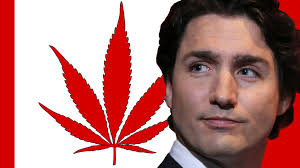
Dear Jacinda – there isn’t the time to go into much detail, so I’ll be brief. If you want to win next month you will have to copy Justin Trudeau and how he won in Canada. If you want to copy Justin Trudeau you’ll have to demonstrate that you’re listening where the other politicians have not been – and that means that you ought to campaign on comprehensive cannabis law reform in New Zealand.

Trudeau campaigned on several major policy planks, but one of them was that cannabis prohibition was a demonstrated failure and the law prohibiting it needed repealing as soon as possible. This was not a shock to the Canadian electorate in 2016 because there had already been four years to observe the effects of legalisation in Colorado and in other places. It will not be a shock here either.

By now even the South African High Court has ruled that cannabis use is a human right, as they did earlier this year. It’s fair to say that if a Third World country like South Africa has an intellectual tradition deep enough to understand the need for cannabis law reform, then New Zealand ought to be able to claim the same.

So with this issue you could demonstrate a clear point of difference with not only Andrew Little, but also with Bill English and Winston Peters. You can also prevent the Greens and the Opportunities Party from outflanking you.

One of the reasons Little was not successful as Labour Leader was his refusal to listen to the people. Cannabis users, all 400,000 of us, tried to tell him that we were tired of being told that our issue wasn’t important and that we’d have to keep waiting. We’ve been waiting since 1996.

All we got was talk about how cannabis users would have to keep going to prison because cannabis causes brain damage, despite us providing ample evidence that prohibition caused far more harm than cannabis itself ever could.

What is sitting before you is the easiest open goal ever offered to a Labour Party leader. Kick it in!

Introducing cannabis law reform to an electorate where up to a third of them are directly criminalised by prohibition, and over two-thirds of them support a change to the current law, will be much easier than introducing civil unions was to an electorate where barely one in a hundred people were affected.

The cannabis issue is unique in that it cuts across a wide range of demographics. The correlation between being Maori and voting for the Aotearoa Legalise Cannabis Party in 2014 was a whopping 0.89 – strong enough that it can fairly be said the vast majority of Maoris have an interest in cannabis law reform.

Considering that there is also a strong correlation between being Maori and not voting, it’s clear that there’s a large block of cannabis-friendly Maoris who have been, up until now, reluctant to vote at all. Although the primary reason for this is general disenfranchisement and not cannabis specifically, the refusal of our political class to listen to Kiwis on cannabis law reform is a major contributor to that disenfranchisement.

This column has previously argued that cannabis prohibition is itself a racist law because of its disproportionate effect on Maoris. It has long been noted that the major losers from cannabis prohibition are the same demographics that vote Labour, so why not give your constituency a break by legalising the recreational drug that most of them prefer to alcohol?

The correlation between voting Labour in 2014 and median age was -0.70, and with voting Aotearoa Legalise Cannabis Party in 2014 and median age it was -0.55, so it’s apparent that there are broad overlaps between Labour voters, cannabis users, and the disenfranchised young and Maori who don’t see enough representation in the system for it to be worth voting.

Change Labour’s stance on the cannabis issue, and you can bring enough non-voters to the polls to change the outcome of this election.

New Zealand Should Only Let Female Refugees In

The hordes of refugees that Europe has let in have mostly been male, and the results have been catastrophic – let’s do the exact opposite

New Zealand, like much of the rest of the Western world, is stuck between a rock and a hard place on the refugee issue. On the one hand there are humanitarian concerns, on the other there is evidence that letting people from certain cultures into your own country drastically lowers your own quality of life. This essay explores a middle ground: only let female refugees in.

With regards to the humanitarian concerns, it can fairly be stated that one refugee life saved is equal to any other refugee life saved. Therefore, if New Zealand could take an extra 1,000 female refugees at the cost of taking 1,000 male refugees, it would not be a net loss on utilitarian grounds.

So this policy is neutral in terms of humanitarian impact. But with regards to lowering one’s own quality of life, it’s obvious that the refugees who do lower the life quality of their host societies are almost always men.

The European experience has demonstrated that to open the door to males from the sort of cultures that are currently producing the majority of refugees is to betray your own womenfolk.

It’s now common for European women to report feeling too afraid to go outside at night – an absolute disaster from the perspective of law and order, let alone the perspective of needing to protect your society’s most vulnerable.

Given that letting male refugees into your country has had the proven effect of inviting the sexual harassment and rape of your own women, why not simply refuse to let in male refugees full stop?

Female refugees don’t commit crimes at anywhere near the rate of males, and they almost never commit the violent sex crimes that often create life-long psychological trauma. So why not cut the supply of these criminals off at the source?

Doing so would also have the effect of greatly allaying the entirely reasonable fears that members of the host society have about mass resettlement of refugees in their neighbourhoods. Banning men would have the effect of banning virtually all crimes of sexual or physical violence, which ought to make the host population much more receptive to the humanitarian needs of the women who would be let in.

So if there are genuine humanitarian reasons that obligate the West opening its borders to the world’s rejects, it’s best to do so in a way that minimises the potential blowback from the host society. This means filtering out those among the refugees who cause most of the blowback.

After all, not much makes a person want to burn down a refugee shelter more than hearing news about another young girl molested by an adult male refugee.

From the perspective of the other side, nothing would incentivise the remaining men in fucked-up countries to unfuck themselves more powerfully than raising the spectre of a future without women.

They would be forced to choose between settling their petty squabbles and religious shitheadedness and finding a way for everyone to live in peace, or living in a world where sexual opportunities were limited to goats and camels.

Some critics might contend that such a policy will just make those places crack down on women’s rights harder and restrict their freedom of travel even more.

If that was the result, that would simply prove that the culture of these places was fundamentally opposed to women’s rights and to freedom in general, and thereby demonstrate the moral obligation that we have in the West to give women shelter from the men enforcing the values of that culture.

Perhaps the best aspect of this policy is that it appeals to the innate sense of justice that most people have. After all, it is the men of these places that are creating all the conflicts that are causing each other to flee, so why should women be punished for any of it?

Let the men sort it out in the absence of women, as they were forced to do in Lysistrata.

Beneficiaries Are The Only True Environmentalists

The only truly environmentally responsible way of life is to consume less than a sustainable level of the world’s resources. In the West, it’s mostly only those on welfare who manage this

Humans now need the equivalent of 1.5 planet Earths to sustain our current level of consumption, and if we all lived like Americans it would take four. In 2013 we reached “Earth Overshoot Day” – the day by which we had used an amount of the Earth’s resources equal to what it can replenish in a single year – by August 20, and every year it draws closer.

The reason why we would need four Earths to all live at the same standard as Americans is because Americans consume so much more of the planet than the average human. The average American consumes 25 tons of the world’s natural resources every year, and they operate 25% of the world’s motor vehicles, despite only being 4% of the population.

This is broadly true of Westerners in general.

We buy big cars, often with every family member having their own, we buy boats, we go on overseas holidays, we buy enormous amounts of plastic, especially in packaging, and we recycle electronic appliances well before they become obsolete.

One thing can be said for certain about all this consumption – namely, that it will end. The planet is finite whether we like it or not. Sooner or later, like sand through an hourglass, the supply will run out and activity will diminish.

Let’s be honest: we don’t work to live anymore, at least not in the West. Technological advancement has made it unnecessary. The average Westerner has so much accumulated capital increasing the value of their labour that a surplus exists easily large enough to feed us all.

We work because we want more stuff. Fuck Earth Overshoot Day! We want an even bigger car, the latest Playstation, and to upgrade to a McMansion – and we want it now!

We could collectively cut down to working half the number of hours that we do, but we won’t, because the need to accumulate stuff is its own moral imperative.

The GDP per capita in America is around USD57,000 per year, which is close to $75,000 in New Zealand dollars. If Americans use four times as much of the Earth’s resources than what the Earth can sustain, then we can put a dollar figure on the upper bound of possible consumption.

One quarter of $75,000 is $18,750 per year. This figure represents the maximum level of consumption that humans would have to limit ourselves to in order to collectively avoid ecological collapse.

Curiously, $18,750 is a level of consumption roughly equal to what New Zealand beneficiaries are already forced to live on, which raises an interesting point – in the long run, environmental laws dictate that the average person on Earth cannot be any wealthier than the average New Zealand beneficiary already is.

In other words, almost every Westerner with a job – who in almost every case will be spending far more than $18,750 a year – is consuming an amount of the world’s resources that is not sustainable in the long run.

In the long run, the average person cannot consume the world’s resources at a rate greater than that of the current average New Zealand beneficiary.

Considering that all of us will eventually have to cut down to this level of consumption, whether we like it or not, the people who are currently beneficiaries are actually giving us a glimpse of what level of wealth is realistically sustainable.

In that sense they are harbingers of the future, unlike the rest of us currently consuming an unsustainable amount of resources. Thus it could be argued that beneficiaries are the true environmentalists.

National and the Greens Could Form A Globalist Alliance Post-Election

A recent leaked poll suggests that the Green Party might find themselves snookered after the election on September 23rd. Although they are polling fairly well, Labour is not, and so the Green-Labour alliance might find themselves dependent on New Zealand First, who the Greens have intimated they cannot work with.

The Greens have also suggested that they would not like to support a Labour-New Zealand First minority Government on the grounds that New Zealand First is “racist”.

This raises the disaster scenario of New Zealand First choosing to go into coalition with National, which would form a comfortable majority, with the Greens left out in the cold again.

Sounds like an everyday drama at a girls’ high school – and the participants are every bit as catty – but for us plebs out there in New Zealand it’s what decides whether we eat at the end of the week or not.

One scenario, however, has been relatively ignored – the Greens can always come around from the other side and form a globalist alliance with the National Party.

National wants to remove capital controls; the Greens want to remove border controls. This makes the two of them natural bedfellows.

After all, the only reason why the Greens are making noises about how “racist” New Zealand First is is because New Zealand First represents the nativist axis on the great globalist-nativist spectrum (that may define the politics of this century).

In other words, New Zealand First represents the people who are born in New Zealand – principally the Maoris and the majority of the white people.

But as Understanding New Zealand demonstrates in the section about Maori voting patterns, the Greens are themselves clearly more of an established power structure party than New Zealand First.

The correlation between voting New Zealand First in 2014 and being Maori was 0.66, whereas between voting Greens in 2014 and being Maori it wasn’t even positive, being -0.09.

So why would the Greens make a big song and dance about how not wanting tens of thousands of “refugees” is racism when the racism in question is an expression of the will of the indigenous Maori people?

Globalism.

The commitment of the Green Party to the globalist dream of destroying any connection between land and ethnicity is so great that they’re willing to further water down the Maori presence in Aotearoa by bringing in 5,000 “refugees” a year.

This may be so strong that, by itself, it tips the true home of the Greens away from the Maori they claim to be taking care of (and subsequently from New Zealand First and Labour) and towards the wealthy white people in the National Party, for whom any connection between land and ethnicity is merely an impediment to business.

Furthermore, as is also discussed in the Understanding New Zealand section about Green voters – “…the correlation between voting Green in 2014 and median personal income is 0.31, which is not as strong as National’s 0.53 but is much closer to that than to Labour’s -0.51…”

The Greens are, simply put, a much wealthier and whiter group of people than either Labour or New Zealand First.

The Greens essentially represent the urban wealthy, and as such it’s arguable that they could more naturally form an alliance post-September with the rural wealthy in the National Party, rather than the urban poor in the Labour Party.

Of course, an alliance with the rural poor – the diametric opposite of the Greens – in New Zealand First would be the most difficult of all.

*

Dan McGlashan is the author of Understanding New Zealand, published by VJM Publishing in the winter of 2017.