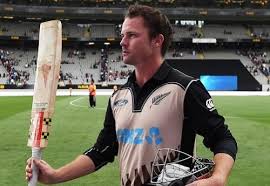
Could Amelia Kerr Play For the Black Caps?

Cricket is a game of skill, not strength, and Amelia Kerr has bags of that. Could she compete with the men?

The main reason for dividing sports teams into men and women is because this reflects the basic division of labour that has occurred in nature: into male fighters and female reproducers. This is the same logic as dividing boxers into weight divisions – that the categories are so different that to pit them against each other is not a fair competition. As this essay will examine, one niche within sports where the female body has an advantage over the male one is that of legspinner.

The chance of a female competing with men in heavyweight boxing, absent some wicked cybernetic arms or computer targeting systems in bionic eyes, is practically zero, and the same could be said of Greco-Roman wrestling or rugby. These sports are too similar to actual fighting for women to compete with men, who are the result of millions of years of natural and sexual selection of fighting skills.

Cricket is, like other sports, a metaphor for combat, but it is not like other sports. It’s not primarily a contest of strength, speed, size, height or aggression. Cricket is a contest of skill, guile, concentration and nerve – qualities that might be of immense value in the conduct of warfare, but not so much in actual fighting.

This is why the sportsmen who become the world’s top cricketers are very seldom in top fighting shape. Kane Williamson, Steve Smith, Joe Root and Virat Kohli are far from musclemen; Rangana Herath, who just moved past 400 Test wickets, is known as “Fatty” for his distinctive pot belly and the less said about Dwayne Leverock the better.

There’s a lot of skill in fast bowling, but physical attributes are crucial. Although the most skilled fast bowlers – like Dale Steyn, Trent Boult and Jimmy Anderson – are not particularly tall, they are all far from short. Moreover, any player lacking those skill levels almost has to be tall in order to make it.

In either case, women can’t compete with men in fast bowling because so much of the action of slinging a weight (like a ball) is a function of shoulder strength, and shoulder strength is one of the ways in which men are stronger than women by the greatest amount.

There’s a lot of skill in batting, but there’s also a lot of strength. Williamson and Kohli might trade on skill but they are far from weaklings. No woman could realistically compete with either player, much less the heavy hitters like Martin Guptill, Chris Gayle, David Warner or Brendon McCullum.

As in the two categories of cricketer above, there’s a lot of skill in spin bowling, but in this regard there is no benefit at all to being strong.

In fact, having big muscles might be a disadvantage. Muttiah Muralitharan, the single most successful spin bowler in the history of cricket, had famously rubbery wrists, extremely flexible, which enabled him to sling the ball with a whipping action that imparted incredible turn.

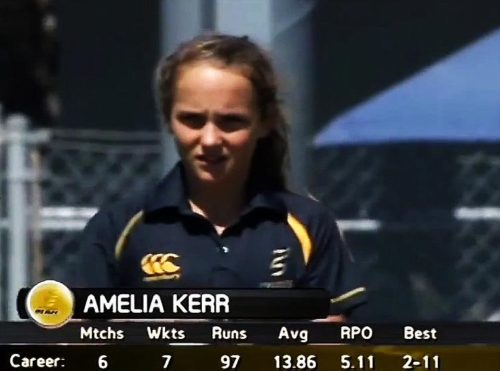
It’s known that women are more flexible in the wrists, elbows and shoulders than men, which is partially a function of having less muscle mass. This flexibility ought to make it possible for female bowlers, like legspinner Amelia Kerr (see video), to put more spin on the ball for the same reasons that Muralitharan could.

However, the big thing when it comes to spin bowling is smarts. The bowler is trying to deceive the batsman, trying to make them play down the wrong line or put their feet in the wrong place anticipating spin in, for example, the other direction.

To this end they need a lot of variations. It seems like Kerr already has most of the variations – and speaking of variations, very few international men’s cricket sides will have faced a bowler as short as Kerr, and therefore they will not be used to the trajectory her deliveries come from.

All this raises a question. Kerr currently has 20 wickets in women’s ODI cricket at an average of 22, and it might be that the coaches of the Black Caps decide that her cunning, guile, variations and unpredictability make her more dangerous against the Black Caps’ next opponent than the best legspinning male. Should Kerr then be eligible for the Black Caps?

Some might argue that the Black Caps are specifically a male representative team and so it doesn’t make sense to pick a woman to play in it, in same way that no-one would select a man to play in the Silver Ferns.

Others would argue that the sport of cricket was only gender-segregated in the first place because of the unlikelihood that any given woman could compete with men, so if a woman is good enough to compete with the best men there is no reason to enforce segregation.

In any case, this column predicts that if Kerr would get the chance to bowl in a net with the Black Caps, the men would learn a thing or two from her.

Peters Has More Leverage in a Labour-Greens Coalition than in a National One

Winston Peters aleady has a number of achievements in government, and the mana that comes with those. Labour and the Greens are more likely to recognise this than National are

The most important element in any negotiation is each side’s BATNA – Best Alternative To a Negotiated Agreement. In other words, how good or bad it would be for either side to walk away from the table. This article will argue that, ultimately, Winston Peters ought to go with Labour and the Greens, for the reason that he can wring a better deal for himself (and for the nationalists he represents) out of that side.

The deal that Peters ought to offer Jacinda Ardern and James Shaw is this: support Peters as Prime Minister for this next term at least, with Ardern in an apprentice role as Deputy. Let’s have a coalition Government that’s mostly Labour with certain New Zealand First mandarins in high places and James Shaw in Cabinet somewhere, maybe Julie Ann Genter as well.

Peters will be the Prime Minister, so if anything goes wrong he can take the blame for it when he retires. But if everything goes right, we get at least one, hopefully two terms of stable centre-left government, at which point Peters retires triumphant.

This should allow us to undo the game of hot potato that our immigration system has become and whack the minimum wage up to a point at which our working class have a standard of living similar to Australia and the rest of the West.

And if everything keeps going right, Ardern will step naturally into the role after those two terms when Winston rides off into the sunset.

This will achieve several purposes: it will allow for a change in Government from the hyper-neoliberal National Party; it will neutralise criticisms that Ardern is too young and inexperienced to take on the top role; it will help Winston Peters fulfill ultimate career objectives.

For Ardern that’s a pretty sweet deal. There’s no reason to think that this deal will be considered part of the electoral pendulum from Labour to National to Labour to National to Labour to National to Labour to National to Labour to National, which means that if Peters does step down after one or two terms of measured, calm, reasonable and dignified leadership, there won’t be a sense that it’s National’s “turn”.

This would mean that Ardern, at age 43, will be in prime intellectual condition to begin her own three-term reign of Prime Minister.

The BATNA for Labour and Ardern is that Peters throws his support in behind National and the country has to endure another three years of neoliberalism, except this time not under the shrewd cunning of John Key but under the blundering, hamfisted efforts of Bill English, with the baby-eating banshee of Paula Bennett shrieking in his ear all the while.

This is a pretty bad alternative, all things considered. It’s effectively a total loss.

Bill English simply couldn’t accept a deal that was this sweet to Peters. His backers expect nothing less than the Ninth Floor, and there would be howls of outrage from his own party if he gave up the Prime Minister’s Office to the leader of a party that won less than a sixth of the votes of National.

National also has a much better BATNA than Labour does. Even if Peters agrees to go with Labour and the Greens to form an African coalition, that coalition would still have to succeed and to provide stable government, for if it didn’t, the electorate would be only too happy to give National another chance under Bennett.

Some in National might be only too happy to let some kind of Labour-New Zealand First-Greens abomination tear itself to pieces for three years (or less) and then set up a three-term Sixth National Government under Bennett or Steven Joyce or some other half-witted order follower.

For this reason, Peters will understand that Labour will be more incentivised to maintain a stable Government than National will. The National Party social media machine proved itself exceptionally effective at raising an angry mob at the peak of the Metiria Turei affair, and if their working relationship with Winston Peters fell apart it could be predicted that the electorate would put the blame on Peters.

This all means that Peters has much more leverage to use against and with Labour and the Greens than he does with National.

Should People Lose The Right to Vote When They Get the Pension?

Ideally, the people who voted would be the same people who had something at stake

When our democracies were set up, there was one thing that was never anticipated: medical advances leading to a white-haired horde of pensioners that held the balance of power in almost every single election. We’re essentially living in a gerontocracy now, and there’s no giant ice floe to push them out onto. This article looks at a potential compromise for our society.

Life expectancy in New Zealand was about 71 years in 1960, which meant that the average person was only expected to live a handful of years once they went on the pension at age 65. When the pension was brought in, in 1898, it was obviously much less than even this.

Life expectancy was over 81 years in 2015, and it keeps climbing as medical advances and social changes like the decline in tobacco smoking prevent what had until recently been incurable diseases. This has led to a problem arising: New Zealand now spends over $12,000,000,000 per year on pension payments, as the average person now lives a dozen years or more extra past the pension age, which has not increased.

The reason why the age of 65 was usually chosen as the age of universal pension was that, by age 65, a person’s body is usually no longer capable of the physical labour necessary to earn a full wage. The wear and tear of life as a working man meant that a full effort was no longer possible from age 65 and, because the vast majority of jobs going around were working-class ones, it was a reliable rule of thumb that most people would be knackered by then.

But if we now live in a knowledge economy, as many politicians and economists are now insisting we do, then the original reason for setting the pension age at 65 is null and void. If we live in an economy where a person’s productivity is primarily a function of their intellectual capabilities then there’s no reason to have a pension age determined by the limitations of the physical body, because there is no need to treat mentally productive people as infirm.

It might be that a person’s intellectual capabilities are not enough to keep them in employment either. Perhaps that person traded on the strength of their body and, for whatever reason, their mind was not developed to the point where participation in a knowledge economy was possible. Such a person should still have the right to a pension.

But the unfairness arises when a person who is still more than capable of earning a living from their mind does so, at the same time as pocketing a $370 a week pension that was intended specifically for people incapable of working. Winston Peters has shown that even a career as intellectually demanding as top-level politics can be undertaken until one’s mid-70s, and yet if he retires in 2020 he will have claimed the pension for ten years while still working full time.

This is really a gigantic con game, in which the elderly have forced payment for their unsustainably lavish lifestyles on the young. Worse, the larger this 65+ age bracket grows, the ever more incentivised they are to vote against any reform to this Ponzi scheme.

Democracy was never intended to have this massive bulk of old voters gumming it up. Once a person is at this stage, they have relatively little stake left in the future running of the country. No major decisions need be taken by such people – they’re already sorted.

Perhaps our old people need to have a deal put to them?

If you reach 65 and feel that you are no longer intellectually capable of participating in the knowledge economy, that’s fine. Here’s a pension – but you are no longer considered intellectually capable of participating in representative democracy.

If you want to keep working on the grounds that you’re entirely capable of it still, you can – and you get to vote as well. But you don’t get to claim a pension on the grounds that you’re too infirm to participate and still get to wield power over others.

We can accept that, for some people, the fair price to pay for being looked after until death is to forfeit their right to further influence the political system in their favour. After all, if you have a political class that pays you $370 a week no questions asked, when you almost certainly own your own home already and don’t have to pay rent out of it, you’re already creaming it by any measure. Life is sweet and easy at that point.

It’s time to stop the Baby Boomers’ theft of the production of the following generations. Taking the right to vote away from pensioners will make it possible for a fairer balance of taxation and benefits to be struck.

Which of Labour or National Shares the Most With New Zealand First Demographically?

Is has been argued that Winston Peters ought to go with whichever side is most like New Zealand First demographically – but which is it?

There are many competing reasons for thinking that Winston Peters ought to go with one or the other of Labour or National in the post-election negotiations to form a Government. Some say that any arrangement with the Greens involved will not be stable enough, some say that the Opposition parties won a clear majority and therefore a mandate for change, some say that Winston will go with whoever he feels like going with. This article, by Understanding New Zealand author Dan McGlashan, looks at things another way.

We will follow here the argument that Peters ought to side with whichever out of Labour and National represents the people most similar to their own, and to that end this article will make a judgment using six major demographic categories, viz. age, ethnicity, education, income level, gender and homeownership rates.

Age

The correlation between voting National in 2017 and median age was a very strong 0.77, which represents the old people who own everything, and between voting Labour in 2017 and median age it was -0.66, which represents the people who are yet to become financially established and are living primarily on their wages.

The correlation between voting New Zealand First in 2014 and median age was negative, at -0.08, but by 2017 it had become significantly positive, at 0.24. This is primarily because of a large number of young, working-class Maoris shifting to Labour.

Young people drifted away from New Zealand First this election, and old people drifted in. The correlation between being aged 20-29 and voting New Zealand First was -0.38 in 2014 but had become -0.60 by 2017, whereas the correlation between being aged 65+ and voting New Zealand First was 0.10 in 2014 and had become 0.36 by 2017.

Young voters tend to not like either National or New Zealand First, whereas elderly voters like both, so that suggests a greater age overlap with the National Party. Decisively, the correlation of 0.24 between voting New Zealand First in 2017 and median age is 90 basis points away from the Labour figure, and only 53 basis points away from the National figure, so National win this one.

National 1, Labour 0

Ethnicity

The stereotype is of New Zealand First as an old, white, racist’s party, which is a very odd perception when it’s led by someone who played for the Auckland Maori rugby team. The truth is much more complex.

Voting New Zealand First in 2014 and being a Kiwi of European descent was perfectly uncorrelated, at 0.00. Between voting New Zealand First in 2014 and being Maori the correlation was a strongly positive 0.66. That means that at the time of the last election, the stereotype of New Zealand First voters was entirely false.

Some truth crept into it in 2017, however. By 2017 the correlation between being a Kiwi of European descent and voting New Zealand First had risen to 0.19, whereas the correlation between being Maori and voting New Zealand First had fallen to 0.40. This means that New Zealand First is still more of a Maori party than it is anything else, but that sentiments of white Kiwis are also well represented.

The correlation between being a Kiwi of European descent and voting National in 2017 was a strong 0.51, and for voting Labour it was correspondingly weak, at -0.56.

This means that New Zealand First is slightly more like National when it comes to whiteness, but far more like Labour when it comes to Maoriness. The correlation between being Maori and voting National in 2017 was a strongly negative -0.68, whereas the figure for voting Labour in 2017 was, at 0.57, very close to the New Zealand First figure.

New Zealand First was fairly to similar to National in that their party was mildly disfavoured by Pacific Islanders, in contrast to Labour. The correlations between being a Pacific Islander and voting National or New Zealand First in 2017 were -0.35 and -0.17 respectively, very different to the correlation between being a Pacific Islander and voting Labour, which was, at 0.57, as strong as the one with being Maori and voting Labour in 2017.

This is unlike the case of Asians, who were moderately more likely to prefer National to Labour, and who despise New Zealand First. The correlation between being Asian and voting National in 2017 was 0.10, only a smidgen stronger than what it was in 2014. Between being Asian and voting Labour in 2017 it was -0.09, but between being Asian and voting New Zealand First in 2017 it was -0.58.

All in all, if you weight each ethnicity by the number of Kiwis belonging to it, it’s more or less a draw.

National 1.5, Labour 0.5

Education

Labour shares with New Zealand First an affinity from those with few NZQA qualifications. New Zealand First was by far the most poorly educated voting bloc in 2014, and, although it’s true that they still are, the margins became smaller.

The correlations between having no NZQA qualifications and voting New Zealand First or Labour in 2017 were similar, at 0.69 and 0.45 respectively, and very different to that of having no NZQA qualifications and voting National in 2017, which was -0.32.

This isn’t really surprising because someone with no NZQA qualifications is not likely to have a large income or a number of rental houses, and so will not benefit from National’s refusal to institute a capital gains tax, and they are very likely to be living hand to mouth or close to it, which means they lost out from the rise in GST to 15%.

Some will be very surprised by the voting patterns of the highly educated, though. On the one hand, it might not be surprising that the university educated were mildly disinclined to vote Labour in 2017. The correlations with doing so were -0.32 for people with a Bachelor’s degree, -0.28 for people with an Honours degree, -0.27 for people with a Master’s degree, and -0.21 for people with a doctorate.

But neither were they particularly inclined to vote National. The correlations with voting National in 2017 were 0.15 for having a Bachelor’s degree, 0.10 for having an Honours degree, and 0.09 for having either of the two highest degrees. As it turns out, a large number of these people voted TOP, ACT or Green.

Compared to their sentiments towards Labour and National, university graduates are extremely disinclined to support New Zealand First. The correlations between voting New Zealand First in 2017 and having a university education was -0.73 in the case of having a Bachelor’s degree, -0.69 for an Honours degree, -0.74 for a Master’s degree and -0.60 for a doctorate.

This suggests that neither Labour or National have much in common with New Zealand First educationally, but Labour does share with New Zealand First a supporter base of very uneducated people. This is worth three-quarters of a point to Labour and one quarter to National.

National 1.75, Labour 1.25

Income

Leaving aside the truly broke, who know that their bread is buttered with Labour, not National, and who are indifferent to New Zealand First, voters in every income band are about equally likely to prefer Labour and New Zealand First to National.

The most wealthy Kiwis dislike New Zealand First even more than they dislike the Labour Party, which is perhaps a commentary on how the Labour Party supports the wealthy by way of supporting neoliberalism.

People with an income of $150K+ had a correlation of 0.24 with voting National in 2017, -0.43 with voting Labour in 2017 and -0.51 with voting New Zealand First in 2017, and those with an income of $100-150K had a correlation of 0.26 with voting National in 2017, -0.40 with voting Labour in 2017 and -0.54 with voting New Zealand First in 2017.

This suggests that the people who are creaming it the most look at Labour and New Zealand First with a similar level of disdain.

People in the $50-60K income band were almost perfectly indifferent to all three parties. The correlation between being in this income band and voting National in 2017 was 0.01, with voting Labour in 2017 it was -0.03 and with voting New Zealand First in 2017 it was 0.04.

This tells us that people in the middle – either the young, poor, ambitious and going up or the old, middle-class, satisfied and looking to hang on – wouldn’t really mind which way Peters went.

The people in the working-class income bands between $25 and $40K, in contrast to those in the $100K+ income bands, look at Labour and New Zealand First with a similar level of approval.

Kiwis earning $35-40K had a correlation of 0.49 with voting New Zealand First in 2017, which is much closer to the correlation between being in this income band and voting Labour in 2017 (0.38) than it is to the one between being in this income band and voting National in 2017 (-0.37).

In the income bands lower than this, people tended to support New Zealand First all the more. To the poorest New Zealanders, there is no apparent difference between National and Labour, and such a mindset seems to find a home in New Zealand First.

Ultimately, wealthy Kiwis like National and dislike Labour and New Zealand First, and poor Kiwis dislike National and like Labour and New Zealand First, so this one goes to Labour.

National 1.75, Labour 2.25

Gender

The correlation between voting National in 2017 and being male was 0.23, understandable as men earn more money than women and are therefore relatively likely to lose from the balance of taxation and welfare spending.

The correlation between voting Labour in 2017 and being female was 0.40, also understandable for the opposite reasons to why the men vote National – women earn less money and therefore benefit more from a party that raises taxes for the sake of social spending.

New Zealand First voters fell right in the middle. The correlation between voting New Zealand First in 2017 and being female was 0.10, which placed it almost exactly as far away from the National figure as from the Labour one.

In other words, New Zealand First voters were slightly more likely to be female, which fell in between National’s moderately more likely to be male and Labour’s strongly more likely to be female.

National 2.25, Labour 2.75

Homeownership

Curiously, the correlations between living in a mortgaged house and voting in 2017 for any of the three parties under discussion were basically identical. For National and Labour it was both 0.16, and for New Zealand First it was 0.14.

For living in a freehold house, things were a bit different. Predictably, people who lived in freehold houses were much more likely to vote National than Labour. The correlation between living in a freehold house and voting for National in 2017 was 0.65, and with voting for Labour in 2017 it was -0.51.

But people who voted New Zealand First fell almost right in the middle – the correlation between living in a freehold house and voting New Zealand First in 2017 was 0.22. This might be marginally closer to National but this was not the case in 2014. At that election, voting for New Zealand First had a correlation of -0.05 with living in a freehold house.

A similar pattern presented itself for those who were renters. The correlation between living in a rented house and voting for National in 2017 was a very strong -0.79, and with voting for Labour in 2017 it was also fairly strong, but in the other direction, at 0.56.

Again, New Zealand First voters fell in the middle. The correlation between living in a rented house and voting Nw Zealand First in 2017 was -0.26, which again falls right in between Labour and National. This one has to be another tie, at half a point each.

Final score: National 2.75, Labour 3.25

In the final analysis, it would be far from easy for Peters to choose between Labour and National on the basis of demographic similarities. Age would push him towards National, income towards Labour, and gender and homeownership rates would be even.

This makes for a very strong negotiating position in one sense. Unlike the Green Party – who cannot support National without committing suicide in the manner of the Maori Party and the British Liberal Democrats – New Zealand First could plausibly support either Labour or National, meaning that either side has an incentive to offer as much as it can to them.

However, Winston Peters has also been forked. He has to make one group of committed New Zealand First supporters unhappy. Either he makes the elderly European contingent unhappy by going with the Green Party, or he makes the working-class Maori contingent unhappy by going with National.

No doubt this calculus means that Peters will take his sweet time, and consider every possibility, before deciding on whose head he will place the crown.

*

This article is an excerpt from the 2nd Edition of Understanding New Zealand, which Dan McGlashan and VJM Publishing will have ready for sale at the end of October 2017. This will contain statistics calculated according to the official final vote counts and will be freshly updated with data from the 2017 General Election.