
The Four Alchemical Realms of Law

When people talk about whether or not something is illegal, they’re talking about whether or not something is against the law. The problem with this logic is that there are several different kinds of laws, and some of them override others. As this article will examine, there is a realm of law corresponding to each of the four masculine elements of clay, iron, silver and gold.

The realm of clay corresponds to natural laws. These laws are fundamental, and therefore they underpin all the laws of iron, silver and gold. Like the clay, these laws are so fundamental that they don’t need to be written down, and they don’t need to be understood. They are simply Nature doing its thing, and they have applied long before any human laws existed, and still apply to the vast, vast majority of the Earth’s creatures.

In a state of Nature, most people are barely aware that these laws exist, until they feel the pleasure or pain that comes with acceding to, or violating, those laws. But the laws of Nature exist no matter whether a person is aware of them or not. Fall off a cliff, you die. Eat poison, you die. Get too close to the big animal with the sharp teeth, you die.

Although the basic laws of Nature are physical laws, and then chemical laws, some of them are also biological laws. Laws of clay that start to approach the realm of the laws of iron are those like “Don’t try to have sex with female X or male A will thump you over the head.” These are essentially the same laws that non-human creatures use to defend their territory or resources. “Might is right” is an example of the laws of clay.

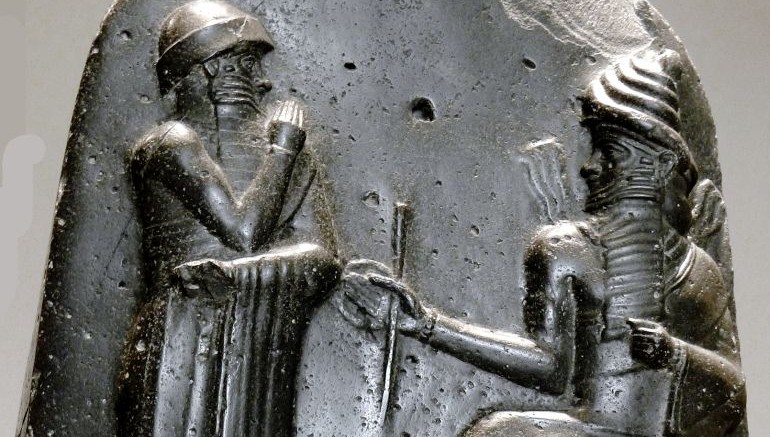
The realm of iron corresponds to the the laws that are enforced by organised human violence. When civilisation began, all offences against the sensibilities of property owners were written down into a code of laws, and penalties for transgressing them proscribed. An entire class of judges and jailers came into being to enforce these laws, paid for by the surplus wealth generated by the order that came with civilisation.

These are laws of iron because the Police will beat you up or put you in a cage if you disobey them. You may even get your head chopped off with an iron axe. Unlike natural laws, legal laws are written down, and therefore can be enunciated very clearly (although some will always quibble). The point of this was to distinguish them from the laws of clay, which were never any more than simple animal instincts.

Like iron, the laws of iron are unyielding. The Justice System doesn’t care if you knew it was illegal or not, or if you really meant to do it or not. Justice is blind, which is another way of saying that it is merciless. Laws degrade into laws of clay once money starts getting involved in the justice system and better lawyers get lighter sentences. But when they don’t degrade, the edges of them become gilt with silver.

The realm of silver corresponds to the laws that are enforced by society. These are the laws that relate to social status, i.e. whether or not a person is considered high value by their community. Violating laws of silver doesn’t carry a risk of arrest like violating laws of iron does, but they can lead to people being less friendly towards you, and giving you fewer employment, social or romantic opportunities. Obeying laws of silver tends to lead to the opposite.

As silver is softer and brighter than iron, so are the laws that fall under the realm of silver more malleable than those that fall under the realm of iron. A person who has transgressed a law of silver, and who has earned some enmity from his fellows, can escape punishment by making a sufficient compensatory effort. Therefore, the laws of silver are more subtle than the laws of iron, and can also change on a whim.

However, like iron, they are cold and sharp enough, in their own way. Many a man has been found innocent at trial but nevertheless destroyed by whispering and gossiping. Social exclusion might be more subtle than an axe, and the consequences less permanent, but it is still enough to cause suffering, and therefore enough to modify social behaviour.

The realm of gold corresponds to the laws that are enforced by God. In this sense, the laws pertaining to the realm of gold are similar to those pertaining to clay, in that they are not written down, and neither are they social. Although other people might be able to help a person understand the laws of clay and gold, they can’t force that person to abide by them, unlike the laws of iron and silver. They can only instruct and leave it up to that person’s true will.

It isn’t easy to speak about what the laws of gold are, but it can be said that they are even more subtle than those of silver and iron. Here we are speaking of laws like the law of karma and the law of attraction. It has to be understood at this point that the realm of gold is the realm of consciousness, and its laws relate to how to alter the frequency of one’s consciousness.

Much of alchemy is the art of playing higher laws off against lower ones, so that one causes change in accordance with one’s will despite being bound by laws the entire time. This is a subject of its own and deserves its own essay, but there are some things that can be said about it here.

One can alter one’s consciousness by obeying laws in higher realms at the expense of laws in lower realms. The most powerful example of such a thing was the example of Socrates. By obeying the laws of gold, and completely ignoring all of the laws of silver, iron and clay to the point of causing his own death, Socrates made himself immortal in this world. Likewise, gathering with friends to break unjust laws of iron (such as drug laws) can create magically powerful bonds of solidarity.

This is another possible interpretation of Aleister Crowley’s saying that “The key to joy is disobedience”. By disobeying the cruder laws, such as the law of biological entropy, unjust statutory laws and by prising the truth above social fashion, it’s possible to raise the level of one’s consciousness. A skilled alchemist can therefore reduce the level of their suffering, and the level of the suffering around them, even as they disobey laws, and even though disobeying those lower laws consistently brings suffering.

*

If you enjoyed reading this essay, you can get a compilation of the Best VJMP Essays and Articles of 2018 from Amazon for Kindle or Amazon for CreateSpace (for international readers), or TradeMe (for Kiwis). A compilation of the Best VJMP Essays and Articles of 2017 is also available.

A Former Black Magician Provides a Magical Analysis of the Christchurch Mosque Shootings

Mass killings almost always have the effect of spreading terror throughout the population that was slaughtered. Most of the time, this terror is the intent of the act. When it is, the killings could be said to be black magic rituals, acts of Greater Magic intended to force the will of the perpetrator onto all the people who observed it. The Christchurch mosque shootings of March 15 can be considered such a deed.

According to one perspective, there are three elementary kinds of magic. The kind that I am interested in here is black magic. This uses the power of fear to cause change in others according to the will of the magician. The other kinds are white magic, which takes fear away, and grey magic, which causes confusion.

The easy way to understand black magic is to understand it as intimidation. It’s why the Police wear uniforms, and caps with black and white chequered bands, and why security guards wear black t-shirts and shoes with thick soles. It’s why the Undertaker wears black, why the Waffen-SS wore black, and why it was said by Gareth Edwards of the All Blacks jersey that “There is something about the blackness of their jersey that strikes fear into your heart.”

Black magic could also be understood as the art of domination. A successful black magician is dominant because of the fear that other people have for them. The best way to intimidate and dominate a person, of course, is to cause them direct physical and personal injury, or credibly threaten to. If they are not able to retaliate to this then they will be forced to submit.

The Christchurch mosque shootings were black magic rituals intended to strike fear into the hearts of certain populations in New Zealand. In this sense, they were much like the John F Kennedy assassination and 9/11. The hope was that the killings would incite submission. This is the most effective way to understand them, and to explain both the actions of the shooter and the response of the nation. Furthermore, it allows us to predict the future.

Jacinda Ardern, and the New Zealand mainstream media, being atheists and non-believers in magic, made a number of grave errors in the aftermath of those shootings. They made these errors because they did not account for being in the domain of magic. Some decisions, although they may have made sense from the perspective of being nice and soothing tensions, didn’t make much sense from the perspective of countering black magic.

When Ardern decided that the name of Branton Tarrant shall not be spoken in polite company, she raised his black magic power to the level of Voldemort from the Harry Potter series. Oddly, there’s a scene from Harry Potter and the Sorcerer’s Stone in which Harry is told: “Call him Voldemort, Harry. Always use the proper name for things. Fear of a name increases fear of the thing itself.”

This is advice that Ardern should really have heeded. When she spoke to Parliament and made a particular effort not to mention Tarrant’s name, she demonstrated that the nation had collectively shit itself in response to the shootings. We showed that they had affected us very deeply and that we were greatly shaken. Tarrant was living rent-free in our heads.

The problem with this, from a black magic perspective, is that is shows vulnerability, and vulnerability attracts more cruelty. I’ll repeat that again: vulnerability attracts cruelty. A lot of people don’t like to accept this, on account of that it is so cruel, but it’s nevertheless how things work. Black magicians like to seek out vulnerability because it means that their magic will have a greater impact.

So any budding black magicians out there, thinking of a way to make their actions as powerful as possible, may have observed Ardern’s response, and taken note of the vulnerability displayed. This is a very bad sign, because it predicts a high likelihood of future attacks, whether follow-up moves by white nationalists or reprisals by Islamists.

After all, Tarrant himself was the victim of a previous act of black magic: the Drottninggatan truck attack in Stockholm in 2015 that left three dead, including an eight-year old girl named Ebba Åkerlund. Images of Åkerlund’s body torn into several pieces left a powerful impression on many Internet dwellers, in particular those on the chans. Tarrant was affected so heavily that he mentioned it in his manifesto.

The downside of black magic, of course, is that if the intended victims of it do not submit then their fear will turn naturally to hatred. When it does, it’s possible for cycles of revenge attacks to arise, and even to become normalised. The horror of the Drottninggatan truck attack was insufficient to cause Tarrant to submit, and as such it turned to the hatred that we saw expressed on March 15.

The way to counter black magic is with fearlessness. London’s response to the 7/7 bus attacks of 2005, which killed 56 people, is the model to follow. Instead of the response that Vince McLeod dubbed “The Great New Zealand Chimpout“, the British response made a point of being business as usual, thereby denying the perpetrators the emotional impact that they desired.

It was noted by all that various criminal gangs, in particular the Mongrel Mob, took a front and centre role in the community response to the shootings. The most visible response involved leading a public haka. The haka needs to be understood, in this context, as a black magic ritual. Its purpose is to demonstrate to the enemy your vigour, determination and unity of purpose. In this, a haka is little different to any other war dance.

The point of performing a haka after such a mass shooting was to demonstrate to the unseen “bad guys” out there that we are strong, we are ready and we are willing to fight. We will not be cowed. This is often the context in which a haka was performed in pre-contact New Zealand: someone would spot a member of an enemy war party in the bush, alert the others, and a haka would be performed to show that enemy that they were going to die if they continued to intrude. This was understood as black magic and called mākutu.

Certainly the New Zealand nation is currently in a state of extreme fear. Acts of national unity are necessary, but they have to be carefully considered owing to the extreme circumstances. In that regard, Tarrant’s actions have to be considered one of the, if not the single most, powerful acts of black magic ever performed in New Zealand. The only real comparison in recent history would be the Rainbow Warrior bombing, which only killed one person.

If the New Zealand nation wants to go forward without attracting further black magicians, and further ritual sacrifices (no matter who conducts them), they need to demonstrate that they are not afraid of death. This is chiefly done by enjoying life, and continuing to enjoy life as we had done before the shootings. Full attendance of Super Rugby games is one example. This will demonstrate to all the black magicians out there that we are not weak and not to waste their efforts on us.

*

Viktor Hellman is a regular contributor to VJM Publishing and author of the upcoming Anarcho-Homicidalist Manifesto.

A Sevenfold Conception of Inherent Human Rights

In this age of tyranny and chaos, many people have lost their natural understanding of the inherent rights of human beings. Many of us have strayed so far from reality, and drifted so far into slave morality, that we honestly believe that rights are granted by the goodwill of the Government. This essay will argue that human rights are not only inherent, and necessary for any civilisation to exist, but also that they are sevenfold, at three different levels of resolution.

To understand our inherent rights, it is necessary to turn to a philosophy that accurately describes reality. We do so here with reference to elementalism, in particular the hierarchy of the four masculine elements. The four masculine elements are clay, iron, silver and gold, in ascending order of rarity and value.

Clay is the most fundamental of the masculine elements, and represents the feminine realm of Nature. In this sense, it represents the rights relating to a person’s life, their right to life and their right to self-ownership. Inherent human rights in the realm of clay means that people inherently have the right to life.

Applying the paradigm of clay to human rights tells us that the State does not have the right to kill its citizens, and neither may it claim right over a person’s body without that person’s consent. The Government may not use the people for medical experimentation, and neither may they be conscripted, whether as soldiers or labourers.

More specifically, the Government ought not to levy taxes on basic food produce, and neither should they interrupt the right of people to gather food and water from the wilderness, because both processes are essential for life. Some would go as far as to argue that the State ought to supply a universal basic income to compensate for the imposition of private property.

Iron is the next most fundamental element, and refers to the masculine realm of war and defence. Inherent human rights in the realm of iron means that people inherently have the right to physical self-defence. They have the right to own and carry weapons, both to protect their own person and their home. They also have the right to expect that the State will act to defend the physical integrity of the nation, and that it will act to protect their private property.

It is also recognised here that the people themselves are the ultimate guarantor of their rights. The realm of iron is the realm of masculine wisdom, and here it is understood that the Government is not always the friend of the people, and is all too often its enemy. Being wisdom, and not excess, there are limits here: people may only harm others if those others are posing a direct, immediate and actionable threat.

Anarcho-homicidalism is enshrined as a right under the realm of iron. The people are never obliged to be slaves – this right is absolute and fundamental. Therefore, they have the right to take any measures necessary to resist enslavement – up to, and including, killing their enslavers. The point at which it is necessary to do so is a question for the people themselves, and never a question for their government.

Silver is the first of the precious masculine elements, and refers to the realm of the mind and intellect. Inherent human rights in the realm of silver means that people inherently have the right to pursue and to discuss the truth. This is otherwise known as the “right to free inquiry” because it is in the nature of gentlemen, when their baser duties are discharged, to discuss such things.

This implies that the rights of the people to freely research, read, discuss and impart information shall not be restricted, except in cases where there is an immediate risk of physical suffering (i.e. incitement of violence). People must always have the right to gather to discuss subjects and to impart information to each other. The State has no right to interfere with a person’s life because they expressed a certain piece of information, whether fact or opinion.

These rights mean that institutions like the Office of Chief Censor are to immediately be abolished. Nothing is to be censored, however certain information might be classified as unsuitable for some audiences, in that exposure to it may cause them harm. Note that, with the realm of iron, there are limits to rights here: the right to free speech does not legalise fraud, nor outright lying for the sake of defamation.

Gold is the most precious of the masculine elements, and refers to the realm of consciousness and God. Because God is more fundamental than language, and therefore cannot be spoken of, it’s not easy to speak about what inherent rights a person has in the realm of gold. Like gold, these rights are precious, and sometimes very rare. In principle, the paradigm of gold here relates to the rights to religious and spiritual freedom.

Inherent human rights in the realm of gold means that people inherently have the right to conduct any ritual, and to consume any spiritual sacrament, that they believe will get them closer to God. These rights are subject to the three more fundamental rights, in that they cannot infringe on any other person’s free speech (i.e. no blasphemy laws), they cannot infringe on any other person’s bodily integrity (i.e. no infant genital mutilation) and they cannot infringe on any other person’s right to life (i.e. no convert or die).

This means that the State has absolutely no right to restrict the consumption and sharing of spiritual sacraments such as cannabis, psilocybin and DMT. No-one has to go through a court and argue that these substances are part of any recognised religious tradition – they simply have the inherent right to use them. Citizens inherently have the right to take any action they feel will bring them closer to God, as long as it does not cause suffering to others.

It is also recognised here that rights are granted by the Will of God, which is more fundamental than the right of any human institution, whether governmental, ecclesiastical, military or otherwise. Therefore, because these rights are granted by God, no such institution can rightly take them away. If it tries to, the people have the right to resist, and they have God’s approval to do so. These rights are inherent to the nature of reality, which is something more fundamental than human governments.

There is another layer behind these four masculine elements. It could be said that, in the same way that the four masculine elements divide into base and precious, so too do our rights divide into a base right that can easily be understood by all people, no matter their intellect, and a precious right that that is harder to grasp but which must be fought for with a determination befitting its value.

The fundamental feminine right, then, relates to the physical world. It is the right to not suffer physically at the hands of the State; the right to physical liberty. What this means in practice can be seen be examining the realms of iron and clay. We can summarise it as the right to bodily integrity, or the right to not have one’s bodily integrity harmed by the State.

The right to physical liberty means that people have the fundamental right to decide how their bodies are used, and what goes into them, and what stays in them – this is known as the Base Right because even animals intuitively understand it. The State does not have the right to impede the physical security or harm the physical integrity of its citizens, whether at the group or individual level. Neither does it have the right to impede their access to territory, unless suffering should be caused by doing so.

In practice, this means that the State does not have the right to interfere with the reproductive rights of its citizens. It cannot mandate a limit to family size, for example, and neither can it prohibit abortion. Nor can it force vaccinations on people, or any health treatment on people, without their consent – the Base Right forbids it. It also means that people, at the group level, have the right to free assembly.

The fundamental masculine right, on the other hand, relates to the metaphysical world. It is the right not to suffer metaphysically at the hands of the State. What this means in practice can be seen by examining the realms of silver and gold. It can be summarised as the right to metaphysical integrity, or the right to not have one’s metaphysical integrity harmed by the state.

In much the same way that people have the right to decide what goes into their bodies and how their bodies are used, they also have the right to decide what goes into their minds and how their minds are used. This right is called the Precious Right because, like masculinity itself, it isn’t always clearly understood.

It means that people have the right to cognitive liberty. Although much of this is already covered under the realm of silver and its rights to free speech, there is more here. The State may not infringe on the rights of the people to express themselves, and may not interfere with the psychological integrity of its citizens, whether at a group or individual level. Neither may it decide that certain practices are legitimate spiritual ones and others not.

There is a third and final level, a right even more fundamental than the Base and Precious Rights, the seventh right that ties all the others together. It is, simply put, the right not to suffer at the hands of the State. This is known as the Fundamental Right and is to be used as the guiding principle whenever it is not clear how to proceed.

The right not to suffer at the hands of the State underpins all of the Base Right, the Precious Right, the right to life, the right to self-defence, the right to free inquiry and the right to spiritual exploration. The Fundamental Right recognises that the State may not cause suffering to people in any of the physical, metaphysical, spiritual, intellectual, martial or biological realms.

Describing our rights like this, in elemental terms, is now necessary owing to the confusion that has arisen from the meshing together of hundreds of incompatible value systems. Our current governmental models have refused to recognise our rights as human beings, and so it has become necessary for us to rally around a new conception of those rights and to see that it is enforced in the space around us. This sevenfold elemental conception of human rights is the way forward.

*

If you enjoyed reading this essay, you can get a compilation of the Best VJMP Essays and Articles of 2018 from Amazon for Kindle or Amazon for CreateSpace (for international readers), or TradeMe (for Kiwis). A compilation of the Best VJMP Essays and Articles of 2017 is also available.

The Three Hurdles

There are many different ways to understand the path to spiritual wisdom. In Elementalism, there are considered to be three major hurdles to spiritual wisdom, each one corresponding to one of the three of the masculine elements which are less precious than gold. This essay elaborates.

The First Hurdle is falling for whatever religion you are brainwashed into from when you are a child. Inevitably, this will be the peasant religion of your community. If you are born to the West of India, it’s very likely that you will fall victim to the Curse of Abraham. In the West that likely means you become a Christian, and in the Middle East that likely means you become a Muslim.

Alchemically speaking, this corresponds to the realm of clay. Its appeal can be understood, therefore, as the allure of community, warmth and friendship. People who fall at this hurdle tend to do so because they are unwilling to fall out with the members of their community who did fall here. Also like the clay, it’s not necessarily a bad thing that most people fall here, as long as they form bonds of solidarity from having done so.

A person who simply goes along with whatever everyone else is doing cannot possibly hope to achieve spiritual wisdom, because they will fall victim to the hysteria of the mob every time it arises. This sort of person is every Nazi, every Communist, every Abrahamist who ever destroyed an innocent person because they felt pressured into doing so. Therefore, their spiritual knowledge is minimal.

The Second Hurdle is the complete rejection of anything even vaguely spiritual, religious or metaphysical. This is the position of fedora-tipping materialist atheism. To fall at this hurdle is to assume that everyone who speaks of magic or metaphysical topics is simply mentally ill. If it can’t be measured, it doesn’t exist. Clearing the First Hurdle means you have to deal with this.

Alchemically speaking, this corresponds to the realm of iron, which has overtones of coldness and sharpness. The best way to understand the attraction is the appeal to invincibility. Those who fall at the Second Hurdle tend to genuinely believe that their obstinate rejection of half of reality makes them pure of mind and clear thinkers, and they derive a sense of power from being unyielding.

Like the iron, people at this level tend to be hard and brittle. They are disinclined to give so much as an inch to anyone claiming to speak of existence beyond the material. This is why, when they finally realise that there is more to life that the material illusion, their entire worldview falls apart, shattered like an iron blade. They have some spiritual knowledge on account of that they have realised that much of reality is illusion, but they have still fallen for illusion.

The Third Hurdle is self-worship. The most characteristic form of this is Satanism. Falling at the Third Hurdle involves submission to a different form of materialism. People who do so are neither peasants nor crude chimpanzee dominators, but rather intellectual snobs, social climbers, egomaniacs, money hoarders and pleasure-seeking degenerates.

So of course, alchemically speaking, this corresponds to the realm of silver. Satanists are reknown for falling prey to the Conceit of Silver. The allure of silver is that one belongs to a small minority of elites, so elite that one’s degeneracy and arrogance in fact represents a higher order of existence.

They aren’t completely wrong – Satanists are almost inevitably a higher quality of person than the average out there. Where they do go wrong is that they don’t understand there is a higher realm – the realm of gold – where one can be silver, iron or clay as best fits. People who fall at the Third Hurdle tend to consider themselves too good to act in either the realm of iron or clay, and their lack of humility is what brings them down.

A crude rule of thumb is that two-thirds of people fall at the First Hurdle, and two-thirds of the remainder fall at the Second Hurdle. The proportion of people who fall at the Third Hurdle varies according to the quality of the age: in a Golden Age it is very few, in a Silver Age about a third, in an Iron Age about two-thirds and in a Clay Age it will be almost all of them.

Only once all of these three hurdles are cleared can genuine spiritual wisdom be found. One might claim that those operating in the realm of gold worship the entire system, but are nevertheless capable of acting as if they didn’t in cases where this is necessary to reduce suffering. Those who have cleared all three hurdles can act in the realms of silver, iron or clay as they see fit.

*

If you enjoyed reading this essay, you can get a compilation of the Best VJMP Essays and Articles of 2018 from Amazon for Kindle or Amazon for CreateSpace (for international readers), or TradeMe (for Kiwis). A compilation of the Best VJMP Essays and Articles of 2017 is also available.