
Fixing Toxic Masculinity Is A Two-Way Street

It’s not accurate to dump all the responsibility for toxic masculinity on males

The mainstream media has been full of stories about toxic masculinity recently, especially the hand-wringing, moralising, finger-pointing style, such as this effort by Lee Suckling in the New Zealand Herald. Leaving aside that the whole issue of toxic masculinity is mostly overblown, there are some things that men really ought to do better for the sake of universally reducing suffering in the world.

Also leaving aside the fact that the media never mentions toxic femininity, which is an equally large problem, the solution presented to fixing this problem of toxic masculinity is to dump responsibility for it entirely on men. Suckling laments that “We are forced to like blue not pink; trucks not Barbies; rugby not netball; muscles, strength, and brute force not intellectualism, thoughts, and feelings,” but blames men exclusively for all of this.

The human species is not a machine, but in many psychological ways it behaves exactly like a machine, especially in regards to conditioning. Behaviour is more or less likely to happen in the future if it was rewarded or punished, respectively, in the present. This has been known for a century and has been codified into what’s known as the Law of Effect.

In other words, changing the behaviour of men requires that they are rewarded sufficiently for the desired new behaviour. This means that they have to be treated correctly for it – and not just by other men.

One crucial detail that Suckling completely overlooks in blaming Kiwi men for everything is that women are equally as complicit as men, if not more so, when it comes to enforcing the standards of toxic masculinity. Proving this is a simple matter of observing which male behaviour gets rewarded with access to sexual resources.

It isn’t the men who are into “intellectualism, thoughts, and feelings” that get the chicks. Although it might be true that high-class women are attracted to those things, and although it might be true that men who are into these things get the cream of the women, there are so few of these women that the behaviour of males is not significantly altered.

For every woman turned on by intellectualism, thoughts, and feelings, there are fifty who are turned on by crass, vulgar displays of wealth and physical power. Driving a big, loud car, verbally abusing or bullying someone or punching another man in the face are the sort of behaviours that make the majority of women see a man as alpha, dominant and worth breeding with.

The Law of Effect explains another oft-observed phenomenon: that men tend to repeat the behaviours that first got them laid for the rest of their lives. So if they lose their virginity at age 17 by getting drunk and acting boorishly around some girl who has nothing but crude primate instincts to guide her mating decisions, then they will often act the boor while trying to get laid for the rest of their lives.

If this is to change, more women have to realise that intellectualism, thoughts and feelings are better predictors of long-term happiness and start rewarding men on that basis. This is necessary because men will respond to this a million times more strongly than they will to getting lectured by homosexuals in the mainstream media.

Cynics might say that it’s not destined to happen. It may be that powers beyond our influence have decided that New Zealand is to be a military outpost of a certain world order, and so our population must be encouraged to be aggressive and abusive in case such qualities are needed to win some future war.

That might not even be a bad thing. Suckling uses the European male as an example of how to be correctly masculine, but neglects to point out that the femininity of the European male has led directly to that continent’s streets and inner cities being conquered by males of foreign cultures.

As ever, the correct approach lies in finding the correct balance between masculine and feminine, but if young Kiwi men are to stop killing themselves at the highest rate in the world, Kiwi women are going to have to help make the change.
New Zealand Should Celebrate Halloween on ANZAC Day

Halloween is an autumn festival that recalls the spirits of the dead. There’s no sense in New Zealand celebrating it at the end of spring

All Hallow’s Eve, modernly known as Halloween, is a festival that marks a time of death and dying in the yearly cycle. In some rituals, the dead are invited to partake in the celebrations, either through being summoned by music or remembered in prayer. Commonly, stories are told about people who have passed. All of this makes sense on the Northern Hemisphere calendar, but not so much in New Zealand.

The purpose of the Halloween festival, befitting the harvest, is to remember the dead. This is fitting because it occurs at the end of October, which is near the end of autumn in the Northern Hemisphere, where the leaves have fallen dead from the trees and the nights are quickly becoming longer, colder and darker.

This is why it is associated with graveyards and skeletons and cobwebs and spiders and mummies, and any other symbol of death that one can think of. At the end of October in the Northern Hemisphere it’s closer to the midwinter to come than it is to the midsummer gone, and is only getting darker and colder, which naturally feels like death for those experiencing it.

What is understood by few, in New Zealand at least, is that the old festival schedule represents a deep natural understanding of the connections between the physical and the metaphysical world. Celebrating Halloween near the end of autumn when Nature is dying is the kind of tradition that deepens the connections of people to the natural world and gives their lives meaning.

This means that we in New Zealand shouldn’t celebrate Halloween on the 31st of October, when it’s light until almost 9p.m. and is sometimes as warm as summer (if the winds are blowing from the North or from Australia). Seven weeks before the summer solstice is a time when we should be conducting a fire festival to celebrate the return of light and warmth into the world at the apogee of the yearly solar cycle.

New Zealand already celebrates these natural traditions at the correct time in the yearly solar cycle in the form of ANZAC Day and Guy Fawkes’s Day.

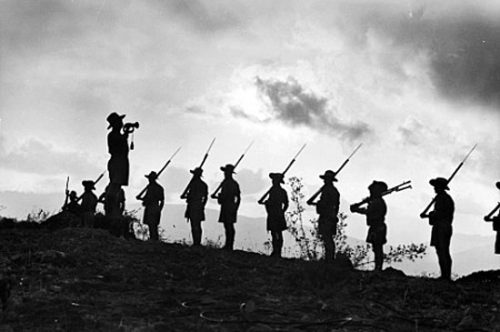
ANZAC Day has become a de facto national festival with an emphasis on the remembrance of the dead and a dawn ceremony – exactly as Halloween was practiced at the end of autumn in old times. On this day we listen to a bugle call that is the same as that our ancestors would have heard a century ago, and we stand in silence to make it as evocative as possible, which symbolically summons those ancestors to stand by our side once again.

Seeing the world as a Great Fractal, this is analogous to how people like us celebrate Halloween in the Northern Hemisphere. It’s also around this day – April 25th – that the trees are either bare or yellow and red as Nature falls into the peak yin part of the cycle.

Guy Fawkes, while not a national holiday, nevertheless involves a public display of fire in a very similar fashion to Beltane in the Northern Hemisphere, or the bonfires of Walborgafton in Uppsala and Walpurgisnacht in Northern Europe. The purpose of the fireworks and bonfires in either case is to celebrate how the Sun itself will soon be lighting up the night as it approaches the zenith of its yearly cycle.

In other words, ANZAC Day and Guy Fawkes’s Day have become the Southern Hemisphere equivalents of Samhain/Halloween and Beltane/Walpurgisnacht respectively. These festivals occur at almost exactly the same times of the seasonal cycle, and feature the same themes of death and fire respectively, but if a person in the Southern Hemisphere was primarily following the calendar they could easily fail to notice this.

The Big Lie of Our Age

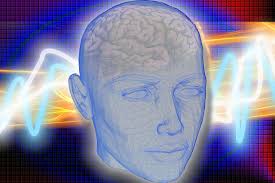
Many pseudoscientific writings speak of the parts of the brain that give rise to consciousness, as if the question of whether the brain does generate consciousness had already been answered in the affirmative

The Big Lie of our age is that the brain generates consciousness. It’s a lie characteristic of our exceptionally materialistic age, because in most other times in human history people have retained their intuitive awareness of the primacy of consciousness. In the modern West, however, it’s simply taken for granted that the brain generates consciousness, and the deleterious consequences of this belief are denied or explained away.

This Big Lie has come about as a result of a reasoning error that became fashionable in the wake of the Enlightenment. The idea was that religion had held humanity back during the Dark Ages by making scientific research impractical, and therefore religious dogma had to be discarded from the scientific reasoning process, and therefore all talk of a world beyond the material had to be abandoned, and therefore consciousness simply had to be a material property.

From this Big Lie a number of falsehoods arise. Many of these falsehoods are encouraged by the ruling classes because they make the plebs easier to rule.

For instance, the belief that the brain generates consciousness leads immediately to the belief that the death of the brain (alongside the inevitable death of the physical body) must inevitably mean the “end” of consciousness. Because if the body dies, and the brain dies with it, then the brain must logically lose its capacity for ‘generating’ or ‘maintaining’ consciousness and thus that consciousness must disappear.

This belief, while predicated entirely on a falsehood, leads to a number of other beliefs.

The most powerful of these is the belief that this life is all that there is. If the death of this physical body means the death of consciousness, then I cannot be held responsible for anything I do while in this place (i.e. Earth, more or less). Therefore, if I take money now in exchange for attacking another person, or if I murder, rob or rape, then I only have to get away with it for as long as this physical life endures.

Another odd idea that follows naturally from the Big Lie is that only creatures with brain structures similar to that which knows itself to be conscious can also be conscious. If the brain generates consciousness by means of some property inherent to it (such as a critical mass of complexity) then other creatures can only be considered conscious to the degree that they share these brain structures with the person thinking up the consciousness theory (after all, that person knows themselves 100% to be conscious).

One delusion is that mortal terror is an appropriately dignified response to mortal threats for a civilised human. It is if you believe that the brain generates consciousness, but if you don’t believe this it becomes possible to be genuinely courageous. After all, why subject yourself to mortal terror if you know that the contents of consciousness are ephemeral and transient?

Of course, the ruling classes are generally happy to have people believe that this life is all there is, for a variety of reasons. Not least of these reasons are because it discourages anarcho-homicidalist action by making people afraid of execution, and because it makes people greedy, aggressive and acquisitive as they try to cram an eternity’s worth of pleasures into one mortal incarnation.

It is ultimately because of this Big Lie that cannabis and the psychedelics are illegal. These drugs modify behaviour by making the user aware, however fleetingly, of a world beyond the material. In this world beyond are immutable moral principles, and it’s harder to pull the strings of people who are aware of these principles and believe in them. Such people tend to make their own decisions.

A common experience on psychedelics is to feel the material world slipping out of consciousness and to become aware of an entirely different world as seen through an entirely different set of eyes, but which is ultimately comprehended by the same consciousness. This often results in the tripper learning the lesson of the primacy of consciousness and how conceptions of time and space are illusions brought about by temporary separation from God.

It is because of the Big Lie that people who become privy to such revelations about the true nature of reality – whether by taking psychedelic drugs or through other means – are seen as having gone insane, and their revelations seen as chaotic nonsense of no value. After all, if a psychonaut comes to realise that the Big Lie is a big lie, then that psychonaut must be dismissed as a space cadet or schizophrenic lest this realisation catch on.

The Alchemy of the Evolutionary History of Hominids

The invention and refinement of the spear was one of the first significant applications of human intelligence

All regular readers of this column will be familiar with four temperaments theory, which is the idea that humans fall into four psychological groups that correspond to the four feminine elements of earth, water, air and fire. As a previous essay discussed, these four elements could be considered to be the four feminine elements of equal value, in contrast to the four masculine elements of varying value. This essay looks at the four temperaments according to the four masculine elements.

The most elementary sort of person is the one that exists in the state of nature. This corresponds to the man of clay. This is how people are when we’re not significantly distinguished from the rest of the animal kingdom – in other words, when we’re just a third chimpanzee.

In esoteric terms, this is a person with no divine inspiration. Such a person will not feel any reason to question the various animal impulses that come through their mind, and consequently they will behave much like an animal. They will be aggressive, vicious, spiteful, brutal, jealous and envious.

Divine inspiration manifests in the man of iron as someone with a concept of discipline. At the most primitive level, this means someone who is able to overcome their fear of physical suffering in order to hold fast and resist an enemy, usually in the form of another man or a predatory animal.

At the most primitive level of humanity, this is how people came to distinguish themselves from the ordinary ape-man, and this is therefore how humanity began to evolve into something higher. Tuning into this frequency of iron meant learning the virtues of bravery and courage which, when applied to death, allow a person to act as something more than just a fear, hunger and sex-based animal.

After a certain critical mass of iron was reached, some of it began, like fusion in the heart of a star, to brighten into silver. This was when people came to learn that intelligent application of discipline was better than discipline for the sake of discipline.

This was also the point at which humans started to use their brains and intellects to secure survival and reproductive advantages. A crucial stage in this process was the invention of the spear. The application of intellect necessary to first realise that a spear is a more effective weapon than a club, and second to improve it by hardening the tip in fire, catapulted humanity forward.

The value of silver is in that it is softer than iron and can therefore be used to direct iron in subtler ways. When humanity started to appreciate this value, then iron was consciously polished into silver for the first time.

This led to a third type of person, one who was neither animal nor knight but somewhere in between. This person carved a niche for themselves out of reality primarily through their minds, i.e. through the application of intelligence. On an alchemical level, this sort of person corresponds to the element of silver.

Music began to develop at this point, as did language more complicated than the growls and hisses that we shared with other mammals like cats and monkeys. Evidently, people decided that they naturally liked that sort of thing because all cultures developed a musical tradition and a tradition of singing.

The real development of silver, however, wasn’t in levity but in lying and cheating and scheming and plotting, either against other people or other animals in hunting or nature itself in agriculture. Silver is not gold, and intelligence is entirely separate from morality.

Most humans don’t develop much past this stage of silver, if they even get that far. But for those who did, the next step was the advent of philosophy, and alongside that came the ritual use of psychoactive drugs.

The first of these drugs to be used ritually was probably psilocybin mushrooms or amanita muscaria, followed by ayahuasca, alcohol and then cannabis. Mushrooms are the obvious choice for ritual use because they require no real preparation (although ought to be dried for reasons of palatability) and because they spring up at at a regular and predictable point in the seasonal cycle.

Once this started to happen, humans started to develop a sense of spirituality. The broader perspectives offered by the altered states of consciousness that were deliberately entered into, often enough for a shaman to learn to navigate in them, allowed for an appreciation of something much greater than oneself, an insight into higher levels of the Great Fractal.

Once insights like this were reached, it became possible for consciousness to affect reality on the level of gold, which is to say, the level of correct conduct.

This led to a fourth sort of person, one who is capable of guiding and influencing all of the other elements despite being soft like the clay. This person was able to lead by example, and therefore did not need to be strong like iron or quick-thinking like silver. This sort of person is rare enough that they are like the gold.

This sort of person took the role of the shaman in ancient society, in that they were a person who experimented with altered states of consciousness for the sake of maximising the breadth of their perspective on reality. This path requires both the courage of iron and the cunning of silver, and in this manner is like a synthesis of the two.