
The Tao of Rugby

The Tao is in everything. More fundamental than words, more fundamental than forms, the eternal interplay of yin and yang is one powerful way of understanding the reality we are presented with. As the Super Rugby season begins, and in a year of fixtures that contains a Rugby World Cup, we take a look at the Tao of rugby.

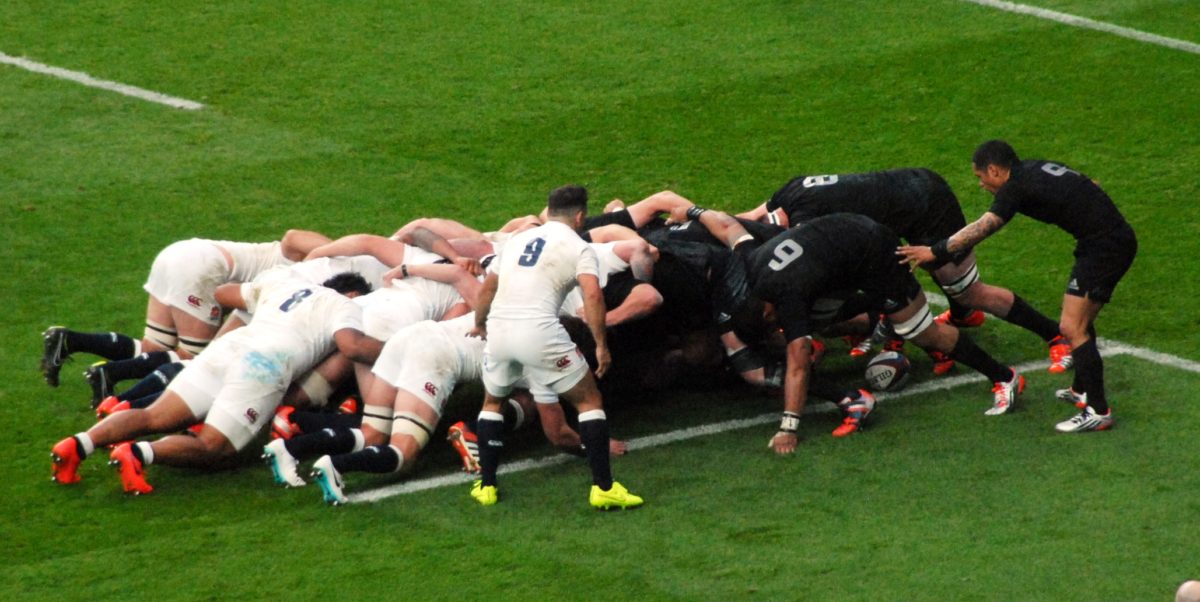
The flowing blitzkrieg of an All Blacks backline move is often the first thing a person sees when they are new to the game. It’s impressive because it’s high skill executed at high pace. It’s all very yang and masculine, because it’s fast and dynamic, but there’s another side to the game, because the backs can’t do anything without the ball.

The forwards might be slow, but without the ball the team can only really go backwards. So it doesn’t matter that these players are slow, as long as they are strong, because strength is the main factor that determines who wins a contest for ball possession. The forwards are therefore like the yin: underappreciated, but just as necessary as the rest.

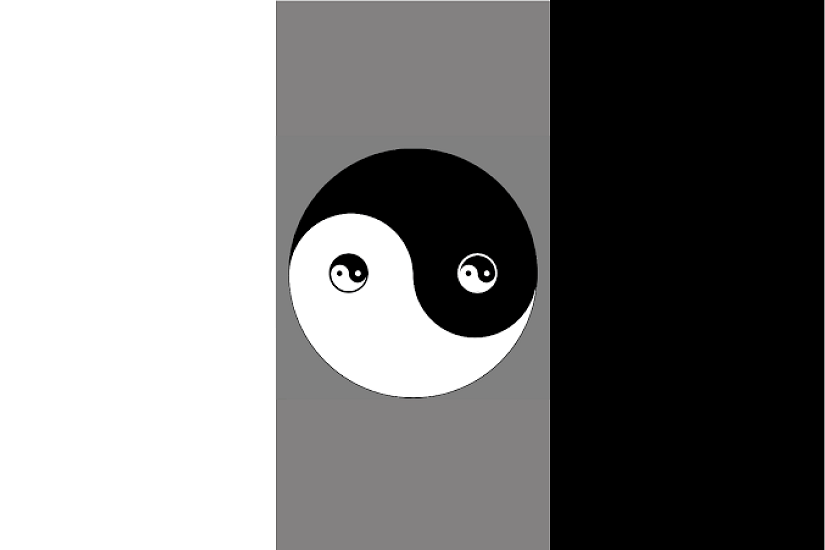
In this sense, a rugby team is like a taijitu. The backs as yang, and the forwards as yin. Both are entirely necessary for the correct operation of a rugby team, because the backs can score points but have trouble winning the ball, and the forwards can win the ball but have trouble scoring points. Neither is superior to the other, and neither can be complete without the other.

There is a deep spiritual truth in this. One solution to the question of the meaning of life is just to play one’s role, whatever that should be. A prop might envy the fitness and speed of the backs, and a winger might envy the strength of the forwards, but at the end of the day all either can do is just to play their role.

The rugby ball, being shaped in such a manner as to prevent it being passed along the ground soccer-style, represents the very centre of the taijitu. This is the position that Taoists refer to as the “unwobbling pivot”, on account of that the rest of the system revolves around it. Without a ball that can bounce in unpredictable ways, there is no game of rugby.

This ball is a very chaotic element, as can be seen on every occasion when a high ball is allowed to hit the ground (and often when it isn’t). In this sense, it also represents Fortune. For a New Zealander of the 21st century, instead of saying “The Lord giveth, the Lord taketh”, we say “That’s just the bounce of the ball.” The sentiment is precisely the same.

These patterns within patterns are part of the reason why rugby is now more of a religion in New Zealand than religion is.

The purpose of religion is not anything to do with any spiritual insights that it may confer. This is merely a ruse. The real purpose of religion is to bind a society together by bringing all of the disparate groups together in a state of equality before something absolute. God knows no division of class or race, and therefore all are equal before God, whether rich or poor.

Coming together in the name of God is an extremely powerful tool for creating social bonds, but New Zealand can no longer attempt to do this in the name of Christianity. That tradition is dead, but it’s not the only way that Kiwis can come together as one.

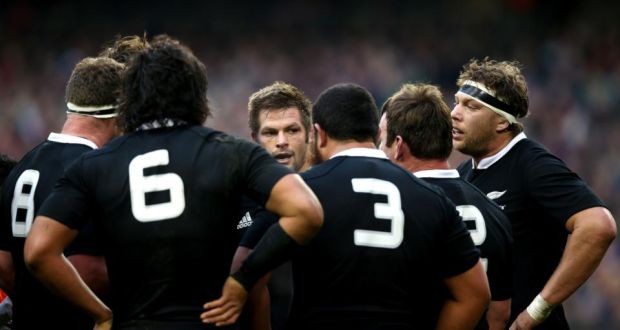
Rugby also serves this purpose. Rugby serves to bring Kiwis together in a way that no religion or Government enterprise can. At an All Blacks game, one sits in the stand, and it doesn’t matter if the person next to you if of a different class or gender – you are there for the same purpose, to give your energy to the same spectacle. You are all equal before something greater: the ritualised warfare that is rugby.

All of this goes double for those who actually play the game. Because mainstream religion is not inspiring to New Zealanders, we have to learn our moral lessons elsewhere – and historically this has been on the sports field.

On the sports field, we learn that sometimes you win and sometimes you lose. Sometimes you play well and lose, and sometimes you play poorly and win. We learn that arrogance usually leads to a comeuppance of some sort. We learn that a hard tackle is no less hard because the person delivering it was white or brown, or because the person receiving it was rich or poor.

We learn that the bounce of the ball favours neither the international superstar nor the 8-year old. All are equal before the whims of the prolate spheroid, which is, to the Kiwi, the form of God, distributing blessings according to a pattern that cannot be understood by mere mortals. We learn to adopt the humility that is the only correct response to such an almighty force.

So when people say that rugby is a religion to Kiwis, they’re more accurate than even they might realise. Rugby is to us what Taoism was to the everyday folk of ancient China, both bonding the community together and instructing its members about the mysteries of life, luck and death.

*

If you enjoyed reading this essay, you can get a compilation of the Best VJMP Essays and Articles of 2018 from Amazon for Kindle or Amazon for CreateSpace (for international readers), or TradeMe (for Kiwis). A compilation of the Best VJMP Essays and Articles of 2017 is also available.

The Three Fundamental Personality Types

If one chooses not to break the world into two, or into four, but into three, one comes across the three fundamental elements of mercury, sulphur and salt. Here the sulphur represents the masculine, the mercury the feminine and the salt the world. As this essay will investigate, these elements also reflect the three elementary personality types.

Anthropologically speaking, men can be described by the ethological niche that they fall into: they can be an alpha, a beta or an omega. This refers to their position on the dominance hierarchy, where alphas have high status and get the best women, and omegas have low status and no women. In modern parlance, these personality types can be described as chads, bugmen and soyboys.

The alpha is a creator. His nature corresponds to sulphur, which is the creative force. This creative energy makes things out of nothing; it imposes order upon chaos. He is Romulus, Gilgamesh, Alexander. He is the cardinal force, which makes something appear where once only chaos existed. This sort of man builds monuments, nations and empires.

Alphas aren’t generally interested in fitting into pre-existing systems. This is why he is also described as Chad, irresistible to women. The cardinal force is the most attractive to women because the essence of masculinity is precisely the capacity to impose order upon chaos. The chad imposes order upon the world around him, therefore he is masculine, and the feminine element naturally becomes devoted to him.

The beta is a maintainer. His nature corresponds to salt, which represents the world. In this sense, there is nothing remarkable about the beta. He doesn’t have a lot of personality, but he is extremely efficient when there are many like him in a bureaucracy – or a paramilitary group. Less intelligent than the alpha, the beta’s intellect can only encompass a limited sphere, but he is perfectly effective within it.

Betas are described as bugmen in modern parlance. This is because they appear to have neither personality nor free will, much like insects. Betas need alphas to give them direction, because they are afraid of doing the wrong thing and getting punished. He knows, however, that he is next in line to inherit the position of the alpha, and so he wants things to change the least. He therefore represents the fixed force.

The soyboy represents the mutable force, corresponding to mercury. This is because he is at the bottom of the dominance hierarchy, and therefore has nothing to lose and everything to gain from its dissolution. He represents the mutable force because the more things change, the better it is for him. He is also, for these reasons, the destroyer.

In this sense, mercury serves as the divine feminine in her representation as chaos. The soyboy is a natural loser, in that he never gets laid except for by pity, and the world seems to be rigged against him. Consequently, he is the one with the largest incentive to change things. This is why he is associated with resentment and other slave moralities. The mercurial element is unpredictable, because it resents having order imposed upon it.

These three personality types all depend upon, and interplay with, each other. Without the chads, there is no civilisation for the bugmen and soyboys to populate. Without the bugmen, the chads and the soyboys do not have enough in common for the ground to exist upon which a civilisation can be built. Without the soyboys, the chads and the bugmen are constantly at war with each other, having no mutually agreed weaker party to beat down upon.

The three are also natural divisions that reflect reality. This is why we can see the creator-maintainer-destroyer trichotomy in Hinduism, where Brahman acts as creator, Vishnu as maintainer and Shiva as destroyer. In Hinduism, however, it is understood that all three are necessary for life to function, and there is less emphasis on the mercurial element being unwanted.

In another sense, the chads and the soyboys follow each other around like the yin and yang of a taijitu, with the yin as mercury and the yang as sulphur. The bugmen are then like the unwobbling pivot of Taoism, as a kind of fulcrum around which the rest of the world turns. This is also reflective of reality in that yin and yang come and go, so that sometimes one is fashionable and the other not, and other times the reverse.

*

If you enjoyed reading this essay, you can get a compilation of the Best VJMP Essays and Articles of 2018 from Amazon for Kindle or Amazon for CreateSpace (for international readers), or TradeMe (for Kiwis). A compilation of the Best VJMP Essays and Articles of 2017 is also available.
VJMP Waitangi Day Address 2019

The only power that scares the Establishment is the unity of the people. Only when Maoris and white people come together, with strong bonds based on mutual appreciation of each other’s talents, do the ruling classes of this country sit up and take notice. Only then do they become afraid of us, instead of the other way around.

There are two very popular, and yet very false, narratives explaining why our society is the way it is. Both of these false narratives serve to divide the nation into two competing blocs, at each others throats. The first is the Imperialist narrative, the second is the Marxist narrative.

The Imperialist narrative has it that Maoris lived in a state of depravity and constant terror. Intertribal warfare and cannibalism were rife; life expectancy was 30 years if you were lucky. According to the Imperialist narrative, Maoris were rescued from this state by the benevolence of the British Empire, which made slavery illegal, and kindly dished out medicine, technology and an end to the Musket Wars.

The Marxist narrative has it that Maoris lived in a state of perfect peace and harmony with Nature. There was no violence and no hunger until the white man turned up. Then the Maoris were driven from their land under musket and cannon fire, into the wilderness to die. The British came here for no other reason than greed, and never saw the Maoris as proper human beings.

Both of these narratives are horseshit. Both have been designed to sow discord and hatred. Both are aggressive, supremacist ideologies, and both are supported by aggressive, low intelligence, egotistical people. Neither has a place in the New Zealand of the new century.

There is a lot of pressure for us to take on one of the false narratives. Many people find it gratifying to blame someone else for their problems, especially an entire group. Many people have chosen a side, not as a Kiwi, but as either a Maori or as a white person, and many of these see the other side of the divide as the enemy who seeks to steal from them.

The British did made slavery illegal, and they did bring technology and medicine here, that is true. They also did some bad things, especially with regards to swindling land from the Maoris, and with creating a society in which money and plastic was valued highly than social and spiritual connections. This is also true.

The Maoris might have problems with violence and abuse and neglect of children, this is true. They have also done outstandingly well compared to other indigenous peoples. Their intelligence and tenacity has enabled them to adapt to the tools of the white man in a way that the others never could. They are much wealthier than Tongans, who were never colonised. This is also true.

We need a new narrative, one that takes us forwards as brothers in arms. Not one that keeps us squabbling in the dirt. Esoteric Aotearoanism can serve as that narrative.

New Zealand society, for the majority of its existence, has been a co-operative enterprise between Maoris and white people. For better or worse, we’re stuck with each other. Neither group of people is going anywhere, and rates of intermarriage are so high that the time will come when there are not only no pure-blooded Maoris left but also no pure-blooded whites apart from immigrants. This is inevitable unless we are divided and conquered by outside forces.

Because of these immensely high rates of interbreeding, and because of the close, sometimes imperceptible, cultural exchange that we have had, Maoris and white people cannot be spoken of as two separate groups. They must be understood as the two major contributing factors to something that is greater than either of them: the Kiwi nation.

There are none of us who are pure Maori, unaffected by the white man’s influence, and neither are there any of us who are pure white people, the same as what can be found in Europe. We are now the yin and the yang of something greater than either of us. Both love rugby, live music, cannabis and exploring the wilderness just as much as the other.

It doesn’t matter what once was.

Co-operation is the only way forward. This demands that we reject the false narratives that cause us to fight each other, and adopt a new narrative that allows each of us to contribute to the greater good in their own way. It doesn’t matter what proportion of Maori blood you have, or what languages you speak, or even what your political attitudes are. There is a niche for you to contribute to the Kiwi nation.

*

If you enjoyed reading this essay, you can get a compilation of the Best VJMP Essays and Articles of 2018 from Amazon for Kindle or Amazon for CreateSpace (for international readers), or TradeMe (for Kiwis). A compilation of the Best VJMP Essays and Articles of 2017 is also available.

Our Problem Isn’t Too Much Masculinity – It’s Too Little

Our culture is so fucked up that it has a number of things completely backwards. It’s easier to find a doctor willing to tell you about the benefits of male infant genital mutilation than it is to find one willing to tell you about the benefits of medicinal cannabis. As this essay will examine, one of the things we currently have backwards is blaming a lack of masculinity on an excess of it.

The phrase “toxic masculinity” is bandied about, ever more frequently nowadays, as if it described an established phenomenon in psychological science. Ostensibly, the term is limited to the description of particular behaviours, performed by men, that are toxic to others or to society at large. In reality, the term is only ever used in the attempt to belittle men – or masculinity in general.

People frequently use the term with the implication that the toxicity comes from an excess of masculinity. But we live in the least masculine age in the history of Planet Earth. In New Zealand at the time of the 2013 Census, around 14% of children were raised by single mothers. When they are at primary school, 88% of their teachers will be women.

This means that most of the adult influence on boys in their formative years is female. Some boys will get to school having never seen a positive male role model or perhaps any at all. If these children are growing up to cause problems because they don’t recognise other people’s physical boundaries, it’s not the sort of problem that more femininity will fix.

The phrase “toxic masculinity” is often used to attack participatory sports, especially under the guise that these sports teach men to be aggressive, domineering and invasive of other people’s personal space.

The reality is – as everyone who has played sport knows – the rules of every game force you to channel aggression into goal-directed activity that does not harm anyone without their consent. You can’t just punch someone on a sporting field, or you’ll be sent off and possibly kicked out of your team. In this regard, the older men (usually) act as models of composure for the younger ones to follow.

Moreover, participatory sports have done more than any government initiative to break down barriers between different race and class groups and encourage them to all meet on the level. On a cricket field, a three doesn’t become a four just because the batsman was brown or middle-class or for any other reason. Masculine energy can therefore be used as a leveller in the interests of horizontalisation just as much as feminine energy can.

Our time in history is so completely feminised, and so confused, that hardly anyone even knows what masculinity is any more. It’s little wonder that some people can call it toxic with a straight face, when they have such a confused conception of it.

We’re so confused nowadays, that we have to go right back. Way, way, way back before even Jesus and even Socrates and Plato, back to the real ancients, who told us: masculinity is the ability to impose order upon chaos. Fundamentally the world is made of a feminine yin-chaos and a masculine yang-order, and in much the same way that the feminine makes chaos out of order, so too does the masculine make order out of chaos.

There are several ways that a person can impose order upon chaos, but correct conduct means that you impose order upon yourself first. This is something that is understood by every actual man, and is not understood by boys or by boys masquerading as men. They go out to impose order upon the world first, and do not realise that the strongest influence is the most subtle.

Socrates, perhaps the foremost Western example of manhood, taught that happiness came from making peace with death. Esoterically, one might describe this as imposing order upon one’s own spirit. As a previous article here has discussed, a failure to impose order upon one’s own spirit by making peace with death is akin to labouring under chains of gold, such that one becomes the slave of anyone who can credibly promise absolution.

A person who has imposed order upon their own spirit is able to impose order upon their mind also. Not being afraid of death means to not be in a state of constant panic at the inevitability of it, which means that it becomes possible to use one’s time on low-intensity pursuits such as reading. They will also be much more able to behave appropriately, on account of having imposed order upon their emotions.

It can be seen here that the common modern conception of masculinity is completely arse about face.

A properly masculine man will not sexually harass women for the simple reason that he has imposed order upon his reproductive instincts and, as such, can discharge them when appropriate, as a matter of will. His animal instincts don’t lead him – that would be an example of chaos being in control.

Likewise, a properly masculine man doesn’t feel the need to dominate everyone, or to boss them around, or to avenge minor insults with violence. He has imposed order upon his own ego, and as such does not have the same insecurities that a less masculine man would have. A truly masculine man has imposed such order upon his emotions that others can not easily knock him off balance. He is in charge of himself.

As such, a properly masculine man attracts the feminine not through force and aggression, but through attracting its freely-willed devotion. Rapists and molesters are not examples of too much masculinity but too little. A real man will have imposed such order upon his life, his behaviour and his appearance, that women will naturally want to be devoted to him, and therefore he doesn’t feel impelled to move on them without their consent.

Men who act on their impulses without consideration for the well-being of others are not “toxic males” – they are shitheads. What our society needs is more masculinity, so that young men can see examples of the correct imposition of order upon chaos. If young males are shown older males being rewarded for correctly imposing order upon themselves, they will imitate it. Thus, what we need is more masculinity, not less.

*

If you enjoyed reading this essay, you can get a compilation of the Best VJMP Essays and Articles of 2018 from Amazon for Kindle or Amazon for CreateSpace (for international readers), or TradeMe (for Kiwis). A compilation of the Best VJMP Essays and Articles of 2017 is also available.