
How God And Evil Can Coexist

One of the great philosophical and theological conundrums is how God and evil can coexist. This question has been discussed for over 2,500 years, and no resolution has been agreed upon. This essay will describe how the conundrum is resolved by the philosophy of Elementalism.

This conundrum is usually expressed in the words of Epicurus (see image at top of page). Believers in God often make the claim that God is both omnipotent and omnibenevolent. This creates a paradox in the mind of non-believers, on account of that evil and suffering exist in the world.

If God is unable to prevent evil, then God cannot be omnipotent. If God is able, but not willing, then God cannot be omnibenevolent. This paradox could be called Epicurus’s Fork, on account of that the believer in God cannot easily reconcile their belief in God’s omnipotence and omnibenevolence with the fact that evil and suffering exist.

Reconciliation of this paradox is easy for the Elementalist, however.

The first thing to state is that Elementalists have a particular conception of God and creation. The Elementalist believes that all individual consciousnesses are fragments of God, and therefore God is not something separate to ourselves. It’s more accurate to say that we, collectively, are God.

Likewise, Elementalists have a different conception of creation. The material world is not something that we woke up in – the material world is a dream that we collectively manifest through our will and karma. More specifically, our experience in the material world is considered to be an infinitely small subsection of something called the Great Fractal.

So how does that relate to the coexistence of God and evil? The answer lies in understanding what existence would be like without the illusion of a material world.

Our consciousnesses only feel suffering because we identify with our bodies. Our bodies are transitory phenomena, and like all transitory phenomena they are in a constant state of flux. This flux is usually painful. As a consequence, we need to act to balance it out. When our bodies get hungry we eat, when they get tired we sleep, when they feel pain we need to attend to it.

Without the illusion of a physical body in a physical world, our consciousnesses would exist in a state of perfect bliss, united with God. Absent a body, we would not have any cause to feel pain or fear of death. Absent a mind, we would not have any cause to feel anxiety or fear of the future. The only thing that would exist would be consciousness.

And it would be as boring as shit.

What would it be like to not suffer? It would be to live a life that was utterly devoid of meaning. Without the possibility of suffering, it wouldn’t matter what actions we chose. Every choice would lead to an identical outcome, at least as far as suffering is concerned. As such, our choices would be totally meaningless. We’d simply drift senselessly through life, like a leaf on a river.

This absence of meaning is the root of spiritual suffering, a worse affliction than any physical suffering could be. People rarely kill themselves from physical suffering, but they kill themselves from spiritual suffering every day. The physical suffering inherent to life, then, is not the worst thing in the world. Neither is the emotional suffering that is also inherent to life on account of that we cannot possibly satiate all of our desires.

We might have to act like physical and emotional suffering is ultimately terrible in order to give life meaning, but the reality is that an absence of meaning would be an even greater suffering.

It’s possible, then, for an omnibenevolent God to allow a minor suffering in order to prevent a major one. If the meaninglessness that accompanies existence in a state of perfect bliss can only be overcome by casting individual fragments of consciousness into a world of eternal misery, then so be it. Cast us, O God, into eternal misery!

At this point, some people will ask: “If Elementalists think that suffering is good, what’s stopping them from deliberately acting to increase suffering? If suffering gives life meaning, then why not go around raping and murdering? After all, it would create plenty of meaning in people’s lives as they struggled to resist you.”

Such questioners must be referred to the Law of Assortative Reincarnation. Elementalists believe that the energy one expresses into the world becomes the energy of one’s consciousness, and that the energy one receives from the world is a reflection of that same consciousness. As within, so without, and as without, so within.

An Elementalist would only act to increase the level of suffering in the world if they themselves wished to incarnate in a world of beings who behaved in that manner. Because this is extremely unlikely, it’s also extremely unlikely that an Elementalist would knowingly act to cause more suffering. The Elementalist belief is that there is enough suffering in the world naturally to give everyone’s life meaning, and so it doesn’t need to be added to.

In summary, Elementalists see no contradiction in believing in an omnipotent and omnibenevolent God despite the presence of evil. It doesn’t matter that a will to cause suffering exists in this world, because that will ameliorates a greater suffering: that of living a meaningless life.

*

If you enjoyed reading this essay, you can get a compilation of the Best VJMP Essays and Articles of 2019 from Amazon for Kindle or Amazon for CreateSpace (for international readers), or TradeMe (for Kiwis). A compilation of the Best VJMP Essays and Articles of 2018 and the Best VJMP Essays and Articles of 2017 are also available.

*

If you would like to support our work in other ways, please consider subscribing to our SubscribeStar fund. Even better, buy any one of our books!

Clown World Chronicles: What Is An ‘Ethnostate’?

The term ‘ethnostate’ comes up again and again, and it will come up even more often as Clown World intensifies. People like talking about whether instituting one is possible, and they like arguing about who would be let into one if it existed. This article tells you what you need to know.

Of all the thoughtcrimes that people get accused of nowadays, being a racist is the worst. Of the all the racist thoughtcrimes one can commit, the worst is supporting an ethnostate (one would think that supporting genocide would be the worst, but in Clown World overt hatred is sometimes not considered actual hatred, for reasons mysterious).

An ethnostate is a country where citizenship is limited to members of one particular nation or ethnicity. The countries of Europe started out as ethnostates, as did most of the nations of the Old World. It’s only in empires, such as Rome or the countries of the New World today, where different races are tasked with living in harmony.

America is not an ethnostate, and nor is any other Western nation today. As such, the concept only exists as an ideal – one that existed in the past, and which some wish would exist in the future.

The ethnostate is usually thought of as an imagined liferaft that will keep white people safe from The Muttening. This term refers to the continual increase of people with undefinable ethnic ancestry, to the point where Western nations are no longer identifiable separate breeds but rather a mass of mongrels.

In its American conception, the usual idea is that white people would pull back to the Pacific Northwest, this being the furthest away from where the bulk of the blacks and Hispanics live. The reasoning is that this part of North America is so cold and rainy that only white people could handle living there. This would also allow for California to be used as a buffer zone.

In its European conception, the usual idea is that all non-natives will be encouraged to leave, otherwise expelled. An ethnostate will thus be created from within. In principle, it doesn’t really matter where the non-natives are expelled to, but the usual idea is “back to the Middle East and Africa.”

The Alt Right, in particular, is obsessed with the idea of an ethnostate, believing it to be the solution to most of society’s problems. They believe in resegregation, which would entail American whites and American blacks living apart from each other. For the Alt Right, blending together different human groups is a recipe for social chaos. Segregation is as necessary to good order as private property laws.

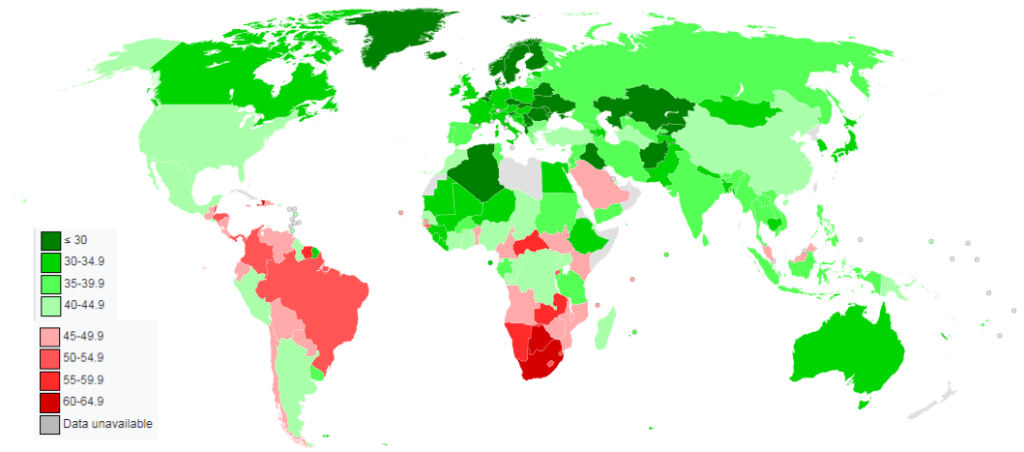
They are particularly fond of quoting crime statistics that demonstrate black Americans committing homicide at a much higher rate than white Americans. “13/52” is a popular phrase, referencing the fact that blacks make up some 13% of the American population but commit some 52% of the homicides. Multiple studies show that American blacks are some six times as murderous as American whites.

They are also fond of quoting sex crime statistics. In Sweden, native Swedes make up some 97% of victims of sexual homicides but at most 58% of the perpetrators. A Norwegian study found that 36% of rapes in Norway are committed by men born outside of it. Another study showed that the number of first-generation immigrants in a European country was significantly positively correlated with the number of rapes in that country.

The Alt Right argues that if Western nations would simply get rid of all their non-whites, everything would be golden. Removing this 10-15% of the population would reduce by half the number of sex crimes and homicides, they argue.

It’s certainly true that there are scientifically documented disadvantages to a lack of cohesion.

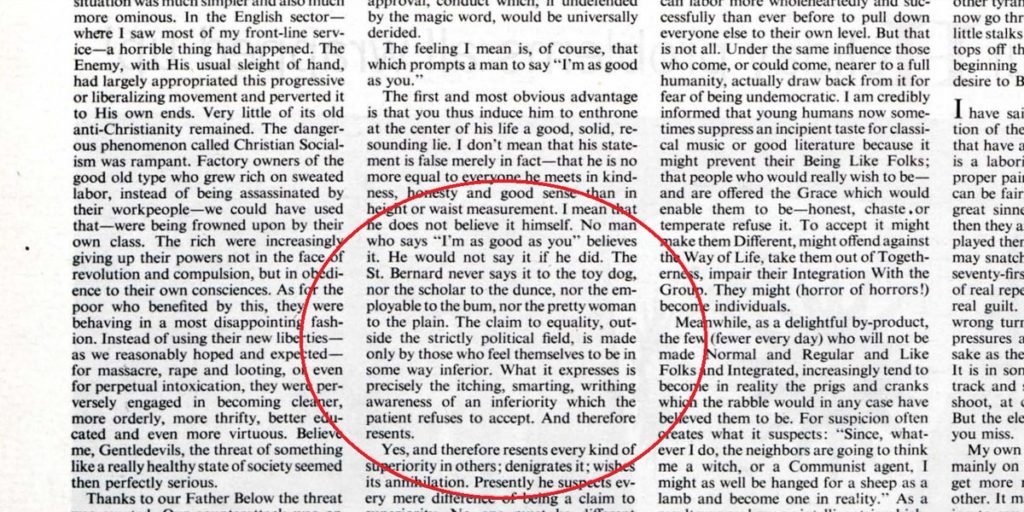
As Aristotle described, a lack of commonalities leads to infighting within groups that would otherwise be harmonious. Diversity leads to factionalisation, which is when one subgroup starts putting its own interests above that of the wider group. This inevitably leads to everyone else doing the same, meaning that overall social solidarity and trust are lessened.

Even worse, diversity gives tyrants the ability to play factions of the people off against each other. Aristotle noticed already 2,300 years ago that multicultural societies were inevitably ruled by tyrants, as their inability to agree on anything was exploited by demagogues. It’s often as simple as favouring one group unfairly, and the whole population can be induced to fight itself.

Despite all this, problems with the ethnostate idea are multiple.

For one thing, many non-whites occupy a lowly niche in Western societies that would otherwise be filled by whites. In Western countries, there’s a need to completely shit on one segment of society, so as to induce the others to stay in line. This is usually the cheap labour segment, which must necessarily be filled by whites in any white ethnostate.

This is true at the other end of the scale as well. If all of the Jews were kicked out of the West, the niches that they currently occupy would end up being filled by white people. Evidence for this comes from the fact that Japan and South Korea have also descended into Clown World, in many ways even worse than what the West has. But Japan and South Korea already are ethnostates, with hardly a Jew to be seen anywhere.

Even more crippling to any ethnostate proposal is the fact that, even with a will to institute one, the existing presence of mixed-race people would make it impossible to draw ethnic boundaries that could be agreed upon. Apartheid in South Africa had the advantage that whites and blacks were distinct people. But in America, the number of mixed-race people is so great that no clear lines could possibly be drawn.

If there is to be any hope for future dreams of an ethnostate, it might have to be run on a Selectionist basis. Some dwellers of cyberspace joke about a “Hapa ethnostate”, but the groundwork for one has already been laid in Hong Kong, Singapore, British Columbia, Sydney, Melbourne, Auckland and a few other places.

*

This article is an excerpt from Clown World Chronicles, a book about the insanity of life in the post-Industrial West. This is being compiled by Vince McLeod for an expected release in the middle of 2020.

*

If you enjoyed reading this essay, you can get a compilation of the Best VJMP Essays and Articles of 2019 from Amazon for Kindle or Amazon for CreateSpace (for international readers), or TradeMe (for Kiwis). A compilation of the Best VJMP Essays and Articles of 2018 and the Best VJMP Essays and Articles of 2017 are also available.

*

If you would like to support our work in other ways, please consider subscribing to our SubscribeStar fund. Even better, buy any one of our books!

The Elementalist Understanding Of Free Will

The question of free will is one of the classic philosophical dilemmas. Do we have any choice over over our own behaviour? Or are we fated to perform certain actions because of our genes and conditioning? Traditional philosophy has explored a variety of approaches to this question, but Elementalism provides a new one.

The questions above are the basis of what is known as the free will vs. determinism debate.

The free will argument contends that people can do whatever they want to. People have a choice between good and evil, between selfless acts and selfish ones, and if a person’s true will is good they will do good. As such, people who do good can be treated as if their will is good, and vice-versa.

The determinist argument contends that a person’s future actions are restricted to a range determined by, among other things, a person’s genes and their conditioning. People don’t really have a choice about what they do, because they can only motivate themselves to act if the wiring of their brain creates an impulse to action.

This is an important philosophical question because, as alluded to above, the resolution of it determines how certain miscreants are to be treated. If free will exists, then criminals can be punished harshly. If not, then they have to be guided into making the right decisions by behaviour modification.

The Elementalist perspective, as is often the case, is that mainstream philosophy has missed the point entirely.

Elementalists believe that all of us are, fundamentally, individuated consciousness, and that these individual consciousnesses traverse the Great Fractal by way of matching frequencies. To the Elementalist, there is no material world – every individuated consciousness is aware of a set of perceptions, and each set of perceptions exists somewhere in the Great Fractal.

These sets of perceptions change as the frequency of one’s individual consciousness changes. Therefore, to change the world to that which one desires, it’s only necessary to change the frequency of one’s consciousness. This can be done through repeated exertions of pure will.

Because there is no hard material world, there is nothing forcing a human being to behave in any pre-determined manner. There aren’t really any neurotransmitters, or any limbic system, or any instinctual response brain circuitry or anything else involved in decision-making. There is just consciousness and the contents of consciousness. Life is but a dream, through which consciousness passes, forever.

Elementalists believe that anyone can get anything they wish for, whether in this life or in one to come, by matching the frequency of one’s consciousness with the frequency of the part of the Great Fractal in which that thing exists or is happening. In fact, Elementalists go as far as to believe that one inevitably lives a life that matches the frequency of one’s consciousness, whether this is wanted or not.

Accordingly, a person has to be careful about what their true will is – because they will get it.

If a person’s true will is to assert themselves violently over others, they will gravitate to a part of the Great Fractal where the order of reality is the violent assertion of power over others. Sometimes they will benefit from that, and sometimes they won’t – that’s how it goes when you wish for such things.

If a person’s true will is order, then they will get order. They will end up in a part of the Great Fractal where chaos is minimised. A person who ends up in such a place might not like it on account of that they find the order suffocating. In such a case, this will be reflected by their true will, leading to a change in the frequency of that person’s consciousness, in turn leading them to another part of the Great Fractal.

If a person’s true will is peace, their frequency will come to reflect this as it comes to reflect the sum total of that person’s actions in their life. This will cause them to gravitate to a part of the Great Fractal populated by peaceful beings. An individuated consciousness might experience this as bliss – or hellishly boring.

In summary, Elementalists believe implicitly in free will, so implicitly that they strive to perfect their mastery over it. Mastery over one’s true will is mastery over how one navigates the Great Fractal – either one drifts ignorantly through existence or one dances skillfully through.

The Elementalist conception of reality teaches that we are individual fragments of consciousness experiencing the Great Fractal, which we are free to explore in perpetuity. As such, there is no reason to assume any kind of determinism beyond the Seventh Hermetic Principle, or the Law of Cause and Effect.

What that means, in practice, is that one can only move through the Great Fractal at a pace and manner determined by one’s previous actions. The more heavily one’s karma weighs, the more restricted one will be to certain pathways, and the less nimbly one will be able to change direction. One’s karma is, of course, a reflection of one’s previously expressed true will.

Such arguments were no doubt understood by the monk in the image at the top of this page. Although he was a Buddhist, and not an Elementalist, he would have been aware that the material world is illusory and therefore that all sensations are transitory. As such, he would have possessed a great deal of the wisdom that Elementalists aspire to.

*

If you enjoyed reading this essay, you can get a compilation of the Best VJMP Essays and Articles of 2019 from Amazon for Kindle or Amazon for CreateSpace (for international readers), or TradeMe (for Kiwis). A compilation of the Best VJMP Essays and Articles of 2018 and the Best VJMP Essays and Articles of 2017 are also available.

*

If you would like to support our work in other ways, please consider subscribing to our SubscribeStar fund. Even better, buy any one of our books!
Clown World Chronicles: What Is A ‘Gutmensch’?

For Clown World to be possible, the people building it have to have popular support. It has plenty of support, of course, among the ruling elites and the great capital interests that profit from the alienation, despair and fragmentation of the people. But how does it get support from the common person, who doesn’t benefit from Clown World? This essay explains.

‘Gutmensch’ is a German term that literally means ‘good human’. It’s a pejorative term that means something akin to “do-gooder” or “goody two-shoes”.

The gutmensch is someone who tries very hard to be seen to be doing the right thing, but who lacks the intellect to actually discern what the right thing is. They are not intelligent enough for philosophy, and they are not intelligent enough to understand the material world and to extrapolate from that, and they do not have a natural moral sense. So they have to take cues from the social world.

The process of determining right from wrong by way of observing the social world is an error-strewn one that takes decades to become any good – and is inaccurate at the best of times. As such, the gutmensch learns right from wrong from learning what the authorities say it is. Their parents, the government, their church, the boss, doesn’t matter – the authorities are always right.

The great weakness of this approach, of course, is that the social world can easily be manipulated by malicious actors. Most people older than children understand that there are many malicious people out there, and that it’s common for these malicious people to seek power in institutions that give them authority over others.

By the time intelligent people are 15 years old, they have figured out that hierarchies of power attract evil people and therefore it’s unwise to ever trust police officers, politicians, psychiatrists or priests. These intelligent people naturally distrust anyone who appears motivated to exult themselves or to assert control over other people.

The gutmensch never figures this out. He will go on blindly parroting what these authority figures say as if it were the word of God. For him, social dominance hierarchies can only be climbed by competence, and people can only become authorities if they were better than others. This child-like naivety makes it possible for all kinds of malicious actors to get support from gutmenschen.

These malicious actors prey on the sheep-like nature of the gutmensch to induce him to support policies which are in the interests of those malicious actors, but not in the interests of the gutmensch. Mass immigration is the foremost example. As such, the gutmensch can be herded to his doom, like a deer driven over a cliff.

The big problem with that is that the gutmenschen take the rest of us down with them. Their overwhelming mass support for the status quo and for the established rulers of society means that, in order to effect positive change, one has to fight against society itself. The gutmensch serves as a mindless drone guarding the elites, something that has to be overcome if Clown World is to be overcome.

Another way that the gutmensch weakens society is from his fear of taboos. There are so many things that the gutmensch forbids themselves from speaking about that, sometimes, talking to them feels like talking to a religious fundamentalist. Topics of race, religion, sex and gender differences cannot be discussed, and if they can be, only the most blue-pilled, Government-approved opinions can be offered.

All these taboos have the final effect of destroying conversation and making communication more difficult. In the final analysis, the gutmensch is, despite his intentions, a destroyer.

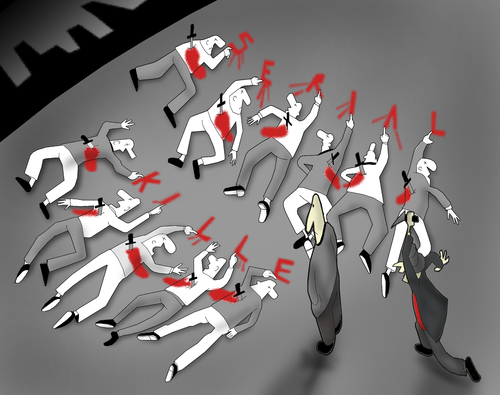
Although the gutmensch thinks himself an upstanding citizen who wouldn’t harm anyone, he was on the front lines of the Nazi and Communist battles against their own people, comprising a large proportion of those who ratted out their neighbours. The gutmensch is capable of committing any atrocity while thinking that, because the Government approved of them, they were doing a good thing.

Fundamental to gutmensch psychology is a terror of being judged, especially of being found unworthy. This is because the gutmensch has no real self esteem, and must find it elsewhere. Because his social equals are also pathetic, the gutmensch must seek approval from authority figures. This is why he is so eager to please them.

Underneath it all, gutmenschen are massively egotistical losers, so incredibly precious that they’ll happily go along with any mob, no matter how destructive, rather than risk disapproval. In their hearts, they know they are pathetic, which is why they resent those who are not. Fundamentally, then, gutmensch mentality is a slave morality.

In most cases, gutmenschen turn out the way they do because they have lived extremely sheltered lives. The typical gutmensch will never have travelled outside of their comfort zone, much less backpacked through the third world or lived in countries where they speak another language. They have never been challenged, and as such remain men of clay.

These gutmenschen evoke plenty of hate on account of that their self-righteous moralising makes people want to punch them. These sentiments are well warranted, because it is the gutmensch who normalises every government abuse, from those of the Nazis and Communists to the War and Drugs and alcohol prohibition.

The difference between a gutmensch and a baizuo is subtle, and mostly a matter of age and education. Perhaps the best way to explain the difference is by analogy to the animal kingdom. The baizuo is like a peacock: it preens, it appears vain, and its elaborate virtue signalling does more harm than good. The gutmensch, by contrast, is a simple herd animal. It doesn’t care about anything other than fitting in.

*

This article is an excerpt from Clown World Chronicles, a book about the insanity of life in the post-Industrial West. This is being compiled by Vince McLeod for an expected release in the middle of 2020.

*

If you enjoyed reading this essay, you can get a compilation of the Best VJMP Essays and Articles of 2019 from Amazon for Kindle or Amazon for CreateSpace (for international readers), or TradeMe (for Kiwis). A compilation of the Best VJMP Essays and Articles of 2018 and the Best VJMP Essays and Articles of 2017 are also available.

*

If you would like to support our work in other ways, please consider subscribing to our SubscribeStar fund. Even better, buy any one of our books!