VJMP Reads: Anders Breivik’s Manifesto XVII (End and Summary)

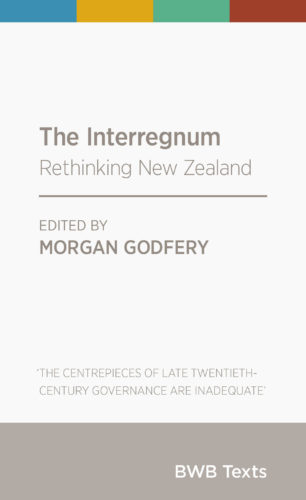
This reading is the final one in this section, and completes our reading of 2083: A Declaration of European Independence. It carries on from here.

This final section of the document (pages 1414-end) is mostly given over to a diary-style account that Breivik wrote when he was planning his operation. It describes in detail his thoughts leading up to the event and the caution he took in order to go undetected until the final moment.

It reads eerily because of a combination of a few things, especially the ordinariness of the vast majority of Breivik’s thoughts when contrasted with the murderous intent and fanatical devotion with which his deed was planned. Hannah Arendt’s comment about “the banality of evil” comes frequently to mind.

Most of the concerns and anxieties that he describes here are simply everyday concerns. One passage about the tediousness of email farming could have been written by any non-violent person, and another passage about Breivik being forced to overcome his fear of spiders might even be endearing if the reader hadn’t already gone through 1,450 pages of justification for shooting teenagers.

This section is actually capable of being self-consciously dark and comical, such as when Breivik is describing the difficulties he initially encountered trying to buy black market firearms in Prague, when his typically Norwegian frankness brought instant paranoia to the criminals he was trying to do business with.

All in all, it’s things like this that make this document so unsettling. Breivik is clearly capable of sophisticated humour and was apparently able to make friends and socialise without anyone realising what he was planning. With his references to social competition and a great future ambition he seems unbelievably normal – most of the friends he references have serious girlfriends and/or professional jobs.

This is a common sentiment for people who have known serial killers and the like, and were astonished by how normal they seemed. After all, Breivik killed over 70 people, which is more than other infamous killers like Ted Bundy and John Wayne Gacy. So it’s reasonable that many people would be surprised and astonished when they saw on the news that someone they knew and considered normal did such a thing.

A question about gun control is raised in this section. If Breivik purchased a semi-automatic rifle legally under stringent Norwegian gun control laws, and still managed to kill more people in one incident than has ever been managed by an American terrorist in the entire duration of that country and its long love affair with firearms, then what’s really going on?

At one point, Breivik relates a discussion with a Marxist friend at a party, where Breivik asks: “Don’t you consider yourself to be a hypocrite considering the fact that you support mass Muslims immigration and at the same time refuse to actually live with them?” It’s a question that many young Western people have asked themselves of the middle-class left.

If a person would start to read this manifesto with a certain idea in their head about Breivik being a neo-Nazi and Nazis being simple but emotional people, they would get a completely different idea by the finish. Breivik is genuine when he claims to despise Nazis, for the reason that Nazis would soon get rid of people like him, a “cultural conservative” who considers Israel a brother nation.

Breivik is not a Nazi, and neither is he a thug. There are grammatical errors characteristic of a native Scandinavian speaker throughout the text, but at the same time there are few people who would be capable of compiling a mostly coherent 1,500 page document in a foreign language.

Also striking is the fact that Breivik made over $1 million over the course of five year through a variety of entrepreneurial schemes that would have taken good intelligence and great personal drive and commitment to complete.

This paints a picture of Breivik as a member of the class elite in many ways. He was physically, financially, socially and intellectually (to say he was ‘mentally’ healthy would be pushing it) in excellent shape.

Perhaps here the signs of his downfall can be first observed – in one passage he describes himself as someone with “basically the perfect body”, and at no point in this document does he express an appreciation of or reverence for any other person, apart from vague historical figures.

Also telling is the fact that no romantic engagement with a woman is ever mentioned. Breivik mentions partying with Norwegian friends and their girlfriends, but at no point does he mention a girlfriend himself, a desire for a girlfriend, or getting laid (beyond the need to breed children to counter Muslim rates of breeding). It’s possible that his narcissism made him lonely on account of making him intolerable to women.

When all the signs are put together, Breivik is clearly a monstrous narcissist, which is perhaps from where he got the willpower to reject the socially accepted history and modes of thinking and arrive at an intelligent and accurate conclusion.

It’s perhaps also possible that being one of the few people in his social circles to appreciate the iron-cast logic of Muslims eventually becoming a majority in some European countries if current trends continue, Breivik suffered from a profound sense of alienation and isolation. It’s an extremely difficult experience to be the one person who can see the truth while the masses rip you down for speaking it. This may have caused him to become bitter, resentful and vengeful.

In the final analysis, it’s more than possible to put aside the narcissism and the murders and to consider Breivik’s unusual perspective on its own merits. Dismissing this document on the grounds that a murderous narcissist wanted it read is to fall victim to precisely the kind of logic dismantled in the document itself. It would represent the intellectual cowardice that gives rise to someone like Breivik in the first place.

After all, Breivik’s political complaints are entirely reasonable, even if his conclusions are not. The real danger is that people with entirely reasonable conservative beliefs are radicalised into violence on account of the utter refusal of the left to engage with them civilly in favour of adopting “Punch a Nazi” style thuggery. A refusal to honestly talk will lead to violence, so any leftist with an honest sense of duty to keep peace and good order in society has to at least consider this question.

*

This is the end of this segment of VJMP Reads. Now we have put to the readers on our FaceBook page the question of which book to read next.

VJMP Reads: Anders Breivik’s Manifesto XV

This reading carries on from here.

In this section (pages 1235-1290), Breivik turns to the question of how to consolidate and organise European conservative groups. This is mostly to be achieved through the promulgation of what Breivik calls the “Vienna School” of ideology, so named because it was in Vienna where the last great expression of a European will to not be ruled by Islam took place.

For Anglo readers, some of Breivik’s philosophy will appear very curious. Some of this originality is a consequence of being European, such as his desire to resist “excessive US cultural influence”. He also believes in the idea of partitioning South Africa in two countries, with one for the Europeans. These sentiments he shares with many other European thinkers, not all of whom are right-wing.

Fundamentally, as is repeatedly emphasised, Breivik is looking for space away from what he considers hate ideologies. These hate ideologies are all as bad as each other in Breivik’s mind, and he claims to oppose any such ideology based on hate: “A multiculturalist is just as bad as a Nazi, which again is just as bad as a true Muslim, a communist or a fascist.”

The four most prevalent hate ideologies in the modern world, against which all nationalists and patriots much stand, are according to Breivik:

1. National Socialism (anti-Jewish hate ideology, racist in nature).
2. Islam (anti-Kafr hate ideology, Christians, Jews, Buddhists, Hindus, Atheists etc).
3. Communism (anti-individualism, anti-freedom).
4. Multiculturalism (anti-European hate ideology, anti-white racism).

Sometimes Breivik’s argumentation is so reasonable that one is forced to consider whether or not he may have become demented after composing this document. For instance, he correctly points out that it isn’t a good or honourable idea to fight the hate of multiculturalism with the hate of Nazism, and one ought to strive to find an ideology without hate. He also points out that young people should not be considered “lost causes” just because the media labels them racists, a level of tolerance severely at odds with his infamous actions.

Much of this section is taken up with talk about the “seven fronts” of peaceful activism, which involve ways of promoting a cultural conservative message and resisting the hate ideologies of Communism and Multiculturalism while acting within the law at all times, and how people in these fronts must officially deny support for the “eighth front” of armed resistance.

Breivik gives a sense of having left no stone unturned when he writes at length about the reality of time in prison for anyone really interested in being a member of the eighth front. How to conduct oneself in prison in order to undermine Islam is discussed at length.

The most interesting thing to take away from this section is the question Breivik raises when he talks about the need for reasonable cultural conservative movements. He makes the claim that multiculturalists have sown the seeds for their own downfall by making moderate cultural conservatism impossible, because this has driven a large number of impressionable young people into the embrace of hate ideologies like Nazism.

This might be the aspect of Breivik’s philosophy that people will have the most difficulty understanding. He has the historical understanding to foresee a counter-reaction to leftism, and he knows that the greater the excesses of one age, the greater the excesses of the counter-reaction. So he is a voice of moderation in a very real way, somehow managing to be a centrist on the paranoid and aggressive axis.

Interestingly, however, Breivik puts the responsibility of creating this reasonable cultural conservative movement on his readers. He argues that any unwillingness to do so will inevitably result in impressionable youth having their social needs met by more insidious movements.

Everything is a Matter of “Muh Feels”

It’s common for one side of an argument to demand from the other side a cold, logical, rational reason to justify their position, while at the same time decrying all appeals to emotion as fallacious. The problem with this line of reasoning is that there are no truly objective reasons to make moral judgments about anything. As this essay will investigate, all political motivations are based on emotion.

Usually the person dismissing an argument as emotional is the sort of person who is a bit autistic, perhaps themselves not really in touch with their own emotions. This sort of person has a tendency to dismiss the genuine outrage, horror or disgust of other people as illegitimate motivators. They also have a striking tendency to not realise how emotional their own arguments are.

For instance, on the question of taxation for the sake of paying for social services, many people on the left make the argument that the right are without emotion when it comes to child poverty, mental health services, rape crisis centres and the like. The usual rightist counter to this is to claim that them keeping the maximum amount of their own income is a moral imperative to oppose communism or the likes, and that left-wing “feels” about starving children etc. do not and cannot ever justify the government levying taxation upon people.

What these rightists usually miss when it comes to this line of reasoning are their own emotions that are tied up in the issue.

The government levying taxation upon people is not wrong by dint of some decree from God. It is usually only opposed by those who believe that their personal net return of government services received from this taxation is negative. For these people, a sense of anger arises from feelings of having one’s energy parasitised; a similar sort of anger arises in cases of property theft or gross disrespect.

It can thus be seen that the right wing opposes taxation for emotional reasons. In other words, “muh feels”.

Political questions, when it comes down to it, are all a matter of “muh feels”. Feelings of injustice motivate most of them, and for many people such feelings are unavoidable. After all, the feelings of the population about what is the optimum level of taxation fall along a bell curve with no taxation at one end and full communism at the other, but the actual overall level of taxation must fall on a point on that curve, meaning that many above it will be outraged that it isn’t higher and many below it will be outraged that it isn’t lower.

Even murder fulfills this criteria. After all, what’s wrong with murder other than that it makes us feel bad? If it wasn’t for the fact that a person likely feels terrified when they’re being murdered, or the fact that the people left behind feel bereaved when someone they love is murdered, or the fact that the people in the neighbourhood feel afraid by murders in case they are next, or the fact that other citizens feel disgusted by murder because they consider it a bestial act of brutality, then there would be no reason to even make murder illegal, much less anything else.

Indeed, it could even be argued that, without feels, none of us would be capable of feeling motivated to do anything, and we would simply lie about until we died of metabolic failure.

Although it’s often true that a person does not examine their own emotional impulses and makes political decisions by just lurching from one burst of neurotransmitters to the next, this does not by itself mean that emotional input into decision making is necessarily undesirable, or that a line of reasoning appealing to an emotion is necessarily fallacious.

It could even be that, for a social species, correct decisions cannot be made without some accounting for how people will emotionally react to them. If one drills deep enough, there may not be much more to life than “muh feels”.

The Conscript’s Dilemma

No forced hierarchy could ever form if those conscripted into it at the bottom killed those doing the conscripting

The thought experiment known as the Conscript’s Dilemma is at the very core of anarcho-homicidalism. It poses a very basic and very primal question that invites the listener to question their inherent attitudes to hierarchy, violence and submission. This essay discusses it from an anarcho-homicidalist perspective.

Imagine that you are a young man entering the prime of his life. Your village lies in the territory of a despotic king who regularly raises conscript troops to go and fight for treasure in overseas adventures. Those sort of adventures are foreign to you. You have you own life to live in the village – obligations to discharge, maidens to court etc. Life is orderly and good.

One day a conscription officer rides into your village. He explains that it’s war time again, and that he has come to round up for the army all fighting age men – which means you. The penalty for refusing to heed the king’s call is death.

This scenario has played out millions of times throughout the history of the Earth. It’s well-known what happens in the vast majority of cases: the villagers, cowed by fear of the distant king, willingly give up their sons to the war machine for fear of incurring the king’s wrath.

After all, if incurring the king’s wrath means certain death, and going to war only means the possibility of death, and there is no third option, going to war is the obvious correct choice.

Or so it might seem.

An anarcho-homicidalist thinks otherwise. Central to the idea of anarcho-homicidalism is that dominance hierarchies could not form without the consent of the dominated, and that anyone trying to enslave you can rightfully be killed if necessary to protect one’s own liberty. This means that the conscript at the centre of this dilemma has a third option: kill the conscription officer and trust that his fellows are also anarcho-homicidalists.

If the others are also anarcho-homicidalists, they will back him up. They will understand that killing the conscription officer was necessary to protect the village and its residents from the kingdom’s hierarchy. They will understand that the king’s actions are tantamount to an attempt to enslave, because they are implicitly claiming that the bodies of the villagers are the property of the king.

If they are not anarcho-homicidalists, that is to say they are normal men, that is to say they are cowards, they will be terrified of getting into trouble from killing one of the king’s men. They will turn the anarcho-homicidalist in, probably for the inevitable reward, or perhaps even kill him themselves out of a belief that he is a murderer and that the conscription attempt was legitimate.

The anarcho-homicidalist knows that if he killed the conscription officer, the punishment is unlikely to be much more severe than the worst potential cost of obeying the demand for conscription, which is to go to war and get slaughtered.

However the potential reward, should he find enough support in his actions that he is not simply taken down by the king’s local sheriffs, is total freedom.

Ultimately, this is what the question of anarcho-homicidalism often boils down to. If you’re not willing to kill to maintain your freedom, then you can’t maintain it in the face of someone willing to kill to take it away.

The Conscript’s Dilemma could be described in much the same way as the Prisoner’s Dilemma, with which it shares much of the same meathook logic. Essentially it’s a question of game theory, and it’s a curious one because the people involved, despite being best served by co-operation, are challenged by powerful incentives that incline them towards not co-operating.

More precisely, the dilemma is that if everyone was an anarcho-homicidalist, and everyone had confidence in everyone else’s faith in anarcho-homicidalism, they would all choose to kill any conscription officer who tried to force them into the army and thereby make slavery impossible, but if sufficiently few of them are anarcho-homicidalists then they will not resist enslavement efforts out of fear that the slavers will punish them, and so slavery becomes possible.

It is a useful rebuttal to those who reject anarcho-homicidalism right off the bat on account of that it explicitly calls for killing people. Very often, the alternative to having a will to kill in self-defence is to become a slave.