

Will Drinking Alcohol Still Be Popular In 50 Years?

Booze: it’s kind of crap, and it’s time we moved on to better drugs

A lot of really stupid things have fallen out of fashion in recent decades, and for good reason. Smoking tobacco is now uncommon, because we’re now much more aware of the deleterious effects than we used to be, and seeing someone riding a motorcycle without a helmet is rare too. This article asks the question: will drinking alcohol still form the basis of Western social interaction in half a century?

Let’s face it: the only reason we drink a lot is habit. It’s not because alcohol is good, and it’s not because alcohol is safe. Alcohol isn’t really good because there are plenty of other common drugs that are better: MDMA is a better entactogen, cannabis is more relaxing, opium is better for getting wasted with. It’s also not safe, for reasons that are obvious to anyone who has spent time around drunks.

No – the reason why we drink a lot is because our parents did, and they drank because their parents did, and so on, and in every case it’s true that people drank alcohol because that’s just what people did. For thousands of years, the ancestors of Westerners knocked back the booze – they didn’t know about the relationship between alcohol and heart disease, liver failure or cancer, because people seldom lived long enough to be affected by such things.

Moreover, there are large capital interests that are tied up in alcohol manufacture and sales. The alcohol industry is easily big enough to buy off politicians at the national level – and they do. These politicians have been more than happy to stop any competitor to alcohol getting established, which is why our recreational drug scene is soaked with booze (and thereby with the violence, sluttiness, vomiting and hangovers that inevitably accompany the alcohol experience).

These factors might very soon stop having an impact. The changing drug market scene has smashed the duopoly over the recreational drug market that alcohol once enjoyed along with tobacco. Not only are there now over a dozen territories where cannabis is properly legal, but the rise of dark markets on the Internet has made it possible for people anywhere to access a wide variety of drugs without needing anything more than a postal address.

There have also been more sinister undertones to the historical promotion of alcohol use.

From the earliest days of the Age of Colonialism, European traders were aware of the destructive effect that alcohol (usually in the form of rum) had on the natives of the New World. There was no need to shoot them when you could simply trade them some booze and watch them destroy themselves. Although it was not appreciated at the time, alcohol was effectively able to be used as a bioweapon by the Europeans.

This was because they had developed a genetic resistance to alcohol over thousands of years of exposure, while the natives had not. Over the past several thousand years, because Europeans were getting drunk much of the time, there was a selective pressure against those who misbehaved while drunk. Anyone who became excessively violent or stupid while drunk was liable to delete themselves, and their genes, from the gene pool. Over time, therefore, Europeans adapted to behave relatively tamely when intoxicated.

So when the European traders introduced alcohol to the delicate psychobiological balance of the New World, it had a similar effect to a hand grenade. Alcoholism has destroyed the native peoples of North America, South America, Australia and Polynesia. If European complicity in this was widely accepted and owned up to, the need to legalise recreational alternatives to alcohol would become obvious.

Given all of these factors, it has to be asked whether the widespread consumption of alcohol is something that will continue much further into the future. It can already be observed that the youngest generation is abandoning alcohol en masse, usually for cannabis but sometimes for other substances that can be easily be obtained: MDMA or research chemicals are popular alternatives.

Global recreational drug culture this century is more likely to revolve around cannabis for the reasons described. Cannabis is something that people of all nations and races can enjoy equally without any sense of cultural advantage, unlike alcohol, which is really the white man’s drug. It can already be seen (in the few places they exist) that cannabis cafes serve as places where people of many cultures come together in harmony and good cheer.

As awareness of the harms of alcohol spreads, as recreational alternatives become increasingly available and as world culture moves further away from a Eurocentric model, it’s possible that the prominence of alcohol in our culture diminishes in the same way tobacco did. It’s hard to imagine now, but there are good reasons to think that hardly anyone will still be regularly drinking alcohol in 50 years’ time.

*

If you enjoyed reading this essay, you can get a compilation of the Best VJMP Essays and Articles of 2017 from Amazon for Kindle or Amazon for CreateSpace (for international readers), or TradeMe (for Kiwis).

The Key to Generating Wealth is Artificial Scarcity

Artificially restricting the common property of the masses drives up the price of private holdings of capital

Work hard, and you’ll get rich. All Westerners have been told this since we were small children – and it used to be true. Back in the days when there was natural scarcity, this made sense, because what was lacking was productive capacity. Now that human productive capacity is effectively infinite (at least when it comes to meeting physical demands), economics works on a different basis – that of artificial scarcity.

The definition of artificial scarcity is “the scarcity of items even though either the technology and production, or sharing capacity, exists to create a theoretically limitless abundance”. Many people have noted that the productive capacity already exists on Planet Earth to create a theoretically limitless abundance of most things, and the reason why we don’t already have it is a matter of politics.

Understanding artificial scarcity is a matter of understanding that every financial transaction is a matter of leverage, and that leverage is a matter of the supply of that good or service, and that the supply of any good or service is a function of its scarcity (or of the scarcity of its basic constituents).

Looked at another way, the more scarce a good or service can be made, the more desperate people will become in order to obtain that good or service, which means the purveyor of it has more leverage, and the price of that good or service will therefore increase. Once your own supply of a particular good or service is ensured, profit can be increased by restricting supply of it to everyone else.

Strangling someone to get them to give up their wallet is an example of inducing artificial scarcity, in this case a scarcity of oxygen to the brain. Understanding this extortionate power is key to understanding the whole point.

In a state of Nature, people are free to hunt and gather from the commons to which all land belongs. There is therefore no such thing as artificial scarcity, because all scarcity is natural. Today, however, because everything has been enclosed, fenced off, walled off, there are no longer any commons, and consequently there is a massive artificial scarcity of food, whether game meat or gathered fruits, nuts, berries, mushrooms etc.

This artificial scarcity of food has created immense scope for profits for the land-owning class. The masses who had their land taken must now serve those who took it in order to get enough of that wealth to live. There is such an immense scarcity of land that anyone with an enforceable claim to own it can become rich by simply charging rent, because there will always be someone with a productive enterprise that needs land on which to operate, and they will pay rent.

In other words, the people continue to work the land for sustenance as they always have done, but now that sustenance passes through an intermediary (the landowner) who takes as big of a cut as they see fit (possibly subject to anti-exploitation laws), and leaves the remainder for the workers. Thus it can be seen that artificial scarcity can arise as a form of gangsterism.

Artificial scarcity is usually defended by those who profit from it, and from the sycophantic dogs who are happy to take a slice of that profit in exchange for enforcing it on the masses. To the extent that these two groups hold power in society, artificial scarcity will exist.

Ever since the Industrial Revolution made it cheap to produce everything, those who wished to gain political and economic control over the masses switched the emphasis from helping those masses overcome natural scarcity to imposing upon them artificial scarcity. George Orwell wrote about this in 1984, when he had Emmanuel Goldstein write about how politicians need to destroy surplus production in order to keep the populace under control.

Speaking as the author of The Theory And Practice of Oligarchical Collectivism, Orwell teaches that the main motive for introducing artificial scarcity is political power. If the people have a surplus of goods and services, their standard of living will rise. As their standard of living rises, it becomes increasingly possible for motivated individuals among them to become educated and free-thinking, and, consequently, to become the sort of person who will challenge the control system.

Defending the control system, therefore, requires that the people are impoverished.

An excellent example of artificial scarcity in the modern world relates to housing. The Baby Boomer generation have realised – now that they own all the houses – that by increasing demand for those houses (through mass immigration) while simultaneously decreasing demand for them (such as refusing to build new ones or restricting access to old ones through tricks such as New Zealand’s meth house scam), they can push the younger generations into more desperation and thereby a weaker negotiating position.

Tightening the supply of housing is like tightening the grip around the throat of the young who are desperate for it – which is how the Boomers are now able to extract so much rent.

Cannabis prohibition is another good example. By artificially restricting the people’s access to cannabis, the politicians gave great leverage to their friends in the alcohol and pharmaceutical industries, who had one fewer competitor for monopoly of the recreational drug and medicine markets, respectively. The cannabis laws also have the benefit of primarily destroying black, brown, young, poor and freethinking people, which further entrenches the power hierarchy.

So getting rich isn’t about working hard anymore – it’s about getting your fingers around the throat of someone who does.

*

If you enjoyed reading this essay, you can get a compilation of the Best VJMP Essays and Articles of 2017 from Amazon for Kindle or Amazon for CreateSpace (for international readers), or TradeMe (for Kiwis).

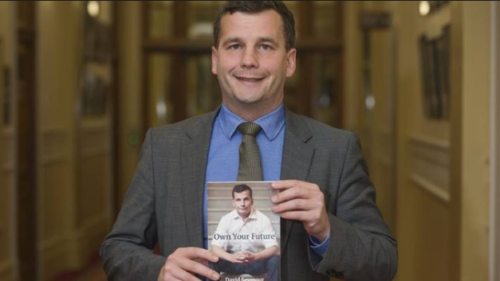
VJMP Reads: David Seymour’s Own Your Future I

A Liberal Vision for New Zealand in 2017

Today, VJMP Reads has a look at Own Your Future, by ACT Party Leader David Seymour. This is a 192-page book of essays published by the ACT Party along the lines of previous ACT Party efforts such as Closing the Gaps and I’ve Been Thinking.

Previous VJM Publishing publications, such as Dan McGlashan’s Understanding New Zealand, tells us some basic facts about the ACT-voting demographic. Although few in number (a mere 13,075 in 2017), they were the wealthiest voter base of any party, as well as the most likely to be born overseas and one of the best educated (along with the Greens). Asians like them the most, white people the next most, and Maoris the least.

We have also seen that people who donate to the ACT Party get the worst return on their investment, with the party gaining 22 votes per $1,000 spent on the 2017 campaign. This compares to 388 votes per $1,000 for Labour, 452 for National and 4,761 for the Aotearoa Legalise Cannabis Party (even the vanity project that was The Opportunities Party managed 62 votes per $1,000 spent).

So who are ACT, in the words of their own leader?

The Introduction runs to sixteen pages, and is worth studying on its own. It starts off by telling the story of the struggles of a wealthy couple to subdivide their land. Hilariously, by the third page there’s already a reference to how, under communism, “people starved by the million”, so it’s already a fair bet at this early stage that the book will be full of far-right-wing American-style libertarianism.

On page 12, Seymour states that he grew up “not rich”, and also states that the first time he realised that the Government might not have our best interests at heart was at age sixteen. Seymour was born in 1983, which would make him around 8 years old at the time of Ruth Richardson’s infamous 1991 Budget, which ripped the heart out of the New Zealand poor. Had it not occurred to him in the aftermath of the social destruction wrought by this that the Government is not on the people’s side, then it can fairly be said that he was unusually privileged, if not actually sheltered.

In fact, the truly sheltered nature of Seymour’s life comes through in lines that would be comic genius in any other context. How else to read “Auckland Grammar is a particularly barbaric place for some kids. I vividly remember one kid getting a tennis ball to the head, it bounced lightly but its power was symbolic”?

Like most men of his time, Seymour is a materialist. He is proud to have supported liberalising the abortion laws. ACT wanted to introduce laws that would make New Zealand a better place, in Seymour’s estimation, hence his support for them. This is stated very matter-of-factly, with no explanation as to why he thought that ACT in particular were best suited to make New Zealand a better place.

Inevitably, Seymour has a go here at the eternal ACT bugbear, the Resource Management Act. He writes that the poorest fifth of New Zealanders spend almost half of their income on housing today, compared to only a quarter of their income 26 years ago. All of the blame for this can be laid at the feet of the RMA, which has strangled the rate of house building. “That’s why people are living in cars and garages.”

The obvious rejoinder to this claim is to point out that New Zealand has the highest rate of immigration of any OECD country. Seymour anticipates this, and writes of the immigration question that opinion is divided between “National’s naivete vs. the racism of New Zealand First.” Like many middle-class white people, Seymour appears to be unaware that New Zealand First’s strongest supporters are Maoris.

Seymour generally doesn’t seem bothered by anti-Maori racism, as shown by his rant about “million after million for various Maori centric projects and separatist legislation”. Racism is, perhaps, only real to Seymour when it prevents wealthy foreigners from immigrating here (after all, as noted above, Maoris don’t vote for the ACT Party).

Going by the introduction, this book seems like the closest thing to a neoliberalist manifesto New Zealand has seen recently. What Seymour appears to be about, fittingly for someone who represents foreign wealth, is freedom for money. He’s not interested in freedom for people. Freedom for people comes incidentally, in so far as those people have money.

One gets the impression that if Seymour could stuff the entire South Island into a giant machine that sorted it out into its constituent minerals for the sake of most efficiently selling it all off to foreign speculators, he would be happy to do so. This book, therefore, promises to be a journey into the mind of an absolutely fanatical die-hard neoliberal.

*

If you enjoyed reading this essay, you can get a compilation of the Best VJMP Essays and Articles of 2017 from Amazon for Kindle or Amazon for CreateSpace (for international readers), or TradeMe (for Kiwis).

An Anarcho-Homicidalist Explains the Last 50 years of Workplace Relations

The social contract is held in place by a fine balance. Perhaps most famously expressed as the 13th-century ultimatum given by English barons to the despotic King John that led to the Magna Carta, it can summarised as: treat us well or we’ll chop your head off. This is to say that, the king has the right to be the king, but if he becomes tyrannical then the rest of us reserve the right to overthrow him.

This social contract is not unique to humans – it’s a natural feature of life for all social animals, perhaps most apparent in observing the political machinations of male chimpanzees. The alpha male chimpanzee might get his pick of the females, and he might even get to preoccupy more than one female at any one time, but if he gets too greedy, and tries to monopolise all of them, then the betas will band together from a solidarity borne of mutual frustration and tear him to pieces.

After all, no matter how strong the alpha is, it’s extremely difficult to beat two other healthy, fit males if those two males have sufficient solidarity to work together as a unit. Over the recent ten or so million years, our ancestors evolved to adapt to this brutal calculus. This instinct manifests as a rudimentary sense of justice, which provokes righteous anger if it is violated, such as by a greedy or tyrannical alpha that doesn’t share.

We have inherited similar sentiments from our common ancestor with the other apes, and they have expressed themselves as the multifarious political machinations that humans have contrived over the millennia. The ultimate intent behind all of this manoeuvering is the genetic imperative to get the maximum amount of pussy, which is essentially a question of getting the maximum amount of resources, this being primarily what attracts the females of sexually reproducing species.

Key to understanding anarcho-homicidalism is understanding the eternal truth of this equation.

The amount of pay that a worker gets in 2018 A.D. is the result of a negotiation. The negotiation reflects the amount of relative leverage that the worker has compared to the employer. For the most part, this is a question of the best alternative to a negotiated agreement. For thousands of years, it was understood that if the employer class offered the workers a deal that was so poor that they could not maintain their own basic dignity, as King John had done, this was effectively an attempt to enslave, and in such a case the workers would have the right to kill that enslaver.

This changed about 50 years ago, with the 1968 Revolution. Ever since that tumultuous year, which marked that the Great Pendulum had definitely swung back from the right that caused World War II to the left, Westerners have been conditioned to be nice. All of the problems of the Great Wars, we were told, stemmed from human nastiness. Now we have to be nice, nice, nice – all the time!

At the same time that the human masses were decoupled from their natural instincts to sometimes be nasty in defence of their basic interests, wages decoupled from productivity (as can be clearly seen from the graph at the top of this essay). Every member of the ruling class, in particular economists and politicians, will tell you that this is a coincidence. But the anarcho-homicidalist knows that it is no coincidence.

Basically, we’ve become so domesticated that not only have we lost the desire to kill our enslavers, which was the one thing holding our half of the bargain in place, but we’ve forgotten that it’s even a legitimate option. Because we’re no longer willing to kill, we’ve lost all of our negotiating leverage. In the age of nice, employers can simply play the working masses off against each other in a race to the bottom, knowing full well that there’s no tipping point at which they will feel too humiliated and revolt.

As a natural consequence, wages have plummeted.

Worst of all, we’re getting nicer and nicer, as most of us are now so powerfully conditioned against violence by a merciless school system that we resemble Alex from A Clockwork Orange after his exposure to the Ludovico technique. The very thought of rebellion is terrifying to a population no longer allowed to write ‘faggot’ on FaceBook, and where protesting the wrong religion will get you beaten to death in prison. One can therefore expect that our negotiating position will continue to weaken.

This is where the philosophy of anarcho-homicidalism becomes necessary: to restore the lost half of the negotiating equation. Those who consider themselves fit to rule need to learn, once again, to fear those who they presume to command. Because, no matter what your ruler says, it’s always, always, always permissible to kill someone trying to enslave you.

Anyone who is incapable of understanding this is already a slave!

*

This essay is an excerpt from The Anarcho-Homicidalist Manifesto, written by Viktor Hellman and due for release by VJM Publishing in the autumn of 2019.