
VJMP Reads: David Seymour’s Own Your Future XII (incl. Summary)

This reading carries on from here.

The eleventh, and final, chapter in Own Your Future is ‘Treaty of Waitangi’. Given eight pages at the back of the book, it’s hard to imagine that Seymour takes this issue very seriously. One gets the feeling that it will be a quick virtue signal with one quiet mention of the Resource Management Act and that would be it.

He starts with a story about how the elders at the Te Tii Marae preferred him to the Green Party MPs at a Waitangi gathering on account of that he knew his Ngapuhi genealogy. Dismissing the Green MPs as “up themselves”, he is very much the hero of this story.

True to form, he then launches into the virtue signalling, being careful to place a macron over the a in ‘Maori’ and pushing a warm, fuzzy, globohomo vibe about how much he loves Maori culture. Seymour comes across as revoltingly dishonest and shallow here, considering that his ACT Party supported the Fifth National Government in its destruction of the Maori people. Politicians demand to be judged on their words, not their actions, like all hypocrites.

What Seymour writes here isn’t unreasonable on the face of it. It’s certainly true that many of the land confiscations made by the New Zealand Government were done so on spurious grounds, often outright false, and it is not reasonable for the beneficiaries of this process to get away with it scot free.

The problem is that the same logic can justify a great many other things. What Seymour and his kind like to call “profit”, others like to call “wage theft”. So if it’s true that “if you take something that is not yours, you should give it back” – which is apparently an ACT Party principle – then are the New Zealand working class owed some of their past production that was taken off them in the form of company profits? Why are wages dwindling relative to the cost of living? Seymour doesn’t seems to care about that side of things.

Indeed, the first mention of the RMA comes four pages in. Here, Seymour objects to the idea that local iwis might be allowed to object to land developments under the RMA. This, he cautions, leads to the possibility of Maoris being given a special class of citizenship. So Seymour is happy to virtue signal about how important Maoris and Maori culture are, he just doesn’t want to pay anything extra for it.

Laying down his neoliberal credentials harder than anywhere else in the book, Seymour declares that “New Zealand at its best” can be found at a citizenship swearing-in ceremony, where a bunch of people from other nationalities can be found “uniting as true Kiwis”. Not for Seymour the argument that a true Kiwi is someone who has roots in the country, or someone who can tell stories about his ancestors and their childhoods in the country. Kiwiness is merely another commodity to be bought and sold.

We could bet money that Seymour would profoundly disagree with this article about how being a Kiwi is a matter of the depth of one’s roots in the country.

He is, however, correct when he points that that Maoris have not actually benefit from all the special treatment of the last decades, and in some major measures (such as home ownership) have actually lost ground. He further makes a good point when he mentions that the problems faced by Maoris are the same problems as faced by all New Zealanders to a greater or lesser extent.

In summary, Own Your Future is a terrifying vision of how money and virtue signalling can matter more than heritage, blood links or any other basis for solidarity. David Seymour is the High Priest of New Zealand Neoliberalism, proudly carrying on the ACT tradition of valuing money more than people. He follows Rodney Hide, Richard Prebble and Roger Douglas in the ideology that everything in the nation can be packaged up and bought and sold for cash, people just as well as timber and lamb chops.

In this sense, he is unrepentant: he believes that New Zealand has a moral obligation to take care of foreign refugees out of general taxation money, but has no such moral obligation to take care of its own poor, even though many of them were created by the horrors of neoliberalism, the very same political philosophy he espouses in this book. Own Your Future stands out, even by the standards of political treatises, as an example of absolutely shameless virtue signalling.

Despite this, he makes several very good points about government overreach, especially with regards to its failed War on Drugs. He isn’t wrong when he points out that unnecessary taxation sucks energy unnecessarily from people, and although Seymour could never be a Georgist, he is correct when he labours the link between capitalism, innovation and prosperity. Perhaps, for that reason, there is merit in having an ACT Party seat in Parliament.

*

If you enjoyed reading this essay, you can get a compilation of the Best VJMP Essays and Articles of 2017 from Amazon for Kindle or Amazon for CreateSpace (for international readers), or TradeMe (for Kiwis).

The Case For Cannabis: Cannabis Meets the Industrial Needs of This Century

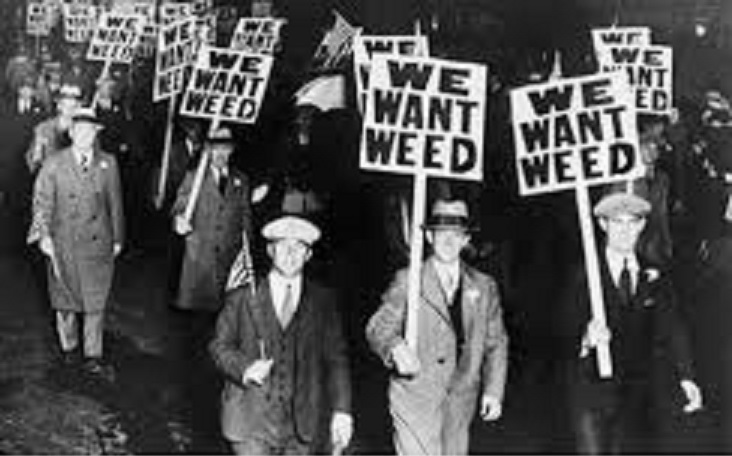
For better or worse, humans will always use drugs to help them cope with the demands placed on them by the daily need to survive. Whether to help focus, relax, kill pain or to see beyond, people will always find reasons to want to change their perceptions so as to best meet the demands placed on them. This article will argue that cannabis law reform is superior to prohibition when it comes to meeting the industrial demands of our time.

During the Age of Exploration, the drug of choice was alcohol, usually rum in particular. Rum had a high alcohol volume and was easy to keep. For men spending months or years at sea in ships, rum offered the best bang for the buck. Wherever European sailors took harbour, the rum trade followed. Names like Port Royal and Kororareka became synonymous with drunken debauchery and destruction.

In the first half of the 20th century, we ran out of places to explore and started killing each other over what had been discovered. This required a combination of drugs, and these – because of the necessities of wartime – were indulged in without shame or sanction. Alcohol was still used to a great extent, particularly for its ability to give men the courage to face enemy gunfire, but use of opiates and tobacco were also widespread, the former on account of its use in physical medicine and the latter on account of its use in psychological medicine.

In the second half of the 20th century, the focus shifted from killing the enemies of liberal capitalism to making money. During this time, people were mostly tasked with social office work. This required more tobacco, but also more caffeine. It was here when the idea of becoming “caffeinated” to deal with the pressures of the day came from. The idea was that the buzz from caffeine would make the inherently safe and secure office jobs less boring.

So far this century, a lot of this work has become antisocial. This has necessitated the rise of caffeine, in order to concentrate for longer periods of time despite low levels of stimulation. This rise has been aided by the increasing unfashionability of tobacco smoking, so that caffeine has now become the go-to drug for anyone wanting more yang energy.

It’s not easy to forecast the precise details of the future, but if one understands the basics of a subject it’s possible to forecast general trends. What seems apparent, in the case of the Western World, is that cannabis has come to replace some of these other drugs as the one that best helps people meet the demands of the workplace, and will continue to do so.

Because of automation, it’s no longer as important for the workforce to be attentive, alert and focused. This is still important for certain roles, but those roles have become an ever-diminishing proportion of the workplace. The roles that have become an ever-increasing proportion of the workplace are those in the creative professions, and the demands of these roles are compatible with cannabis use.

It’s widely known and accepted that much of the world’s production of quality music is made by people on drugs, and this is true to a lesser extent of literature as well. Cannabis (especially cannabis sativa) helps with the process of creativity by breaking down old conditioned pathways of thought and replacing them with novel ideas. This has made it a favourite substance of people in many creative occupations – not just music and writing but also design, cuisine, hospitality and programming.

In order to meet these industrial needs, we will not only need to legalise cannabis, but to go further. At a minimum, cannabis will need to become legal so that people who need to use it for the sake of their work can do so. For the sake of creative occupations, it will need to be gently encouraged in the workplace in the same way that coffee is encouraged in offices, and tobacco is encouraged in factories, already now.

The world is changing faster and faster, and as a result of this people find themselves confronted with original situations ever more frequently. These original situations demand original ways of thinking. The desirable qualities for employees of the future will be flexibility, originality and breadth of thought, instead of the obsessive focus and repetition that has characterised the workplaces of the past. These qualities are well enhanced by cannabis, which makes it a good choice for the workplace of the future.

*

This article is an excerpt from The Case For Cannabis Law Reform, compiled by Vince McLeod and due for release by VJM Publishing in the summer of 2018/19.
VJMP Reads: David Seymour’s Own Your Future XI

This reading carries on from here.

The tenth chapter in Own Your Future is ‘Environment’. Seymour begins with an anecdote that gives us an idea of the moral sentiments that led Seymour to the ACT Party. The child Seymour didn’t like the moralistic implication of the Captain Planet writers that humanity was inherently evil on account of our environmental impact.

Seymour soon has a go at the Greens, who he labels hypocrites. He does make an excellent point: none of the Greens have any scientific background. This is certainly very curious for a party that makes such a point of having scientific backing for their policies. They also waste an incredible amount of money on junkets, especially when climate change is the excuse.

Another fair point he makes is that the price distorting effects of Big Government intervention often have environmental consequences. This is especially noticeable in the case of agricultural subsidies, which tend to lead to overproduction and exploitation of land. Much better to let the market solve such questions, as with water rights.

When talking about the importance of property rights, he unwittingly reveals the secret logic behind much of ACT Party thinking, when he says “pricing and property rights go together”. In the ACT mindset, wealth equals rights. The more money you have, the more rights you have to do things, including doing things to the land and to other people. The RMA gets attacked here again as a quasi-communist institution.

Seymour makes a very clever point when he says that productivity growth is the basis of prosperity. ACT have been heavily criticised in the past for taking a “rape and pillage” approach to New Zealand’s native areas, in which everything can be sold off for money. In this essay, Seymour switches focus to productivity gains from technology and software.

However, he doesn’t stray far from the general neoliberal path. Globalisation is good, and signing the TPP is a good thing. Not for Seymour any sympathy for those who have lost out from neoliberalism. The wealthy benefit from it, and ACT is fundamentally a party for the rich.

Noting that the left/right political divide correlates strongly with alarmist and sceptical positions (respectively) on the issue of global climate change, Seymour declares himself a “luke-warmist” who agrees that some degree of climate change is man-made but does not agree that it will necessarily have devastating effects.

The environmental idea that seems to appeal the most is the idea of having inland sanctuaries, naturally run by private investors. This, Seymour believes, is the only way that New Zealand has a chance of bringing back the dawn chorus that was sung by our birdlife several hundred years ago. Curiously, he wants to have a large trust to dole out grants for these sanctuaries, which, along with his support for foreign refugees, makes one wonder if working-class Kiwis are the only people he doesn’t care about.

It is interesting that ACT might have so detailed an environmental policy, because it seems like an attempt to attract alt-centrist voters. Both ACT and Green voters are young. Indeed, ACT and the Greens could be considered the alt-right and alt-left of a new paradigm of politics, or at least one that has been remodelled to appeal to the young.

*

If you enjoyed reading this essay, you can get a compilation of the Best VJMP Essays and Articles of 2017 from Amazon for Kindle or Amazon for CreateSpace (for international readers), or TradeMe (for Kiwis).

The Case For Cannabis: Reform Doesn’t Mean Stoned Workers

One of the most hysterical arguments against cannabis law reform is that it will lead to a spate of workers coming to work stoned. This will be a disaster, we are breathlessly told, because some of these intoxicated workers are responsible for other people’s well-being. As this article will examine, such fears are not grounded in reality.

The reasoning seems to be that the nation’s workforce cannot handle the temptation of easy access to cannabis, and will inevitably come to start using it all day in the nature of severe drug addicts, such as before work. Images of surgeons giggling maniacally while slicing arteries open are thrown about by pants-pissing old conservatives, who seem to think of cannabis users akin to a horde of zombies.

This argument is false in at least three major ways.

In the first case, people already have access to plenty of legal recreational drugs and choose not to use them. There are a number of industrial jobs that people can’t safely do while drunk, and there are a number of customer services roles that can’t adequately be performed while stinking of tobacco smoke. In the vast majority of situations, employees in either of these roles don’t partake in alcohol or tobacco before work.

If one thinks rationally about the idea, there’s no reason to think that legal cannabis would be any different. The case of surgeon is especially ridiculous – surgeon is a professional occupation. The type of person who works in this profession is hardly the sort of person who would experiment with recreational drugs before they go to work anyway.

In the second case, the availability of swab tests that can test for actual cannabis intoxication means that a blanket ban on cannabis is unnecessary. There may have once been a point in such a blanket ban, on account of that there was otherwise no way of telling if a person was dangerously affected by a cannabis high. But accurate swab tests mean that it is no longer necessary to take urine samples (if it ever was).

Most importantly, legal cannabis does not in any sense mean that employers will lose the right to send home workers who are dangerously high. Workers who are intoxicated on any substance, legal or otherwise, are first and foremost a safety risk to other workers and to themselves. So if an employee comes to work stoned, the employer has every right to send them home on the grounds that they are in no state to discharge their duties.

In the third case, the vast majority of cases of cannabis intoxication are immaterial to the job at hand. This is clearly true if one considers that a large number of people who work in roles where attentiveness is paramount are on sedatives, anti-histamines or psychiatric drugs of some kind, and that this is nonetheless acceptable to their employers, who do not drug test them for those substances.

Psychiatric drugs such as Olanzapine have been shown to increase the chance of fatal car accidents, and benzodiazepines are even worse. Many people drive while sleepy, and many elderly people are significantly more dangerous behind the wheel than the average driver. If all of these risks come within the bounds of acceptability, then a small amount of cannabis in the system is acceptable as well.

The idea that cannabis law reform would inevitably lead to masses of stoned workers is the kind of overblown hysteria that is typical of cannabis prohibitionists. There are at least three major reasons to think that reform would not impact the safety profile of the workforce. Repealing cannabis prohibition would bring protocol about workplace safety back to sanity and logic.

*

This article is an excerpt from The Case For Cannabis Law Reform, compiled by Vince McLeod and due for release by VJM Publishing in the summer of 2018/19.