
What A Sensible Drug Policy For 2026 And Beyond Might Look Like

The Misuse of Drugs Act was introduced in 1975, a response to President Richard Nixon’s declaration of a War on Drugs in June 1971. These two moves were the end result of decades of puritanical hysteria around altered states of consciousness. This hysteria began with alcohol prohibition and, after the popularisation of psychedelics in the 1960s, reached a peak.

New Zealand, ever the kid brother of the Anglosphere, followed mindlessly along with America in making almost every drug illegal. It’s crazy to have a drugs policy where booze is the only recreational option, but thanks to Christian moralism, atheist fear of the psyche and general ignorance and hysteria, that’s what we ended up with. This essay is an attempt to describe what a sane, rational drug policy would look like, if anyone in power was ever incentivised to bring one in.

The sane and rational place to begin is with the research of Professor David Nutt, the world’s foremost expert on relative drug harms. He has developed a set of criteria for measuring drug harm using an analysis technique called multiple criteria decision analysis, or MCDA. Resulting from Nutt’s research is a scale of relative drug harm, outlined at length in books such as Drugs: Without The Hot Air. In theory, a science-based scale like this should be the foundation of an intelligent drug law.

The scale of relative drug harm varies depending on local factors, so that it’s not possible to apply one uniform scale to all countries. For example: in New Zealand and Australia, a lot more damage is done by methamphetamine than by crack cocaine. It’s the other way around in American inner cities. In any case, it’s possible to draw many valuable insights from Nutt’s analysis.

My sane and rational drug policy would declare that Western culture has already managed to handle alcohol and its effects. There are pubs all over the West and yet our culture has not collapsed. Countless movies, songs, books and plays are full of alcohol references, and yet society has not degenerated (at least not from alcohol). This makes alcohol a baseline to which other drugs can be compared.

Any drug more dangerous than alcohol would remain illegal as it currently is. This would include methamphetamine, crack cocaine and heroin. People involved with importing or manufacturing these drugs would still face severe legal penalties.
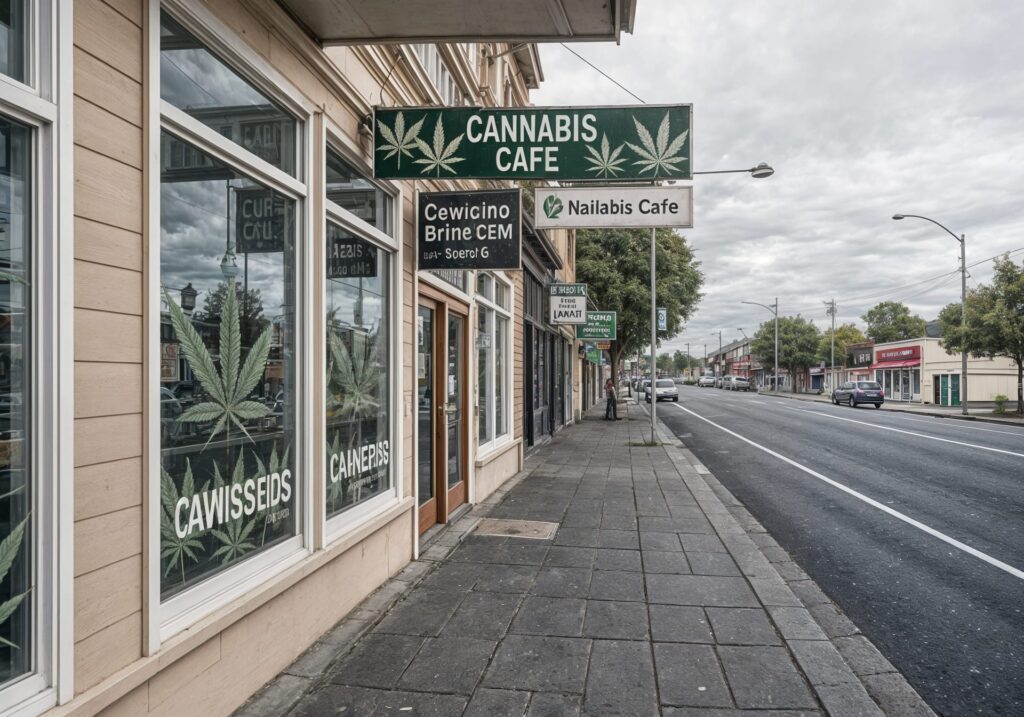
Any drug less dangerous than alcohol would become legal with some degree of regulation. The difficulty here, of course, is that a wide range of drugs fall into this category. Most drugs are much less harmful than alcohol and each would need a bespoke legal schedule. Sane and rational people ought to be able to cope with this.

The truly less dangerous drugs, such as cannabis, should be relatively easy to deal with. Cannabis cafes can be legalised along the lines of existing pubs. There is already precedent for this model with the cannabis cafes of the Netherlands and Colorado. Cannabis doesn’t cause people to become aggressive or violent and so doesn’t need to be managed strictly like alcohol does.

Because of the low risk associated with MDMA, specialist MDMA lounges should also be possible. It will also be possible therein to hear music that is different to the usual Boomer rock that one hears at pubs. These lounges will likely target those more interested in a rave-style experience than a booze-up. Those selling MDMA at such venues will be legally tasked with ensuring that their patrons are not harming themselves through excess or irresponsible use.

Psychedelics are also not considered particularly dangerous by Professor Nutt. In fact, magic mushrooms and LSD are among the least harmful of all the drugs surveyed (Nutt’s MCDA doesn’t consider mescaline and ayahuasca, which are more American drugs). A psychedelic policy might involve sale from pharmacies only, with no venue sales. It might involve legal home mushroom grows. In any case, it would abolish any requirement that psychedelics can only be taken under medical supervision, indoors, during working hours.

Opium is less dangerous than alcohol, according to David Nutt, and therefore this policy would include legal opium. However, this would be highly restricted owing to its unfamiliarity to Western culture. The correct degree of regulation here might involve opium lounges akin to private clubs, which would be more discreet than pubs or cannabis cafes (i.e. they would only admit members).

Users of regular amphetamines might not want to use them in public, so this might be another case where the pharmacy-only model would be superior to an alcohol-style pub and club model.

All of these regulations would potentially also include the usual provisions for not selling drugs near schools, not using a motor vehicle while high, not using drugs in public etc.

Therefore, my proposed Drug War Armistice policy would not (at least, not initially) change the legal status of methamphetamine, crack cocaine or heroin. But it would change the legal status of most other drugs, on the basis that they’re all safer than alcohol, and therefore that our society can handle them. Moreover, anything less harmful than alcohol is a potential exit drug from alcohol. Thus, liberalising relatively less harmful drugs will reduce overall alcohol and/or other drug damage.

*

For more of VJM’s ideas, see his work on other platforms!
For even more of VJM’s ideas, buy one of his books!

*

If you enjoyed reading this piece, buy a compilation of our best pieces from previous years!

Best VJMP Essays and Articles of 2023
Best VJMP Essays and Articles of 2022
Best VJMP Essays and Articles of 2021
Best VJMP Essays and Articles of 2020
Best VJMP Essays and Articles of 2019
Best VJMP Essays and Articles of 2018
Best VJMP Essays and Articles of 2017

*

If you would like to support our work in other ways, make a donation to our Paypal! Even better, buy any one of our books!
Ending The War On Drugs Would Get People Socialising Again

Everyone is lamenting the lack of sociability among young people in recent years. Even Boomer media like Fox News is asking whether the nightclub scene is dying out. The sociability crisis is being blamed for increasing rates of depression and for plummeting birthrates. No truly effective solutions have been offered yet, so this essay suggests a way to get the party (re)started.

This lack of socialising is not good for society. Socialising is how social bonds are created (hence the name), and these bonds are what prevents us from falling back into a dog-eat-dog pre-civilisational jungle. Successful societies, however large or small, are made up of people who are friends. Absent quality socialising, the stress of proximity makes people into enemies.

The problem is that the usual methods of socialising are either absent (as in third spaces) or no longer desired (as in churches or pubs). So many would-be socialisers have become discouraged from the lack of quality social options, leading them to sit at home on the Internet.

I am an early Millennial, which is not young, but it’s young enough to be tired of pisshead culture. It’s so boring. I’m tired of listening to sad old fools droning on about how great they used to be when they were young. I’m also tired of watching young people turn into chimpanzees, and the general narcissistic toddler vibe. I want a different buzz.

These are common sentiments among people younger than 50. We’re tired of alcohol. Moreover, we know how dangerous it is now. People today have access to research like that of Professor David Nutt, which suggests that alcohol actually does more harm than any other drug. People didn’t know that even 20 years ago.

Many young people know this now, though, which is why they’re increasingly choosing to sit at home, on weed, watching YouTube or Netflix, rather than going to pubs. The vast majority of those young people would rather socialise if they had a decent environment in which to do it, but they don’t. This is not an accidental tragedy, but an inevitable result of bad laws.

There’s one obvious solution: end the War on Drugs.

Already it’s very common among people younger than 50 to socialise on the basis of doing drugs other than alcohol. At the moment, the vast majority of this activity takes place in private, by necessity, owing to the law. An alternative to pubs could bring this activity into the sunlight and, with it, the people who are into those alternatives.

Here I’m not talking about places to do hard drugs, such as injection rooms. My approach is simple: anything recognised as a potential social substitute for alcohol, with a safer harm profile than alcohol, should be made readily available to reduce alcohol harms. This means that heroin, cocaine and methamphetamine would remain underground.

If there was a cannabis cafe in my city it would be ideal. I would love to be able to meet interesting travellers without the ever-present threat of violence that comes with pubs. Dutch-style cafes are all that anyone needs in this regard. Cafes in New Zealand could be even better than Dutch ones, because in New Zealand it’s easier to have a sunny courtyard.

MDMA lounges would also attract a younger crowd back into the cities. Like alcohol, MDMA is an entactogen that makes social interaction easier and more fun. But MDMA doesn’t make people violent or aggressive. As such, it could achieve many of the benefits of alcohol use without so many of the drawbacks. People already use MDMA regularly, so being able to access a safe and measured dose of it would improve life for many.

Of course, psychedelic dens would also exist if the War on Drugs ended. Imagine a place like a bar where one could melt into a sofa for a few hours, listening to Shpongle or Alan Watts drum ‘n’ bass remixes. Or not melt, but have great conversation with intelligent people. Somewhere like this could happily sell a basic solid dose of LSD, psilocybin or mescaline for $20-30 and then sell Vs or Red Bulls for $5-10.

The ideal outcome would be a range of venues that offered various combinations of psychoactive experiences, decor and music. All of these places would be safer than pubs, but all are impossible dreams as long as the War on Drugs continues.

The Boomers who oppose this need to get with modern science. Not modern morality (I’m not arguing that), but science. Whether the use of drugs other than alcohol is degenerate is not relevant, because modern science confirms that many of them are much less dangerous than alcohol. And because no-one – especially not me – is arguing for alcohol to become more restricted, the logic is that these safer alternatives to alcohol should be legalised.

The contention of this essay is that young people want to socialise just as much as young people in previous generations. They just no longer want to do alcohol, which is the only realistic choice in most cases. So they tend to stay at home. This is a great tragedy. The solution is ending the War on Drugs.

*

For more of VJM’s ideas, see his work on other platforms!
For even more of VJM’s ideas, buy one of his books!

*

If you enjoyed reading this piece, buy a compilation of our best pieces from previous years!

Best VJMP Essays and Articles of 2023
Best VJMP Essays and Articles of 2022
Best VJMP Essays and Articles of 2021
Best VJMP Essays and Articles of 2020
Best VJMP Essays and Articles of 2019
Best VJMP Essays and Articles of 2018
Best VJMP Essays and Articles of 2017

*

If you would like to support our work in other ways, make a donation to our Paypal! Even better, buy any one of our books!

Some Very Basic Advice For The Mentally Ill, From A Veteran Of The Mental Health System!

This year marks the thirtieth anniversary of my entry into the New Zealand mental health system. It’s been a frustrating and horrifying journey, a blend of Brave New World and Dante’s Inferno. Because much of what mental health experts have told me in this time has turned out to be false, I have had to teach myself about psychiatry to a major extent. If I could summarise what I have learned about dealing with a psychiatric condition oneself, I would give two basic pieces of advice.

First, understand nervous system regulation.

Modern psychiatric theory has abandoned the chemical imbalance model for the traumagenic neurodevelopmental (TN) model. This means that no well-informed person still believes that mental illness is mostly caused by chemical imbalances that can only be corrected by expensive pharmaceuticals.

According to the TN model, early childhood trauma plays the major role in mental illness by causing the brain to develop in unnatural ways. The brains of highly traumatised people tend to respond much differently to stress: some anxious and neurotic types powerfully over-react, some bluntened and depressed types under-react. Such abnormal responses to stress can make it much harder to live a normal life.

This model has implications for those who have, until now, believed that their condition was the result of something intrinsically wrong with them mentally or spiritually. It turns out that most psychiatric conditions are actually physiological in nature.

Somatic symptoms such as headaches, insomnia, nausea and migranes are often stress responses, and signals that the nervous system is already hyperaroused. Anxiety and depression are common consequences of suffering this hyperarousal for an extended period of time. As such, keeping the nervous system well-regulated is crucial for lessening the impacts of most psychiatric conditions.

The best way to do this is to avoid stress, which is not always possible. The grim truth is that most stresses are forced on people by the needs to find food and shelter. Nonetheless, there’s a lot each individual can do to minimise the stress on their nervous system.

Learning to meditate is one of the best things that anyone with a psychiatric condition can do. Cultivating the ability to not physiologically react to distressing thoughts is as good as taking any pharmaceutical. Dedicated meditation practice can downregulate the nervous system more effectively and more permanently than anything else.

Another great move is learning to avoid toxic narcissists. This is also not always possible, because of family and work obligations. But it’s very useful to learn the typical early warning signs of toxic narcissism, so that those displaying it can be shunned as early as possible.

Second, understand the importance of connection. This means connection at every level: to family, to community and to the divine.

The simplest and easiest way to feel connection is through one’s family. But, if you have a psychiatric condition, chances are high that your family environment is psychotogenic. If so, then interacting with your family can add to the stress and nervous system dysregulation. This is where the community comes in.

Connection to the community is relatively easy, but here a person has to be realistic. A mental illness will mean that certain avenues into the community will be closed off. However, it will also mean that solidarity can be easier to find in some other ways. It’s very easy to feel solidarity with other people who have had to deal with the psychiatric system. Groups organised on this basis that meet physically can be challenging to find if one doesn’t live in a city, but there are numerous online groups devoted to every psychiatric condition.

Divine connection is harder to find. The main problem here is that Westerners have been lied to about spirituality for centuries. The native Western spiritual traditions were destroyed by the coming of Christianity, so that when Christianity died, we were left with only memories of the divine. When the European spiritual traditions, such as the Eleusinian Mysteries, were lost, the Western soul was lost to confusion.

The answer here is a combination of meditation and spiritual sacraments. Correct meditation will silence the mundane thoughts, and correct spiritual sacrament use will bring the glory of the divine back to consciousness. This combination of meditation and spiritual sacrament use is the basic formula espoused by some New Age religions such as Elementalism.

Cultivating a divine connection can help create a sense of belonging, which many people do not otherwise have. It’s common to feel like an alien on this planet and in this society. Meditating or taking spiritual sacraments with friends or family can create powerful feelings of connection with the rest of reality.

Society might never have been more mentally ill than today. However, it has (probably) never been easier for an individual with a mental illness to cope with it. Advanced knowledge of the causes and treatment of mental illness is now available through the traumagenic neurodevelopmental theory, and communities of meditators or spiritual sacrament users have never been easier to find.

*

For more of VJM’s ideas, see his work on other platforms!
For even more of VJM’s ideas, buy one of his books!

*

If you enjoyed reading this piece, buy a compilation of our best pieces from previous years!

Best VJMP Essays and Articles of 2023
Best VJMP Essays and Articles of 2022
Best VJMP Essays and Articles of 2021
Best VJMP Essays and Articles of 2020
Best VJMP Essays and Articles of 2019
Best VJMP Essays and Articles of 2018
Best VJMP Essays and Articles of 2017

*

If you would like to support our work in other ways, make a donation to our Paypal! Even better, buy any one of our books!

‘California Sober’: Could It Catch On In New Zealand?

Many lifestyle trends that originate in California then spread to the rest of the world. This is because California is where the Spear of Destiny is: the focal point of world cultural influence. The West Coast of America has more soft power than anywhere else on Earth. The latest trend that might spread from there to the rest of the world is called California Sober.

Many people say that life is best with no drugs at all. But for many others, this isn’t realistic. Billions of people feel the need to use chemical assistance to take the edge off the intensity of life on this planet. For those living outside the Abrahamic moral paradigm, using recreational drugs is no more immoral than seasoning one’s food.

The term ‘California Sober’ refers to a lifestyle in which one still uses drugs, but in such a manner that one does very little harm. In fact, one does roughly as little harm as a sober person. The main aspect of the lifestyle is to abstain from the typical drugs of destruction, in particular large amounts of alcohol. In this lifestyle, cannabis replaces alcohol as the go-to everyday social lubricant.

In contrast to the puritanical forms of sobriety so common to the West, in which all psychoactive substances are considered from the devil, California Sober usually involves indulgent cannabis use, with the occasional use of alcohol or psychedelics. Alcohol is still used, but sparingly, such as for celebrations. Psychedelics are also used sparingly, but more for spiritual or mental health reasons.

This arrangement is not merely a fashion. It reflects actual psychological and medical science. Professor David Nutt, perhaps the world’s foremost expert on relative drug harms, conducted a study that found alcohol to be the most harmful drug of all. Figure 3 in this paper (link goes to .pdf) suggests that alcohol is twice as harmful to other people as heroin, and about as harmful to the user as heroin, crack cocaine or methamphetamine.

According to Prof. Nutt’s research, cannabis is less harmful than tobacco, and much, much less harmful than alcohol. Magic mushrooms are considered by this research to be the least harmful of all those surveyed.

The logic of the California Sober lifestyle is to take this modern science into account when making recreational drug choices. As such, the use of alcohol is much less common in comparison to wider Western society. The use of cannabis and psychedelics, by contrast, is much more common.

The lifestyle hasn’t been designed by the dispassionate scientific analysis of a few elites, though. It is, for the most part, an organic development.

Many people have found that they like to use alcohol to take the edge off the stress of daily life, but they really don’t like the side-effects of alcohol: the sickness, the bloating, the hangovers, the mental dullness. For them, cannabis does the job of taking the edge off without the physical suffering.

For these people, replacing alcohol with cannabis seems like an obvious idea.

Some Kiwis, your author among them, have been living California Sober for a while already. I worked as a barman for several years to help pay for university, but by the time I graduated I had come to realise that cannabis was a better lifestyle choice than alcohol for many reasons. Foremost among these reasons: cannabis users seemed much less prone to violence and sluttery.

Using more cannabis, I found that I felt a lot better physically than I did using alcohol. So phasing out the alcohol seemed like a natural choice. Occasional psychedelic use, usually to mark a solstice or equinox, also seems like a natural choice. I believe that many people, if given the freedom to do so, would live a lifestyle similar to this.

The main difficulty with leading this lifestyle in New Zealand, of course, is the law.

Cannabis has been fully legal in California since 2016, the year 57% of Californians voted to legalise it at referendum. New Zealand, unfortunately, voted away our chance at cannabis freedom in 2020. As such, we are now eight years behind California, and counting. It’s not likely that the Sixth National Government will change the cannabis laws, and they might not lose power until 2029 (assuming they win three terms, as National governments tend to do). So New Zealand probably won’t get legal cannabis until 15 or 16 years after California.

Despite this, cannabis is easy to get in New Zealand – Kiwis are some of the world’s heaviest users of it. Thus it’s possible to live a California Sober lifestyle here, but not with the same level of acceptance as in North America. Moreover, medicinal cannabis is now very easy to access in New Zealand.

Most of the reasons that caused the California Sober lifestyle to become popular in North America also apply to New Zealand. We also have severe problems with physical, mental and social damage caused by alcohol, and would benefit from a shift to lower-harm substances. It may be that natural adoption of this lifestyle among Kiwis is what eventually forces a change to the cannabis laws.

*

For more of VJM’s ideas, see his work on other platforms!
For even more of VJM’s ideas, buy one of his books!

*

If you enjoyed reading this piece, buy a compilation of our best pieces from previous years!

Best VJMP Essays and Articles of 2023
Best VJMP Essays and Articles of 2022
Best VJMP Essays and Articles of 2021
Best VJMP Essays and Articles of 2020
Best VJMP Essays and Articles of 2019
Best VJMP Essays and Articles of 2018
Best VJMP Essays and Articles of 2017

*

If you would like to support our work in other ways, make a donation to our Paypal! Even better, buy any one of our books!