
New Zealand First Risks Destruction If It Opposes Medicinal Cannabis Reform

From Jim Anderton to Peter Dunne and now to Winston Peters, New Zealand has always managed to find one piss-soaked old bastard to hold up cannabis law reform

The New Zealand First Party won 8.7% of the votes in the 2014 General Election, which entitled them to 11 Parliamentary seats. Strategic blunders saw them fall to 7.2% of the vote in 2017, still above the 5% threshold but precariously so. New Zealand First is at risk of committing another strategic blunder by opposing Chloe Swarbrick’s Medicinal Cannabis Bill, and this article will explain why.

Dan McGlashan’s Understanding New Zealand provides us with an explanation for what happened here. We can see that the correlation between being Maori and voting New Zealand First was initially very strong, at 0.66 in 2014, when they did very well in the Maori seats. By 2017 the strength of this correlation had fallen to 0.38, as a large proportion of that Maori support abandoned the party.

Between 2014 and the 2017 General Election, New Zealand First came out in opposition to those same Maori seats in which they had done so well. This was a massive error because Maori people are extremely reluctant to cede any kind of political power to the Crown, for the understandable reason that when they have done so in the past, they ended up losing heavily from it.

New Zealand First were punished at the ballot box in 2017, losing 1.5% of their vote, mostly from Maoris who switched back to to Labour.

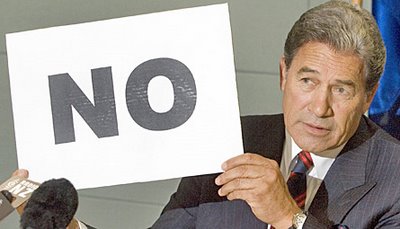
Between 2017 and the 2020 General Election, we may see another fall in New Zealand First support, and for similar reasons, only this time it may be catastrophic. The difficulty is that Winston Peters risks betraying the wishes of many of the people who support their party by opposing Swarbrick’s Bill.

On the Bill, Peters is quoted as saying “It goes far too far. There’s no restrictions at all, it’s random, it’s haphazard, it’s free for all.” Whether this means New Zealand First will support the Bill through its first reading or not is unclear, but if they vote to dismiss the Bill they run the risk of self-destruction, because they will alienate many of their core supporters.

Invalid’s beneficiaries are heavy supporters of New Zealand First – the correlation between being on an invalid’s benefit and voting New Zealand First in 2017 was 0.47, which is moderately strong. Many of these invalids have found medicinal relief in cannabis, which is reflected in the strong correlation of 0.79 between being on an invalid’s benefit and voting Aotearoa Legalise Cannabis Party in 2017.

These stats suggest that there are a large number of cannabis-using invalids who voted New Zealand First at the last election, and further New Zealand First opposition to cannabis law reform risks alienating these people further.

Although New Zealand First does get more support from older people than younger ones, this is nowhere near as pronounced as most people think it is. The correlation between median age and voting New Zealand First in 2017 was only 0.26, in comparison to the correlation of 0.78 between median age and voting National in 2017.

Therefore, concern about the opinions of elderly Boomers with regard to cannabis ought not factor too heavily in New Zealand First’s calculus. The vast majority of young people support proper cannabis law reform, and New Zealand First risks tarnishing their image among these voters through their conservatism on this issue.

Perhaps the biggest risk that New Zealand First runs by opposing this medicinal cannabis bill is through losing the support of the New Zealand-born, who are not only the biggest New Zealand First supporters by far but also the biggest cannabis law reform supporters by far. The correlation between being New Zealand-born and voting for New Zealand First in 2017 was 0.54, which is moderately strong, but the correlation between being New Zealand-born and voting for the Aotearoa Legalise Cannabis Party in 2017 was 0.73.

Cannabis use is an intrinsic part of Kiwi culture, and it’s not going anywhere. If the New Zealand First Party really wants to make good on its pretensions to represent Kiwis and our culture, they need to accept the fact that we really enjoy using cannabis and are going to keep doing it.

New Zealand First might be tempted by conservative instincts to oppose this bill, but you can’t piss directly in the face of your own supporters in that way and expect that they will turn out to support you when you ask for it at election time. Maoris, young people and invalids are all heavily impacted by our ludicrous cannabis laws, and young Maoris doubly so. They have been crying out for relief, and a recreational alternative to alcohol, for decades.

New Zealand is already 22 years behind California on the medicinal cannabis issue, and New Zealand First is causing this country to fall further and further behind, mostly at the expense of their own long-term voters. If they don’t keep up with the state of play and research in other jurisdictions they risk destruction at the hands of the voters.

*

If you enjoyed reading this essay, you can get a compilation of the Best VJMP Essays and Articles of 2017 from Amazon for Kindle or Amazon for CreateSpace (for international readers), or TradeMe (for Kiwis).
The Three Definitions of ‘Racist’

The word ‘racist’ has a variety of meanings depending on the political goals of the person using it

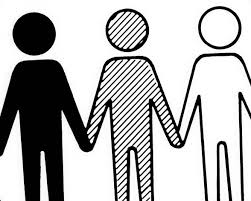
The word ‘racist’ has been overused so badly in 21st century discourse that it no longer has any real meaning. Originally used to describe a person who held unfair prejudices against a group of people on the basis of their skin colour, it now has a wide range of meanings depending on the political motivations of the person pointing the finger.

The first definition is what can be called the “supremacist” orientation. This is the attitude a person has if they believe that their race is the greatest one of all and everyone else is naturally inferior. It is also the “classical” racism that was espoused by Adolf Hitler, and is the real type of racism that everyone is afraid of.

The problem with a supremacist orientation of racism is that it obligates the holder to be fighting all the time. As the alpha male in any dominance hierarchy soon learns, claiming to be the top dog means you’re always fighting off challengers. This is great in a “live fast, die young” sense, but it doesn’t make for peace or order.

In an effort to bring peace on Earth, The Powers That Be have made immense efforts to discourage this sort of racism since the end of World War II, in which this sort of racism was directly responsible for the deaths of 50,000,000 people.

The second definition is specific, and could be termed the “experiential” version of racism. People in this category are not supremacists because they do not believe that their own specific race is generally superior, so they are not racists in the first sense. In this category are people who have learned to not like members of specific races through adverse life experiences.

People in this category can, in fact, can be the opposite of supremacists, as they often are in the case of white people who happily concede that the average IQ of a Far East Asian is higher than that of a white person, or in the case of Far East Asians who happily concede that white people are much less corrupt when in government than Far East Asians.

They often get accused of being racists, though, because their experience has caused them to hold unflattering opinions of some races and these opinions are often considered supremacist by social justice warriors looking for someone to freak out at. The truth prevails, however, because these people tend to find each other and reinforce each others’ experiences.

The third is the “Marxist” definition of racism, which is the weaponised version. Here the concern is with how to use guilt about racism as a tool for browbeating those perceived to be bourgeoisie. Anywhere you hear the ludicrous assertion that racism isn’t real racism unless the person doing it is part of the bourgeoisie, you know you’re in Marxist territory.

This weaponised version of racism is used to manipulate people, usually white people, into believing that they have inherited racial debts from the age of colonialism, and can only clear these racial debts by supporting Marxist policies like mass Muslim immigration. This is why it is so frequently brought out when someone criticises the practices of the religion of Islam, which is not a race.

Unfortunately for the Marxists, their attempts to guilt-trip people into supporting their policies has backfired, because no-one knows which of these definitions is being used at any one time. Manipulating people through dishonest use of language is typical for people with totalitarian mindsets, but overuse of it causes the populace to become aware.

*

If you enjoyed reading this essay, you can get a compilation of the Best VJMP Essays and Articles of 2017 from Amazon for Kindle or Amazon for CreateSpace (for international readers), or TradeMe (for Kiwis).
VJMP Reads: The Interregnum: Rethinking New Zealand X

This reading carries on from here.

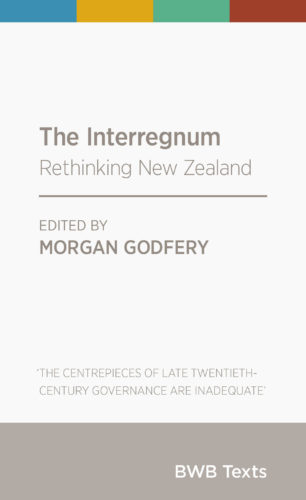
The tenth, and last, essay in The Interregnum is ‘Politics of Love’, by Max Harris. Like the other essays in this collection, it speaks from an unashamed youth perspective, such as when Harris complains of the “stale language” of the current political discourse.

This essay is about the politics of love, and it opens by defining what love is to Harris: “a feeling of deep warmth that is directed outwards towards an object, such as another person.” There is nothing objectionable about his definition of love; indeed it seems fairly comprehensive, especially when he writes that “the idea of love is closely tied to relationships and the connections between people.”

Predictably, given the Marxist leanings of the previous essays in this book, this essay quickly moves on to a declaration that the politics of love would necessitate “a willingness to accept a greater number of refugees.”

But one wonders why it is that emphasising the aspect of love leads naturally to the conclusions that Harris takes it to.

Why not, for example, stop all immigration to New Zealand from the Third World on account of love for the people already in New Zealand, whose living standards drop when Third Worlders move into their locales? Isn’t it entirely possible that my love for the people of New Zealand impels me to want to see them safe from robbery, rape and murder – the crimes that mass Third World immigration has brought to Europe and America?

Doesn’t our love for young New Zealand girls and women drive us to keep them safe from the rampant sexual abuse and harassment that is now part and parcel of the female experience in Europe?

Doesn’t our love for the homeless and mentally ill already in New Zealand drive us to take care of them as a priority, before we spend money importing irreparably damaged people from the other side of the world to jump in front of them in the queue?

Doesn’t our love for the hardworking taxpayer who has busted his back his whole life drive us to ensure that he can retire at a fitting age, instead of having to work into senescence to pay for gibs?

The essay makes a plea for more solidarity, but how is that possible when diversity is also increasing? It points out that New Zealanders already feel disconnected – so how will importing tens of thousands of “refugees” help? It will only add to the ethnic chaos, making us feel even more disconnected.

But Harris, and people like him, would happily call me hateful for asking those questions.

To Deny That Cannabis Is Medicinal Is To Deny The Humanity of Medicinal Cannabis Users

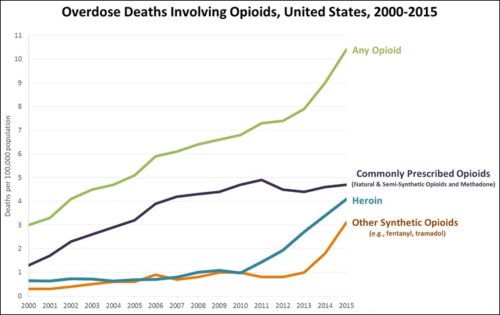
Opioids kill 1 in every 10,000 Americans every year, but they’re fully legal

One of the most awful aspects of being a medicinal cannabis user is getting lied to by doctors and mental healthcare workers who deny the emotional and spiritual benefits of cannabis use. The problem isn’t that they won’t help you get hold of cannabis medicine (because there are plenty of people who will) – it’s that they refuse to have an honest conversation with you about the benefits and side-effects of using it.

It’s impossible, in most places, for a sick person who uses medicinal cannabis to expect that their doctor will listen honestly to what they have to say. If the patient mentions the benefits of their cannabis use, the doctor will insist that the patient must be mistaken when they believe that cannabis helped them. Even if the doctor goes as far as conceding that cannabis has some medicinal value, they will almost always attribute all manner of ghastly side-effects to using it.

Worst of all, it’s impossible to change the mind of your doctor by presenting evidence from jurisdictions that have legalised medicinal cannabis. It doesn’t matter that medicinal cannabis was made legal in California in 1996 after the doctors there looked at the evidence – those doctors are simply presumed to be wrong, and recklessly so. End of story.

This refusal to speak honestly with patients is, from the patient’s perspective, a dehumanising experience. It’s a way of saying that your experience can be discounted, because you are worth less than a normal human being. With almost every other medicine it’s possible to tell a doctor that it alleviates your suffering and have it considered enough to get a prescription.

This is even true of opioids, which kill 1 in every 10,000 Americans every year, and which have been so recklessly overprescribed that the opioid crisis now has its own Wikipedia page.

Not so with cannabis. Somehow cannabis has the mysterious property of causing suffering that only doctors, politicians and pharmaceutical company lobbyists are able to see. A patient might feel that their suffering is reduced from using medicinal cannabis, but unfortunately for them, they are not considered full human beings on account of the claim that cannabis causes psychosis. Therefore, their belief that cannabis alleviates suffering can be dismissed on account of it being a belief held by a psychotic person.

It’s a vicious Catch-22: you might feel that the cannabis takes your suffering away, but this can be trumped by the declaring that using cannabis robs you of your ability to reason, and then anything you say can be dismissed as the ravings of a lunatic.

If a person is suffering psychologically, and they take a substance that they believe to be medicinal, and their experience of using this substance is that it ameliorates psychological suffering, then how can anyone else possibly presume to judge otherwise?

It might be that the side-effects of using some particular medicines are so great that, on balance, it’s better to look for an alternative than to prescribe them, but significant side-effects from cannabis use are non-existent.

The feeling from the patient’s perspective is that doctors are saying that ameliorating your suffering, in particular, is not worth pursuing because you are not valuable. Elderly Baby Boomers are getting stuffed full of opioids at the first murmur of complaint, but if anyone else wants to use some cannabis they have to risk several years in prison.

*

If you enjoyed reading this essay, you can get a compilation of the Best VJMP Essays and Articles of 2017 from Amazon for Kindle or Amazon for CreateSpace (for international readers), or TradeMe (for Kiwis).