
The Case For Cannabis: Cannabis is Not Harmful

One of the most fundamental arguments for cannabis prohibition is that cannabis is harmful. Because of this harm, the argument goes, we need to make cannabis illegal. This will give people less opportunity to use cannabis and thereby have their lives destroyed. As this article will examine, there are at least two good reasons to oppose this argument.

Firstly, we can see prohibition causes more harm than legal cannabis would – and over and above the harm caused by enforcing the prohibition. When a country or state introduces cannabis prohibition, they usually also introduce a number of ancillary laws that are ostensibly to fight the harm of cannabis, but which end up causing more harm.

It’s apparent that burning plant matter and then inhaling the smoke is not the best thing you could do for your lungs. This is not a contentious assertion, and the vast majority of cannabis users are fully aware of it. But when people have tried to take measures to make cannabis use more safe, they find themselves being stymied by the law. In many cases, the law is intended to penalise not just cannabis use but the entire cannabis culture.

Manufacturing cannabis butter to make some brownies changes your crime from possession of a Class C drug to manufacture of a Class B drug. So if a person decided to make some hash brownies, they would then not only be in possession of a Class B illegal drug, but they could also be charged with manufacturing it – which carries a maximum penalty of 14 years imprisonment.

We are told that the schedule of increasing penalties reflects the schedule of increasing harm caused by these drugs. But the harm of cannabis does not increase 56 times because someone made some bud into some brownies. There’s no logic to that at all – if anything, the harm is lessened by virtue of avoiding lung damage.

It’s true that the psychoactive effect of hash brownies will be greater than smoked bud, but the psychological drawbacks of using cannabis have been massively overstated. The cozy consensus that using cannabis causes schizophrenia has been shattered by new research suggesting that it is a genetic propensity to schizophrenia that predicts cannabis use, and not the case that cannabis use alone predicts schizophrenia.

In any case, it’s possible that even cannabis bud does not cause net harm. Yes, smoking it is not great, but the smoke damage may be outweighed by the medical benefits of lower stress etc.

Likewise, the example of “drug paraphernalia” is another one in which the majority of the harm is caused by the law itself, rather than cannabis. People have been arrested for the possession of water bongs and charged with a more severe crime than mere cannabis possession – but using a water bong is more healthy than inhaling hot smoke. Despite being more healthy, possession of a bong carries a maximum penalty of a year’s imprisonment in New Zealand.

The physical harms of cannabis have generally been overstated. Of course, inhaling cannabis smoke is not ideal but even this is transparently less dangerous than rugby, horse riding, skiing and downhill mountain biking. All of these activities, whose level of risk falls into the acceptable threshold, are legal. Therefore the “cannabis is so harmful it should be illegal” is nonsense.

Moreover, even the most ardent cannabis user doesn’t smoke as many joints in a day as a tobacco user smokes cigarettes, and so the level of risk here falls into already established acceptable limits.

Another major argument when it comes to the supposed harms of cannabis is that prohibition is a bizarre response to any supposed harm caused. Let’s say, for argument’s sake, that cannabis is harmful – how does it make any sense to introduce more harm into a person’s life, just because they used it? The idea of punishing an adult into taking responsibility is ridiculous.

The argument that cannabis should be prohibited because it is harmful is mistaken. Cannabis prohibition itself is responsible for more harm than cannabis is. If reducing harm done to human beings is a consideration when setting legal policies, then it’s clear that prohibition ought to be repealed for the sake of a less punitive approach.

*

This article is an excerpt from The Case For Cannabis Law Reform, compiled by Vince McLeod and due for release by VJM Publishing in the summer of 2018/19.
The Case For Cannabis: Drugs Are Not Categorically Bad

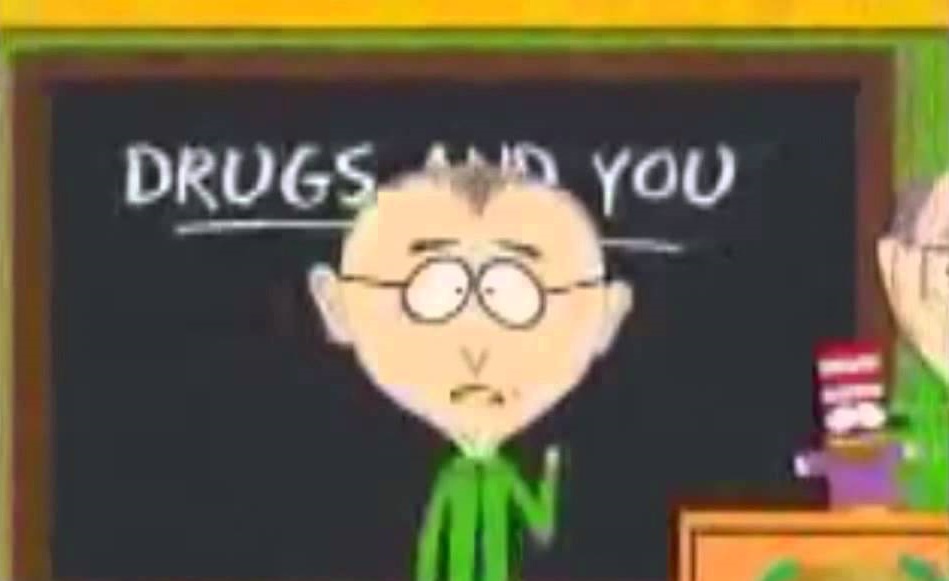
“Drugs are bad, mmmmmkay?” goes the South Park joke. Mr. Garrison’s catchphrase satirises the near-total absence of thought that the Establishment has put into their anti-cannabis rhetoric. The idea is that drugs are bad, and cannabis is a drug, therefore cannabis is bad, and therefore cannabis prohibition is justified. As this article will examine, it’s not that simple.

The popular conception of what the word “Drugs” means is highly variable. Some people consider any foreign substance taken into the body to be drugs. Other people say that anything not prescribed by a doctor is drugs; once it is prescribed it magically becomes medicine. Still others contend that drugs are anything that are bad, and anything not drugs is good.

The kind of person who makes the argument that drugs are categorically bad is usually the sort of person who is obsessed with purity. Inevitably they are a wowser of some kind, and they fit into two categories: the first some kind of physical health freak, the second some kind of religious freak. Their belief is that cannabis disrupts physical and spiritual health, respectively.

The physical truth about many drugs, like most substances that one could put into the body, is that healthy and unhealthy use is a primarily a matter of dosage. The most obvious example is salt, where too much or too little will leave a person in poor health. Some might counter here that a lack of cannabis will not make someone sick, but that’s not true in many medicinal cases.

Another example is amphetamines. There are many amphetamines that are basically the same substance as what one finds in ADHD medicines – in other words. The major difference is that the crackhead takes it in much, much heavier doses than what a doctor would recommend.

A small amount of cannabis will not hurt a person, unless they are extremely sensitive to smoke or similar. In fact, a small amount might greatly help a person, especially if they suffer from one of the hundreds of different conditions that cannabis is known to treat. By the same token, smoking a hundred joints a day will be bad for you almost without a doubt.

In any case, the fundamental point is that this argument is misdirected. If a particular dose of a particular substance is bad, then don’t use it. It’s a simple as that!

It’s possible that a blanket admonition against drugs along the lines of “drugs are bad” is a good idea if you are a parent speaking to a ten-year old child. Someone without the mental sophistication to make good decisions might need it. But it’s no basis for a national law that governs young and old alike.

Adult citizens are not like children, and need to be spoken to honestly. The positive and negative effects of all drugs need to be spoken about honestly, and the citizens need to be informed with reference to reality and science. If this does not happen, then the risk arises that those citizens lose trust in doctors and Government officials, and then movements like the anti-vaxx one start to crop up.

Cannabis should not be illegal because “drugs are categorically bad”. This is a child’s logic, and it should not be informing the national cannabis policy. We need to move on from these simplistic thought patterns, because they do not describe the reality of the situation, and absent that people cannot make correct decisions.

*

This article is an excerpt from The Case For Cannabis Law Reform, compiled by Vince McLeod and due for release by VJM Publishing in the summer of 2018/19.

The Case For Cannabis: Prohibition is a Waste of Money

People often talk about cannabis prohibition as if it was just a law and that was that. The reality is that enforcing cannabis prohibition not only costs a large amount of money, but it also prevents a large amount of money from being made. As this article will argue, cannabis prohibition is a colossal waste of money, so much so that it’s worth repealing it on that basis alone.

The cost of cannabis prohibition is close to half a billion dollars a year. This is comprised of two groups of costs: the direct cost of enforcing prohibition, and the opportunity cost of prohibition.

The direct cost of enforcing prohibition chiefly includes prison costs, court costs and Police costs.

According to an estimate made by the New Zealand Treasury, New Zealand spends about $400,000,000 dollars every year on enforcing cannabis prohibition, and is missing out on $150,000,000 of GST on cannabis sales. This means that, according to the New Zealand Government itself, the opportunity cost of enforcing cannabis prohibition is over half a billion dollars a year.

A study by Harvard economist Jeffrey Miron estimated that the American federal government spends USD8,700,000,000 annually on enforcing cannabis prohibition. Adjusted for population size and currency, this suggests that something in the range of $200,000,000 is spent annually in New Zealand to enforce cannabis prohibition (this includes court and prison costs as well as Police costs).

Potentially much greater than this is the opportunity cost of prohibition.

The Miron report linked above suggested that America loses a similar amount from taxation opportunities to what it loses from having to pay to enforce prohibition. Converted to the scale of New Zealand, that suggests that around $200,000,000 in potential tax revenue from legal cannabis sales are instead funnelled into the pockets of criminal gangs.

Other studies suggest similar figures. According to Shamubeel Equab, who wrote a report commissioned by the New Zealand Drug Foundation, up to $240,000,000 could be claimed in tax annually from a regulated drug market.

This is supported by other calculations. The state of Colorado, with a similar population to New Zealand, sells $2,000,000,000 worth of cannabis a year. If a similar amount was sold in New Zealand, that would mean that $300,000,000 of GST would be collected on it.

So, as mentioned earlier, the combined cost of all of the aspects of cannabis prohibition is about half a billion dollars per year.

This is a lot of money for something that arguably has no benefit at all. Even if one charitably conceded that a majority of people wanted cannabis prohibition (they don’t), or that cannabis prohibition prevented a significant amount of cannabis getting into the hands of young people (it doesn’t), $400,000,000 is a great deal of money, especially when considered on an annual basis. It’s about $150 a year for every taxpayer.

Had the Fifth National Government legalised cannabis at the start of their term in 2008, New Zealand would have already saved at least $4,000,000,000. The asset sales campaign run by the National Party raised barely more than this, and that was at the draconian cost of losing ownership of these assets forever.

It sounds incredible, but it’s hard to deny the maths. If the Fifth National Government had legalised cannabis instead of selling state assets, they would have raised almost the same amount of money – without losing ownership of the assets. They sold the country out from under us for effectively nothing.

Worst of all is that New Zealand is borrowing money from overseas sources to pay for the deficits that we’re running in order to finance this prohibition. So not only did we not save $4,000,000,000, but we’re paying interest on those billions – just to imprison our own young people for growing medicinal plants.

Cannabis prohibition should be repealed because it simply isn’t worth the money. The total losses to the New Zealand economy from cannabis prohibition cannot be justified – even if it was charitably conceded that there was some benefit to prohibition. It would be much better to make cannabis legal, which would save hundreds of millions currently wasted on enforcement, as well as gathering hundreds of millions in tax revenue.

*

This article is an excerpt from The Case For Cannabis Law Reform, compiled by Vince McLeod and due for release by VJM Publishing in the summer of 2018/19.

The Case For Cannabis: The Criminal Justice System is Not A Treatment Pathway

Of all the terrible arguments made in favour of cannabis prohibition – and there are many – one of the worst is the argument that contends that cannabis prohibition is a good thing because some of the people that get involved in the criminal justice system are incentivised to stop using cannabis. This article will examine the flaws in this logic.

One of the saddest peasant attitudes remaining in our society is the idea that certain people just need a “good kick up the arse” to encourage them to function properly again. The idea seems to be that a “short, sharp shock” of physical abuse can be beneficial to drive dullness from a person’s mind. It’s an abusive attitude that is a remnant of a less enlightened time and, fortunately for the rest of us, it’s dying off.

This attitude finds expression in the idea that getting arrested on account of a cannabis offence could be a good thing, if that led to a person suddenly appreciating the consequences of cannabis use and changing their habits for the better.

There is an element of logic to this line of reasoning. After all, it’s common for young petty criminals to become afraid the first time they encounter some genuine heat from the Police, or the first time they do a custodial sentence and realise that prison isn’t a great deal of fun after all. This fear can, indeed, change behaviour.

But what this approach leaves out is two things.

The first is that many people simply don’t want to stop smoking cannabis, any more than they want to stop playing rugby or buying magazines with Harry and Meghan on the cover. You could instruct the Police to arrest people for playing rugby in the park, on the grounds that their behaviour was recklessly dangerous, but it wouldn’t make it the right thing to do or a good idea. Neither would it stop people from doing it.

Psychologically speaking, it’s hard to declare that you know how another adult should live their lives, and so much better than them, that you can fairly justify setting the Police on them if they don’t do what you say they should do. In another time and place, that degree of coercion would be recognised as slavery, and it’s no wonder that people naturally disobey the cannabis laws today.

So this means that deploying the Police to force people into getting medical treatment for using cannabis (as if that even made sense) will not be effective in the long term. People feel like they have the right to use cannabis, and they will continue to feel as if they have the right, because it’s natural to think it ridiculous that a medicinal plant could be illegal.

It’s possible that Police involvement in a person’s life might reduce their level of cannabis use, but so what? Punching someone in the face for eating a Big Mac might also inspire them to make healthier lifestyle decisions, but that doesn’t mean that the overall benefit of the action outweighs the overall harm.

The second is that there are cases of legitimate medicinal need, and encounters with the criminal justice system are not helpful in cases of medicinal need. Police officers are not qualified doctors and neither can they be. Having them as the first line of dealing with cannabis users makes as much sense as making the Army responsible for it.

The argument refuted in this article is usually made by people who are entirely unaware of the medicinal properties of cannabis. When they become aware of the medicinal properties of cannabis they tend to stop making it. Of course, if a substance really is medicinal then it ought to be something supplied by doctors and pharmacies; the Police should not be needed at any stage.

There may, indeed, be cases where there is a cannabis user who needs psychiatric intervention. After all, there are many instances in which certain strains of cannabis will not be helpful. A person who is acutely psychotic from sleep deprivation doesn’t need a honking high-THC strain that will wire them even tighter.

But even in cases like this, it’s not Police intervention that would be helpful, unless it comes as part of the Mental Health Act or similar and not as part of enforcing the law against the “crime” of cannabis. A person who has mentally disintegrated so far that they need psychiatric intervention is already in a kind of hell. The last thing they need is to encounter law enforcement.

The argument that cannabis users can be persuaded to get treatment for “cannabis abuse” by getting arrested, and then threatened with further attacks from the Justice system, is neither fair for rational. It would be better for cannabis to be made legal and destigmatised, so that people who did need treatment would be more likely to get it. Police involvement is unnecessary.

*

This article is an excerpt from The Case For Cannabis Law Reform, compiled by Vince McLeod and due for release by VJM Publishing in the summer of 2018/19.