

How Kieran McAnulty Could Become Prime Minister In 2026

The 2026 New Zealand General Election looks like it’s anyone’s game. Recent polling has suggested that Labour is only a few points behind National now, with the second-tier parties winning 35%+ of the vote collectively. A number of interests could potentially seize power after 2026. But some of them would need to make a move soon.

It’s very hard for a previously deposed Prime Minister to become the Prime Minister again. A previously deposed Prime Minister has the taint of failure about them – people are afraid to back them openly incase of another failure. Therefore, current Labour Leader Chris Hipkins is a losing proposition. This is over and above the fact that Hipkins is about as personally appealing as leftover fish and chips.

The question is not who might replace him. That’s obviously Kieran McAnulty. Kiwis don’t want nice anymore, because we had that with Jacinda Ardern and we all saw how utterly ineffective it was. Smiles don’t build houses. We want a strongman who will get something done.

McAnulty has enjoyed a lot of publicity recently, and the public seem to appreciate his no-nonsense aggression. The stars seems to be aligning for him to take over from the ineffective Hipkins, sooner rather than later. The question is under which platform McAnulty would run under in the 2026 election if he is to beat Chris Luxon (who will presumably run for National as incumbent).

This article makes a few suggestions.

If we look at overseas trends, we can see what’s coming New Zealand’s way in 5-10 years’ time. This has long been the case technologically and culturally, and it’s true politically as well. In other Western countries, two major trends are obvious.

The first is the increase of anti-immigration sentiments. Morgoth wrote on Substack this month that “There’s been a noticeable hardening in rhetoric regarding mass immigration in Britain recently.” This was proven to be a Europe-wide phenomenon in the European Parliament elections a few days later, when nationalist parties surged ahead in comparison to the previous election.

It’s becoming obvious to all Westerners now that the story our rulers sold us – of the cheap labour imports being people just like us who would turn out the same if we spent money on their education and welfare – was a total lie. Although some immigrants make a positive contribition, the vast majority of them are lower IQ than the average white person, and thereby cause similar levels of social carnage as low-IQ whites.

Because New Zealand has run a relatively intelligent points-based immigration system, instead of a brainless refugee resettlement-based one, New Zealanders don’t have the same disdain for immigration that Europeans do – yet. But it’s coming. The Sixth Labour Government doubled the refugee quota, bringing in twice as many Muslims and Africans as before. These Muslims and Africans have, predictably, set about committing the enormous numbers of violent, sexual, and property crimes that they’re infamous for everywhere else. As such, anti-immigration sentiments are rising sharply in New Zealand.

British nationalist Nigel Farage has declared the upcoming British general election an “immigration election”. Farage’s Reform UK party has polled as high as 17% in recent days. If McAnulty was willing to tap into similar nationalist sentiments in New Zealand, he could position himself and Labour to benefit from the coming surge.

The second obvious trend is cannabis law reform. In America by 2022, the number of people who used cannabis daily had increased 15 times since 1992. Now more Americans use cannabis daily or near-daily than use alcohol. This is a cultural change like the transition from newspapers to the Internet. It is seismic.

It’s not just cannabis use that is rising, but also support for cannabis use. Germany legalised cannabis this year, as did Luxembourg the year previous. Slovenia just voted for legal cannabis in a referendum a few days ago. Some 70% of American adults now support legal cannabis, with elderly Christians the last major holdouts. The War on Cannabis is being won by cannabis.

Some argue that Labour cannot run on this because of the failed cannabis referendum in 2020. But Arizona had a cannabis referendum in 2016 that failed with only 48.7% of the vote, and that was followed by another referendum in 2020 that passed with around 60%. Sentiments are shifting so fast in favour of cannabis that, if there was another cannabis referendum in New Zealand today, it might pass with 60% as well.

The statistics from 2020 showed that the majority of pro-cannabis supporters were young and well-educated – precisely the sort of person that New Zealand needs to appeal to in order to maintain economic viability into the future. Cannabis law reform is an open goal. If McAnulty wants to kick it into the net, he needs to campaign in 2026 to legalise cannabis.

If McAnulty would lead Labour into the 2026 General Election on a nationalistic, pro-cannabis ticket – along with all of the usual concerns that Labour stands for – he would ride two extremely powerful waves of popular support currently sweeping the West. This would be Labour’s best chance of making the Sixth National Government a one-term affair.

*

For more of VJM’s ideas, see his work on other platforms!
For even more of VJM’s ideas, buy one of his books!

*

If you enjoyed reading this piece, buy a compilation of our best pieces from previous years!

Best VJMP Essays and Articles of 2023
Best VJMP Essays and Articles of 2022
Best VJMP Essays and Articles of 2021
Best VJMP Essays and Articles of 2020
Best VJMP Essays and Articles of 2019
Best VJMP Essays and Articles of 2018
Best VJMP Essays and Articles of 2017

*

If you would like to support our work in other ways, make a donation to our Paypal! Even better, buy any one of our books!
10 Months Of Taking Cannabis Tea For C-PTSD: A Review

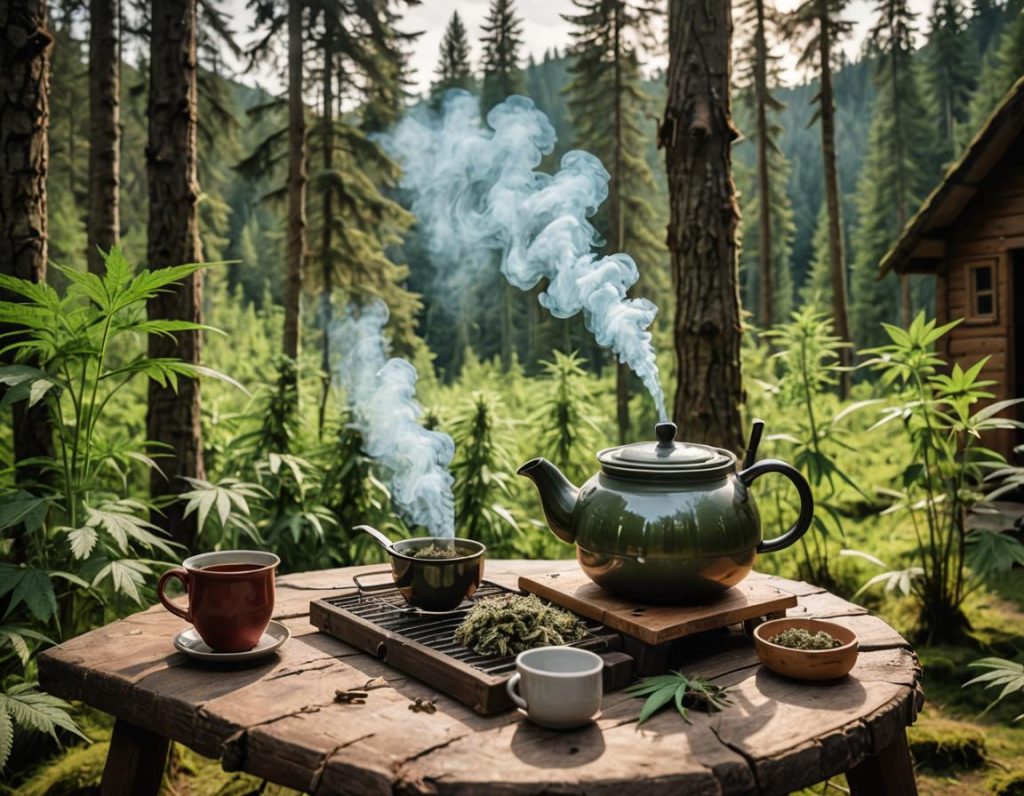
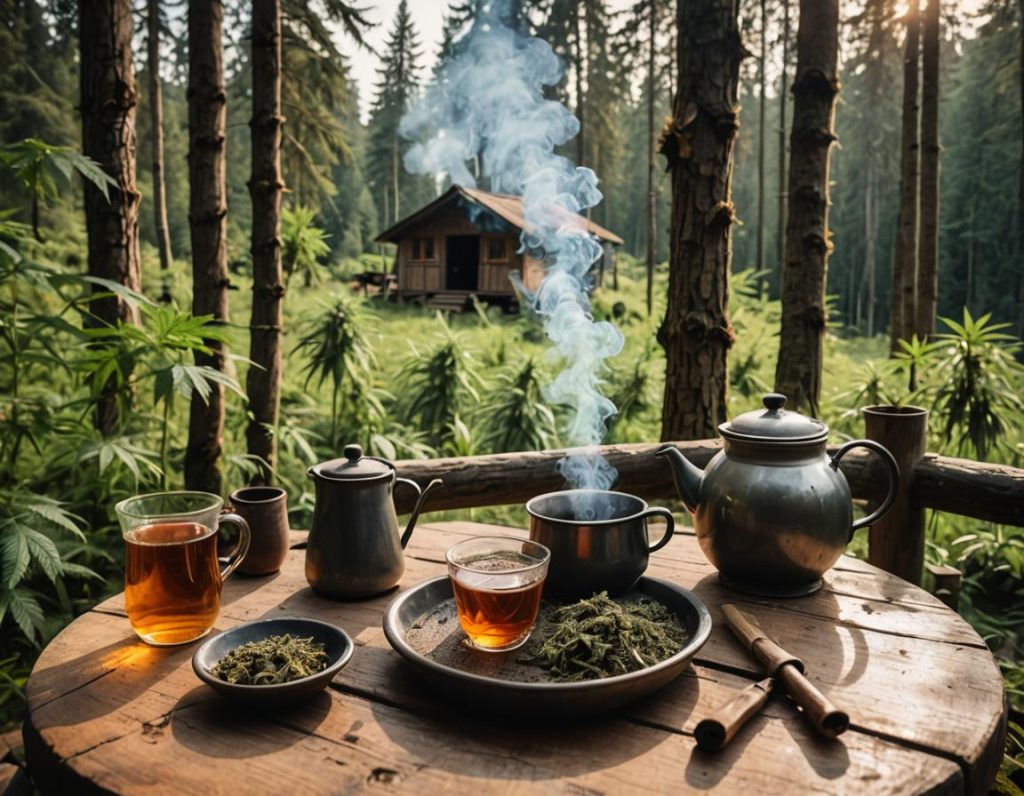
I began taking medicinal cannabis in the form of tea about ten months ago, to deal with complications resulting from C-PTSD. This medicinal cannabis I received in the form of 35g bags of Shishkaberry buds, after getting a prescription from a cannabis clinic with an office in my city. I was prescribed this Shishkaberry to use in the form of medicinal tea. I found instructions for its preparation on WikiHow.

In my case of C-PTSD, hyperarousal is the primary symptom. This manifests in four major ways: as insomnia, nausea, anxiety and depression. Of these manifestations, the first two are mostly somatic and the last two are mostly psychological.

Because of these complications, sleep is the foremost problem. It doesn’t take much stress before the hyperarousal gets to the point where sleep duration and/or quality are affected. On account of the C-PTSD itself, relatively minor levels of sleep deprivation can have major effects in terms of emotional dysregulation, as well as suicidal and homicidal ideation. The distress of intense suicidal and homicidal ideation is sufficient that ordinary life is impossible. Therefore, getting enough restful sleep is a significant part of the battle.

Up until recently, I had managed this condition with a combination of pharmaceuticals (which I didn’t want more of) and cannabis (which I did want more of). This combination, in conjunction with a conscious choice to live a low-stress lifestyle, has generally succeeded in keeping the hyperarousal under control.

The pharmaceuticals consisted of anti-depressants and anti-psychotics. I have been prescribed five different types of each over the course of my 29 years as a psychiatric patient. Some pharmaceuticals became ineffective after years of use. Others had side-effects that were intolerable.

Pharmaceutical side-effects have included lethargy, sedation, mental fogginess, drowsiness, impotence, weight gain and digestive problems. The side-effects of the anti-psychotics are generally much worse than those of the anti-depressants. If the total effect of the C-PTSD is to make a normal life impossible, the total effect of the pharmaceuticals is not to make a normal life possible but to make the abnormal life tolerable. They do help with the hyperarousal, and therefore prevent the likely consequences of the hyperarousal getting out of control (i.e. suicide/homicide). But the side-effects are abominable.

Because of the severity of the pharmaceutical side-effects, I have often stopped taking prescribed medication. This is the reason for having tried five different anti-depressants and five different anti-psychotics over 29 years. Unfortunately, the problems with C-PTSD have proven extremely stubborn, such that life was impossible without the pills. Thus, it hasn’t been possible to escape the pharmaceuticals and their side-effects.

For these reasons, I have been excited about the possibility of being able to access medicinal cannabis, which seemed to have promise in treating hyperarousal without excruciating side-effects. Securing this access has been a 15-year battle from hell, but one that was won ten months ago. Since then I have been taking cannabis tea every night, starting with about 0.2 grams of ground cannabis buds in a tea strainer and working up to 0.45 grams.

The primary advantage to cannabis in tea form is that it provides most of the same benefits as taking it in joint form, but does not have the same side effects. Most of my medicinal cannabis consumption over the past 15 years has been in joint form. This has been great fun, but is far from ideal from a medicinal point of view.

The typical pattern when smoking a joint is to firstly experience a 30 minutes or so high of intense positive emotion, followed by a low lasting several hours, unless another joint is smoked, whereupon another high begins. Even while experiencing a low, being affected by cannabis is still good because it alleviates the nausea, headaches, suicidal ideation and homicidal ideation that is otherwise endemic to my C-PTSD experience. Thus, smoking joints, although far from ideal, is still much nicer than only having pharmaceuticals.

The great advantage that I have found with the Shishkaberry tea is that it alleviates the hyperarousal of C-PTSD without either the side-effects of pharmaceuticals or of smoked cannabis.

Drinking cannabis tea is a much smoother experience than smoking joints. The tea takes away the nausea and the psychosomatic pain, without the powerful psychoactive effects of inhalation (as fun as those are, they make it harder to get things done). As a result, when I am on the tea I don’t feel a strong desire to smoke cannabis.

Because the cannabis tea has alleviated the hyperarousal to some extent, it has been possible to halve the dose of the currently prescribed anti-depressant. This has led to benefits resulting from fewer pharmaceutical side-effects, such as some of my ordinary concentration ability returning, and some weight loss.

Currently I am enjoying the best sleep of my life thanks to the Shishkaberry tea. I therefore intend to keep taking it for the medium-long term future. The next step is to taper off the anti-depressants completely, which is made more realistic by the cannabis tea. If this is achievable then the cannabis tea would have had a massively positive impact on my life. So I recommend it to all with hyperarousal from a traumatic stress disorder.

*

For more of VJM’s ideas, see his work on other platforms!
For even more of VJM’s ideas, buy one of his books!

*

If you enjoyed reading this piece, buy a compilation of our best pieces from previous years!

Best VJMP Essays and Articles of 2023
Best VJMP Essays and Articles of 2022
Best VJMP Essays and Articles of 2021
Best VJMP Essays and Articles of 2020
Best VJMP Essays and Articles of 2019
Best VJMP Essays and Articles of 2018
Best VJMP Essays and Articles of 2017

*

If you would like to support our work in other ways, make a donation to our Paypal! Even better, buy any one of our books!

Ambassadors Of Weed

The cannabis referendum in 2020 may have failed (even if non-Chinese voters voted in favour of it), but it was close enough that no-one has really complained about the liberal medicinal cannabis regime that the Sixth Labour Government introduced.

It’s now very, very easy to get hold of a medicinal cannabis prescription. There are now numerous outfits that will give you a prescription after a teleconsultation. Some of these might demand that you go through a multi-stage process of first trying CBD oil, then THC oil, before you can first get a prescription for THC flowers. But it’s not a difficult process.

Despite this ease, cannabis is not fully accepted in New Zealand. Decades of Drug War programming has brainwashed hordes of idiots into thinking that cannabis fries brains, causes violence and sexual assaults, and is a gateway to criminality. The truth about cannabis doesn’t matter. The perceptions are what lead to the opposition.

In almost every case where cannabis has become legal (excepting Thailand and a few other places) it only became so after a long struggle. The masses have been brainwashed for so many decades to see cannabis as something evil that changing mass perception is something that can only happen slowly.

Millions of conversations must be had before widespread acceptance of cannabis can exist. This must consist of millions of people hearing from multiple other people each how cannabis helped them, whether medicinally, recreationally or spiritually. And then millions of slow realisations that the government lied about it.

Not only must cannasceptics hear the arguments for cannabis law reform, they must hear them from people they respect if they are to change their opinions.

Whether people accept it or not, human society is status-based. This is how we have evolved for hundreds of thousands of years: in tribes where the higher your status, the higher your chance of surviving and reproducing. Status-seeking and status-judging are as hard-wired into us as sleeping.

Thus, people are more likely to become accepting of something if they see high-status people engaging in it. Status can be hard to judge, but most people realise that polite, happy, pro-social people are higher status than bitter, angry and resentful people.

This essay is an encouragement to all the new legal cannabis users to consider themselves ambassadors of weed.

Many people will not have met a medicinal cannabis user before. So if you can create a polite, happy, pro-social impression on such people, it will normalise in the public consciousness the idea that cannabis users are good people. Let’s not forget, most people who voted no in the cannabis referendum did so because they hated cannabis users.

Some political ambassadors end up representing civilisation among the savages. If you are a cannabis user, this is essentially what you are, among all the pissheads, screen zombies and painkiller addicts. So don’t forget it! Act like you are surrounded by ferals, because you are. Modern drug culture, with its belief in the harmlessness of alcohol and the absolute harm of everything else, is a mass psychosis.

This essay, then, is an encouragement for those with medicinal cannabis prescriptions to act as if they were early traders with cannibal tribes. Try not to shock the natives of Boozelandia too much. They’re superstitious and poorly educated. Try to act in a friendly and understanding manner.

This especially relates to doctors and other medical staff.

If you get a prescription for e.g. Tilray 10:10 oil, such that you are directed to take 1mg every day from a 40mg bottle, then take 1mg every day. Don’t drink half the bottle on the first day and then start hassling the doctor for refills. Holding to the prescribed dose will convince people that it’s possible to use cannabis responsibly without ending up like Trainspotting.

None of this is to say that anyone should use less cannabis or not enjoy it.

Modern Rockefeller medicine has been slow to realise it, but one of the main psychiatric benefits of cannabis is precisely that it gets you high. Being high is the opposite of being low, and being low for too long (so that you get stuck there) is commonly known as depression. Therefore, cannabis is a cure for depression.

I have personally found that cannabis can stop dead all manner of suicidal and/or homicidal ideation, and this is primarily achieved by making you feel good when you would otherwise have felt bad. This sounds straightforward to most people, but it’s still a shock to those who believe that people need to suffer for various reasons of character building/anti-degeneracy/religion/sadism.

Anyone who implies that cannabis is bad because it makes people happy is the sort of authoritarian who ought to be kept far from any decision-making. So, please, enjoy it to the max. As with so many other things, an intelligent balance is necessary.

If New Zealand is ever to step fully into the 21st Century and legalise cannabis, it will first require acceptance of cannabis users by the herd. This will require ambassadors of weed to create that acceptance through positive interactions.

*

For more of VJM’s ideas, see his work on other platforms!
For even more of VJM’s ideas, buy one of his books!

*

If you enjoyed reading this essay/article, you can get a compilation of the Best VJMP Essays and Articles from 2021 from Amazon as a Kindle ebook or paperback. Compilations of the Best VJMP Essays and Articles of 2020, the Best VJMP Essays and Articles of 2019, the Best VJMP Essays and Articles of 2018 and the Best VJMP Essays and Articles of 2017 are also available.

*

If you would like to support our work in other ways, subscribe to our SubscribeStar fund, or make a donation to our Paypal! Even better, buy any one of our books!
Correlations With Special Voting Yes In The Cannabis Referendum

VariableSpecial voting Yes for Cannabis
Never married0.781
No children0.745
Special voting Yes for euthanasia0.742
Part-time study0.730
Voting Greens 20200.682
Aged 20-240.663
Currently unpartnered0.637
Aged 25-290.625
Neither ownership of house nor house in family trust0.594
Working in arts or recreation services0.581
Working in information media or telecommunications0.575
Receiving income from Student Allowance0.559
Level 3 certificate0.538
Master’s degree0.534
Working as a professional0.520
Personal income $5,000-$10,0000.511
Working in professional, scientific or technical services0.509
Full-time study0.487
Honours degree0.483
Receiving wage or salary0.473
Doctorate0.451
Mean personal income0.451
Following Judaism0.444
Aged 30-340.439
Bachelor’s degree0.439
Unemployed0.426
Voting The Opportunities Party 20200.422
Working in accommodation or food services0.399
Voting Maori Party 20200.391
Enrolled in a Maori electorate0.389
Working in financial or insurance services0.374
Median personal income0.333
Working in administrative or support services0.328
Working in public administration or safety0.327
Personal income $70,000+0.327
Personal income < $5,0000.293
Maori0.271
Voting Vision NZ Party 20200.256
Following Spiritualism or a New Age religion0.247
Receiving income from Sole Parent Support0.238
Voting ALCP 20200.233
Receiving income from Jobseeker Support0.225
Following no religion0.223
Employed full-time0.218
Working as a community or personal services worker0.216
Enrolled in a North Island electorate0.200
Following a Maori religion0.199
Working in education or training0.190
Aged 35-390.184
Enrolled in an urban electorate0.159
Following Buddhism0.141
Receiving income from Supported Living Payment0.120
Following Hinduism0.115
Receiving no source of income0.103
Working in rental, hiring or real estate services0.097
Asian0.093
Following Islam0.091
Percentage of electorate overseas-born0.078
Employed part-time0.063
Voting Sustainable NZ 20200.048
Working as a sales worker0.034
Pacific Islander0.032
Percentage of females in electorate0.029
Working as a clerical or administrative worker0.015
Aged 40-44-0.017
One child-0.026
Percentage of males in electorate-0.029
Six or more children-0.042
Receiving income from interest, dividends, rent, other investments-0.054
Working in transport, postal or warehousing-0.057
Voting Advance NZ 2020-0.061
Object to answering how many children-0.075
Percentage of electorate New Zealand-born-0.078
Voting TEA Party 2020-0.078
Voting Heartland NZ 2020-0.093
Receiving income from self-employment or owning one’s own business-0.096
Working in electricity, gas, water or waste services-0.097
Voting Labour 2020-0.113
Working in healthcare or social assistance-0.127
Voting ONE Party 2020-0.141
Working in mining-0.161
Turnout rate-0.169
Working in wholesale trade-0.173
Own house in family trust-0.176
Working as a manager-0.195
Five children-0.197
European-0.198
Personal income $50,000-$70,000-0.206
Voting New Zealand First 2020-0.207
Personal income $10,000-$20,000-0.213
Working in construction-0.220
Aged 45-49-0.235
Receiving income from ACC or private work insurance-0.256
Voting NZ Outdoors Party 2020-0.257
Percentage of voting age population enrolled-0.258
Working as a machinery operator or driver-0.277
Voting Social Credit 2020-0.303
Working as a labourer-0.307
Mean age-0.308
Level 2 certificate-0.334
Working in retail trade-0.348
Level 6 diploma-0.352
Working in other services-0.371
Median age-0.392
Aged 50-54-0.397
Working in agriculture, forestry or fishing-0.400
Level 4 certificate-0.419
Four children-0.428
Voting ACT 2020-0.430
No NZQA qualifications-0.446
Not in the labour force-0.454
Personal income $20,000-$30,000-0.457
Level 5 diploma-0.458
Level 1 certificate-0.461
Personal income $30,000-$50,000-0.474
Working as a technician or trades worker-0.476
Following Christianity-0.477
Divorced/separated/widowed-0.494
Voting National 2020-0.494
Aged 85+-0.496
Aged 55-59-0.517
Working in manufacturing-0.517
Aged 70-74-0.524
Aged 65-69-0.526
Not studying-0.533
Aged 75-79-0.563
Aged 60-64-0.571
Receiving income from NZ Super or Veteran’s pension-0.571
Aged 80-84-0.583
Own or part own house-0.635
Currently partnered-0.637
Two children-0.639
Three children-0.654
Voting New Conservative 2020-0.660
Married (not separated)-0.696

*

This table is an excerpt from the upcoming 3rd Edition of Understanding New Zealand, by Dan McGlashan and published by VJM Publishing. Understanding New Zealand is the comprehensive guide to the demographics and voting patterns of the New Zealand people.