
A Technoshamanic Update to the Perennial Philosophy

The perennial philosophy comes and goes, all throughout time and space, being a reflection of the mind of God in the Great Fractal. In every new age it updates itself, taking a form that makes sense to the people of the time, depending on the characteristics of that age. Because technological change has been so rapid over the last 150 years, the perennial philosophy has not been able to keep up. This essay makes an attempt to do so.

The metaphors of the former age were the crucifix, the fish and the crescent, just as they were the pyramid, the bull and the sacrificial brazier in the age before that. The age that we are now entering has its own zeitgeist – perhaps it is time for a technoshamanic update to the perennial philosophy?

The perennial philosophy is informational gold and is more fundamental than language and therefore cannot be described in words. However, we can predict what some of its teachings are going to be, by applying the axiom of “As below, so above” to the modern day.

In its earlier incarnations, through the writings of Hermes Trismegistus and others, the perennial philosophy explained the metaphysical world by analogy to the natural world. “That which is above is from that which is below, and that which is below is from that which is above, working the miracles of one,” reads the Emerald Tablet, “Its father is the Sun and its mother the Moon.”

This remained an extremely effective metaphor, until today. The world of today is so bizarre, so surreal and impossible that distinguishing it from a dreamscape is no longer easy. Moreover, modern people are almost completely out of touch with the natural world – many of us haven’t so much as looked at the Moon in years.

We need a new metaphor for a new age, and virtual reality seems like the obvious replacement.

Following this line of reasoning, one might expect that the creation myths of the new century will be based around the same binary division as always but with a modern twist; in other words not of yang and yin, fire and water or Sun and Moon but of 1 and 0. The hardware is the brain, the software is the mind, and electricity is the Holy Ghost.

Different lives could be seen as nothing more than differing sets of sensory impressions upon consciousness. As long as these impressions could be accurately recorded and reproduced, there’s no reason why they couldn’t be accessible for any conscious person to experience at any time.

My own The Verity Key twisted the ordinary perception of consciousness through a machine that could replace the consciousness of another person with that of the operator of the eponymous device. The idea was to play on the usual belief of the reader that their consciousness was directly connected to their physical body, and could never be separated.

This played with the idea of the Great Fractal, which is conceptualised as an immense algorithm that calculates all of the possible combinations of senses that make up the illusion of the material world. This is a modern way of expressing how all things flow from one, i.e. “all created objects come from one thing, an undifferentiated primal matter”.

In other words, all of the contents of consciousness ultimately flow from consciousness itself, because nothing more than consciousness is needed to create them all – a fact known to all who have managed to purify their consciousness to the level of gold and thereby completed the Philosopher’s Stone.

Other ancient alchemical or hermetic beliefs can likewise be transliterated into a modern context.

The laws of karma can be expressed in terms of frequency, which no-one understood before the days of widespread radio, and which now everyone does. If one can imagine such a thing as a frequency of consciousness, a higher frequency would produce a more harmonious tone and joy among those who heard it, whereas a lower frequency would produce a discordant tone and fear among those who heard it.

A technoshaman might contend that, upon the expiration of one’s physical body, the frequency of consciousness that one had cultivated is the only thing that passes into the next world. They might even go as far as to contend that this frequency will attract those of a like frequency, and therefore that, post-death, one’s frequency dictates which part of the Great Fractal one’s consciousness becomes attuned to and the frequency of those who populate it (until, of course, one dies there as well).

One’s “frequency of consciousness” can here be likened to an analog television or radio signal. The more pleasurable frequencies are not necessarily the first ones discovered, or the most popular ones, and they certainly aren’t the easiest to tune into. In order to tune into higher frequencies one must know where to find them on the dial.

The alchemical quest of transforming lead into gold is a physicalist metaphor for the mystical quest that, in modern language, could be said to be about tuning a low frequency of consciousness into a higher one.

*

If you enjoyed reading this essay, you can get a compilation of the Best VJMP Essays and Articles of 2017 from Amazon for Kindle or Amazon for CreateSpace (for international readers), or TradeMe (for Kiwis).
The Four Ways to Impress Another Person

People have historically put a lot of effort into figuring out ways to impress each other

To make an impression on another person is to instill in them a minor sense of awe, which is very useful because it tends to make that person more willing to be helpful. This minor sense of awe, if reflected back upon the awestruck, closely relates to the phenomenon of charisma. The tricky part is that what impresses another person depends on that person’s own level of alchemical development.

Impressing someone at a raw, biological level is fundamentally a matter of strength and natural vigour. This is primarily the basis on which dominance hierarchies are formed among social creatures in nature. Basically, creatures pay respect to any other creature powerful enough to fuck it up. These creatures probably evolved to do so, because the alternative to doing so was often death and therefore a failure to propagate one’s genes.

In an alchemical sense, this responds to the level of clay. In other words, it’s the natural state. People who have not been raised well – i.e. people who have been either neglected or abused as children – tend to not move past this stage. This is also the stage at which prison logic runs. The motto of this stage could be “Might makes right”.

What’s crucial to note here is that a person who is themselves at the level of clay will not and cannot be impressed by a person’s level of silver or gold, because they simply will not be able to perceive those elements. Even perceiving when a person carries significant levels of iron is difficult.

Being strong and vigorous will not impress any mature adult person, of course, for the reason that they only consider it impressive to be strong if one also has that strength under control. Wilding out and demonstrating raw physical dominance by fighting might impress some people, but it won’t impress those of a higher grade.

What will impress people of iron is being strong and having that strength under control. Respect is thus only given to those who are able to impose order upon their own bodies. At this level, it’s common for people to pay respect to people who are good at fighting, but to not respect people who are good at applying their intellects at the expense of martial prowess.

Alchemically, this level of control reflects the presence of iron, which itself implies a heightened degree of order. To have a will of iron is to have the ability to impose one’s will on one’s body no matter what it is telling one to do. The most impressive thing one can do here is to die on the battlefield by charging valiantly into the enemy and making them remember you.

Being strong and having that strength under control isn’t necessarily enough once one starts climbing the social hierarchy. Here, we enter the realm of silver, and here what impresses is not having strength, and not having that strength under control, but having that strength easily under control.

A person of iron will be impressed by the ability to bear great physical trials, but a person of silver will only be impressed if these trials are born with grace. This represents a softening, in the sense that the emphasis is no longer on killing like Rambo but rather preserving one’s humanity under duress.

The captain of a sports team always has to be a bit more of silver than the players under them, and it is on this basis they are judged after the match. Can they take a loss with good grace, and acknowledge the ways in which the opposition were superior? Can they take a win with good grace, and acknowledge that the opposition challenged and tested them despite the scoreline?

If they can do so while smiling, and while physically exhausted after an extended period of strenuous exertion and probably running on adrenaline, then they might impress the man of silver. This sort of behaviour will be considered noble or gentlemanly by any onlooker who are themselves sufficiently cultivated to appreciate it.

Of the fourth way to impress people very little can be said, as is usual for matters pertaining to alchemical gold. In the context of this essay it’s enough to say that it pertains to impressing people – and knowing that one has impressed people – without letting it go to one’s head and becoming egotistical.

In other words, it’s not enough to be strong, and it’s not enough to have that strength under control, and it’s not even enough to have that strength easily under control. If one wants to impress a man of gold, one has to be able to do all that without becoming too impressed by oneself, because it’s there that gold will not be.

This is extremely difficult for a number of reasons. The primary one is that it represents the apotheosis of the philosopher, which is an experience reserved only for the rarest of persons. Another major reason is that the temptations of the ego are evil in every possible application of the concept; they are multifarious enough so that evil can tempt one in any situation.

*

If you enjoyed reading this essay, you can get a compilation of the Best VJMP Essays and Articles of 2017 from Amazon for Kindle or Amazon for CreateSpace (for international readers), or TradeMe (for Kiwis).
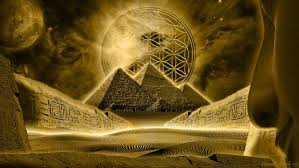
VJMP Reads: Julius Evola’s Ride the Tiger III

This reading continues on from here.

The sixth essay in Ride The Tiger is called “Active Nihilism – Nietzsche”, and continues to deal with the problem of the Death of God. Also continuing with the esoteric theme of this book, Evola appears to insist that the solution is alchemical. The negative is overwhelming and ascendant; it cannot be resisted. So the question becomes “how far the negative can be transformed into something positive.”

Here we are concerned with “the transition to the postnihilist stage.” Modern man is free, free from the strictures of Abrahamism – but free for what? We have striven against our enslavement for so long that we don’t know what to do with freedom. We invented God to assuage our existential anxiety, and, now that we are “free” from this God, that anxiety has rushed back with a vengeance. Evola cites Sartre here: “We are condemned to be free.”

Evola contends that Nietzsche’s conception of the Superman is not sufficient to avoid this nihilism. His reasoning is that the Superman theory is not sufficiently different from the other eschatologies, such as the Marxist one, and therefore cannot be more than a pseudosolution to the problem of nihilism.

As was true for Marxism, the Superman theory could potentially be used to justify all manner of horrors in the present by promising paradise in the future. However, Nietzsche’s theory of eternal recurrence strikes much closer to what might be described as a perennial philosophy.

The seventh essay is called “Being Oneself.” It seems as if that, once the pseudosolutions and outright false philosophies are abandoned, what one is left with is oneself. This something is beyond morality (indeed, morality is considered something to be liberated from), and internal, instead of imposed from without as if by God or King.

Nietzsche comes in for some criticism here. Evola considers his attitude to the human spirit “materialistic”, but concedes that Nietzsche must have seen beyond because he is capable of distinguishing the “Self” from the “I”. Other thinkers, such as Guyau, are considered, but dismissed for not offering anything truly new, merely “restrictions that more or less return to one οf the systems οf the old morality.”

Evola concludes that the answer, as ever, is to “Know Thyself”. However, there’s a caveat. In the past, it was easier to know thyself because one was defined by strictures of class, religion, nation, caste and many other things. Modern man is free, so he cannot fall back on these now-abandoned strictures.

Modern man is, in fact, so free that it is as if he has been shattered to pieces. His soul “contains multitudes”. This shattering, Evola contends, can be most easily observed in remorse, which is an emotion that mostly affects divided people and which is characteristic of our time.

The eighth essay is called “The Transcendent Dimension – ‘Life’ and ‘More Than Life'”. The man who gets it, Evola contends, is one who possesses a transcendental dimension, a spiritual dimension. Here he distances himself further from Nietzsche, who for Evola was more of a vessel that history acted through than a genuine actor in his own right. Nietzsche’s great error was “confusion of the sacred with the profane”.

Evola, through quoting Nietzsche, gives us a prescription for a man of gold, although without using alchemical terms: a many who has great passions (clay), but who holds them in check (iron), and who hold them in check with apparent ease (silver) and who, last of all, does not draw any particular egoic satisfaction from doing so (gold). Here, the highest sort of man is one who overcomes great dangers, for it is only in doing so that all these qualities can be expressed.

Evola mentions the common interest in Zen philosophy among the Beat Generation that was heavily influenced by the existentialists. Here, religious belief (of any kind) is rejected as a failure of the human spirit, of the sort of person who did not have the character to survive the tension of the Age of Nihilism, and who hence surrendered to easy answers.

*

If you enjoyed reading this essay, you can get a compilation of the Best VJMP Essays and Articles of 2017 from Amazon for Kindle or Amazon for CreateSpace (for international readers), or TradeMe (for Kiwis).

Why Spirituality is Represented Elementally by Gold

In terms of elementalism, it can be said that clay represents health, iron represents courage, silver represents intelligence and gold represents spirituality. But why should spirituality be equated with gold in particular? This essay examines the question.

Gold is the cornerstone of the economy, because it’s ultimately what backs debt (even if that’s no longer as apparent as it was when we were on the gold standard). Everyone knows, intuitively or otherwise, that other people will always accept gold as payment for goods and services, and therefore that the substance always has value. This means that material things can be valued in terms of gold.

In alchemism, gold represents spirituality, for the reason that spiritual treasures are the most valuable of all. The universal appeal of gold is similar to the universal appeal of a genuine connection with God. Much as the value of gold is obvious to anyone who can sense it in the material plane, so is the possession of metaphysical gold obvious to those tuned into it.

Gold is the rarest in physical terms, and its the hardest to create in alchemical terms. Like genuine spiritual wisdom, there simply isn’t very much of it. Although clay is everywhere and iron can easily be found, silver and gold require more effort, and gold twenty times more so than silver.

The intellectual traditions that give value to silver might be hard-won, but it’s possible to develop them in a formulaic manner through the education system. There is no such thing as formulaic development of spirituality. Every consciousness takes its own path back to God.

Without spirituality, people are terrified of their own deaths, because they tend to drift into materialism, and therefore the belief that the brain generates consciousness, and therefore the belief that the death of the physical body means the extermination of this consciousness.

This reasoning causes them to think more short-term. After all, if long-term thinking means having to face up to fact that one will die, it’s best to avoid it entirely. Best just to live for immediate gratification, and the less guilt the better.

This has repercussions, many of which are denied by the men of silver and iron. The men of silver delude themselves into thinking that the spiritual side of life is childish nonsense, in contrast to the hard, adult sobriety of their scientific materialism. The men of iron, for their part, consider gold to be soft and therefore a weak element, not particularly more valuable than clay on account of its lack of immediate application to warfare.

Both are grievously wrong, and wrong in a way that causes immense suffering. The men of silver find that, no matter how many books they read, they cannot solve existential questions without an understanding of the true nature of God. Absent this, the pin is pulled from history and it no longer has any meaning. The men of iron don’t even know what they’re missing out on.

Another way in which gold represents spirituality is that it cannot degrade. Clay can rot, iron can rust and silver can tarnish – but there is no such equivalent for gold. One can leave a gold coin out in the elements for ten years and it will be as shiny as the day one left it there. Like spirituality, gold is not temporal in this sense.

Metaphysical gold works in a similar fashion. The health and strength of every person fades early in their life, and their mental powers fade late, but all of these temporal powers must fade. Spirituality relates to that which endures beyond the death of the physical body, and value earned early in life tends to endure.

A final way is that gold is extremely malleable: one gram of it can be hammered out into a sheet one square metre in area.

Spirituality, too, is extremely malleable. It is useful everywhere. Whereas big muscles are seldom useful and big brains are only useful where there is information to be processed, an appreciation of the fact that this is it will pay off in all domains of life.

*

If you enjoyed reading this essay, you can get a compilation of the Best VJMP Essays and Articles of 2017 from Amazon for Kindle or Amazon for CreateSpace (for international readers), or TradeMe (for Kiwis).