r/K Selection Theory and Political Orientation

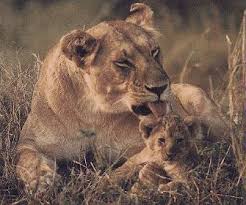
r/K selection theory is an ecological concept that applies to the attitudes that a breeding creature will have towards its offspring. Simply put, all sexually reproducing creatures fall along a spectrum that has zero parental input into the survival of the offspring at one end (the r end) and extremely high parental input at the other end (the K end).

The classic r-strategy is one that has a very high rate of breeding, and a correspondingly very low rate of parental investment, like that of a reptile or a mouse. The classic K-strategy, by contrast, is one that has a low rate of breeding and a correspondingly high rate of parental investment, like that of an elephant or a human being.

As above, so below: the thinking of people can be understood along this exact same parallel. Although biologists don’t look at it like this, it’s possible to view this r/K arrangement as representing the degree of solidarity that exists between human generations.

The r-strategy could be compared to the kind of male that gets a woman pregnant and then disappears from the scene before he is called upon to provide any resources for the offspring. It is even described as “opportunistic”, in much the same way that that kind of male behaviour is.

The K-strategy would then be compared to the kind of male that forms a monogamous pair bond for life, with no intention of finding future female partners to inseminate, and who makes a large investment in terms of time and/or energy in making sure that the offspring of the bond grow up to be fit to deal with the selective pressures of life.

Practically speaking, a male running the r-strategy would have to inseminate more females than a male running the K-strategy, because fewer of the former male’s offspring could be expected to survive to adulthood, on account of the lower degree of parental investment they received.

Moreover, a smaller proportion of those who did survive to adulthood would reproduce, because those who did survive would more frequently be socially or emotionally defective in comparison to those who had a more natural level of paternal investment.

The r/K selection strategy parallels closely the objective of the various political wings. What’s odd, though, is that both wings of the left-right spectrum see themselves as representatives of the K-strategy and their opponents as the representatives of the r-strategy.

Conservatives would consider that the optimal K-strategy would be a monogamous marriage, and preferably a Christian one, and this is the kind of family that appears to be held up in our culture as some kind of ideal. In such a marriage the father would stick around and provide a large amount of investment in a relatively small number of offspring.

They would consider that paying out money in welfare is a mistake because it incentivises r-strategy men to impregnate women and then disappear. In many cases the fear is that welfare incentivises women to get inseminated by dead-beat males and that the rest of us therefore have to carry the burden for children who would not otherwise have existed.

Liberals would consider that the K-strategy involved paying an amount of tax that was sufficient to cover all the requirements every citizen has to grow into a healthy, productive adult. This would mean a high level of investment in every child – schooling, healthcare, freedom from abuse and neglect etc.

They would consider the r-strategy to be what religious conservatives do when they have large numbers of children in adherence to a religious admonition to populate the Earth, and then raise them to be fearful, prejudiced and superstitious.

It appears somehow natural, when reading about the difference, to associate humans and mammals with the K-strategy and reptiles and insects with the r-strategy. Probably this is why both sides of the politico-retard spectrum consider themselves to represent the K-strategy.

Oddly, this gives us a potential way forward for the political system. If both left and right can agree that a K-strategy is morally superior to an r-strategy, then why not forget left and right entirely and run the system along the lines of a K-strategy?

The Use of Major Psychedelics in Healing Psychological Trauma

At some point in the near future, the potential for using psychedelic medicines to help heal the major psychological traumas that cause most mental illnesses will be a hot topic. Unfortunately, we will have to begin almost from the beginning, as the bulk of our historical knowledge about these substances has been destroyed.

Despite this, there is still a considerable amount of shamanic knowledge in the underground culture, certainly much more than what exists in the mainstream medical establishment, for whom the retarded calculus of “drugs = brain damage” still dominates thinking.

The essential thing that has to be understood is that psychedelics, like cannabis, serve to decondition the mind and brain, only in a much deeper and more sudden way than cannabis.

Deconditioning is here used in the clinical psychology sense to mean a process of unlearning – in particular, of unlearning involuntary subconscious reactions to things that may have been useful to deal with the problems of the past but which no longer are.

This is principally why the psychedelic experience is so difficult. It is also why the psychedelic experience is so exhilarating. One sees things as they actually are, as one did when a child, without the experience being filtered through hundreds of layers of conditioning collected over many forgotten years.

It is possible to condition oneself into a mental illness by thinking too hard about things, because the brain (crudely speaking) works like muscles in the sense that the more it is exercised the stronger it becomes.

Because anxiety and depression are often little more than a habitual fixation of thinking on either the future or the past, respectively, a psychedelic experience often has the effect of deconditioning a person from thought patterns that made them unhappy.

This is why a lot of practiced psychedelic users take them when they feel it’s time to reset the thinking. Usually this is after a certain amount of time has passed since the last experience.

Likewise, many people have suppressed traumatic memories. The suppression often makes good short-term sense in that it allows the damaged person to deal with their immediate problems of survival, but it often makes bad long-term sense in that the warping effect it has on someone’s personality magnifies over time.

This points the way to the major positive use of psychedelics in healing mental illness. Any mental illness that has been caused by overconditioning in an area of the brain/mind could be helped by a medicine that deconditions a person from the thoughts they did not want to have.

It could also give them an opportunity to bring up the suppressed memories and to consider them in a new light, free of the conditioned anxiety response that usually accompanies recollection of past traumas.

Where more research will be necessary is to make sure that the patient does not lose conditioning in areas of the brain/mind that actually helped them in their life.

There are many concepts and habits that people have learned for good reasons, in particular concepts around good social conduct that make life much easier for all of us. An 18-year old adult will have been conditioned for almost their entire life about many things.

So in order to be able to use these tools effectively, mental health practitioners will have to educate themselves past the barbaric superstitions that currently inform our approach to pre-pharmaceutical medicines.

Much of this will involve sitting down with drug users and talking to them to discover what benefits they have found in the use of various substances in their explorations of the mind.

This cannot happen until society comes to appreciate both that psychoactive drug users are people who have followed the prehistoric shamanic path, and that this path is still necessary in our society to protects us from the excesses of groupthink, of tradition and of mindless, knee-jerk programmed reactions and thinking.

The Need For Luciferianism in the Modern World

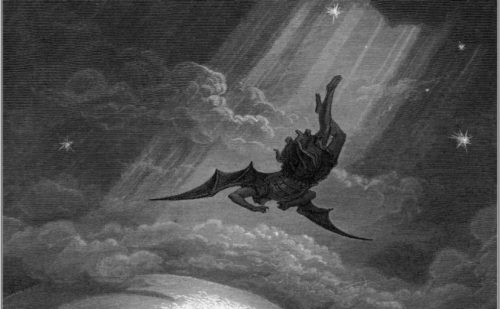
The symbol of Lucifer is of an angel who descends from some higher place to bring enlightenment to the beings in the darkness below. In some forms, like in his incarnation as Prometheus, this is done out of a love for humanity. In others, like his incarnation as Satan, this is entirely accidental. This essay will argue that – despite what appears to be commonly believed – there always will be a need for Luciferianism this century.

Asking what value Luciferianism has to the modern world can be answered by looking at the people who fear it. One can soon notice that they are the same kind of people who have always feared it.

They are the benighted, those who quiver in fear at the light because they know that it illuminates something within themselves that they are ashamed of, something that would make them appear undignified to those who look on and judge.

These people have a reason to oppose Lucifer because their power comes from the gossamer shadows of lies that they cast on the rest of humanity. Lies about God, about human nature, about the world, about the future. Politicians and priests.

Anyone who, like Lucifer, brings light to people is the enemy of anyone who controls those people with lies.

If one goes back far enough, it is possible to imagine a situation where there were a number of primitive ape-men watching a burning tree that had been struck by lightning or similar. The natural reaction of all animals, like it was for us, is to be afraid of fire, and so they would have kept back from it.

But one of those ape-men would have carried within him the spirit of Lucifer, and he would have gone forward (striding or creeping, it doesn’t matter) and approached the fire without fear, eventually learning to tame it. Such an ape-man (it could just as well have been an ape-woman) would have been responsible for the development of firecraft and therefore, eventually, of civilisation.

So it can be said that, were it not for Lucifer or one like him, we would all be eating raw meat still, cowering in the shadows.

So much for the past. Because the age we live in now is extremely materialistic, even a metaphor such as Lucifer will often be dismissed as a religious delusion. The very idea that Lucifer represents a courageous rejection of stagnant dogma is often itself considered part of the cultural baggage of religion.

The mastery of fire was so long ago that it’s almost irrelevant, says the materialist. Now, we have mastered almost all of reality: we have sent a man to the Moon, we have built atomic bombs and power plants, we have built computers powerful enough to simulate weather.

The truth is that our modern material advances are the yang to the yin of spiritual enfeeblement. As Tyler Durden told us in Fight Club: “Our great war is a spiritual war.”

Even if all of the problems in the world had been solved and we were living in utopia, there would still be a need for Lucifer to come in and to break up the lazy, complacent lies that we would be telling each other, lies that would risk us falling back into an animal state.

After all, we know that nothing lasts, that yang falls into yin before yang reasserts itself.

Lucifer represents the spirit of anyone who asks questions to authority. For example, who will question the cozy idea that our current time and place is the most morally and philosophically advanced of all times and of all places, and that our current crop of leaders have everything under control, and in doing so protect us from the stagnation that creeps in to every successful society? Only Lucifer.

Therefore, Luciferianism has the potential to protect us from the arrogance or hubris that inevitably destroys a culture once it has started to believe its own bullshit.

Lucifer will always live on in the spirit of anyone willing to give the middle finger to an authority figure spouting lies or fearmongering. It doesn’t matter if there lies come from the left or the right, or from anywhere else.

Go back far enough and there would have been a cowardly faux shaman telling someone else not to go too close to the fire under any circumstances, for it simply could not be mastered – and there would have been one who chose not to believe him.

Whenever lies and untruths start to act as chains weighing down the soul of a people – family, tribe, nation, race, species doesn’t matter – there will be a need for people to summon the spirit of Lucifer to burn them away.

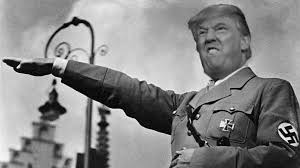
Why Donald Trump is Absolutely Nothing Like Adolf Hitler

Ever since Donald Trump announced his candidacy for the Republican Party Presidential nomination, comparisons between him and Adolf Hitler have been spewing out of the mouths of talking heads in the mainstream media. But as even the superficial analysis presented in this essay will make clear, Trump and Hitler are two very, very different men.

Of course, it isn’t easy to get to the truth about either of them – Adolf Hitler is the single most lied about individual in all of history, and Donald Trump is the most lied about individual of our time.

But even so, even if we limit our analysis only to those facts that are accepted by basically everyone, both pro and anti-Hitler and pro and anti-Trump, we can see that they have little in common.

Let’s start at the beginning. At age 25, Hitler had just moved to Germany and was about to enlist in the German Army to fight in World War One, in which he was wounded and received an Iron Cross for bravery.

At age 25, Trump had just inherited control of his family real estate and construction firm. Before then he had obtained four student deferments to avoid being drafted to fight in the Vietnam war.

At age 30, Hitler had just joined the German Workers’ Party, which was the forerunner to the NSDAP. He was elected leader of the party two years later at the age of 32.

At age 31, Trump married the first of his three wives, a Czech model named Ivana.

When Trump was 35 years old, his older brother Fred died of alcoholism, an event which caused Donald to swear off all drugs, but in particular alcohol and cigarettes.

When Hitler was 34 years old, he led an attempt to overthrow the Weimar Republic Government with armed force, an event remembered as the Beer Hall Putsch.

The coup attempt failed with the deaths of 16 Hitler supporters and four German Police officers, and Hitler was arrested and sentenced to five years’ imprisonment.

Already it is clear that the lives of these two men are on very different paths. Trump appears – from any perspective – to fit the mold of every other playboy prince or President who was born into immense wealth and privilege and decided to parlay it into a shot at power – like George W. Bush, John F. Kennedy, et al.

Hitler spent the eventual nine months of his imprisonment writing his manifesto – Mein Kampf (My Struggle) – which formed the philosophical foundations of his efforts to apply his energies to the world.

By age 45, the political movement that Hitler had built had won a democratic election and put him in power as the Chancellor of Germany, and he had already begun to pass measures that would limit the capacity of the German people to take back the power they had granted him.

Trump, for his part, was busy divorcing his first wife and shacking up with his second, the actress with which he was having an affair.

By age 50, of course, things were radically different: Hitler had given orders for the German Army to invade Poland, an event which would trigger British and French reprisals and ignite the European Theatre of World War Two.

At age 50 Trump was also locked in battle – but in the courtroom against rival Atlantic City casino owners. It was already clear that Hitler would not have brooked such resistance at age 50. His domestic opponents had long since been liquidated.

At age 55, Hitler was on the brink of death, only kept going by frequent doses of methamphetamine. This makes him quite the contrast on the drug enhancement front with Trump, who has apparently never smoked cannabis or even tobacco.

And at an age when Adolf Hitler was long since dead at his own hand, his attempt to rid the world of Jewry having led to his own destruction, Trump was happy to see his daughter not only marry a Jew but convert to their religion, prompting him to state “I have a Jewish daughter, and I am very honored by that.”

Somehow it’s hard to imagine Hitler saying such a thing.

By this age, of course, Trump had not even come close to political power. And as we cannot read the future, the comparisons must end there.

It’s apparent even from this short look at things that the two men are nothing alike. Hitler was an extremely intense and original thinker with the willpower of a demon, and who was willing to remake the entire world in his image. Trump is a wealthy playboy who just coasted along on his family wealth, like many before him.

In fact, it’s well possible that Hitler would have despised Trump for his willingness to schmooze up to corruption for money. Such an analysis must wait for another time.