
The Four Kinds of Warfare

When a person hears the word ‘warfare’, it usually conjures up images of fire and explosions, bombs, tanks, blood, death, bayonets and bullets. This is what most people mean by ‘warfare’. As this essay will examine, there are four different elementalist perspectives that we can take towards the subject of war, depending on the realm of reality that we are in.

The element of iron corresponds to the kind of warfare that we are used to. In the natural world, iron represents the strength that came to dominate over the clay. It is the strength of muscle, claws and fangs, and later bone clubs and spears, and then swords, axes and knives and then firearms.

When we talk about warfare we’re usually talking about warfare on this level. Here the goal of the warfare is to reduce one’s opponent to chaos by destroying the coherence of (and therefore the order in) their physical body. The element of iron is especially useful here because it can be hammered into a tool that can pierce or slice through an opponent’s body of clay.

Much of modern warfare in this sense is really a logistical challenge that seeks to optimise how quickly iron can be moved from one part of the battlefield to another. Hence, bullets move as fast as possible and tanks move as fast as cars despite weighing several tons. The apogee of this process might be the aircraft carrier, many of which can carry dozens of strike fighter jets plus other armaments.

The element of silver corresponds to economic warfare. This means that it is a warfare of primarily unseen things: debt and interest rates being the foremost of them. In the same way that a man with an iron instrument can reap a field of wheat, a man with a silver instrument (such as a bank charter) can reap a field of men.

The nature of this economic warfare is silvery like the gossamer of a spider’s web. Its power does not come from crushing and slicing, like the iron, but from dazzling and entangling. It has been used ever since Babylon and bases itself on things that people with ordinary intellects have trouble understanding, like fractional reserve banking.

So people with low levels of financial literacy find themselves bedazzled by the promise of, for example, an instant loan no-questions-asked-right-now, and this leads to them becoming entangled in scams like payday loans that they take out to blow on something like a holiday, and then getting bled for a small amount every week forever to service the interest.

The element of clay corresponds to demographic and biological warfare. This does not mean biological in the sense of nerve agents and genetically engineered viruses, but in the sense that the most powerful weapons of any group of people over the long term are the wombs of their women.

Most refuse to acknowledge it, but Europe is in the process of being conquered by an r-selected, equatorial enemy that primarily wages war by reproducing at a high rate and ensuring that the children produced are brainwashed into willingly serving as soldiers for the furtherance of the meme complex. This is warfare of clay because it’s the same way that plants and insects outcompete each other: by spitting out as many offspring as possible.

It has been said that “demography is destiny”, and this is clearly true if one looks back over history and notes how high birth rates inevitably lead to the surviving offspring seeking out new territories (and usually killing the existing occupants of them). The British Empire was also founded on high birth rates and it has been the same for every previous empire in history.

The element of gold corresponds to spiritual warfare. This is the hardest perspective to understand, and it is the perspective that is the most valuable.

The reason why it is the most valuable is the battlefield in question here is the human will, absent which, no force can triumph in any of the other three areas of warfare, no matter how vigorous, strong or smart.

It isn’t a simple matter to describe how warfare is conducted on this level, but it’s enough to say that the spiritual birthright of every human being is to understand that their core essence is pure consciousness, and that this consciousness is immortal, invulnerable and eternal and is the same as God.

*

If you enjoyed reading this essay, you can get a compilation of the Best VJMP Essays and Articles of 2017 from Amazon for Kindle or Amazon for CreateSpace (for international readers), or TradeMe (for Kiwis).
Humanity’s Greatest Conceit

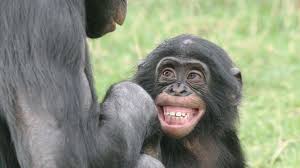
Many people are happy to hold the belief that other creatures have a “lesser” or “lower” form of consciousness to themselves, despite the absence of a logical basis for it

The single greatest conceit of the human animal is that humans like it are somehow more conscious or self-aware than the beings who make up the rest of the animal kingdom. This belief is not only insane and irrational, but it has had devastating consequences for the rest of the Earth.

When it comes down to it, no-one has any fucking idea who or what else is conscious. This follows simple logic. After all, how could we possibly know? Each one of us can assert with absolute certainty that, as an individual, they are conscious, because being conscious of your own consciousness is sufficient evidence that it exists. But this gets taken to illogical conclusions.

The vast majority of humans labour under the erroneous assumption that other creatures are only conscious to the degree that they are like those humans. A chimpanzee is considered to be very similar to us relative to the rest of the animal kingdom (and it is if the comparison is made in physical and anatomical terms), but this has no relevance to whether or not the chimpanzee is conscious.

If we can’t observe or measure consciousness in other humans, then we can’t measure it in other creatures either. So if consciousness has never and can never be either observed or measured in other creatures, then any belief about the consciousness of another creature must of necessity be an article of faith.

Simple enough, but the difficulty arises when this iron-clad logic meets the infinite human capacity for self-delusion. The vast majority of people make the erroneous assumption that their brain generates consciousness and therefore that other creatures are similar to the extent that their brains are believed to be similar.

But this is pure superstition, and not logical.

Even worse, despite being a majority, are those who assume that they are superior to all creatures of “lesser” consciousness, and that the supposed lower consciousness of other creatures give us a green light to abuse and exploit them.

It’s common for humans to look at a cat and think we see an animal that is uncomprehending of the greater existential questions, but how can we rule out that the cat has long since solved all these questions and is now blase about them, to the point that any human wondering about them merely appears sophomoric?

How can we know that the cat, who sleeps 15 hours a day, isn’t meditating for most of this time? Cats might all be spiritual masters on the order of Buddha.

How do we know that the ant that appears to go forward mindlessly, isn’t at perfect peace with its role in the world and accepts it without reservation?

The logical flaw is also evident if one observes that many people are willing to assume that these creatures have less consciousness on account of that they didn’t evolve as much of it as we did – but they aren’t willing to make the same assumptions of different races, even though the logic is the same.

The argument that differing selection pressures could account for differences in consciousness between humans and the other mammals, but could not also account for differences in consciousness between white people and black people, is a contradiction on its face.

Humanity’s greatest conceit is that our consciousness is somehow more special or worthy of not suffering than the consciousness of other creatures, and this line of reasoning is what has enabled the rape of the planet that has occurred over the last century.

*

If you enjoyed reading this essay, you can get a compilation of the Best VJMP Essays and Articles of 2017 from Amazon for Kindle or Amazon for CreateSpace (for international readers), or TradeMe (for Kiwis).
The Three Definitions of ‘Racist’

The word ‘racist’ has a variety of meanings depending on the political goals of the person using it

The word ‘racist’ has been overused so badly in 21st century discourse that it no longer has any real meaning. Originally used to describe a person who held unfair prejudices against a group of people on the basis of their skin colour, it now has a wide range of meanings depending on the political motivations of the person pointing the finger.

The first definition is what can be called the “supremacist” orientation. This is the attitude a person has if they believe that their race is the greatest one of all and everyone else is naturally inferior. It is also the “classical” racism that was espoused by Adolf Hitler, and is the real type of racism that everyone is afraid of.

The problem with a supremacist orientation of racism is that it obligates the holder to be fighting all the time. As the alpha male in any dominance hierarchy soon learns, claiming to be the top dog means you’re always fighting off challengers. This is great in a “live fast, die young” sense, but it doesn’t make for peace or order.

In an effort to bring peace on Earth, The Powers That Be have made immense efforts to discourage this sort of racism since the end of World War II, in which this sort of racism was directly responsible for the deaths of 50,000,000 people.

The second definition is specific, and could be termed the “experiential” version of racism. People in this category are not supremacists because they do not believe that their own specific race is generally superior, so they are not racists in the first sense. In this category are people who have learned to not like members of specific races through adverse life experiences.

People in this category can, in fact, can be the opposite of supremacists, as they often are in the case of white people who happily concede that the average IQ of a Far East Asian is higher than that of a white person, or in the case of Far East Asians who happily concede that white people are much less corrupt when in government than Far East Asians.

They often get accused of being racists, though, because their experience has caused them to hold unflattering opinions of some races and these opinions are often considered supremacist by social justice warriors looking for someone to freak out at. The truth prevails, however, because these people tend to find each other and reinforce each others’ experiences.

The third is the “Marxist” definition of racism, which is the weaponised version. Here the concern is with how to use guilt about racism as a tool for browbeating those perceived to be bourgeoisie. Anywhere you hear the ludicrous assertion that racism isn’t real racism unless the person doing it is part of the bourgeoisie, you know you’re in Marxist territory.

This weaponised version of racism is used to manipulate people, usually white people, into believing that they have inherited racial debts from the age of colonialism, and can only clear these racial debts by supporting Marxist policies like mass Muslim immigration. This is why it is so frequently brought out when someone criticises the practices of the religion of Islam, which is not a race.

Unfortunately for the Marxists, their attempts to guilt-trip people into supporting their policies has backfired, because no-one knows which of these definitions is being used at any one time. Manipulating people through dishonest use of language is typical for people with totalitarian mindsets, but overuse of it causes the populace to become aware.

*

If you enjoyed reading this essay, you can get a compilation of the Best VJMP Essays and Articles of 2017 from Amazon for Kindle or Amazon for CreateSpace (for international readers), or TradeMe (for Kiwis).

The Three Orientations of Bravery

Bravery is generally thought of as an ability to maintain calmness and composure in the face of danger, especially in the context of going forward into that danger for the sake of achieving some moral goal. It’s almost univerally thought of as a highly desirable personal quality and usually thought of as a masculine one. Originally bravery referred to physical courage, but, as this essay will show, there are at least three major perspectives that one can take on the concept.

These three perspectives translate into the perspectives of iron, silver and gold if one takes the approach of elementalism or esoteric alchemy. These can be thought of as forms of bravery that evolved from a successful resolution of the challenges that led to the previous form.

The form of bravery that corresponds to the iron is the simplest and most universally understood of the four orientations. Here the iron responds to upwards – a form of bravery that is oriented up the dominance hierarchy, towards one’s parents, one’s boss or the local king. Here, being brave is a matter of standing up to those who would try and hurt you.

This orientation of bravery is usually understood in a martial sense, and indeed we can see that Mars, which represents iron, gives us the etymological origin to words like ‘martial’. In the context of esoteric alchemy, ‘martial’ means ‘like the iron’ and therefore reflects a sense of being sharp, strong and unyielding.

As a warrior proves his bravery in the arena of iron (by whatever means) and succeeds in keeping dependents safe, he naturally comes to take on a shine, which represents his entry into the arena of silver. He learns that keeping the peace is as much a question of diplomacy as it is a question of beating the shit out of people, and he finds that he no longer needs to orientate himself up so much.

This form of bravery is the form of bravery that goes outwards. In the same way that a given volume of silver can cover more area, when hammered flat, than the same volume of iron, the bravery of the man of silver is that which orients itself over a wide area.

Once a great warrior comes to take responsibility for his tribe and becomes a chief, the next step up the hierarchy of silver is to take responsibility for a wider and wider geographical area. This is natural as long as he continues to shine, because this will cause people from far and wide to seek his judgment and mediation.

The bravery involved here is not so much slaying dragons and more a will to confront the real nature of the physical world and to strive towards its mastery. This means the real nature of the world in terms of its physics, chemistry, mathematics, biology and related disciplines, as well as statecraft.

When the man of silver moves beyond his prime years for taking responsibility for his people, he enters the arena of gold. Gold represents the form of bravery that goes inwards. This is like gold because it is the rarest and most precious form of bravery.

A person who orients their bravery inwards learns to make peace with God, which is the hardest thing of all to achieve because this orientation has the fewest biological instincts giving it power. Biological instincts are not generally concerned with bravery in general, because that is a moral orientation – they are concerned with survival and dominance.

One reason why this form of bravery is so rare is that not everyone understands that it takes bravery to truly look within – but it does. It takes a lot of bravery to look into your own soul and to ask yourself if you are truly good or evil, or if such things really exist. It takes incredible bravery to really truly ask yourself if you can be comfortable saying goodbye to all of your attachments with this world upon the moment of your physical death.

The three orientations of bravery, therefore, relate to the challenges that naturally faced people in the historical past as they overcame the dangers of their environment.