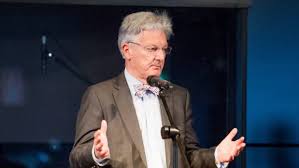
VJMP Reads: Anders Breivik’s Manifesto VI

This reading carries on from here.

In this section (c. pages 366-425), Breivik traces some of the reasons for the weakness of the modern West. Although the reasons for the West’s decline are many, some weigh more heavily than others.

Curiously, from the perspective of 2017, the document points out that in the absence of a meaningful life people will gravitate towards mindless destruction. In this sense, the document appears to be somewhat prescient.

Breivik laments a lack of order and structure in the modern West. Society, he claims, has essentially broken down. Nobody wants to have children any more because they want to live carefree lives of perpetual adolescence. The plummeting birthrates have led to a demand from many quarters for mass immigration to replace the non-existent native children.

And so, conflict between the natives and immigrants becomes ever more likely, following the maxim “demography is destiny”.

Not that mass immigration is proposed merely for economic reasons. Breivik details a large conspiracy on the part of European elites to radically transform the make-up of their nations, especially in Britain under Tony Blair. Interestingly, Breivik is willing to criticise big business for their complicity in mass immigration – something that few on the right are willing to dare.

Perhaps unavoidably for a document of this length, the rhetoric swings from entirely reasonable libertarian critiques of Marxism to unreasonable demands, such as the total banning of the discipline of sociology. Sociology is inherently untrustworthy: “Their academic weapons are to deliberate spread their falsified and corrupted Marxist world view.”

Breivik makes an accurate criticism when he points out that the advocates of cultural Marxism are seldom the black, poor or disabled people that the Marxists claim to be agitating on behalf of. Instead, the vast majority of Marxists in the West are from privileged, wealthy families.

When Breivik writes that “Cultural Marxists tend to hate anything that has an image of being strong, good and successful” he agrees with some of the columnists of this newspaper, who have previously written about the overlap between modern leftist thought and slave morality, in particular the feeling of resentment that induces the weak to oppose anything strong.

This tendency is also equated with the feminine, with masochism and with suicidal ideation.

He also echoes this newspaper when he quotes a British politician as saying “When all the politicians agree, the rest of us should suspect a plot against the ordinary citizen.” Like this newspaper, the intent in raising such paranoid conjectures is to crystallise dissent against the system.

Breivik makes no effort to hide his dissatisfaction with the political process. Electoral politics is dismissed as an “empty ritual” directed by the collusion of the political and media classes. Important issues are not discussed by the media, who has failed to do its job as a Fourth Estate holding the government to account. Instead, they are decided upon “behind closed doors”.

In this section, Breivik manages to list who his enemies are. In short, his three major groups of enemies to the European people are:

1. The media and academia, who have an anti-Western bias
2. The political elites, who seek to remake the world in their image regardless of the cost, and
3. Muslims.

Whatever Happened to The Polynesian Takeover of New Zealand Rugby?

At the turn of the century, many commentators believed that a total Polynesian takeover of the All Blacks was inevitable – what happened?

The All Blacks team for this Saturday’s Bledisloe Cup clash against the Wallabies has been named. A curious aspect of the teamsheet is that it is one of the whitest All Blacks teams named in decades. This means that a lot of the race-panic rhetoric at the turn of the century turned out to be grossly misguided, and this article looks at why.

In the opening years of this century, the All Blacks back row was made up of the “Great Wall of Samoa” in Jerry Collins, Chris Masoe and Rodney So’oialo, with the Tongan-born Sione Lauaki playing a part-time role. All three of these players typified the “big hit” culture of Polynesian rugby, and they earned the “Great Wall” epithet from their uncompromising defensive style.

The back three was comprised of the “Flying Fijians” Joe Rokocoko and Sitiveni Sivivatu, with the rock-solid Mils Muliaina as the last line of defence. All three players were lightning-fast across the ground – a quality, we were told, deriving from the superior proportion of fast-twitch muscle fibers in the Polynesian genome. No white player was going to be able to compete, ever again.

The idea that the All Blacks front row would sooner or later be permanently Polynesian was taken for granted in many quarters. After all, the squat, solid build of the average Polynesian was considered the ideal build for a prop, and some considered it just a matter of time until the heavier build of the Polynesians won out.

The last bastion of white All Blacks was expected to be the second row, on account of that the Polynesian genome seldom produced men taller than 6’6″, which is realistically the minimum height necessary to succeed as an international lock. But even then, with players like Ross Filipo on the rise, it seemed as if the entire forward pack would follow the backs in becoming entirely Polynesian.

This piece from The Telegraph, penned in the year 2000 and titled ‘White players shying away from All Black future‘, is typical of the rhetoric of the turn of the century. John Morris, the headmaster of Auckland Grammar School, explained that white pupils at his school were abandoning rugby union and turning “to soccer, hockey or even rugby league where there is a better chance for the smaller lad.”

This seemed reasonable for white kids, who, going through puberty later than Polynesians, often found themselves as boys against men on the high school rugby fields. Many thought that white kids would all turn to cricket, essentially abandoning rugby to the Samoans, Fijians and Tongans.

John Matheson, editor of New Zealand Rugby magazine, even went as far as to state “It won’t be too long before there is not a white face in the All Black team.”

Fast forward 17 years, to this weekend’s Bledisloe Cup match, and those predictions could hardly have been more wrong.

The player with the most Polynesian blood in the All Blacks starting XV is the half-Samoan Reiko Ioane. Sonny Bill Williams, at centre, is next. He is at most half-Samoan, with a white mother and a father with a Welsh surname. All of the other All Blacks are white or Maori – and there is not a single Fijian or Tongan among them.

Two half-Samoans out of fifteen players means that less than 7% of the All Blacks are Polynesian by blood – a lower proportion than the amount of Polynesian blood in the New Zealand population as a whole, and barely greater than that of Black Caps. And even then, Ross Taylor is a far more established player in his team than either Ioane or Williams is in the All Blacks.

So what happened?

Explaining this outcome – and how the white ethnomasochists at the turn of the century got it so badly wrong – is not straightforward.

First, genetics plays a role, in ways that were understood by few 15 years ago. Polynesians may have a higher proportion of fast-twitch muscle fibers, and that may make them quick across the turf, but this simply means that white players have a higher proportion of slow-twitch muscle fibers. Because rugby union is fundamentally a game of possession, strength trumps speed in many cases, in particular when it comes to the contest for the ball.

Players of European descent have an advantage in the upper body over Polynesians, especially when it comes to grip strength and shoulder strength. When it comes to winning the ball, this advantage is decisive. This explains why the All Blacks forward pack this weekend will be entirely white, with the exception of the Maori hooker Codie Taylor (who nevertheless has plenty of European ancestry).

The second major explanation is geographical. If one looks at the birthplaces of the current All Blacks squad, one striking pattern leaps out: very few of them are born in the big cities.

The lifestyle of people in Kiwi big cities is following the trends established elsewhere in the West: big city people are rapidly getting fatter, lazier, more obese. This means that many more All Blacks are from the minor centres than before – and the population of the minor centres is almost exclusively white and Maori.

The third major factor is professionalism. At the turn of the century, rugby matches were often won by turns of individual brilliance, as they were in the amateur days.

The game has changed a lot since then. It is much more structured now, which means that there is less room for individual flair and more demand for highly-coached, error-free play, which shifts the advantage to the middle classes because they are far more able to pay for the necessary coaching. In doing so, the advantage also shifts away from the working-class Polynesians and back to the white people who occupy the vast bulk of the middle class.

In summary, the breathless predictions of total Polynesian dominance of the top levels of New Zealand rugby turned out to be wrong. Rugby union is a fundamental part of Islander culture, this is true – but it’s a fundamental part of white Kiwi culture as well, and the Pakeha are not going to give the game up simply because they get smashed a lot in teenage years.

Predicting the racial makeup of the All Blacks in another 17 years is impossible. What can be said for certain is – as Sir Apirana Ngata believed – rugby union will continue to serve as the best of all cultural solutions for bringing out inter-racial harmony and co-operation in New Zealand, as it has done for over 120 years.

The Great Fractal

In the beginning was consciousness. This is the same as God, and it is the same as yourself. God is consciousness, and God is you, and you are consciousness. This didn’t really happen in the beginning, because there’s no such thing as time, but it’s the start of the story.

All religions and spiritual movements are inspired by gnosis about the real nature of God. It’s very simple – God is consciousness because consciousness is sufficient to create the entire physical world (and all possible worlds), and consciousness is outside of time and space and is complete even in division.

Nothing over and above consciousness is necessary to create the appearance of the entire material world and everything in it, and the appearance of every possible material world and everything in that. In fact, all of these possible material worlds can be derived through repeated iteration of a simple fractal equation – the Great Fractal.

So when people say that God is omniscient and omnipotent and everywhere and eternal they are entirely correct, because all of these things are true of consciousness.

The only disagreement arises when people try to describe the precise nature of God. These efforts are doomed to failure because consciousness is more fundamental than language, and therefore cannot be defined in language. And so all efforts to describe God or to interpret the will of God are errors, usually made through a person conflating their ego with God and therefore confusing their personal desires for the will of God.

That’s all there is to life. You, being conscious, are conscious of things. This never changes, not even on the other side of the death of your material body.

The Great Fractal is the sum total of all of the possible phenomena that God can be conscious of. It is called the Great Fractal because all possible lives are similar to all other possible lives in ways that, if represented graphically, form a fractal of infinite complexity and depth.

Every possible life is being lived by God, right now, with full consciousness – and always has been and always will be. There is a being exactly the same as you who is right now living the life you lived up until ten minutes ago – and there are an infinite number of lives being lived inbetween now and ten minutes ago.

The Great Fractal is alive. It is bursting with consciousness. Every possible life that God can imagine – from the simplest flatworm to seventh-dimensional wizards, is consciously being lived right now, and always will be, forever.

How? God just dreamed them up, and God continues to dream as an act of will. That’s all that this – what we call life – is: just a dream. You know this because it’s not any more real than the dreamworlds that you experience at night. Nothing is different at such a time – you are consciousness, and you are conscious of phenomena, and that’s all there is to it, awake or asleep.

What you consider to be your life is just one infinitely small and infinitely limited perspective of the Great Fractal, at the human-on-Earth-in-the-21st-century level. Just like a computer program that can give you the impression of an entire journey merely through zooming in on particular co-ordinates of a fractal, so is your life just a pathway through the Great Fractal and what you see along the way.

You do have free will, only you are limited by certain laws whose purpose is to make this illusion more immersive. What you consider to be free will is nothing more than navigating through the Great Fractal to the degree that you are able – you decide on a part of the Great Fractal that you would like to experience and then – if it’s possible to get there from where you are now while obeying the laws of immersion – you go there.

Why did this happen, instead of something else happening?

Being pure consciousness, God is perfection. God resides in a state of perfect bliss, complete and without desire.

Although this is perfect on one level, it’s grossly imperfect on another: it’s not very interesting.

Simply put, the most enjoyable game that God can play is to look into a limited section of the Great Fractal for long enough so that God can actually come to convince Godself that this limited section is really the whole thing – and then God can feel a sense of awe and grandeur by once again awakening to an appreciation of the whole, an appreciation of itself, an awakening from the delusion that God was ever something else.

And then to do it again, and again and again, forever – an unceasing pattern of forgetting and remembering, of mistaking the illusion of the material world for transcendental reality and then realising the trick and laughing about the fact that one could ever fall for something so obvious.

What we call enlightenment is what naturally arrives as a consequence of turning the common, understandable, materialist perspective around; from looking backwards at the uncreated consciousness instead of looking forwards into the created Great Fractal.

The Great Fractal is the sum total of all the contents of consciousness and all the possible contents of consciousness. It is what the ancient Vedic culture called Maya. We mistake it for reality to the extent that we are making a game of this life.

Te Reo With Mnemonics: Sports Words

Rugby – whutupōro

(loan) A group of kids playing rugby ask another kid, who is wearing rags, if he’d like to play. The kid says “Fuu, too poor, yo.”

League – rīki

(loan) A rugby league team walks past an old woman. She looks horrified and holds her nose, as if they reek.

Cricket – kirikiti

(loan) A man walks through a field wearing cricket gear and carrying a cat.

Netball – poitarawhiti

A woman in netball uniform walks onto a court eating a pie. The umpire says to her “If you want to play netball you’ll have to pay the pie tariff.”

Ball – poi

A boy plays cricket, but instead of bowling a ball he bowls a pie.

bounce – tāwhana

Inside a tavern, a crowd of drunken revellers bounce balls of all descriptions.

The Maori word for bounce – tāwhana – sounds like the English word tavern

catch – hopu(-kia)

A man hops along some grass and then dives to catch a ball.

coach – kaitohutohu

A man holding a kite talks to some skeptical schoolchildren. He says “I am the best in the world at coaching you on how to use this kite. Or who? Or who?”

Court/Field – papa tākaro

A middle-aged man meets some children on a sports field after a game and gives them some takeaway food. He is the papa takeaways.

tackle – rutu

Some trees are playing rugby. One of them tackles another by wrapping its roots around them.

kick – whana

A man tries to kick an electric fan into a goal.

pass – kuru

A doctor has a coughing patient on the other side of the room. The doctor says “This will cure him!” and passes a rugby ball into the patient’s chest.

*

The above is an excerpt from the upcoming Learn Maori Vocabulary With Mnemonics, by Jeff Ngatai, due to be published by VJM Publishing in the summer of 2017/18.