Understanding New Zealand: Maori Party Voters

The Maori Party is a bit of a misnomer. Sure, they represent Maori, but not all Maori – only some. Let’s get the obvious one out of the way: the correlation between voting Maori Party in 2014 and being of Maori descent is an extremely strong 0.91. The correlation between voting Maori Party in 2014 and being a Pacific Islander was a not significant 0.01, and the other two correlations, with being European and being Asian, were both significantly negative at -0.35 and -0.30 respectively.

What may seem incredible if you look at Parliament, but not surprising if you knew about Kiwis, is the size of the negative correlation between voting National in 2014 and voting Maori Party in 2014: this is -0.75. That is enough to suggest that the average Maori Party voter has very, very little in common with the average National voter, even though the Maori Party supports National in Parliament.

With no other party was there as large a negative correlation with voting Maori Party in 2014. Voting Maori Party had a correlation of -0.64 with voting Conservative, and -0.29 with voting ACT. Imagining some kind of blend of National, Conservative and ACT voters can give us an idea of what an anti-Maori would be like if one existed.

Maori Party voters were indifferent to the Greens. Voting Maori Party in 2014 had a correlation of 0.02 with voting Green in 2014. They do, however, seem to like the other strongly pro-Maori parties. Voting Maori Party in 2014 had a correlation of 0.41 with voting Labour and a correlation of 0.46 with voting New Zealand First.

The strongest correlations with voting for the Maori Party were with Internet MANA (0.84) and the Aotearoa Legalise Cannabis Party (0.85). Those two correlations may give a clue as to the sense of betrayal that many hard done by Maori will be feeling at the actions of the Maori Party MPs elected to Parliament, who raised tobacco taxes and did nothing about cannabis prohibition.

There is a fairly big difference between some correlations that the reader may have expected to be close to equal. One set of them relates to the strength of the correlation between being educated and being Maori and between being educated and voting Maori Party.

The correlation between being Maori and having a Bachelor’s degree is -0.45, but the correlation between voting Maori Party in 2014 and having a Bachelor’s degree is only -0.28. There was a similar pattern for all of the postgraduate degrees.

For being Maori and having an Honour’s degree the correlation was -0.46, but for voting Maori Party in 2014 and having an Honour’s degree it was only -0.29. For being Maori and having a Master’s degree the correlation was -0.45, but for voting Maori Party in 2014 and having a Master’s degree it was -0.28. And for being Maori and having a doctorate was -0.41, but for voting Maori Party in 2014 and having a doctorate it was 0.27.

A similar pattern repeats itself if we look at correlations with income bands. The $60-70K income band is perfectly even, in that the correlations between being in this band and being either Maori or voting Maori Party are both exactly 0.00.

For all of the income bands below this, the correlation with being Maori was more strongly positive than it was for voting Maori Party in 2014, but the opposite was true of the three income bands above this one.

A similar pattern repeats if one examines the difference when it comes to claiming benefits. The correlation between being on the unemployment benefit and voting Maori Party in 2014 is 0.79, but the correlation between being on the unemployment benefit and being Maori is 0.91. Similarly, the correlation between being on the invalid’s benefit and voting Maori Party in 2014 is 0.59, but the correlation between being on the invalid’s benefit and being Maori is 0.77.

One difference, and one major clue as to how Maori Party voters differ from general Maori, is that the correlation between being on a student allowance and voting Maori Party in 2014 (0.26) is stronger than the correlation between being on a student allowance and being Maori (0.20). This tells us that the average Maori Party voter is generally more driven and aspirational than the average Maori.

A general picture emerges of Maori Party voters being significantly better off than the average Maori person. This cannot be explained by turnout alone. The correlation between turnout rate in 2014 and being Maori is -0.75, and with between turnout rate in 2014 and voting Maori Party in 2014 it is -0.74. So there is no significant difference there.

This is supported by general measures of health and well-being. The correlation between having never smoked tobacco and voting Maori Party in 2014 (-0.55) is weaker than the correlation between having never smoked tobacco and being Maori (-0.73). In a similar vein, the correlation between being a solo parent and voting Maori Party in 2014 (0.66) was not as strong as the correlation between being a solo parent and being Maori (0.79).

There are several potential implications of this. One of the most notable is that, if Maori Party voters are actually significantly wealthier than the average Maori, a partnership with National as not as odd as it might otherwise appear.

*

This article is an excerpt from Understanding New Zealand, by Dan McGlashan, published by VJM Publishing in the winter of 2017.

The New Masculine Age Will Be One of Either Reason or Brutality

The feminine has done its dash as ruling force in the human world, for now at least. The feminine epoch that has just ended may have saved us from warring ourselves back into the Stone Age during the Cold War, but its logic and its attitudes are now glaringly ineffective for dealing with the challenges we face in 2017.

Let’s be fair. The feminine can probably be credited with saving us from nuclear hellfire in the aftermath of World War II. Curtis LeMay wanted to pre-emptively nuke Russia and China, and he once had the ear of the US President. Cooler heads prevailed there, as they did in the Cuban Missile Crisis, so we’re all still here.

The potential geopolitical catastrophes of our generation will be different in nature to the ones of our parents. Our danger is not an outside enemy killing us in fire but that we rot from within.

If one looks back at the earliest history of humankind, the most fundamental masculine action a man could possibly make was to build shelter in the form of a house or a wall.

Building a wall is incredibly masculine for many reasons. On the physical level, a person has to be able to lift large stones and chisel them into flat shapes. On an emotional level, a person has to look out into the world and see dangers that they want to protect their people from. On an intellectual level, a person has to do maths to calculate how the wall ought to be constructed, and on a spiritual level a person has to discriminate between that which belongs close to their people and that which does not – and to have the will to declare that which does not belong is to be kept on the other side of the wall.

This latter point reveals the genesis of the current European migrant crisis. It isn’t a matter of not having the knowledge, strength or skill to build a wall; the crisis of the West is a matter of will. In particular, we seem unable to make intelligent decisions about who to let through the wall and who not to.

Why did the European Union adopt an immigration policy that made it hard for people from similar cultures – such as the Americas or the ANZAC countries, to enter – and hard for people from high-energy, low-crime cultures – like the Far East Asians – to enter, but easy for people with very little to offer?

It could be many reasons – historical guilt, cultural decadence, internal corruption, out-of-touch political elites or that history is a masculine subject and therefore taboo in a feminine age like the one we have just come out of.

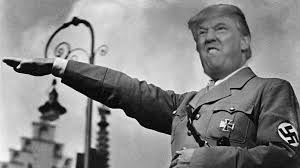
If this rhetoric about will and cultural decline sounds like something Hitler might have dreamed up, heed this warning: a new masculine age will inevitably be either one of reason or brutality, and it will be up to us to decide which.

Most women will be pleased at this new state of affairs, for the reason that if men become men again then women will no longer be forced to become men to compensate. As many women can tell you, it’s not dominating a man that is the difficult thing, it’s knowing what to do with him once you’ve brought him to heel, as a feminine woman has no natural use for such an arrangement.

Some men will be pleased with this new state of affairs, most obviously the masculine ones who find it natural to move forwards. Some will find it more difficult, in particular those not fully weaned who prefer to just drift along, but the zeitgeist of this new age may transform such half-men into correct ones.

If the masculine does its job correctly, the heroes of this new age will be men like Professor Jordan B. Peterson, whose commitment to reason is so complete that he is baffled by the irrationality of the criticisms levelled against him.

If the masculine does not do its job correctly, then we only have to look back to the last time people were in this situation to guess that the heroes of this new age will be much like Hitler.

The biggest danger is that the mainstream media has cried wolf so hard over Trump that if Trump does not turn out to be the next Hitler, the next Hitler could simply stand up and go full Nazi knowing that no-one was going to believe the warnings about him.

Whether humanity survives the challenges of the next half-century will be a matter of whether it can correctly identify reasonable men to follow and correctly identify brutal men to keep out of power.

It is becoming ever more obvious to ever more people that we can no longer rely on the mainstream media or the Government to be the gatekeepers of such knowledge. But with the Internet before us and alternative media growing every year, there is no excuse to rely on the authorities of a bygone age.

Why Meme Magic is Real, or How Trump Won the Propaganda War

The aptly named One Meme to Rule Them All heralded the true beginning of the spontaneous grassroots pro-Trump campaign. At no point were Hillary supporters motivated to produce or share memes

Remember when you were a kid, and “reading” books used to be less about those weird symbols that the grown-ups were hypnotised by, and more about looking at pictures that had those symbols underneath? That wasn’t just you being uneducated – it was also your intuitive understanding of the power of those pictures to talk to your spirit.

Magicians are aware of one thing that ordinary people are not: that the deeper parts of the mind, which psychologists call the subconscious – or even the unconscious – are not in any way less powerful than the surface parts that do all the thinking and talking.

Indeed, some even draw a distinction based on the primary target of the magic in question. Lesser magic can be considered the art of conscious magic and is mostly intellect-based, routine and predictable; greater magic is the art of unconscious magic and is mostly will-based, darker and more dangerous.

Memes speak to the subconscious. So they, like magic, are not targeted at the logical, rational, autistic left brain, because the left brain is the gatekeeper of the conscious. Memes appeal to the joyful, passionate, spontaneous and psychotic right brain, because the right brain is the gatekeeper of the subconscious.

In this, their power is humour, not logical rigour. This is a point that the left have missed for a long time, as they have become ever more obsessed with political correctness and policing people’s speech, although they managed to avoid any serious consequences until the Trump election.

We are now in the Post-Truth Age; this is a point that is well understood. The implications of this are less well understood. One of them is that it is no longer considered possible to determine using logical rigour which of a set of political candidates is most likely to be lying.

Politicians have been trying for so long to get an edge on their opponents by crafting more powerful lies that the race to the bottom has led to no-one believing them at all.

The more Hillary Clinton shrieked accusations of fascism at Trump, the more she herself came to appear Hitler-like, and the more Trump came to appear the noble resistance

And so it simply didn’t matter what Hillary Clinton’s arguments were. All Trump had to do was to create the right sort of vibe, and this would ensure that his voters turned out while Hillary’s did not. In this regard, the more Hillary struggled to get an edge, the more she sunk into the quicksand.

The rhetoric against Trump quickly became so extreme that it was laughable. Clinton genuinely appeared to believe she was fighting Hitler, and the stronger her belief the crazier she appeared to all but her own echo chamber.

Soon it was pretty clear that Hillary Clinton was herself a dangerous megalomaniac, and that she had the entire political establishment, the military establishment, the industrial establishment, the banking establishment and the media establishment behind her.

It was against this backdrop of extreme seriousness and humourlessness that memes started to work their magic.

Meme magic began, therefore, in the symbology of resistance. In much the same way that early Christian martyrs adopted the symbol of the fish as a sign of a mutual interest in resisting Babylon and Rome, so did young and creative people adopt Pepe and Kek as signs of resistance to a monstrously corrupt political establishment.

After the election, only the relatively woke appreciated how close we had all come to disaster

FaceBook avatars bearing green frogs also bore a message that went over the head of the majority of the plebs, but these were understood as a secret language by an elect few. It was a sign not to give up hope, not even when the mainstream media was pushing polls that gave Hillary Clinton a 98% chance of winning.

The three propaganda images in this essay are an excellent example of this phenomenon, and are merely a selection from the best. Where some people just see ridiculous drawings or photoshops of Trump, many others were powerfully affected at a subconscious level.

This column has previously argued that Hitler represented an excess of masculine energy, and that the world may have recently swung too far to the left in a 70-year cycle of history.

Hillary was always much more like Hitler than Trump was or ever could have been. Her promise to let 500,000 Syrian refugees into America was a clarion call for those who had been watching the collapse of Europe and the distance between Establishment politicians and the will of the people in the West.

Perhaps her defeat was then – rather than the certain path to nuclear hellfire the talking heads told us it would be – a sign that things are about to move back to normality. Trump has already admitted that the American Government has done a poor job recently of living up to its stated ideals.

The danger for Trump is that, having gone all-in on the “drain the swamp” rhetoric, he has to make genuine change or lose support in the next election. He also has to stay onside with the army of meme magicians that shitposted him into the White House.

It is too early to say if he will succeed. In any case, it can be confidently predicted that meme magic will play a large role in the next election and in each one henceforth.