

The Four Ways to Destroy A Population

The people, united, will never be divided – but there are other ways to destroy them

Ruled as we are by a parasitic, incestuous cadre of abominations, it isn’t easy to get our minds around all the ways that we have been destroyed. So many underhanded tricks have been used to divide and conquer us that it’s impossible to list them all. This essay tries to make sense of them by grouping the tactics of the ruling classes into four major categories.

The first is to disincorporate the target population. This means to take action that prevents them from forming any bonds of solidarity. Interpersonal solidarity, if too much of it is achieved, will allow a group of people to form their own sovereignty without being dependent on the State. Therefore, the State has to smash it.

The easiest way to achieve this has been known for millennia – it is to enclose public space. This is where people meet and where people talk, and where that happens there tends to grow opposition to the State. From the marketplace that spawned Socrates to the beer halls that spawned Hitler, anywhere people can meet and share their discontent about the way things are run is a place where that discontent can fester.

Alchemically, this category is equivalent to clay, because that represents the masses coming together. Disincorporation, therefore, means fences, walls, blockades, moats, trenches and everything else that prevents the natural flow of conversation from taking place.

The second is to disintegrate the target population. This is essentially Plan B, for when disincorporation fails. Here, disintegrating means to literally take away sources of order from within the body of the target population. The result of doing so is to render into chaos the bonds of solidarity that hold the people together, making them less able to take action.

This involves schemes like the War on Drugs, in which half of the population is demonised and persecuted for no good reason while the other half of the population keeps their mouth shut lest they be the target next time. The people don’t need to be literally split apart by force (although that’s an option), because it’s easier to split them apart by turning their own natural greed and cowardice on each other.

Alchemically, this strategy is equivalent to iron, because it’s the sharp edges of iron that cause bodies of clay to disintegrate. Although bullets are definitely one method by which this can be achieved, it’s mostly about forcing people apart by legal boondoggles and trickery.

The third is to disorientate the target population. This is where actual lying comes in. This is Plan C in the sense that the ruling class only uses it if their target population form bonds of solidarity that resist initial attempts to break them. Here they have to spin a web of deceit, confusion, misdirection and pure bullshit.

In the West, which has generally high levels of freedom of movement, association and speech, it’s not easily possible for the ruling classes to prevent the population from forming strong bonds of solidarity. Therefore, the ruling class has to direct the natural rage of the target population somewhere else.

Mainstream media such as television and radio does an outstanding job of this in our societies. There are new, shiny and loud distractions every moment of the day, blasted into our brains in the ever more frequent gaps in the programming. These are the alchemical equivalent to silver, in that they shine things at us to distract and one risks becoming blinded by it all.

The fourth is to demoralise the target population. This is the plan of last resort, and the ruling class only try it if the previous three methods have failed. It’s a question of the will of the people: if they are many, united and well-organised, they will win unless their will to be free can be sapped.

Alchemically this relates to gold and is therefore primarily a question of spirituality. It can be seen that, in the modern West, all spiritual traditions are attacked and persecuted while corrupt and empty religious ones are allowed to thrive. Our natural spiritual relationship with God has been destroyed and replaced with a pathetic McDonaldsisation of old Hebrew myths.

This absence of genuine spirituality has sapped our wills to live, and our ability to feel joy. Instead of being united with our birthright, which is to know spiritual truths about the survival of consciousness beyond the death of the physical body and the laws of karma, we are told that we are merely accidents of chemistry. Consequently, fear of death pervades our every waking moment, and we are thus paralysed.

Demoralisation is arguably a more powerful tactic than any of disorientation, disintegration or disincorporation because it can destroy a population at any level of intellectual advancement or physical organisation. This explains why so many of the problems and stresses we encounter in everyday life exist – they are placed there, deliberately and maliciously, to demoralise us.

*

If you enjoyed reading this essay, you can get a compilation of the Best VJMP Essays and Articles of 2017 from Amazon for Kindle or Amazon for CreateSpace (for international readers), or TradeMe (for Kiwis).

The Four Ways to Impress Another Person

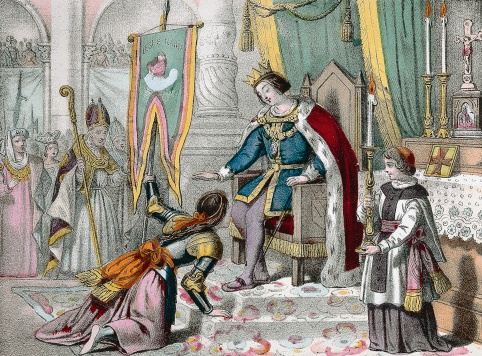
People have historically put a lot of effort into figuring out ways to impress each other

To make an impression on another person is to instill in them a minor sense of awe, which is very useful because it tends to make that person more willing to be helpful. This minor sense of awe, if reflected back upon the awestruck, closely relates to the phenomenon of charisma. The tricky part is that what impresses another person depends on that person’s own level of alchemical development.

Impressing someone at a raw, biological level is fundamentally a matter of strength and natural vigour. This is primarily the basis on which dominance hierarchies are formed among social creatures in nature. Basically, creatures pay respect to any other creature powerful enough to fuck it up. These creatures probably evolved to do so, because the alternative to doing so was often death and therefore a failure to propagate one’s genes.

In an alchemical sense, this responds to the level of clay. In other words, it’s the natural state. People who have not been raised well – i.e. people who have been either neglected or abused as children – tend to not move past this stage. This is also the stage at which prison logic runs. The motto of this stage could be “Might makes right”.

What’s crucial to note here is that a person who is themselves at the level of clay will not and cannot be impressed by a person’s level of silver or gold, because they simply will not be able to perceive those elements. Even perceiving when a person carries significant levels of iron is difficult.

Being strong and vigorous will not impress any mature adult person, of course, for the reason that they only consider it impressive to be strong if one also has that strength under control. Wilding out and demonstrating raw physical dominance by fighting might impress some people, but it won’t impress those of a higher grade.

What will impress people of iron is being strong and having that strength under control. Respect is thus only given to those who are able to impose order upon their own bodies. At this level, it’s common for people to pay respect to people who are good at fighting, but to not respect people who are good at applying their intellects at the expense of martial prowess.

Alchemically, this level of control reflects the presence of iron, which itself implies a heightened degree of order. To have a will of iron is to have the ability to impose one’s will on one’s body no matter what it is telling one to do. The most impressive thing one can do here is to die on the battlefield by charging valiantly into the enemy and making them remember you.

Being strong and having that strength under control isn’t necessarily enough once one starts climbing the social hierarchy. Here, we enter the realm of silver, and here what impresses is not having strength, and not having that strength under control, but having that strength easily under control.

A person of iron will be impressed by the ability to bear great physical trials, but a person of silver will only be impressed if these trials are born with grace. This represents a softening, in the sense that the emphasis is no longer on killing like Rambo but rather preserving one’s humanity under duress.

The captain of a sports team always has to be a bit more of silver than the players under them, and it is on this basis they are judged after the match. Can they take a loss with good grace, and acknowledge the ways in which the opposition were superior? Can they take a win with good grace, and acknowledge that the opposition challenged and tested them despite the scoreline?

If they can do so while smiling, and while physically exhausted after an extended period of strenuous exertion and probably running on adrenaline, then they might impress the man of silver. This sort of behaviour will be considered noble or gentlemanly by any onlooker who are themselves sufficiently cultivated to appreciate it.

Of the fourth way to impress people very little can be said, as is usual for matters pertaining to alchemical gold. In the context of this essay it’s enough to say that it pertains to impressing people – and knowing that one has impressed people – without letting it go to one’s head and becoming egotistical.

In other words, it’s not enough to be strong, and it’s not enough to have that strength under control, and it’s not even enough to have that strength easily under control. If one wants to impress a man of gold, one has to be able to do all that without becoming too impressed by oneself, because it’s there that gold will not be.

This is extremely difficult for a number of reasons. The primary one is that it represents the apotheosis of the philosopher, which is an experience reserved only for the rarest of persons. Another major reason is that the temptations of the ego are evil in every possible application of the concept; they are multifarious enough so that evil can tempt one in any situation.

*

If you enjoyed reading this essay, you can get a compilation of the Best VJMP Essays and Articles of 2017 from Amazon for Kindle or Amazon for CreateSpace (for international readers), or TradeMe (for Kiwis).
Smart and Dumb Are Best Measured Not On One Spectrum, But Two

The usual way for people to think about intelligence is as a single spectrum, where we start dumb and – if we’re lucky – grow to become smart. This seems to fit neatly into the dominant thought paradigm, which is that of materialist, empiricist science. This paradigm contends that single-celled organisms evolved to become intelligent and the more intelligent the better.

This is certainly one way of looking at things and it’s a valid perspective. It’s just a little simplistic. Intelligence is so multivariate and nebulous a concept that trying to reduce it to a single number is like trying to rank all of the world’s great works of art along a single scale. It might make some kind of sense, but it’s not really meaningful.

A better way to think about intelligence is that there’s a smart spectrum and there’s a dumb spectrum. The two have some overlap, but it’s minor. These two spectrums have been generally considered to overlap entirely, in that the more dumb a person is the less smart they must be and vice versa, but anyone who has met a decent range of other people in their life will know that this isn’t true.

The most obvious counterpoint to the single spectrum of intelligence argument is the large number of hopeless nerds and autists out there. There is an archetypal absent-minded professor who knows everything about their area of expertise and nothing about any other aspect of life – someone who could lecture a class of a hundred postgraduates but can’t change a lightbulb. Always these people dominate IQ tests, but it’s not as simple as declaring them intelligent.

These people, usually men, exhibit a high reading on the smart spectrum as well as a high reading on the dumb spectrum. So they aren’t intelligent in the same way as people who are high on the smart spectrum and low on the dumb spectrum.

This is not a dig at the university sort. A majority of smart people have made themselves less dumb for the reason that they have realised how much suffering their own dumbness causes and have acted to mitigate it. After all, what other use is being smart in the first place?

Another type of person who exhibits a high reading on both the smart and dumb spectrums is someone who wastes the intelligence they were born with. Being high on the smart spectrum isn’t by itself enough to succeed in life – there are all kinds of personal qualities like perseverance, diligence and honesty to consider.

People who are high on the smart spectrum and low on the dumb spectrum are rare, and are also difficult to recognise. After all, the average person is fairly dumb, and are therefore prone to assume that truly intelligent people are themselves dumb if they disagree with that average person on anything.

In many ways, these people are compelled to hide away, because being high on the smart spectrum isn’t necessarily a good thing, especially if someone else becomes envious of it and wants to challenge you.

Likewise, being low on the smart spectrum isn’t the worst thing either, because as long as one is also low on the dumb spectrum one can often just chip away at goals until they were completed, especially if one has been taught the right methodology. Being high on the smart spectrum can lead to distractions, and can lead to a person becoming impractical.

People low on the dumb spectrum and low on the smart spectrum might be the old-fashioned kind of person who never had a full education available to them, but who is nevertheless wise and not easy to fool. They can’t really fool others because they’re not smart enough to spin bullshit quickly enough, but it’s hard to fool them because they’re not greedy or gullible.

You could find a lot of this sort of person among farmers and agriculturalists, as well as members of traditionalist religions, and especially among old people.

The last sort of person is one who is low on the smart spectrum and high on the dumb spectrum. These people most effectively embody the chaos principle, because they are not as passive as people who are low on the dumb spectrum.

People high on the dumb spectrum have the tendency to do impulsive, mindless and destructive things, but if they’re also low on the smart spectrum they don’t tend to learn from their errors and gladly commit them over and over again. Driving drunk is a classic behavioural expression for a person in this quadrant.

These four personality types can be mapped onto an elementalist framework. The high-smart, low-dumb person can be thought of as gold, the high-smart, high-dumb person can be thought of as silver, the low-smart, low-dumb person can be thought of as iron and the low-smart, high-dumb person can be thought of as clay.

Whichever has the most value depends on what one is trying to achieve. If the important thing is to avoid errors, then the priority is to be low on the dumb spectrum. If the important thing is to be creative and to react quickly to changing environments, then the priority is to be high on the smart spectrum.

*

If you enjoyed reading this essay, you can get a compilation of the Best VJMP Essays and Articles of 2017 from Amazon for Kindle or Amazon for CreateSpace (for international readers), or TradeMe (for Kiwis).

Why Spirituality is Represented Elementally by Gold

In terms of elementalism, it can be said that clay represents health, iron represents courage, silver represents intelligence and gold represents spirituality. But why should spirituality be equated with gold in particular? This essay examines the question.

Gold is the cornerstone of the economy, because it’s ultimately what backs debt (even if that’s no longer as apparent as it was when we were on the gold standard). Everyone knows, intuitively or otherwise, that other people will always accept gold as payment for goods and services, and therefore that the substance always has value. This means that material things can be valued in terms of gold.

In alchemism, gold represents spirituality, for the reason that spiritual treasures are the most valuable of all. The universal appeal of gold is similar to the universal appeal of a genuine connection with God. Much as the value of gold is obvious to anyone who can sense it in the material plane, so is the possession of metaphysical gold obvious to those tuned into it.

Gold is the rarest in physical terms, and its the hardest to create in alchemical terms. Like genuine spiritual wisdom, there simply isn’t very much of it. Although clay is everywhere and iron can easily be found, silver and gold require more effort, and gold twenty times more so than silver.

The intellectual traditions that give value to silver might be hard-won, but it’s possible to develop them in a formulaic manner through the education system. There is no such thing as formulaic development of spirituality. Every consciousness takes its own path back to God.

Without spirituality, people are terrified of their own deaths, because they tend to drift into materialism, and therefore the belief that the brain generates consciousness, and therefore the belief that the death of the physical body means the extermination of this consciousness.

This reasoning causes them to think more short-term. After all, if long-term thinking means having to face up to fact that one will die, it’s best to avoid it entirely. Best just to live for immediate gratification, and the less guilt the better.

This has repercussions, many of which are denied by the men of silver and iron. The men of silver delude themselves into thinking that the spiritual side of life is childish nonsense, in contrast to the hard, adult sobriety of their scientific materialism. The men of iron, for their part, consider gold to be soft and therefore a weak element, not particularly more valuable than clay on account of its lack of immediate application to warfare.

Both are grievously wrong, and wrong in a way that causes immense suffering. The men of silver find that, no matter how many books they read, they cannot solve existential questions without an understanding of the true nature of God. Absent this, the pin is pulled from history and it no longer has any meaning. The men of iron don’t even know what they’re missing out on.

Another way in which gold represents spirituality is that it cannot degrade. Clay can rot, iron can rust and silver can tarnish – but there is no such equivalent for gold. One can leave a gold coin out in the elements for ten years and it will be as shiny as the day one left it there. Like spirituality, gold is not temporal in this sense.

Metaphysical gold works in a similar fashion. The health and strength of every person fades early in their life, and their mental powers fade late, but all of these temporal powers must fade. Spirituality relates to that which endures beyond the death of the physical body, and value earned early in life tends to endure.

A final way is that gold is extremely malleable: one gram of it can be hammered out into a sheet one square metre in area.

Spirituality, too, is extremely malleable. It is useful everywhere. Whereas big muscles are seldom useful and big brains are only useful where there is information to be processed, an appreciation of the fact that this is it will pay off in all domains of life.

*

If you enjoyed reading this essay, you can get a compilation of the Best VJMP Essays and Articles of 2017 from Amazon for Kindle or Amazon for CreateSpace (for international readers), or TradeMe (for Kiwis).