
The Century of Psychology is Being Delayed By Politics

This might be the “Century of Psychology” – if politicians allow it to be

It could be argued that the 19th century was the century of physics, and the 20th century was the century of chemistry. Men such as Maxwell, Watt, Faraday, Tesla, Edison, Rutherford, Hoffmann, Einstein and Shulgin transformed our everyday lives. But now that we can blow up the entire planet at the press of a button, physics and chemistry seem to have hit their limits. This essay argues that psychology will be the science that transforms the 21st century, but there are numerous political obstacles in the path.

As once was true for physics and chemistry, the current popular level of understanding of psychological science is primitive. In the same way that we laugh about previous generations believing that the Moon was made of cheese, so too will future generations laugh at us for believing ridiculous things like smoking cannabis causes schizophrenia. Descriptions of the way we treat desperately mentally ill people today, such as subjecting them to involuntary electroshock treatment, will evoke horror in the future.

Nowadays, thanks to mass education, people can get their heads around aeroplanes, photography and nuclear energy and no longer consider them sorcery. There are a number of obstacles, however, that must still be overcome before the science of psychology can have its full impact upon the world. The main one at the moment is that people tell lies because of politics, and these lies obscure the truth about humanity’s true nature.

For example, the left tells lies intended to create a perception of, and belief in, the natural equality of all people. Because their political dogma is based around the need for horizontalisation, they are loathe to concede that any two people or groups of people are different in any way that might imply that one was better than another.

Although there are no two things in Nature that are precisely equal, the fervour with which it is asserted that all human groups are precisely equal in intellectual capacity equals that of any religion. At its most ridiculous, this obsession with equality will concede that the human form has been shaped by evolution and that the differences in human phenotypes are a function of evolution, but that evolution stops at the neck.

Many people have discovered that genetic differences between groups, especially when it comes to intelligence or temperament, cannot simply be discussed openly without some leftist shrieking all manner of accusations at the participants. This has a retarding effect on the advancement of science because people become reluctant to discuss psychology honestly for fear of having “Racist!” screamed in their face.

The right, for its part, blames the poor and blacks for their state of poverty. If only they would stop doing drugs and read books, the right contends, prosperity would soon follow. They have no time for the arguments that the poor are doing drugs to medicate trauma-based mental illnesses that no other medicine can treat, or that they can’t concentrate to read books on account of being full of adrenaline all the time from the verbal and physical violence in their environment.

Not only does the right tend to blame people for the damage that has been done to them from the outside, but they give credit to people for success that is better attributable to the environment in which that person was raised and the support networks they had. This is bad because it makes it impossible to discuss the nature of society accurately and with honesty, and therefore impossible to design social policy that reduces human suffering.

Authoritarians tell a story about human nature that exaggerates our similarity with chimpanzees. This narrative emphasises the violent struggle of daily chimpanzee life and how qualities such as viciousness, paranoia, brutality and aggression serve to keep one’s enemies at bay. It represents an extreme form of verticalisation in which no-one can turn their back on anyone else for a second.

This ideology can be used to justify a wide range of cruelties, because authoritarianism is naturally terrified of chaos, and so authoritarian societies clamp down on free expression and recreational exploration of sex, drugs and music. All of these things, plus others, are regularly banned in authoritarian societies, which emphasise the usefulness of hierarchy for keeping things in their place.

The problem with this attitude is that human beings have a need for recreational activities, because boredom is literally a mental disease, and one that leads to physical diseases. People have to be allowed to enjoy themselves, because human nature needs to find a balance to the masculine working and fighting aspects of life.

Moreover, authoritarian thinking cannot handle drug use because drug use leads to free thought, and novel ways of thinking are considered security threats by control freaks, who clamp down on them. This mentality is responsible for cannabis being illegal. Pharmaceutical advances in the treatment of psychological conditions seldom happen when authoritarians are in charge.

Libertarians, on the other hand, tell a story about human nature that exaggerates our similarity with bonobos. This narrative emphasises lovemaking and peace, and maintains that all people are capable of being good if only given a chance. Although this is based in a perfectly lovely sentiment, it’s no less dangerous.

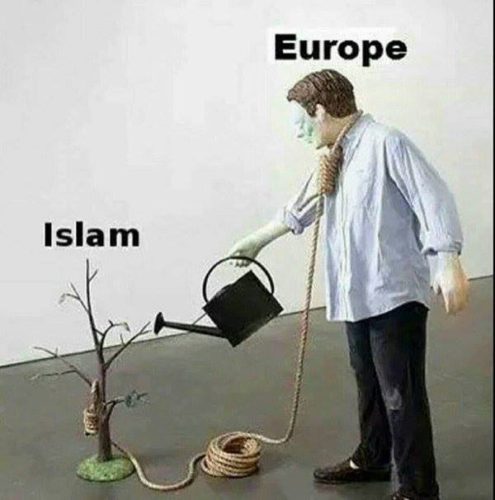
For one thing, the belief that all people are inherently good makes it harder to defend ourselves from those who are not good. Libertarian naivety about the dark rivers that run through the human heart mean that they make political decisions that expose them to that darkness. Often the mistake is not realised until it cannot be easily rectified (such as the European experience with Muslim and African immigration).

Another point is that libertarian logic denies the inherent human need for (at least a modicum of) order. It might be true that excessive legal and cultural strictures cause suffering, and that liberation from such is exhilarating, but no-one can simply dwell in a state of chaos without eventually feeling impelled to impose some order upon their surroundings.

Psychology has the potential to radically improve the standard of living of all people, especially this century as advances in brain-scanning technology herald great advances in neurochemical understanding. The biggest challenge that psychology faces, however, is that many people are motivated to deny psychological truths for the sake of political advantage. This will delay the impact of advances in psychological science on human society.

*

If you enjoyed reading this essay, you can get a compilation of the Best VJMP Essays and Articles of 2017 from Amazon for Kindle or Amazon for CreateSpace (for international readers), or TradeMe (for Kiwis).
The Palestinian Paradox

The more a person knows about certain political issues, the less likely they are to present information about those issues in an honest manner

When listening to people talk about the Israel-Palestine Conflict, it’s possible to observe the following pattern. The more knowledge a person has about the conflict, they less likely they are to present that knowledge objectively to a listener. This presents us with a curious paradox that makes it necessary to unlearn some of our educational conditioning.

In the educational system, it’s rare that a student considers the possibility that their teacher is lying to them. In the vast majority of cases they don’t need to do so, and paranoia about the teacher is not optimal from the perspective of learning efficiency, because the most efficient learning method is to accept everything unquestioningly.

The political world, however, is infinitely more cutthroat than any educational system could ever be, and one result of this is people constantly lying. The average politician will lie about absolutely anything if they perceive that it is somehow to their advantage to do so. Truth is not a goal in the way it is for an academic. To the average politician, honesty is a slave morality, fit only for simple-minded suckers.

In the political world, people don’t become experts, because that implies an honest effort to communicate truth. Politicians merely become effective manipulators of truth-like statements. Information is not learned because it has truth value; information is learned because data can be used to manipulate listeners into obeying one’s directives and working for one’s agendas.

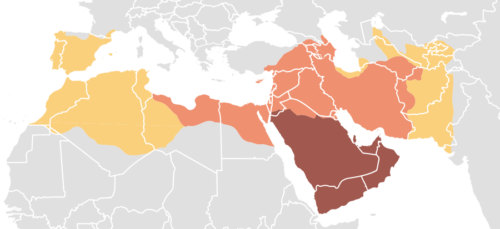
The Palestianian Paradox arises in the case of the Israel-Palestine conflict, where there are rarely neutral observers for the reason that almost everyone hates at least one of either Jews or Arabs. The result of this is that people are usually only interested in learning about the history of the conflict in the first place if they have already committed to one side or the other.

Many people hate Jews and this leads to them learning about the conflict from a perspective that emphasises Palestinian rhetoric; many people hate Muslims and this leads to them learning about the conflict from a perspective that emphasises Israeli rhetoric. Indeed, the very choice of descriptor for the disputed area in question gives away a bias (I have chosen “Palestinian Paradox” for the sake of alliteration).

The paradox, then, is the more a person knows about the Israel-Palestine conflict the less likely they are to be motivated to tell the truth about it, because only a person with an established bias would be motivated to learn about the conflict in the first place.

If a person knows a lot about the history of the conflict and the major names involved, they are more likely to selectively omit some of this information when telling you about the conflict for the sake of supporting the objectives of their side. Finding a truly neutral observer is extremely difficult, which makes learning about the conflict difficult, because the more someone is an expert the more likely they are to be biased.

This is also true of many (if not most) other conflicts throughout the history of the world.

In terms of elementalism, the distinction described here corresponds to the distinction between the realm of gold and the realm of silver. In the realm of gold, truth is appreciated for its own value and is recognised as valuable in its own right. In the realm of silver, it is the appearance of truth that matters. The actual truth is hidden away behind the glare of the appearance of truth.

This reflects the distinction between the gold of honest truth-seeking for its own ideal reasons and the silver of educating oneself so that one might use one’s knowledge as a weapon to further material objectives.

*

If you enjoyed reading this essay, you can get a compilation of the Best VJMP Essays and Articles of 2017 from Amazon for Kindle or Amazon for CreateSpace (for international readers), or TradeMe (for Kiwis).

VJMP Reads: Julius Evola’s Ride the Tiger I

Having chosen a left-wing work (The Interregnum) for our previous reading, we now go to the right again and have a look at Julius Evola’s Ride the Tiger. Subtitled “A Survival Manual for the Aristocrats of the Soul”, it’s based on the premise that the fight against modernity has been lost and the only thing a thinking man can do is ride the tiger of modernity until it’s time to rebuild on the other side.

Part I of the eight parts of this book is called “Orientations” and divides into two essays.

The first of these is called ‘The Modern World and Traditional Man’. This opens outright with a declaration that this text isn’t for everyone. Like The Satanic Bible, Evola is explicit in that his book is only for a particular kind of person. Ride the Tiger is written for the outsider.

Evola’s style seems timeless in the sense that his complaints about the nature of society apply just as well to 2018 as they did to his time, and probably apply well to many times in the past. Things are collapsing, certainly in social terms if not yet physical ones, and so Evola advocates a return to traditional values.

These traditional values are not bourgeoisie ones, Evola is at pains to point out, but in fact “the very antithesis of them.” Indeed, he hints at evoking the perennial philosophy, such as when he writes “It is good to sever every link with all that which is destined sooner or later to collapse. The problem will then be to maintain one’s essential direction without leaning οn any given or transmitted form.”

Psychonauts such as the readership of VJM Publishing will commiserate with this feeling, as it’s a handy description of the ego death experience that comes with the peak of a psychedelic trip. One loses all touch with and memory of the fleeting forms of energy that make up the material world, and resides solely in pure consciousness, and thereby reunites with God.

Fittingly, then, Evola states that the Tradition that inspires him has “the character of an esoteric doctrine.”

The second essay, ‘The End of a Cycle – “Ride the Tiger”‘, continues in the same vein. Evola explains that the expression “to ride the tiger” is from the Far East and refers to the idea that it’s safer to ride on the tiger’s back than to try and flee and get pounced on, for the tiger will eventually tire out and then one can make an escape.

Essentially, the idea expressed here is this: great and terrible changes are sweeping the world, and will continue to do so. They will destroy much, if not all, of the existing order, regardless of whether this order is good or bad. There is no hope of resisting this process.

All of this sounds terribly pessimistic and nihilistic on the surface, but it’s clear that, like Nietzsche before him, Evola has anticipated the nihilism that follows the destruction of the incumbent value system, and is speaking of what must come beyond that. He writes of the “Four Ages” system famililar to readers of Plato’s Republic as well as to Hindus.

The warning of this chapter is that the forces of destruction and degeneracy are too powerful to be overcome; resisting them is as futile as resisting the tide. But in this there is still a message of hope: those destructive forces are too mindless, stupid and disorderly to hold sway for very long and so, like the storm, they will pass, and leave an opportunity to rebuild order in their wake.

And so, Evola mocks the “progressive” and “advanced” thinking of the West as little more than symptoms of a disease of the soul. This is apparently the context in which the book ought to be read.

The object of the book is summed up in the final paragraph of this essay: “defining the attitude to be taken toward certain experiences and processes of today”. In other words, how do we deal with the fact that everything’s falling to bits?

*

If you enjoyed reading this essay, you can get a compilation of the Best VJMP Essays and Articles of 2017 from Amazon for Kindle or Amazon for CreateSpace (for international readers), or TradeMe (for Kiwis).
The Yin-Yang of History

Traditionally speaking, when men like this start appearing among your youth, it’s the beginning of the end

The postwar period was a good one for the West. The major Anglo powers had seen all the challengers and potential challengers to their world hegemony bombed flat – partially by them, mostly by each other. With Nazism and Communism both falling to their knees, the liberal democratic order ushered in some good times for the people of the world. Peace and prosperity reigned… but the yin-yang of history tells us that nothing lasts.

The 1990s might be seen, from the vantagepoint of history, as the apogee of these good times. The Soviet Union had fallen, and China and India were yet to rise. Those of us who knew the course of history, however, knew this: good times create weak men. Weak mean create hard times. Hard times create strong men. Strong men create good times.

This is the yin-yang of history.

Good times are the equivalent of summer. Here, people don’t have to think very hard about how to survive and thrive. In the same way that it’s warm and sunny in summertime and so people don’t have to think very hard about what clothing to put on before they go outside, political conditions are favourable in the sense that the ruling class doesn’t have to think very hard about security without and solidarity within.

In the summertime of history, wealth abounds from the increased energy in the atmosphere. To most, these good times seem like they’re going to last forever. The more perceptive of people, however, even if they don’t know about the yin-yang of history, can often see the signs of collapse coming in advance.

The problem with good times, as Plato observed in The Republic, is that they create weak men. When times are good, the tendency is to let minor infractions slide, and although this can lead to an atmosphere of joy it also leads to indiscipline. This indiscipline is why the weak men are weak, and it’s this indiscipline that leads to the hard times.

It might be argued that this is the stage that the West finds itself in 2018 A.D. Our Baby Boomer leaders, who were raised with all the laxness of a generation that had got its fill of violence in World War II and had decided to bring up the Boomers with as little harshness as possible, clearly do not possess the mental discipline to educate themselves properly about the matters of the world.

In our age, it’s entirely possible to find a Western minister or higher who doesn’t know the basics about history or science. There is ample opportunity to learn about such things, of course, but our leaders would rather drink alcohol and watch television. Some, like the Belgian Minister of Health, have lost control of their weight entirely.

These weak men cast a shadow on their nations: the same as the shadows of autumn, who they represent. Their enemies observe this absence of intellectual power, and they move to take advantage.

Because the leaders have no discipline to educate themselves properly, they don’t understand what’s really happening in the world. This results in decisions getting made on the basis of how things used to be a long time ago (but no longer are), or how things might be in some idealised future world (instead of how they now are).

These poor decisions lead naturally to hard times. This stage in the cycle of history corresponds to the wintertime. Leaders lead the people in the wrong direction, causing them to dissipate their energies on follies or to spill them on battlefields for no reward. Here there is poverty – in fact, there is never enough of anything, and people learn to live with want.

Hard times can lead to bitterness, but in the same way that the bitterest cold of winter leads to a hardening in the form of ice, so too do the bitterest lows of life lead to a hardening of the heart. These hard men do not, at first, bode well for the people who they live among. To the contrary – the pitiless, ruthless nature of hard men make them natural criminals and killers.

But the hardness of hard men leads to discipline in those who come after them. This discipline – true iron discipline – is a matter of Will and therefore it is ultimately generated from within. These disciplined men are the opposite of the men we have in 2018 A.D. These disciplined men impose order upon their minds by devoting themselves to the correct course of study and behaviour.

Disciplined people who study hard represent the springtime of a people. It is for these people that VJM Publishing exists. These are the people who will rise up and make good decisions. They will come to occupy positions of leadership not because their backers paid for the best advertising, but because they are asked by their peers to occupy these positions on the basis of demonstrated wisdom.

Because of this wisdom, these leaders are not afraid to shy away from the knowledge necessary to make the correct decisions. This leads to increasing wealth and prosperity. So when the men of gold are recognised as such and are placed into positions of leadership on account of this, then the people will enter another golden age, or another age of summer.

*

If you enjoyed reading this essay, you can get a compilation of the Best VJMP Essays and Articles of 2017 from Amazon for Kindle or Amazon for CreateSpace (for international readers), or TradeMe (for Kiwis).