The Ethnonationalism Spectrum

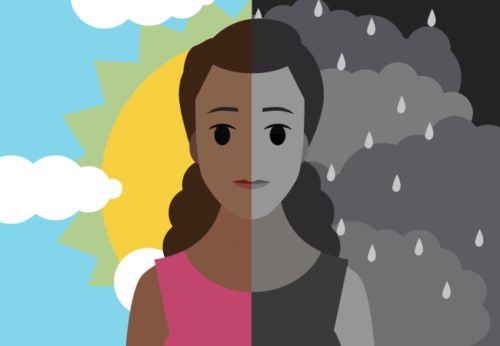
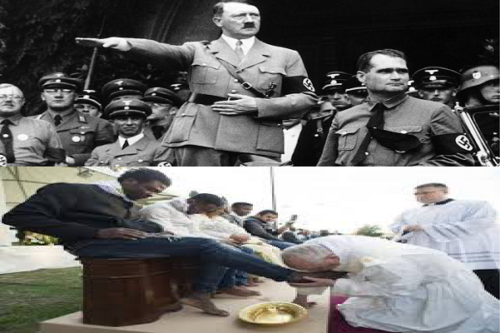
The ethnonationalism spectrum varies from ethnosupremacism (top) and ethnomasochism (bottom)

Despite being an accurate description of the way that human societies organised themselves for ten thousand years, the word ‘ethnostate’ has become taboo recently. Although the debate is usually dominated by arguments between insane Nazis and insane Marxists, there is a fascinating variety of opinions on the question of how wide and/or porous the group borders should be. This essay attempts to put them on a spectrum.

The two poles of the ethnonationalism spectrum are ethnosupremacism and ethnomasochism.

Ethnosupremacism found its apogee in the racial supremacist doctrines of Adolf Hitler’s Nazi Party in the 1940s, under which the Eastern Europeans were declared subhuman and therefore less worthy of existing in the lands of Poland and Ukraine than the German soldiers to who the land was promised. This pole of the spectrum fell out of favour, understandably, when the German “Drang nach Osten” ended up causing the deaths of over 25 million people.

There are two aspects to ethnosupremacism (see: The Three Definitions of Racism) and one is much more dangerous than the other. The first can be considered a sort of pride in the achievements of one’s kin and is little different to individual self-esteem raised to the group level, whereas the second is the belief that other ethnicities are categorically lesser and perhaps even ought to be exterminated.

The first step from ethnosupremacism towards sanity could be called ethnoconservatism. This is the “fuck you, I’ve got mine” of the ethnonationalist spectrum. This position is similar to regular conservatism on the class spectrum. Essentially it says that, because one’s own kind are doing well from the way that society is structured, there is nothing wrong with the way society is structured and it should therefore stay the same.

This is different to ethnosupremacism in the sense that the ethnosupremacist doesn’t believe that any amount of money can help the lesser races overcome their inherently base nature, whereas the ethnoconservative doesn’t care, they just don’t want to pay for it. Likewise, the ethnoconservative doesn’t despise other races, they just don’t think it’s right to mix with them, for whatever reasons.

This is a common position in the New World, on account of that the remnants of the native population are often much poorer than the descendants of the settlers. If an individual feels that the Government shouldn’t charge them taxes in order to fund social programs etc. intended to reduce income inequality, they are likely to take this position.

Ethnomasochism has found its apogee today, in the anti-white SJW culture that represents the furthest swing of the Great Pendulum away from the ethnosupremacism of the Nazis. Ethnomasochism is discussed at length here but could be summarised as a belief that one’s own kind were worthy of particular disgrace on account of some past political misdeeds. Very often, ethnomasochism is the result of a low self-esteem, whereby the individual’s self-hatred is projected onto the race as a defence mechanism.

The first step from ethnomasochism towards sanity is a realisation that individuals do not inherit sin from their forefathers, and that even if they did, it would be impossible to determine how much blame one’s forefathers had caused one to inherit. However, if one is more intelligent than the average person one might come to perceive that gross pride in one’s race is considered vulgar by most cultured people and that a modicum of racial humility ought to be adopted, on occasion, for the sake of politeness.

A white person here might not possess any self-hatred but might make a joke about how a high proportion of child sex offenders are white people. An Asian might make a joke about how he’s shit at driving, and a black person might make a joke about how he feels tempted to steal something. This is not genuine self-hatred but a kind of self-deprecation for the sake of social utility. Indeed, a person needs to have genuine self-esteem before they can joke about themselves in this manner.

This is the position most commonly associated with sanguine cosmopolitanism and could be described as ethnocurious. Many people who are university educated or who identify with the left-libertarian quadrant (of the common political model) are here, especially if they are the sort of person who does a lot of international travel. Ethnocurious people often have foreign girlfriends or boyfriends, and can prefer other races on account of that interactions with their own kind lack novelty.

In the middle of the spectrum is a point of reason. Here it is acknowledged that each person is an individual, and therefore neither responsible for the crimes of their race nor able to take credit for its accomplishments, and yet that each person has genetic characteristics that have shaped the way that their environment has treated them, and which have thereby shaped their life story.

Here one believes that the most logical thing to do, therefore, is to treat everyone else as equal partners in a grand human project to minimise the amount of suffering endured by conscious beings in this world. Other people are to be understood but their resentments are not to be encouraged.

Unfortunately for us, this point of reason conflicts with all the other positions. Ethnosupremacists will shun you for being a weakling who is unwilling to stand up for his own kind. Ethnoconservatives will shun you for being a suspected Marxist. The ethnocurious feel like this position wilfully misses out of much of the flavour that life has to offer, and ethnomasochists will despise you for not adopting their quasi-religious narrative that their particular race is guilty.

Even more unfortunately, this point of reason conflicts with neoliberal ideology (the prevailing ideology of our age), and so a combination of state and corporate power has colluded to obscure the truth about it. Neoliberal ideology demands that any desire on the part of big business for cheap labour can be met by simply opening the borders to mass Third World immigration, and so any problems that might be caused on account of mixing together people of genotypes that never previously mixed can be dismissed as racism.

The dumber a person is, the more likely they are to pick an unsophisticated position at either pole of the ethnonationalist spectrum. If they are sadistic they will choose ethnosupremacism where everyone else is subhuman, if they are masochistic they will choose ethnomasochism where everyone else is an immoral oppressor. If they are intelligent they will have a nuanced position somewhere centrist.

*

If you enjoyed reading this essay, you can get a compilation of the Best VJMP Essays and Articles of 2017 from Amazon for Kindle or Amazon for CreateSpace (for international readers), or TradeMe (for Kiwis).

Writing Bipolar Disorder

Bipolar Disorder is an extremely taxing mental disorder that is believed to affect about 1% of the population at any given time. Most commonly affecting people in their mid to late 20s, the condition affects men and women in roughly equal numbers. This article looks at how to write believable and realistic characters with Bipolar Disorder.

As the name suggests, bipolar disorder refers to two distinct poles, one corresponding to ‘up’, the other ‘down’. These relate to mood and behaviour; Bipolar Disorder was once known as “manic depression”. The stereotypical course of Bipolar Disorder is for someone to feel extremely low and depressed, and then suddenly feel high-energy and manic, only to fall back into depression, in a cycle that never ends (important to note here that the cycle is not predictable, like a pendulum, but chaotic).

Although the idea of mania can sound appealing to those with no experience of the condition, and although it is generally much less unpleasant than depression, Bipolar Disorder causes problems at either pole. It contrasts with healthy, natural changes in mood in the sense that people with the condition are seldom in an average, moderate state inbetween the two poles, as mentally healthy people are.

When a person in this condition is in a depressed phase, they are at risk for all of the suicidal behaviours that accompany Major Depressive Disorder. Self-harm is common among people with Bipolar Disorder, a function of the deep self-hatred that occurs in depressive phases. However, when a person is in a manic phase, they are also at risk of harming themselves.

Manic periods have to last for at least a week to really count, as an elevated mood could occur for any number of reasons. The manic phase of Bipolar Disorder can, at its most extreme, present much like a methamphetamine bender. A character undergoing one will tend to talk fast, sometimes stammering, and will have difficulty following a conversation, being easily distracted. Also like a methamphetamine bender, manic episodes tend to result in very little sleep. At worst, they can cause a person to become psychotic.

The combination of these factors can result in some extremely risky behaviour, which could be dynamite for your creative fiction. Hypersexuality, gambling, drug-taking and speeding in motor vehicles are all common behaviours for a person with Bipolar Disorder while they are in their manic phase. Someone behaving like this might seem like they’ve been given a week to live and want to make the most of it.

A character with Bipolar Disorder might not be easy for other characters to deal with. The erratic moods of bipolar sufferers means that other characters seldom feel comfortable around them. People with bipolar can be unpredictable. They are also very high suicide risks, because of the combination of impulsiveness arising from the mania and the self-hatred arising from the depression.

Sometimes a character with Bipolar Disorder will come across as full of energy and life and enthusiasm, making them seem very charismatic to another character. Other times they were be low in energy and miserable, which makes them seem very different. Someone who meets a Bipolar character while they are at one pole, and then meets them again while they are at the other, might have difficulty believing they’re the same person.

If the protagonist of your story has Bipolar Disorder, they might find themselves facing a considerable degree of social stigma. As mentioned above, their condition might make other characters feel uncomfortable. The protagonist might find themselves getting overlooked for parties and for social occasions on account of that other characters are afraid they will be in too crazy of a mood.

If the protagonist encounters another character with Bipolar Disorder, things might not be much easier. It’s common to meet a person with Bipolar Disorder during one of their manic phases, because this tends to cause them to become more extraverted. During this time, they might strike others as dynamic, engaging and enthusiastic. However, if a friendship is formed, it may not survive the depressive phase.

There are two kinds of Bipolar Disorder, known as Bipolar I and Bipolar II. The essential difference lies in the severity of the manic symptoms. The more powerful the manic symptoms, the more likely the sufferer will get a diagnosis of Bipolar I. This is not to downplay the difficulty of living with Bipolar II, but some of the hypomanic episodes in the latter case can actually be useful for getting things done.

Bipolar Disorder is distinct from Borderline Personality Disorder, although the behaviour of people with the condition can appear similar. For instance, people with either condition are capable of changing their attitude towards another person very quickly, but the Bipolar sufferer tends to have more self-awareness than the Borderline and maybe aware that their change in perception is not fully rational.

*

This article is an excerpt from Writing With The DSM-V (Writing With Psychology Book 5), edited by Vince McLeod and due for release by VJM Publishing in the summer of 2018/19.

When You’re Not Allowed to Talk, It’s Time to Pick Up a Rifle

American President John F Kennedy once said “Those who make peaceful revolution impossible make violent revolution inevitable.” Peaceful revolution is dependent on free speech, because we have to be able to talk about what’s going wrong in our society before we can change anything. Absent that free speech, as this essay will examine, we might as well pick up rifles and get ready to fight.

When things are going wrong in your society, you have to talk about the problems if you’re going to fix them. This is why the principle of free speech was enshrined as the first amendment to the American Constitution. In order for people to be aware that there is a problem, it needs to be discussed reasonably, so that people can change their opinions when presented with new information, and thereby arrive at more accurate perceptions.

Once you’re no longer able to talk about your society’s problems openly, people will still talk about them (of course) only privately. Instead of being hopeful and confident, they will become bitter and suspicious. Resentment at not being able to speak openly will creep in, and this will turn to anger directed at those considered responsible. Eventually this anger turns to hate, which can only find expression in violence.

The West has made a massive strategic error over the past 40 years, in opening themselves up to mass Muslim and African immigration. The logic appears to have been that, because employers don’t want to pay fair wages for work in the West, we can simply open the borders to the poor countries of the world, whose members will be so grateful for the opportunity to come here that they won’t ask for the same wages that a Westerner would.

However, the example of real life showed that this logic doesn’t hold. Gratitude is not a universal human value. Muslims didn’t come to integrate and to contribute; they came to conquer, as directed by their holy scripture. Africans mostly came for the welfare – the unemployment rate among Africans in the West is well over 50%. The total cost to Western societies for letting these people in has been tremendous, in both financial and social terms.

Far from leading to a successful multicultural paradise, this mass immigration has caused the social fabric of Europe to disintegrate. Paris, which was once known as the City of Lights and Love, is now so shockingly decrepit that it’s responsible for a new mental disorder, called Paris Syndrome. This refers to the sense of derealisation that tourists feel when they come to Paris and, instead of finding what they expected, discover an almost Third-World environment with soldiers on the streets.

New Zealand has recently discovered that you’re not allowed to talk about such things. Auckland Mayor Phil Goff recently banned speakers Lauren Southern and Stefan Molyneux from giving a talk at the Auckland Town Hall, and the corporate media supported him by calling the duo “far-right”, “white supremacists” and “extremists”.

Southern and Molyneux wanted to talk about such taboo subjects as the consequences of mass Muslim and African immigration to the West on social cohesion and trust, and the correlations between race and IQ. Goff calculated that, as a globalist, such discussion didn’t serve his political agenda so he shut the talk down. This has had the effect of sending the entire discussion underground – where it is discussed, as mentioned above, with resentment and hate.

Unfortunately, there is no easy solution to the problem of a tyrannical government that is cracking down on freedom of expression. The historical record tells us what will happen: we will get pushed further and further into a state of subjugation as the Government takes ever more aggressive steps to repress discussion of its failures, until the resentment and anger reaches a critical mass. Beyond this point, people will look for revenge first and foremost, and potential future harm to themselves will not weigh as heavily.

In such a case, the only reasonable action is to pick up a rifle. Once you’re not allowed to talk, you’re a slave. You’re a slave to those who set the agenda and the talking points (in this case, the globalist corporatist media). With a rifle, however, you can still assert the right to speak and to be heard. If the government and media are colluding to take your right to speak away, then it’s the only way to assert a right to be heard.

*

If you enjoyed reading this essay, you can get a compilation of the Best VJMP Essays and Articles of 2017 from Amazon for Kindle or Amazon for CreateSpace (for international readers), or TradeMe (for Kiwis).

Writing Panic Disorder

Panic Disorder (PD) is a kind of anxiety disorder that is characterised by reoccurring, sudden attacks of intense fear without any obvious cause. These attacks, called panic attacks, involve a number of unpleasant psychological and physical sensations, including shortness of breath, dizziness, heart palpitations and sweaty hands. This article looks at how to believably portray Panic Disorder in your creative fiction.

A panic attack usually lasts for about ten minutes. The first sign is usually a wave of adrenaline and noradrenaline that surges through the bloodstream in preparation for the fight or flight response. It’s common for sufferers to feel a panic attack even in their bowels. Despite the absence of an obvious threat, the panic can be equally as intense as if one was confronted with a terrorist mass shooter.

One unpleasant feature of these attacks is that they can stir many different kinds of fears. Some panic attacks make the victim afraid of dying, whereas others make them afraid that they will lose control and become a screaming mess (even though this is extremely rare). In some ways the experience is like a tour de force of terror.

Perhaps the most difficult thing about this condition is that panic attacks are so unpleasant that they can be traumatising, and this creates fear of future panic attacks, which is often enough to itself cause a panic attack. So a person with the condition can end up learning to fear situations which may cause panic, and this can lead to social isolation in a similar fashion to agoraphobia.

If the protagonist of your story has panic disorder, it is likely that they have to live a life somewhat on the outside. Panic Disorder makes it difficult to socialise, especially when a person starts to become afraid of future panic attacks. This can lead to an everyday experience of constant misery, as the protagonist starts to twist themselves up in knots of over-thinking and anxiety.

An interesting story can be told about a normal life that starts to break down because of Panic Disorder. It’s common for a sufferer of the condition, at least in the initial stages, to be unaware that they are suffering from a recognised psychiatric condition. The panic attacks can be embarrassing, on account of that they have no obvious cause, and it’s easy for a person who suffers them to consider themselves mentally weak rather than sick. They can seem to come out of the blue.

People with Panic Disorder tend to develop a fear of the places in which they have had panic attacks, by way of association. This is one of things that makes the condition so disruptive. Even something as simple as going shopping can become an ordeal if a person is afraid that the experience will trigger a panic attack. Because much of the suffering of the condition is caused by fear of the next attack, certain places can themselves become intimidating.

If a character in your story encounters another character with Panic Disorder, how the first character reacts will tell the reader a great deal about their level of compassion. Because panic attacks can be set off without any obvious cause, the suffering is in the mind. This means that people who need help and reassurance from others can usually only get it from especially empathetic people. A character who helps out another one suffering a panic attack might demonstrate their nature to the reader.

A character with Panic Disorder might have a very complicated relationship with drugs. Many people with the condition have found that alcohol, cannabis, tobacco etc. has a short-term, immediate effect of quelling the panic, but have also found that using these substances makes a panic attack more likely once they have worn off. A character taking drugs to treat their anxiety might not have figured the second point out yet.

In contrast with Generalised Anxiety Disorder (GAD), Panic Disorder tends to come in sharp spikes or groups of attacks. GAD is an ever-present background hum of anxiety, whereas people with Panic Disorder can often live entirely normal lives until the panic kicks in. When people with Panic Disorder are anxious, it is usually because of a particular fear of another panic attack rather than anything general.

Mass Panic Disorder is not a condition in the DSM, but the author might still like to use the phenomenon in their creative fiction. A contagious panic attack might be the event that leads to mass destruction of part of your story world, leading to the disruption of the life of one of your characters. An explosion might cause a mob reaction that a character gets caught up in.