

The Three Definitions of ‘Racist’

The word ‘racist’ has a variety of meanings depending on the political goals of the person using it

The word ‘racist’ has been overused so badly in 21st century discourse that it no longer has any real meaning. Originally used to describe a person who held unfair prejudices against a group of people on the basis of their skin colour, it now has a wide range of meanings depending on the political motivations of the person pointing the finger.

The first definition is what can be called the “supremacist” orientation. This is the attitude a person has if they believe that their race is the greatest one of all and everyone else is naturally inferior. It is also the “classical” racism that was espoused by Adolf Hitler, and is the real type of racism that everyone is afraid of.

The problem with a supremacist orientation of racism is that it obligates the holder to be fighting all the time. As the alpha male in any dominance hierarchy soon learns, claiming to be the top dog means you’re always fighting off challengers. This is great in a “live fast, die young” sense, but it doesn’t make for peace or order.

In an effort to bring peace on Earth, The Powers That Be have made immense efforts to discourage this sort of racism since the end of World War II, in which this sort of racism was directly responsible for the deaths of 50,000,000 people.

The second definition is specific, and could be termed the “experiential” version of racism. People in this category are not supremacists because they do not believe that their own specific race is generally superior, so they are not racists in the first sense. In this category are people who have learned to not like members of specific races through adverse life experiences.

People in this category can, in fact, can be the opposite of supremacists, as they often are in the case of white people who happily concede that the average IQ of a Far East Asian is higher than that of a white person, or in the case of Far East Asians who happily concede that white people are much less corrupt when in government than Far East Asians.

They often get accused of being racists, though, because their experience has caused them to hold unflattering opinions of some races and these opinions are often considered supremacist by social justice warriors looking for someone to freak out at. The truth prevails, however, because these people tend to find each other and reinforce each others’ experiences.

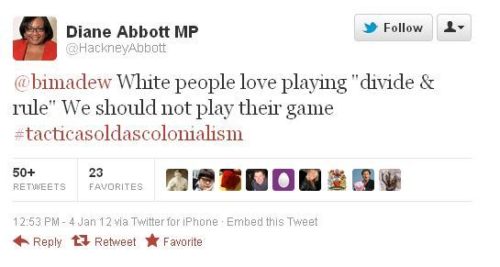
The third is the “Marxist” definition of racism, which is the weaponised version. Here the concern is with how to use guilt about racism as a tool for browbeating those perceived to be bourgeoisie. Anywhere you hear the ludicrous assertion that racism isn’t real racism unless the person doing it is part of the bourgeoisie, you know you’re in Marxist territory.

This weaponised version of racism is used to manipulate people, usually white people, into believing that they have inherited racial debts from the age of colonialism, and can only clear these racial debts by supporting Marxist policies like mass Muslim immigration. This is why it is so frequently brought out when someone criticises the practices of the religion of Islam, which is not a race.

Unfortunately for the Marxists, their attempts to guilt-trip people into supporting their policies has backfired, because no-one knows which of these definitions is being used at any one time. Manipulating people through dishonest use of language is typical for people with totalitarian mindsets, but overuse of it causes the populace to become aware.

*

If you enjoyed reading this essay, you can get a compilation of the Best VJMP Essays and Articles of 2017 from Amazon for Kindle or Amazon for CreateSpace (for international readers), or TradeMe (for Kiwis).

Why Books Will Surge Back Into Fashion

The next great invention is like a comprehensive collection of webpages on a specific topic, printed on paper and with no advertisements or intrusive pop-ups, bound into what’s called a “book”

Way, way back in the almost prehistoric age of 1993, the Internet was barely in its infancy. Compared to its form today, the Internet of 1993 was practically at the zygote stage. As the elderly readers of this column may recall, gathering information mostly involved a building called a library, which stored information solely in hard-copy format (i.e. books).

This system had worked out pretty well for a few thousand years, as it became common for kings and rulers to build royal libraries for the sake of attracting scholars from near and far, which made it possible to have an educated middle class, and, with that, all the trappings of what we now call civilisation.

In the mid-90s, at about the same time as the introduction of Windows 95, things started to change. Although there were still very few people who had decent websites or information portals up, there only needed to be a few thousand such resources for the Internet to be bigger than most people’s local libraries.

A tipping point was then reached. Once the Internet started to contain more information than the average library, it started making more sense for researchers to make the Internet their first port of call. Most of the early Internet pages were built by nerds and hobbyists who were obsessed with their area of expertise, meaning that you could go on the Internet and effectively find entire books worth of information from digital libraries all around the world.

This made researching many times more efficient than it used to be. Early web browsers like Netscape, Northern Lights and Metacrawler allowed people to escape the nightmare of index cards and misshelved books. This made it possible, with technological enhancement, to learn many times faster than one otherwise could have done.

Then, something terrible happened. Someone realised that this unprecedented access to information was so valuable that you could start sticking advertisements on it, and people would still consume the medium. At this point, the televisionisation of the Internet began.

It was subtle at first. Just a “sponsored post” here and there, or a notice that the big banner ad underneath the header was now necessary owing to increasing bandwidth costs. But as the shekels rolled in, more and more people became attracted by promises of easy money, and started making websites specifically to put ads on them. When Google introduced AdSense in 2003, the floodgates were fully opened, and have remained so ever since.

In 2018, advertising on FaceBook and Google search is as intrusive as television, radio or newspaper media ever was. What was once a portal away from crass commercialism and the mindless pursuit of more money, the Internet has now mostly become a collection of billboards-for-rent. Websites such as VJM Publishing, that do not advertise apart from a list of links to our published books in the sidebar, are extremely rare.

Worst of all, the surge of advertiser money has seen the advent of mass censorship, as leery marketing executives put pressure on platform providers to make controversial speech less accessible so as to ensure their product is not associated with anything unfashionable. This has sent people who want access to quality information elsewhere.

The final result of this is that books are going to take over again. The Internet won’t go away, because it continues to fill an extremely useful niche in study and research, but people will start using it less for actual information (because of the ever-more intrusive ads), and more as an index through which quality information in the form of books can be found (which is ironically closer to its original purpose than it is today).

Because the Internet is so vast, it allows for tremendously specific books to be written and to be easily made available to readers, despite the ads. This new breed of books will be responsible for the resurgence in book readers over coming decades.

*

If you enjoyed reading this essay, you can get a compilation of the Best VJMP Essays and Articles of 2017 from Amazon for Kindle or Amazon for CreateSpace (for international readers), or TradeMe (for Kiwis).

The Philosophy of Materialism is The Memetic Cancer of Our Age

The brain generates consciousness and therefore the death of the physical body means the extinction of all awareness – so buy buy buy!

Materialism – what is it good for? To give it its due, it’s a very useful paradigm to adopt if one wants to conduct an experiment in any of the physical sciences. The monkey who first realised that fire could be started from the friction of a hard wood on a soft one derived an enormous advantage over the monkeys who were still doing dances to try to please the lightning gods.

More recently, materialist science such as physics and chemistry led to Anglo-American dominance of the sea trade routes, as the adoption of first coal, then oil, then uranium allowed these powers to keep a naval force in operation that was orders of magnitude more powerful than what was possible under sail. Mastery of these sciences also allowed these same powers a decisive military advantage in terms of weaponry.

All well and good – but what is materialism bad for? Many, many, many things. Unfortunately, materialism has strengthened beyond being a mere scientific approach. It’s not even a worldview anymore. In our blind 21st century, materialism must be accorded the status of a legitimate religion. This has had profound effects on the political, scientific and intellectual discourse of all nations.

Like any dominant religion, the presuppositions of materialism can no longer be questioned in polite society. It’s possible to talk about “the” biological basis of consciousness as if it were already an established fact that consciousness has a biological basis. Asking how it is that it’s known that consciousness has a biological basis elicits, in materialist circles, a similar response to going into a church and demanding the priest prove his contention that the Bible is the Word of God.

It’s just not the done thing.

And so it’s possible for one of the world’s most prominent intellectuals, Sam Harris, to discuss consciousness with a supposed expert on the subject for over an hour without either of them questioning the dogma of the “biological basis of consciousness”. That the brain generates consciousness and not the other way around is assumed from the beginning, and all subsequent data has to be shoehorned into this framework or discarded.

Ironically, the podcast mentions that consciousness had hitherto been the purview of philosophers, in a passage exclaiming how good it was that other disciplines are now considering it. The reason why this had been the case is now obvious – because physicists, chemists and neurobiologists are incapable of the logical reasoning necessary to truly consider the question. This logical failure leads to errors like assuming right off the bat that the brain generates consciousness, the type of error that philosophers generally don’t make.

Listening to a supposed expert in neuroscience ramble on about the biological substrates of consciousness is every bit as depressing as listening to some old priest ramble on about whether or not we’re allowed to drink wine on Sundays. Both charades are dependent on one gimmick: take for granted the biological basis of consciousness and we can explain everything (says the neuroscientist), take for granted the eternal truth of the Bible and we can explain everything (says the theologian).

The worst part of it is that – just like Abrahamism, Nazism, Communism and Marxism – materialism has also rotted the minds of the people who have come to believe in it. Like a cancer, it has given rise to a number of bad things, all of them ultimately caused by the belief of materialist individuals that the death of their brain inevitably means the extinguishing of their consciousness.

Materialists are generally indifferent to the condition of the world after they die. Let’s just rape it now is their motto. After all, if their consciousness is extinguished upon the death of the brain, there is no logical reason to act in a manner custodial to the life that comes after you. There won’t be any way it affects you, so why bother?

Materialists are also easily manipulated by death anxiety. People who know that the consciousness survives the death of the physical body can laugh in the face of death, because they know that death will not occasion a traumatically significant change from the state of existence that pertained before death.

This latter point is why materialist cultures like the British fight wars all over the world while non-materialist ones such as the Indians do not. A Brit can easily be terrified into doing what you tell him because of the fear of invasion or economic disaster or God’s judgment or some other catastrophe; the Indian will just laugh.

For Western culture to survive, we have to cast off the spiritual sickness that we inherited even as we assumed scientific and military dominance. We have to move past materialism and the ludicrous contortions of reasoning that it forces people to undergo.

Psychedelic drugs and meditation are the cures for the memetic cancer that has been growing in the West for a few centuries.

*

If you enjoyed reading this essay, you can get a compilation of the Best VJMP Essays and Articles of 2017 from Amazon for Kindle or Amazon for CreateSpace (for international readers), or TradeMe (for Kiwis).

To Deny That Cannabis Is Medicinal Is To Deny The Humanity of Medicinal Cannabis Users

Opioids kill 1 in every 10,000 Americans every year, but they’re fully legal

One of the most awful aspects of being a medicinal cannabis user is getting lied to by doctors and mental healthcare workers who deny the emotional and spiritual benefits of cannabis use. The problem isn’t that they won’t help you get hold of cannabis medicine (because there are plenty of people who will) – it’s that they refuse to have an honest conversation with you about the benefits and side-effects of using it.

It’s impossible, in most places, for a sick person who uses medicinal cannabis to expect that their doctor will listen honestly to what they have to say. If the patient mentions the benefits of their cannabis use, the doctor will insist that the patient must be mistaken when they believe that cannabis helped them. Even if the doctor goes as far as conceding that cannabis has some medicinal value, they will almost always attribute all manner of ghastly side-effects to using it.

Worst of all, it’s impossible to change the mind of your doctor by presenting evidence from jurisdictions that have legalised medicinal cannabis. It doesn’t matter that medicinal cannabis was made legal in California in 1996 after the doctors there looked at the evidence – those doctors are simply presumed to be wrong, and recklessly so. End of story.

This refusal to speak honestly with patients is, from the patient’s perspective, a dehumanising experience. It’s a way of saying that your experience can be discounted, because you are worth less than a normal human being. With almost every other medicine it’s possible to tell a doctor that it alleviates your suffering and have it considered enough to get a prescription.

This is even true of opioids, which kill 1 in every 10,000 Americans every year, and which have been so recklessly overprescribed that the opioid crisis now has its own Wikipedia page.

Not so with cannabis. Somehow cannabis has the mysterious property of causing suffering that only doctors, politicians and pharmaceutical company lobbyists are able to see. A patient might feel that their suffering is reduced from using medicinal cannabis, but unfortunately for them, they are not considered full human beings on account of the claim that cannabis causes psychosis. Therefore, their belief that cannabis alleviates suffering can be dismissed on account of it being a belief held by a psychotic person.

It’s a vicious Catch-22: you might feel that the cannabis takes your suffering away, but this can be trumped by the declaring that using cannabis robs you of your ability to reason, and then anything you say can be dismissed as the ravings of a lunatic.

If a person is suffering psychologically, and they take a substance that they believe to be medicinal, and their experience of using this substance is that it ameliorates psychological suffering, then how can anyone else possibly presume to judge otherwise?

It might be that the side-effects of using some particular medicines are so great that, on balance, it’s better to look for an alternative than to prescribe them, but significant side-effects from cannabis use are non-existent.

The feeling from the patient’s perspective is that doctors are saying that ameliorating your suffering, in particular, is not worth pursuing because you are not valuable. Elderly Baby Boomers are getting stuffed full of opioids at the first murmur of complaint, but if anyone else wants to use some cannabis they have to risk several years in prison.

*

If you enjoyed reading this essay, you can get a compilation of the Best VJMP Essays and Articles of 2017 from Amazon for Kindle or Amazon for CreateSpace (for international readers), or TradeMe (for Kiwis).