The Great Division at the Heart of Generation X

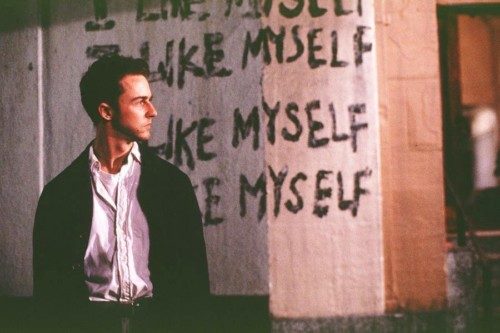
The 1999 film Fight Club was highly prophetic for those too young to identify with the Baby Boomers and too old to identify with the Millennials: those of us who vaguely, apathetically, identify with being called Generation X. Speaking to us in the midst of a quarter-life crisis, Tyler Durden told us what we already suspected, but dreaded being forced to accept: we are the middle children of history, no purpose, no place.

It’s true. We stand for nothing. Nothing unites us, apart from this cynicism. We have no Great War – Afghanistan and Iraq will never define our generation like Vietnam did the one before us and World War II the one before that. Very few of us fought in it, and the body count incurred simply does not compare.

Neither do we have a Great Depression.

The proportion of Baby Boomers raised in absolute poverty dwarfs the proportion of Generation X raised in absolute poverty, as the several decades of technological advancements and massive industrial and economic expansion after World War II all but eliminated childhood poverty by the 1970s, save for the unfortunates born to mentally or physically ill parents.

Where the Baby Boomers used the political system as a weapon to enslave the coming generations and to keep them working to maintain Boomer leisure and privilege, Generation X mostly refused to engage.

And where the Millennials are taking measures to overthrow the current political and economic systems and to replace them something not borne of the poverty mentality of the Boomers, again Generation X mostly refuses to engage.

In this sense, Generation X is a generation of springtime, in that we comprise the part of the sine wave where yin transforms to yang, and life begins to blossom but without direction, owing to its inexperience.

But in the same way that the springtime is a season of broken weather, so too is Generation X naturally unstable, and so too will we break apart.

But can we really like ourselves without knowing who we are, and doesn’t that require a purpose and a place?

The natural division at our heart is like this: half of us are like the Boomers, half are like the Millennials.

It might be that the Boomers end up representing the “old left” in the exact same way that they once represented the “new left” against the “old right” of the Greatest Generation, with the Silent Generation playing the role of autumn.

This suggests that half of Generation X will sell out and throw their lot in with their parents, resisting change and acting to perpetuate the same injustices on the Millennials that the Boomers imposed on them.

In this way, half of us will become the “old left”. Probably this means that, as we age and become the leaders of industry alongside the Boomers, we will advocate for more governmental control and regulation, fewer entrepreneurial freedoms and the continued importation of millions of third-world people to destroy the solidarity and so also the wages of those we employ, screaming “racism” every time a Millennial or Generation Z complains about anything.

The other half of us will become the “new right”. Probably this means that, as the Millennials also age and gain in economic and political influence, they will still look primarily to members of Generation X for immediate guidance, and those of us willing and able to fill these roles will naturally do so.

It’s very possible both that the Millennials and Generation Z, having been raised in an abundance mentality that sharply contrasts with the poverty mentality of the Boomers and their immediate predecessors, will demand a radical transformation of society and revaluation of values, and that they will look to members of Generation X for moral, philosophical and spiritual guidance.

This column predicts that half of us will succeed in reciprocating these expectations from the next generations, whereas the other half will cling to the old ways out of fear and fail.

The next generations might well be horrified at the sexual permissiveness, the suicidally reckless obsession with alcohol, the negligent attitude to the potential negative consequences of mass immigration, the indifference to the mental damage of exposure to suggestive television advertising and the brutally cognitively restrictive education system that all combine to characterise the culture that we have become used to – after all, none of these phenomena are caused by the expression of universal or eternal moral truths.

Will we stand aside for the next generation, or will we try and strangle it in the crib in order to shore up our own positions? That is the essential question that will divide Generation X over the coming decades.

How Individualism Defends the Anglosphere

In the aftermath of the Great Depression, a couple of extremely virulent and aggressive political movements swept the Western world – communism and national socialism – eventually leading to the deaths of some 50 million people. How did the Anglosphere avoid getting sucked up in these murderous, psychopathic insanities?

The soul-grinding deprivation of the Great Depression caused horrific trauma all around the world. Perhaps on account of an absence of historical guidance and precedent, a number of countries voted extremists, demagogues or lunatics into power on the grounds that desperate times called for desperate measures.

But none of the core Anglosphere nations of Britain, America, Canada, Australia or New Zealand came close to voting a totalitarian into power before World War Two, and none of them have since.

As the European Theatre of World War Two dawned, there seemed to be three major forces. The central powers, represented by Germany, Italy, Austria and Romania, were fascist; the eastern powers, represented by Russia, were communist; and the western powers, represented by the British Empire, America, France, Holland and Scandinavia, were liberal democracies.

The liberal democracies won, and won an opportunity to reshape the world in their image in the coming decades – which they mostly seized.

But ninety years after the streets of Europe were once filled with running battles between communists and national socialists, it looks like they’re going back to the same stupidity.

So why didn’t the Anglosphere put a totalitarian in power before World War Two, and why aren’t we going to put one in power in the coming decade, as the inexorable laws of demography push Europe closer to civil war?

There is a different culture in the Anglosphere. Namely: we are not a slave race, and so we do not tremble in worship before power. In fact, almost uniquely in the world (along with Holland and Scandinavia), we openly express contempt for those who wield it.

Because of this, we don’t get swept up in mass movements and personality cults like the Europeans. There is no concept in the Anglosphere of awaiting some great leader to free us from a terrible and unfortunate state of disgrace, such as which put Hitler in power. Neither is there the kind of entrenched, systematic corruption that leads to the mass resentment of the wealthy that puts Marxists in power.

In fact, if anyone stands up with even vaguely Hitler-like rhetoric, that person is immediately shut down for being a crackpot. There’s no way that you can stand on a street corner and rant about Jews without getting jeered at or having garbage thrown at you.

The trajectory of the British Union of Fascists was much different to that of the Nazi Party: “As the party became increasingly radical, however, support declined. The Olympia Rally of 1934, in which a number of anti-Fascist protestors were attacked, isolated the party from much of its following.”

Even at the apogee of British fascism, The Battle of Cable Street, a maximum of 3,000 fascists were met by 20,000 counter-demonstrators. They were even outnumbered two to one by the Metropolitan Police, which made them, at peak strength, orders of magnitude weaker than the Sturmabteilung in Germany.

And no fascist movement in America, Canada, Australia or New Zealand became anywhere near as strong as the BUF.

There seems to be an inherent wisdom in the Anglosphere consciousness that is capable of recognising massively dangerous egos and imposing a kind of order upon them before they become capable of doing too much damage. It is not in our nature to grovel before a big man; our nature is pulling the fingers, flipping the bird, saying “fuck you”.

It seems to be the natural gift of the Anglo people to keep order without the need for totalitarianism – perhaps a function of having the right amount (not too much, not too little) of diversity of thought, much like the Swedes with their lagom or the Dutch with their famous tolerance, care is taken to act with the correct proportionality.

This is probably a combination of the concept of fair play, which prevent anyone from falling too far down, and the concept of the tall poppy syndrome (Swedish: Jantelagen), which prevents anyone from developing a disruptively large ego.

Anglos generally don’t brook shadowy, sinister conspiracies like other Westerners, and are prone to instantly reject ideologies that require that human nature fundamentally be reshaped, believing in almost all cases that such a thing is simply not possible.

This column has long predicted that natural demographic laws will force Europe into a kind of civil war when Muslims in Europe realise they have the numbers to enforce their religious proscriptions on the natives. This will probably lead to the coming to power of another tyrant, because it is the nature of Europeans to swing from one extreme to another.

Whether the Anglosphere will shed the blood of its young men another time to put the European continent to order is another consideration.

A Look at the Black Caps Squad For The Champions Trophy

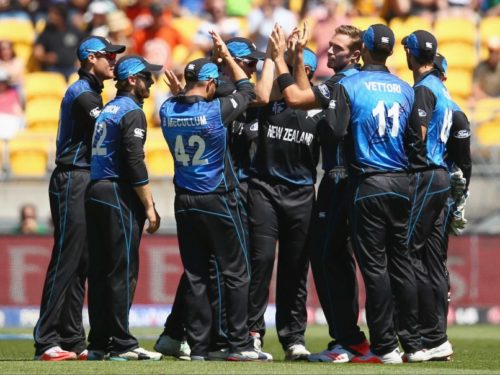
The Black Caps squad for June’s Champions Trophy has been announced. The full squad is: Kane Williamson (c), Corey Anderson, Trent Boult, Neil Broom, Colin de Grandhomme, Martin Guptill, Tom Latham, Mitch McClenaghan, Adam Milne, Jimmy Neesham, Jeetan Patel, Luke Ronchi, Mitchell Santner, Tim Southee and Ross Taylor.

The Black Caps have a tough group to get out of. They must qualify in the top two of the pool to progress, and their group of four contains world champions Australia, home favourites England, and giant-killers Bangladesh. Finishing last is a realistic possibility.

Matt Henry might be the big omission from the squad. Over his 30-match career Henry has 58 wickets at 25.10, which makes the case for his inclusion about as compelling as the case for Trent Boult before the 2015 CWC. It is certainly a significantly better record than any of McClenaghan, Milne and even Southee.

Despite this, the Black Caps pace battery will be very strong. It looks as though the pace bowling attack will be based around Trent Boult (as could be expected up until the 2023 CWC), with Adam Milne returning to his pre-CWC injury third seamer role and one of McClenaghan or Southee sharing the new ball.

Adam Milne has the potential to be a tremendous bowler, as he has both the pace and accuracy. All he needs to learn is the subtlety that divides the cricket master from the journeyman and New Zealand will have another weapon in the bag.

Mitch McClenaghan has surprised a lot of people and continues to do so. He has been excellent for the Mumbai Indians in this season’s IPL and the Black Caps selection panel appears to believe that this white-ball success will translate well to English conditions.

English conditions will also suit the tricky Tim Southee. So in all cases, Kane Williamson knows he has 30 overs of top-drawer pace bowling available to him.

The Guptill-Williamson-Taylor axis comprises three of New Zealand’s best ODI batsmen ever and, if anything, these three players are better than the ones that took the Black Caps to a CWC final. So most of the top order picks itself.

Tom Latham is enduring a horror season with the bat, but he is still likely to open the batting alongside Guptill. His current average of just under 30 might make his place in the order look questionable, but with six Test centuries by age 25, his experience and skill against the new ball will be useful in English conditions with high levels of lateral movement.

The real selection questions are around the middle order.

The Black Caps are yet to find a dependable replacement for Grant Elliott, although the squad does include a number of possibilities. Neil Broom might be considered the front-runner for the position but Jimmy Neesham has recently been surprisingly good in the last batsman’s position.

Any number of players could take the allrounder’s position at 6. Probably the Black Caps will go with Corey Anderson, whose awful run with injuries seems to be over. Anderson, like McClenaghan, has been impressive in the IPL, and Williamson ought to be able to depend on him for four overs at least.

The other allrounder’s position at 7 is another open question. If Tom Latham opens the batting, there may be little advantage in choosing Luke Ronchi at 7, as Ronchi has been very poor with the bat for a long time and does not offer more than Latham with the gloves.

Mitchell Santner might have fallen out of favour slightly in the regard of the current set-up, and this could mean that Colin de Grandhomme takes his place as the bowling all-rounder, if the brains trust decides to go with Luke Ronchi at 7.

Given the strength of the top order with the bat, the smart thing to do might to pack the middle order with hard-hitting allrounders.

Likely team for the first match versus Australia on the 2nd of June, starting at 9.30p.m. New Zealand Time:

1. Martin Guptill
2. Tom Latham (wk)
3. Kane Williamson (c)
4. Ross Taylor
5. Neil Broom
6. Corey Anderson (5/6)
7. Colin de Grandhomme (5/6)
8. Mitchell Santner (4)
9. Mitchell McClenaghan (2)
10. Adam Milne (3)
11. Trent Boult (1)