
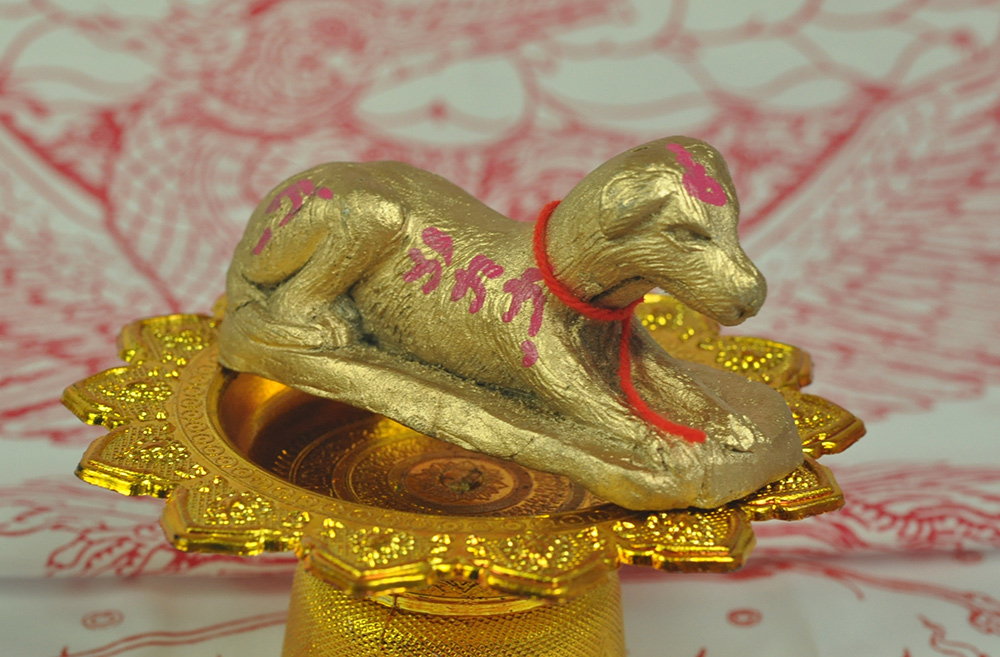
Alchemical Gold, Gold Magic and Gold Magicians

In alchemism, the Elementary Masculine Perspective divides reality into four elements of increasing value: clay, iron, silver and gold. Previous articles looked at alchemical iron and alchemical silver, what they represent, and what sort of person embodies them. This article looks at the fourth of the four masculine elements: the radiant and enigmatic substance known as gold.

The primary masculine division is into precious and base. The secondary masculine division is the further division of the base, as well as the further division of the precious into silver (colourless precious) and gold (colourful precious), with the latter more precious than the former.

That gold is shiny and colourful means that it represents the highest frequency of all, namely that of God, that which makes all things possible. The chemical symbol ‘Au’ comes from the Roman word aurum, which shares a root with the modern word aura. It was believed that the substance possessed an aura such that it was holy, or from God.

Elementary alchemy has it that the division between yin and yang can be represented as the division between clay and iron, with the first passive and soft and the second active and unyielding. Silver relates to a balance of iron and clay that is more correct for the current situation than either extreme, and represents how according with the World of Forms is more valuable than simply being an animal.

Gold is a second order of balance, between and beyond all of silver and clay and iron. What this means is that gold is unafraid to act as pure iron or pure clay, should the situation demand it. This makes it different to silver, which attributes value to the middle ground between the feminine extreme of clay and the masculine extreme of iron, and which is reluctant to act as either.

Silver is prone to a particular form of the balance fallacy called the Conceit of Silver. Essentially this means that silver always believes that it’s of the highest value (i.e. that it is of gold). Gold is willing to place itself below silver – and that is precisely why it is more valuable than silver. Gold is without ego.

Gold represents a kindness that none of the other elements are capable of. Silver is too conceited, iron too harsh and clay too soft. This kindness is something extremely valuable, because without it this world is something of a hell. It is why Aleister Crowley was impelled to write “Love is the law, Love under Will.”

Kindness given of the free will of the giver, and not to secure some future advantage, is real gold, and invaluable. Without it, nothing else in this world can have any real value, for gold gives meaning to things.

Being the most malleable of all metals, gold is softer than both silver and iron. This relates to the fact that it is also the most expansive. One gram of physical gold can be beaten out into a sheet a square metre in size; by similar means, a tiny amount of alchemical gold is enough to make a tremendous number of things possible. Therefore, gold is pliable enough to achieve things that silver cannot (much less iron or clay).

Gold relates to the widest, broadest, most fundamental and most deeply hidden knowledge. It is the esoteric to the exoteric of silver. Knowledge of gold is knowledge of the metaphysical fundamentals, what Plato called the World of Forms. Silver is knowledge of the material world; gold is knowledge of the immaterial. Silver is knowledge of the current state of affairs; gold is knowledge of the eternal.

Metaphorically, gold refers to that of the greatest value. No element is more valuable than gold: therefore, gold is perfection. Gold also relates to God, which is to say that it cannot be described, on account of being more fundamental than language. It is consciousness to the intellect of silver, the muscles of iron and the viscera of clay.

Gold magic relates to a person’s frequency of consciousness. If a person can overcome suffering and come out the other side neither pacified nor cruel, then it can be said that they are in possession of spiritual gold. A human being that has never suffered will be something like the silver. One who has suffered and become cruel as a result is like the iron, and one that has suffered and become meek is like the clay. To remain kind even when one has suffered is like the gold.

Psychological and spiritual healing fall under the rubric of gold magic. Successful gold magic will induce a depressed person to be more happy, an anxious person to be calm, and a despairing person to find meaning. Silver cannot do any of those things because its nature is cold and austere. Silver cannot impress with warmth of kindness. Gold causes those suffering in its presence to feel that everything is going to be okay.

This an esoteric quality possessed by gold magicians. You could never trust a person who said that they were a gold magician, and any gold magician would know this, and therefore they would never say it. Anybody claiming to be a gold magician could be confidently said to actually be a silver magician, because a real gold magician wouldn’t go around bragging about how wonderful they were – they would be content that their behavioural example was such that they would be sufficiently rewarded.

The presence of alchemical gold is felt on such a fundamental level that it causes its possessor to radiate warmth. Unlike silver, which can be measured in IQ tests and university achievements, gold cannot be measured. This is a feature of its divine origin. It can only be sensed – and some people sense its presence where others do not, which is another reason why it defies description.

*

If you enjoyed reading this essay, you can get a compilation of the Best VJMP Essays and Articles of 2017 from Amazon for Kindle or Amazon for CreateSpace (for international readers), or TradeMe (for Kiwis).
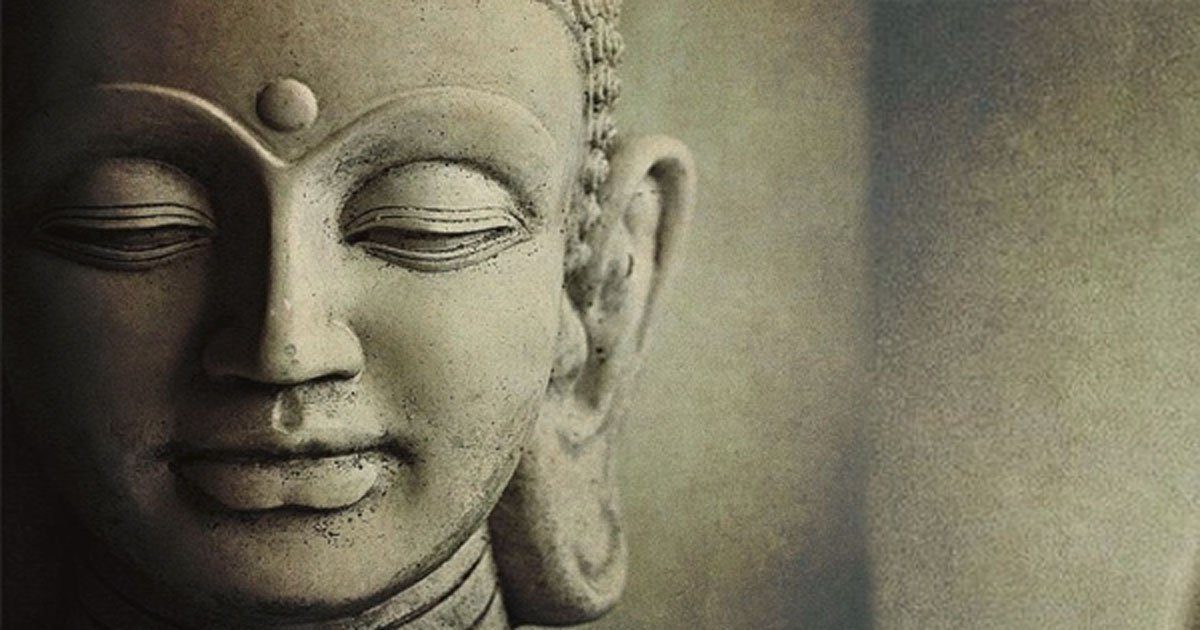
Why There’s Nothing, Fundamentally, To Be Afraid Of

Some people wonder why the great sages, such as Buddha, are always depicted smiling. It seems like there’s some great and uplifting secret that they are privy to, knowledge of which has liberated them from all the suffering in the world. Buddha knew a great many things. One piece of knowledge he shared with Alan Watts: that there’s nothing, fundamentally, to be afraid of.

Essentially there is no reason to ever worry or to feel bad about things that might happen in the future. This seems like an article of faith, and perhaps an irrational one, until one looks at the philosophy behind it.

Most people think that they know what lies in store for them as a human being on this planet. That they will die, and suffer as they do so. What lies in store is growing older, more tired, more decrepit, and eventually more sick, until a major organ fails and one dies painfully. Probably this death will be preceded by several decades of increasing pain in joints and muscles, as well as eyesight, hearing, bowel and bladder failure, and maybe even a stroke or two.

It follows from this that life itself is suffering, and increasingly so as one ages. We can conclude that we know we’re going to die, and that this death is going to be painful. Therefore, we know that an attitude of apprehension and even fear towards the future is rational. This is why almost everyone has one – we know that the future brings immense suffering.

But do we really know this?

One knows that one is conscious. Thinking about it, it’s possible to realise that this is all one really knows. This is the one and only single fact that one can ever state with certainty. Everything else is a matter of probability, even questions like “Will the Sun rise tomorrow?”. It’s not certain that the Sun will rise tomorrow, because the Earth could be destroyed at any time by a comet, rendering the question of sunrise meaningless.

Because nothing else can be known, nothing else can be stated as an eternal fact about reality. Only the fact that one is conscious can be stated as such. All else belongs to the category of contents of consciousness, which is to say that all else is merely “things that one is aware of”. These phenomena are not facts in the same way that one can state “I am conscious” as a fact. Rather, they are probabilities.

Let’s say that life is suffering. Fair enough, life is suffering, and it gets worse until the physical body dies. So what? There is no reason to think that one will still be aware of the suffering of one’s physical body after its expiration. One is conscious now, and one is conscious of a physical body, and this physical body suffers – so what?

There is no reason to think that consciousness is still aware of the suffering of the physical body after death. Indeed, consciousness might then become aware of a new body, or might dream up something else entirely. Therefore, any physical suffering can never be any more permanent than any other phenomenon of Nature, such as the ebb and flow of the tides. Birth, death, doesn’t matter: all is just an oscillation from pain to pleasure, with high points and low points.

For this reason, there is no need to fundamentally be afraid of the decay and death of one’s physical body. There’s every reason to think that on the other side of death is the absence of all suffering, and all pain is just a shadow of death. All suffering is an effect of material phenomena, which are all transitory in nature. If there is no reason to fear death, then there is no reason to fear pain either. All suffering will pass.

Note that the argument here is that there is nothing fundamentally to be afraid of. There might be plenty of things to be superficially afraid of – death and pain being the foremost of these. It makes sense to be afraid of getting hit by a train, not because the consequences of getting hit by a train would be permanent, but because one has a role to play here in this dimension of reality in which we find ourselves, and one’s role is (in all likelihood) one that avoids getting hit by trains. Not to be fundamentally afraid does not imply that one ought to behave recklessly or without regard for one’s physical well-being.

There is no reason, fundamentally, to be afraid of anything, because all suffering is a phenomenon that will pass. We do not need to be afraid of pain merely because pain is painful – this is sufficient reason for pain to be avoided, but not for it to be feared. We can appreciate that pain, like all natural phenomena, comes and goes, and that we remain the observer of it, as we remain the observer of all material phenomena.

*

If you enjoyed reading this essay, you can get a compilation of the Best VJMP Essays and Articles of 2017 from Amazon for Kindle or Amazon for CreateSpace (for international readers), or TradeMe (for Kiwis).

The Four Elements of Health

Alchemism holds that the metaphysical world is comprised of four masculine elements of clay, iron, silver and gold. Because we can apply the maxim as above, so below, we can reason that there are patterns within the physical world that reflect this. This essay look at personal health through the prism of the four masculine elements.

The first element of clay relates to eating well. There are two aspects to this.

Fundamental to physical health is simply getting enough food. This fact has long been forgotten in the West on account of our centuries of abundance, but it’s still a biological reality for all creatures. The primary survival challenge for creatures similar to us in a state of Nature is to gather enough food resources to meet their metabolic needs. If this is not possible it will lead to hunger, then weakness, then death.

Another important aspect is that one gets the right food. It’s not simply a matter of filling one’s stomach: one must eat food that is actually healthy. Acting correctly at the level of clay will see a person avoid sugar and fatty cheeseburgers in favour of fruits, vegetables and home-cooked meals. Someone who has mastered life at this level will act as if food is medicine.

Iron relates to physical discipline in the pursuit of health. There are also two aspects to this.

Most obvious is exercise. The body has to be used, otherwise it will fall into decay. Humans were very active during the biological past, and this is reflected in the biological present. Properly applying the element of iron to one’s health means that one will get up and stay fit, whether through walking, running, swimming or biking. thereby one becomes physically hard, like iron.

Iron is the masculine element, and as a consequence it is the element that imposes boundaries. Therefore, part of the realm of iron is preventing unwanted substances from entering one’s body. This is obviously true in the case of poisons, but become trickier when applied to drugs and medicines. Acting correctly in the element of iron will see a person keep harmful things out of their body.

Silver relates to intellectual exercise. This shares elements of both clay and iron, and like clay and iron there are two distinct aspects to silver.

The former relates to what you put into your head. This relates to quality of information. A person acting at the level of silver will take care to not read low-information sources. They will tend to avoid gossip mags and FaceBook. Someone succeeding at this level will read full books from start to finish, and will cross-reference claims made in the media with other sources before believing them.

The latter relates to the discipline necessary to keep using the mind. The brain is like a muscle: you will lose it if you don’t use it. It’s important to keep reading everyday, and thinking about what one has read, as well as challenging what one thinks is known. Part of the realm of silver is intellectual debate, and a healthy individual at the level of silver will be able to do with words what the man of iron does with a sword.

The element of gold relates to spiritual exercise. Again like the previous elements, this is achieved in two ways.

The first is to keep incorrect thoughts out of one’s head. Gold is different to silver here because the realm of gold deals with frequencies, and not information like silver. So this does not relate to keeping bad information out of the head, but rather bad frequencies. Correct application of gold to health involves avoiding people and situations that cause bad energies, as well as patterns of thought that lead to same.

The most important spiritual exercise, of course, is meditation. Only through meditation does an individual arrive at the peace of mind and self-knowledge necessary to make correct decisions. Meditation is the final transmutation of the previous three elements into the gold of enlightenment. This brings what is usually referred to as “mental health”, involving a calm acceptance of things.

These four elements combine to create a complete picture of health. An individual who succeeds in applying these four elements to their health will be physically, mentally and spiritually healthy.

*

If you enjoyed reading this essay, you can get a compilation of the Best VJMP Essays and Articles of 2017 from Amazon for Kindle or Amazon for CreateSpace (for international readers), or TradeMe (for Kiwis).

The Case For Cannabis: Cannabis is a Tool For Personal Growth

The cannabis high can teach a person a lot about themselves that they didn’t already know. It brings up a range of different emotions, and some of those emotions provide the sort of challenges that lead to healthy personal growth. This article discusses the idea that cannabis ought to be legal for its benefits as a tool for personal growth.

Personal growth can occur in a number of areas. For those who have suffered previous life trauma, it’s common that personal and emotional development stalls at the stage where the trauma occurred. Heavy physical, sexual or emotional abuse can lead to impulsive, neglectful, destructive behaviour, and getting past such conditioned behaviours is not easy.

The main use of cannabis for psychotherapy might lie in its ability to induce a state of relaxation and fearlessness. In that state, it’s possible to revisit earlier traumas and to reinterpret them. Traumatic events tend to leave the impression that they were more important than they really were, which can lead to them making a change to behaviour that outweighs any learning value the experience may have had.

A person may have become conditioned to react angrily or violently when confronted with a certain emotion or stimulus, when they really shouldn’t. In order to correct this, psychotherapy seeks to revisit the traumatic event and recondition the patient to not react with anxiety when they recall it. This has the effect of settling the psychological tension that had existed ever since the trauma.

Cannabis is useful for its deconditioning effects – although this is also one of the reasons behind why it has been illegal. One man’s psychological damage is another man’s asset, and the brutal learned helplessness that people come to suffer as a result of early schooling tends to make them more amenable to instruction from their overlords in the workplace. Those overlords, therefore, do not want people to decondition themselves, especially if it also makes them free.

Probably the most effective use of cannabis, however, lies in its ability to cause the user to have original thoughts that could not have been generated by any other method. Cannabis has long been associated with creative industries and endeavours, especially music and writing. It does this by preventing repetitive thoughts from occurring, leaving mental space for ideas inspired by the environment.

There are several people whose minds are limited on account of the low range of stimuli they have encountered over the course of their lives. Many of these people, particularly, have been dumped in front of a screen by a parent early in their lives and know little of the outside world or of other people. They have essentially been programmed to accept Disneyland as their reality.

People like this can bring themselves a new lease on life by using cannabis, and allowing themselves to explore vistas of the mind that were previously shut off. As users will attest, entire realms of new thought can open up when one is under the influence of cannabis: all sorts of strange, wonderful and unsettling ideas seem to arise as if from a parallel dimension that one could not perceive until just now.

Related to this, and as mentioned in a previous section, cannabis is a religious and spiritual sacrament. This entails that many people have used it as a tool for spiritual growth.

There is a reason why hippies are associated with terrifying insights into the nature of death, consciousness and reality as well as cannabis – they have seen beyond. Cannabis use can lead to spiritual growth in the same way that meditation does. By way of breaking one’s usual patterns of paying mental attention to petty things, one frees up mental space for new and original thoughts to arise, perhaps from long-suppressed places.

On a darker level, the unpleasant and paranoid aspects of the cannabis experience can lead to personal growth in a grim, meathook sense. Many people have avoided ever really thinking about the fact that they’re going to die, thanks to all the conditioned patterns that come with living an everyday life. So when a person does, perhaps for the first time ever, it’s common for them to feel extremely challenged by it.

Cannabis law reform ought to happen so that cannabis can be used as a tool for personal growth. There are both therapeutic, recreational and spiritual benefits that cannot be explored under prohibition.

*

This article is an excerpt from The Case For Cannabis Law Reform, compiled by Vince McLeod and due for release by VJM Publishing in the summer of 2018/19.