Thoughts of a Luciferian Occultist on the Occasion of His 36th Birthday

My life has been divided into four nine-year blocks that correspond to the four masculine elements of clay, iron, silver and gold. This has culminated in my own apotheosis as someone who no longer fears the death of the physical body. Such thoughts became apparent to me when I marked the occasion of having been around the Sun thirty-six times, and reflected upon the wobbly path that was taken.

The phase of clay, representing the first nine years, was when simple survival skills were learned. This phase is shared by all creatures that need to survive, right down to the dumbest herbivore. This is the phase that we are born into, one that is characterised by fear as we learn to balance our innate curiosity with staying away from dangers.

In the first nine years of my life I was little different to a sheep or chicken. Essentially all actions I took were reactions. Usually I was guided along by well-meaning adults, and usually I had no reason to not comply. In this phase a basic civilising process took place, and I learned to enjoy life.

The alchemical culmination of this phase is tin, which corresponds to the planet Jupiter. Like Jupiter, it is large, larger-than-life in some ways. It’s bombastic and narcissistic but it is grounded in a healthy affirmation of life and therefore is necessary before the next phase can begin.

The iron phase began when I learned to take competitive sport seriously. Here the enjoyment of life becomes strong enough that a desire to challenge oneself and others arises. This happened at about the same time as puberty began, and with that came a desire to kill other males.

This is the phase when it becomes useful for a child to learn a martial art, or when it becomes enjoyable to seriously develop a set of skills for a competitive sport. Fittingly for iron, during this phase I became a harder individual, but in becoming so I also became a more useful one, in the same way that tools of iron are much more useful than tools of clay.

Its apogee was an incident on a rugby field where I hit an opposing ball carrier so hard in a tackle that I broke my own collarbone on impact and was knocked to the ground. He and I had developed a grudge over the course of the game, hitting each other harder and harder in tackles to try to show off who was strongest. I was about 15kg lighter than him and resorted to a shouldercharge to make up for it.

Unfortunately, he saw he coming and put the shoulder in himself, and I came off second-best (in an odd coincidence, that player, Simon P. Murphy, went on to become the author of His Master’s Wretched Organ, published by this company!).

The incident taught me to appreciate the limits of the sphere of iron. It was effectively where I learned the limitations of aggression and violence, and that knowing how to guide aggression intelligently was much more important than sheer volume of aggression.

It represented a softening to something of greater value, and this was represented alchemically by the phase of silver. This was also where I learned the value of intelligence. On the rugby field it didn’t seem like intelligence was worth much, as it appeared to me mostly about strength. But knowing how to direct one’s strength, not strength itself, was the real ability of value.

This phase began around age 18 and involved going to university. At university it is expected that one has gotten over the testosterone-fueled dominance battling of the phase of iron and therefore that one can work on polishing oneself up.

For me, embarking on the path of silver began with a Bachelor’s degree in psychology, and with losing my virginity to a Swedish nursing student. Upon managing both of these things I developed an appreciation for what intelligence had to offer the world.

I learned to use my own intelligence to go travelling and work around the world, spending three years in Europe and a year in other foreign climes. During this time I learned a few languages, and upgraded my education to a Master’s degree, and by the end of this nine-year block I was capable of thinking logically and rationally.

Being able to think intelligently is an ability that dazzles those still on the level of iron or clay, and as such it corresponds to the reflective ability of sunlight off a mirror. But intelligence itself is not, by itself, necessarily an expression of the will of God.

The silver became, in itself, more alive, and this moved me into the realm of mercury. This was represented in the material world by doing a lot of bar work. Here I learned to become silver-tongued, and to crack jokes, and to parry insults into harmless banter, and to be glib and slick and easygoing.

Seven grams of psilocybin mushrooms, taken shortly after I turned 27, marked the end of this phase of silver and mercury. These I had been given by a hippie workmate upon expressing to him what I felt to be the mental health benefits of smoking cannabis, especially for someone like me who had long suffered problems from nausea and insomnia.

I recall, at the peak of the trip, standing before God and being asked how much I thought I could handle, and replying that I wanted the full measure. In that moment I became entirely reunited with God and understood that I was forgiven for all errors, past and future.

This experience obliterated my mind, and taught me that everything I knew was wrong. I had been granted a glimpse into the face of the divine, but because of my ego and attachment to false self I was not immediately able to manifest the knowledge that I had been granted in my everyday life.

I had two options: to abandon the shamanic path and dismiss the insights gleaned from psychedelics as delusions and insanities, or to accept the challenge of the phase of gold.

I accepted the challenge of the phase of gold, and this involved a willful refusal to allow myself to forget the insights that I had been granted at the peak of the mushroom trips, such as an insight into the true nature of consciousness, or the fact that the contents of consciousness could be represented as a Great Fractal.

The culmination of this phase was writing a manuscript called The Pyrrhonist, an exercise in questioning reality from first principles. This caused the complete disintegration of my entire personality and of everything I believed to be real. I systematically questioned every belief I had, even the most fundamental, and by the end of that process I had questioned the fundamentals of reality so thoroughly that I was mad.

At the nadir of this phase I spent ten days in a mental health unit.

This dark night of the soul served as an nitric acid, dissolving all of the less pure elements of my soul; I was completely humbled. I was forced to stand before the judgment of God and concede that the maintenance and preservation of my ego was a fool’s errand – not only did I make myself less happy, but everyone who encountered me got less out of it than they otherwise would have done.

At this point I had been completely broken, and was ready to rebuild.

This took another three years or so, and involved a kind of self-nurture that, ironically, I had been too selfish to previously allow myself, lest the softness made me weak. It also involved smoking a tremendous amount of cannabis, for the reason that this medicine prevented the pull of the body from dragging my frequency back down to clay because of pain and nausea.

I had to learn to accept that I was not and could never be judged by ephemeral concerns. I embarked on an attempt to purify my soul, which involved abstinence from all of tobacco, alcohol and women.

This last of the four nine-year blocks of my life ended this week, upon turning 36. It ended with my acceptance of the fact that I feel entirely at peace and that there is nothing, fundamentally to fear. I am absolved of all sin and can take my part in the play.

This, I feel, is the lesson of the element of gold. It cannot shine directly on people, in the manner of silver, because where people become blinded and dazzled by silver they become humbled by gold, and in being humbled they become resentful, and in becoming resentful they become destructive.

Gold, being the softest of all metals, can least tolerate that destructive will, and so it has to learn to be subtle. Its essence is therefore gentleness and precision. Working on the level of gold means learning to influence on the level of spirit, not just the level of mind (as is silver).

I feel that now, at age 36, a certain alchemical process has come to its end and that now I can live on whatever level of clay, iron, silver or gold is necessary for the environment that I am in, now that I know how to tune into the appropriate frequency.
The Three Main Forms of Virtue Signalling

The difference between virtue signalling and a genuine desire to help is that virtue signalling doesn’t demand any kind of sacrifice

Virtue signalling is when a person (usually male) makes an effort to signal to any prospective mating partners within earshot the quality of their reproductive virtue. Like a stag bellowing as loudly as it can during the roar, much of the communication made by the human male is intended specifically to let nearby females know about his reproductive capacity. This essay looks at the specific forms of it.

The female of every sexually reproducing species attracts the male through signalling her fertility, which is perceived by the male as beauty. The male counterpart is virtue signalling, in which he signals that any offspring produced by him would successfully be able to compete with those of other males. There are three basic virtues that a male can signal to attract a female: strength, intelligence and moral rectitude.

Strength relates alchemically to iron, and is mostly a function of height and weight. This is why men with a poor posture habitually straighten their backs up when they see an attractive woman walking in their direction. After all, a man is not very strong if he doesn’t even have the muscles to hold his body up straight.

What any given woman finds attractive along these lines is mostly a function of what physical qualities the men in her ancestry needed in order to survive. And so European women are attracted to strong arms, Asian women to a steady nerve, and African women to fast-twitch muscle fibers. All women, however, are attracted to a physical body that looks as if it can survive the rigours of life on Earth – one that metaphysically represents iron.

But strength is only part of the equation. It may be the most important factor for the majority of sexually reproducing species, because most of these species assert a right to exist primarily on the basis of their physical strength, but sheer physical strength is less frequently the prime determinant of success in humans (unless they are savages).

Intelligence relates alchemically to silver, and this could be considered the next level of virtue signalling. Many intelligent men have realised that, for the human animal, intelligence is a better predictor of future success than mere physical strength, and this has led many men to make displays of their mental health and strength instead of displays of physical health and strength.

Silver is softer than iron, and consequently the men who virtue signal their intelligence tend to be more subtle than those who virtue signal their physical strength. The usual way to go about it is to show off who knows the most about any given subject, or who has the greatest range and depth of general knowledge.

Another way to do it is by wearing glasses.

This form of virtue signalling often leads to petty arguments, in which the participants are unwilling to concede that their opponents have made any valid points because of a fear that this will be taken as a concession that those opponents are more intelligent or knowledgeable. Since the point of virtue signalling is to demonstrate to any observing females the reproductive quality of the signalling male, there is very rarely an incentive to concede a point to an opponent, because this will merely make them appear more attractive at your expense.

Humans are ultimately a social species, and no single individual is capable of dominating the collective. This means that an ability to get along with other humans and to behave correctly is the virtue that most strongly predicts reproductive success in our modern societies. The result of this is the importance of moral rectitude.

Moral rectitude relates alchemically to gold, because of its rarity, value and malleability. In this context, virtue signalling refers to when men act as if they are much kinder than they really are. Here a man might claim to have a will to perform a certain act in a certain situation, or to have a certain belief about the correct ordering of society, when the reality is very different.

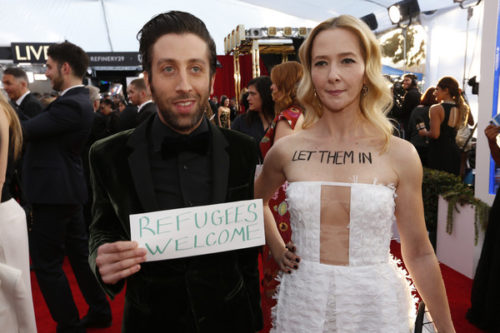
One of the most common examples of this moral virtue signalling in 2017 is the expression of a desire to let refugees into the country, to be taken care of by general taxation. Inevitably the intent of this is to signal to all observing females that the male is kind and decent and morally upstanding. In other words, that he is in possession of the gold of being able to understand the Will of God as expressed through morality.

The reason why this is virtue signalling is that the males in question almost never have a genuine desire to look after these people. Those who virtue signal the most about refugees almost never live in the kind of neighbourhood that refugees are dumped in, and they almost never work the sort of jobs that are impacted by a sudden increase in the supply of unskilled labour.

Other common examples are going on about having a black friend to signal that one is not racist, or pretending to support women’s sport to signal that one is not sexist.

The whole point of all of this virtue signalling is to demonstrate reproductive fitness, which is why men will often end up fighting and arguing over who is the strongest, the smartest or the most good. Essentially there’s no real difference between a couple of rams butting heads in rutting season and two men trying to demonstrate that each is the most virtuous by claiming to support various political causes.

The Four Feminine and the Four Masculine Elements

Most readers are familiar with the concept of there being four classical elements, and that those classical elements are fire, air, water and earth. Those four elements do indeed form a complete quadripartite system, but this system is itself a feminine perspective on the ideal of a quadripartite system. This essay looks at its masculine counterpart as well.

The difference is that both sets of four flow from only one of from what can be described as The Fundamental Masculine Orientation and The Fundamental Feminine Orientation. Fundamentally, a masculine orientation will see the world in terms of differences, and a feminine orientation will see the world in terms of similarities.

This is because the masculine tends to measure itself against other men in a hierarchy, and to struggle to become greater than other men, whereas the feminine tends to smooth differences over for the sake of group solidarity, and in doing so implicitly asserts that no-one is any greater than anyone else.

The four feminine elements are known as the four classical elements of fire, air, water and earth. These are feminine elements because they all have equal value – the world and life could not exist without any of the four.

They are also known as feminine elements because they directly correspond to the natural, physical world, which is feminine in contrast to the masculine world of ideals. The earth refers to the clay underneath us, the water refers to the rain, the oceans and the rivers, the air refers to that which we breathe and move around in and the fire refers to the light of the Sun and the stars.

More precisely, it can be said, as Aristotle did, that fire represents that which is hot and dry, air that which is hot and wet, water that which is cold and wet and earth that which is cold and dry.

The four masculine elements have been known for as long as the four feminine elements – but this fact is not understood by all. They are even more esoteric and secret than the four feminine elements because they refer to the spiritual world that modern people have become blind to, whereas the feminine elements refer to the material.

They can be described as clay, iron, silver and gold. These are masculine elements because they refer to an explicit hierarchy in which the latter three elements are the result of a refinement process performed on the element previous.

Firstly, one has a state of clay. This could be considered analogous to the natural proportions of fire, air, water and earth in the material world, i.e. those that were present without any conscious effort to refine them.

What naturally happens after then is a hardening of some part of the clay, into iron. In the natural world this has taken the form of the development of bones, muscles, horns, spikes and fangs. These developments were a masculinisation in that they made the extant chaotic and potential-rich element of clay into something of defined shape and application, like a tool.

The correct balance of clay and iron represents a further refinement of the natural world, this time into silver. This has a greater value than both iron and clay because of its optimal balance of both. Silver is harder than clay but softer than iron, and because of this more intelligent utility it shines with higher value.

The highest refinement is that of gold, which is the correct balance of clay, iron and silver. This is considerably more complicated than just balancing masculine and feminine, and as a result gold is the rarest of all of the masculine elements.

Note that the four masculine elements are abstractions, and as such they do not directly correspond to anything in the material world. Thus, what counts as gold and silver is often a matter of opinion (value, like beauty, is in the eye of the beholder).

Thus we can see that the four masculine elements relate to a kind of alchemy, in that they describe in metaphor a willful attempt to raise one’s level of consciousness (where clay = completely unrefined, iron = partially refined, silver = mostly refined and gold = completely refined) whereas the four feminine elements relate to materialist science in that they are a description of the natural world (for example, fire = plasma, air = gas, water = water and earth = solid).

Essentially, the masculine is concerned with up and down, and the feminine is concerned with in and out. This is the ultimate difference between the two fundamental orientations.

The Limits of Inclusiveness

Gay people are categorically unwelcome here

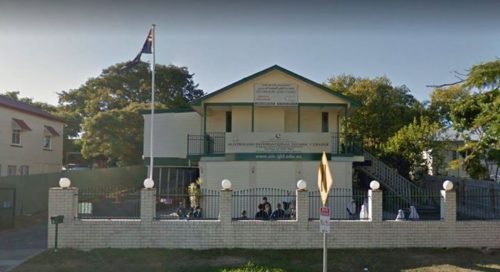
With news that Queensland Islamic authorities are urging their followers to vote “No” to same sex marriage, the levels of cognitive dissonance among many on the left are starting to become painful. It’s now undeniable that a grand coalition of everyone who isn’t a rich, straight white male is an untenable concept. This essay examines why.

For the past couple of decades, leftist groups across the world have looked for solidarity on the basis of “the enemy of my enemy is my friend.” This logic has inspired the “tolerant left” to make a show of solidarity towards any and all groups that had a grudge against the people running the world – commonly agreed to be rich, straight, white men.

This has led to the left adopting the idea of inclusiveness as a moral virtue. Any and all alliances with people who hated the Establishment had to be entertained. It didn’t matter if they were women, gay, black, Muslim or anything else, just as long as they wanted to overturn the status quo.

However, this grand political dream to remake the world in one’s image fell apart, as such schemes inevitably do, because it ran into inexorable silver laws of psychology.

It can be stated as a psychological rule that, the larger and more diverse any given group, the weaker the bonds of solidarity that hold it together will be, and the smaller and more pure any given group, the stronger those bonds of solidarity will be.

This is obviously true if we look at the extremes. At one far extreme we could consider the nuclear family to be the smallest group with the strongest solidarity. Parents are often ready to kill if that is necessary to protect their offspring, and “brother” is used as a gesture of common bonds in all kinds of ideological movements, so it’s easy to see how this small, extremely exclusive group has the highest solidarity.

The reason why you can’t just let a random person into your family and have them considered one of you is because this would increase the degree of diversity of the group to the point where such extremely strong bonds of solidarity are no longer tenable because the necessary level of trust isn’t there.

The obvious reason for this is because the already existing members of the family have next to nothing in common with a random person, so there’s no special reason to trust them.

At the the other far extreme we could consider the human species to be the largest group with the weakest solidarity. Indeed, we can see here that people generally don’t care at all if they hear that someone on the other side of the world died, unless that person had something in common with them, such as a native language or racial origin.

Further evidence for this can be observed if we place the nation states along a line with a familial level of solidarity (highly discriminating and strong) at one end and a universal level of solidarity (undiscriminating and weak) at the other.

Here it can be seen that the nations that cast the net of citizenship over an extremely broad set of different people (USA, Brazil, South Africa, Russia) have the lowest levels of solidarity, measured by the unwillingness of the wealthy to contribute to the communal welfare in the form of taxes, and by the willingness with which the poor use lethal violence on other citizens.

It can also be seen that the nations that cast this net more exclusively, such as only over a small, homogenous ethnic group (Scandinavia, Japan, Germany, South Korea, Canada), have the highest levels of solidarity, measured by an egalitarian culture and low levels of interpersonal violence.

Fitting this trend, countries with moderate levels of diversity (Argentina, Britain, Australia, New Zealand, Chile) are in the middle.

There’s no escaping this silver law: the more inclusive the group, the weaker the bonds of solidarity, and the less inclusive the group, the stronger the bonds of solidarity.

The idea of trying to include as many people in the wider group as possible is essentially a feminine idea, and this is why it is generally associated with the left. It’s a form of horizontalisation that seeks to remove all distinctions from people in order to homogenise us into an easily malleable ball of putty.

However, we can now see the limitations of it. The motivation behind this idea is ostensibly to avoid making people feel bad on account of being excluded, but the flipside of it is that no-one ever feels good on account of being included.

This has led to a situation where Muslim immigrants, considered by the trend-setters among the left to be allies on account of a mutual Christian enemy, will vote against the rights of other leftist allies if those allies are homosexuals. It is a tremendous irony that these religious fundamentalists, allowed into the country because of a desire to display the virtue of tolerance, do not share the belief in the value of that tolerance, and so are now acting to maintain intolerance towards groups they consider outsiders.

With the recent wave of immigration having made our societies much more diverse, we have correspondingly lost much of the solidarity that used to provide us with a sense of society and community. The net has been cast so wide, thanks to a fanatical ideology that believes it can erase all human uniqueness, that it cannot keep hold of what it covers.

In other words, the inevitable consequence of trying to treat everyone like your brother is that your brother can no longer count on a brotherly level of exclusive solidarity from you, and will have to settle for much less. People who believe that inclusiveness is necessarily a virtue might therefore want to be careful what they wish for.