
Why Right-Libertarianism Is Full Of Autists

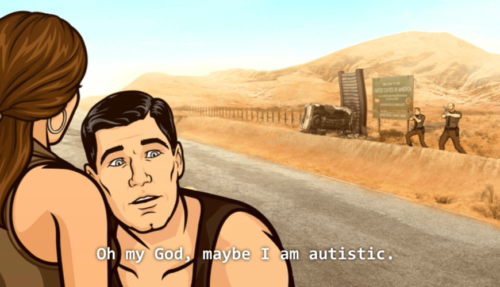
Many have had the experience of being surrounded by right-libertarians and realising that they have absolutely no clue about how other people think, and that this lack of insight inevitably dooms their political philosophy. It’s now apparent to many that the right-libertarian movement is chock full of autists. This essay will argue that right-libertarianism and autism overlap so heavily because they are both highly masculine mindstates with a shared evolutionary genesis.

Right-libertarians often like to paint a picture of how excellently everything would work if there was no welfare. In their minds, the welfare system only incentivises failure. If it was removed, they claim, people would work harder and pull themselves out of poverty rather than “relying on the Government”. Human suffering would decrease as a consequence.

What’s perfectly clear, to the 99% of the population who aren’t right-libertarians, is that this approach completely fails to account for the reality of human behaviour. Pulling the rug out from under tens of millions of struggling people at once would lead to chaos and violence in short order, and the thought that private security could manage enemy odds of hundreds to one is laughable.

Human suffering would increase sharply – and quickly – if we got rid of the welfare system, and a person doesn’t have to be a Dickens scholar to know this. We can simply observe the widespread misery in all times and places that don’t have one. Therefore, no-one will ever get rid of the welfare system, any more than they’ll ever get rid of the law against theft, and for similar reasons. Why don’t right-libertarians understand this?

One approach has it that the major difference between male and female psychology is that the masculine mind is systemising, while the feminine mind is empathising. The logic here is that men and women evolved to fit different niches in the biological environment: the male to the hunting niche, and the female to the gathering and nurturing niche.

Another theory has it that the major difference is that the male brain is autistic while the female brain is psychotic. This is apparent in several ways – chiefly the fact that boys are diagnosed with autism at many times the rate of girls, but also by genetic studies that show that autists tend to inherit from their fathers a disproportionately high number of genetic markers relating to brain development.

Yet another theory points out that men tend to vote for right-wing parties more than women do (a theory supported by the research of our very own Dan McGlashan), and from this draws the conclusion that men are naturally more conservative or orderly than women are.

What all these theories have in common is a realisation that men are not particularly empathetic. After all, the male brain has not evolved to be empathetic. For a hunter, empathy is not useful – in fact, it could even be detrimental if it caused the hunter to hesitate before landing a killing blow. All that really matters is the systemising ability to figure out how to get into position to land the killing blow. That is what is rewarded.

The male adaptation to a hunter’s niche is probably the underlying cause behind both high male rates of autism and of supporting right-libertarian parties. Essentially it’s a matter of a large swathe of people, predominantly men, lacking the brain capacity to imagine what it’s like to be another creature, and thereby coming to support a political movement that simply discounts such experience as a non-factor.

Females, for their part, tend to be neither hunters, autists nor right-libertarians. Their niche required more empathy, because it fell to them to do the bulk of the child-rearing and attending to the sick or old. It’s therefore not easy for women to ignore the suffering endured by other conscious beings. Women (like psychotics) tend to find it stressful when another conscious being is suffering; men (like autists) do not.

In order for a person to become a right-libertarian, they have to be usually masculine, in the sense that they have to have an unusually low amount of empathy for the countless millions who would suffer under their political system. Moreover, they have to keep supporting this system despite the overwhelming opposition from sensible people. These qualities are very similar to the tenacity and stubbornness that autists are infamous for, and probably because of a shared origin in masculine brain structures.

*

If you enjoyed reading this essay, you can get a compilation of the Best VJMP Essays and Articles of 2017 from Amazon for Kindle or Amazon for CreateSpace (for international readers), or TradeMe (for Kiwis).
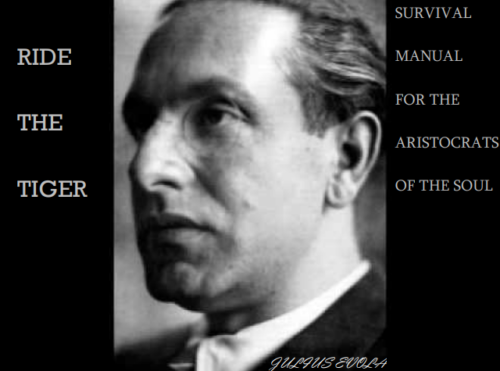
VJMP Reads: Julius Evola’s Ride the Tiger V

This reading continues on from here.

The 13th essay in Ride The Tiger is called ‘Sartre: Prisoner Without Walls’. This essay is very short – only three pages – and concerns itself with the attitude that one ought to take towards inherent freedom. Criticising Sartre’s conception of man as “condemned to be free”, Evola decries the idea that ultimate freedom is any kind of curse, describing this attitude as characteristic of the deep nihilism of the 20th century.

Sartre’s conception of life is, in Evola’s estimation, a fundamentally negative one in that one considers the human experience akin to being a prisoner without walls. For Evola, this maudlin attitude is not appropriate, for it brings with it suffering. Something more is needed.

The 14th essay is called ‘Existence, “Α Project Flung into the World”‘. Here Evola continues to outline his misgivings with existentialism, despite giving it credit for accurately describing the dilemma of the human condition. Existentialism also gets credit for moving beyond primitive solutions like religion and scientific materialism.

As mentioned previously, Evola’s main problem with existentialism is metaphysical. The varieties of existentialism that do not give a satisfactory answer to metaphysical questions are no better than nihilisms. For this reason, the maxim “existence precedes essence” must be rejected. A person is that which transcends the mere physical form; if not, existence is nothing more than morphing randomly into various shapes. Transcendence cannot and will not be found outside the self.

The idea of anxiety over lost choices, opportunities and paths is, for Evola, ridiculous – and materialistic. The transcendent principle ought to exclude such thoughts. The nature of things cannot usefully be said to be sinful in and of itself. Much better to adopt the ancient Greek view of cultivating appreciation of the beauty of limits and form.

The 15th essay is called ‘Heidegger: “Retreating Forwards” and “Being-for-Death” – Collapse οf Existentialism’. The problem with Heidegger, Evola contends, is that his philosophy is motivated principally by a fear of death, in particular the death of the false self, or I. It’s better to disavow identification with the I, and to choose instead to identify with the transcendent, than to march to the drumbeat of death.

Here Evola continues with his criticisms of existentialist philosophy, accusing it of promoting a bleak, sombre and submissive attitude towards the world, one of resignation. Jaspers offers no other solution but faith. In fact, none of the existentialists have offered a satisfactory solution to the problems of nihilism as outlined by Nietzsche. “Existentialism is a projection of modern man in crisis”.

Neither is faith satisfactory, for that is essentially no different from the “Catholic existentialism” that has already been rejected on account of positing the transcendent outside oneself. It must be accepted that God is dead. Transcendence ought not be conceived of as the ‘other’; rather one should begin from the point of transcendence and consider the world from that perspective.

In any case, all of these men, religious and existentialist alike, are written off as petit bourgeoisie, writing about petit bourgeoisie concerns. The real philosophy comes from the men who have survived the “storms of steel and fire” of the early 20th century: those who have been tested. These are the men who understand the true nature of things; they understand “being able to be destroyed, even, without thereby being wounded”.

*

If you enjoyed reading this essay, you can get a compilation of the Best VJMP Essays and Articles of 2017 from Amazon for Kindle or Amazon for CreateSpace (for international readers), or TradeMe (for Kiwis).
Masculine Conservatism and Feminine Conservatism

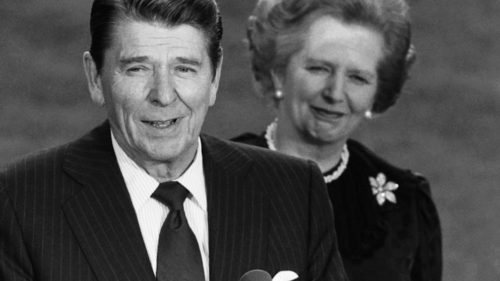
One male, one female, but both represented a very masculine, active conservatism

Contemporary political philosophy suffers from an inability to accurately define terms. Political discussion has been so inundated with lies from all quarters that no-one any longer knows what anyone else is really talking about. This essay makes an attempt to make sense of conservatism by teasing it apart into recognisably masculine and feminine strands.

Like its synonym ‘right-wing’, conservatism is usually equated with a will to keep things the same as they are now. This seems to be naturally implied by the root verb ‘to conserve’. In most cases, this makes a lot of sense. The balance of power has traditionally been held by men, by the religious and by the wealthy, and these are generally the same people who promote and support conservatism.

In some cases, however, it makes less sense. Why, for example, would a conservative support mass immigration to America of low-skilled Mexican workers? Such an action not only fails to conserve the status quo but actively disrupts it. Why also would a conservative support the introduction of government surveillance measures like the PATRIOT Act? Such an action also marks a distinct change of attitude on the part of the American Government towards the people.

One solution to this dilemma is to think in terms of vertical or horizontal dominance hierarchies. Another potential solution follows from the understanding that conservative attitudes divide neatly into two major strains. The basic dichotomy could be considered between active conservatism (or masculine conservatism) and passive (or feminine) conservatism.

The core tenet of masculine conservatism is that people have a moral obligation to take action to impose order; in other words, an obligation to take action to reduce chaos. This is a missionary, evangelical form of conservatism in that it goes out into the world looking for disorder to impose itself upon. It’s an extremely popular sentiment in the New World, because the immigration histories of these countries selected for people willing to impose order upon chaos, on account of that the New World had so much chaos.

Done correctly, this masculine conservatism can lead to a person being able to maintain a complex system at high performance for a long time. A doctor who makes a diagnosis is operating to reduce the chaos in their patient’s body; a mechanic who makes a diagnosis is operating to reduce the chaos in their client’s vehicle.

The core tenet of feminine conservatism is that people have a moral obligation to not change anything, to maintain the status quo. This strand of conservatism is the one that makes appeals to “tradition” so as to justify not changing anything. Change is here seen as disruptive, destructive, stressful – and fundamentally unnecessary.

In an ideal situation, these two impulses overlap so much as to be indistinguishable. After all, if things are already in good order, there’s no pressing reason to change anything, and therefore a desire for the status quo is a desire for good order. Moreover, in such a situation, a desire for good order is a desire for the status quo, so a conservative can simply copy what their forebears did to succeed.

In the situation we have inherited, these two impulses are far away from harmonious co-operation. Another way of expressing this disharmony is to consider it in terms of fault lines within the conservative movement. Anti-conservative forces might target the loci of these divisions between masculine and feminine with agitprop intended to further the divide.

There are two ways to do this. The first is to draw attention to a situation of persisting disorder, because one half of the conservatives will want the situation to persist and the other half will want the disorder to be resolved. The second is to draw attention to a situation of disintegrating order, because one half of the conservatives will see this disintegration as a natural process and the other half will want to retain that which is at risk of being lost.

The two strands of conservatism that this essay considers masculine and feminine are extremely powerful – if they work in unison – but, if they don’t, the overall system is fragile and highly vulnerable to direct pressure from the outside.

*

If you enjoyed reading this essay, you can get a compilation of the Best VJMP Essays and Articles of 2017 from Amazon for Kindle or Amazon for CreateSpace (for international readers), or TradeMe (for Kiwis).

Verticalisation and Horizontalisation

Dividing the political spectrum into two poles depending on a person’s attitude to sociobiological dominance hierarchies can be more instructive than left and right

There are many competing theories of political spectrums. The best known is left-right, but libertarian-authoritarian and traditionalist-progressivist are two popular others. This essay contends that the most instructive way to look at the basic political division is to split it into what we call verticalists and horizontalists, based on crude biopolitical sentiments.

These terms refer not to a person’s ideal distribution of resources or land, or to the status quo or change, but to a person’s preferred form of social dominance hierarchy. In this sense, verticalists correspond to what has traditionally been called a “masculine” kind of politics while horizontalists correspond to what has traditionally been called “feminine”.

Verticalists also overlap heavily with what has hitherto been considered the right, and horizontalists with the left, but it isn’t as simple as this.

The basic belief of a horizontalist is that the dominance hierarchy ought to be flattened, or at least that the ideal dominance hierarchy is a relatively egalitarian one. This entails that no-one can exalt themselves too far above the others or above the average. The basic belief of a verticalist is that it is morally permissible for an individual to acquire many, many times more wealth or power than the average person.

Horizontalists are therefore much like mainstream leftists when they contend that CEOs should not be allowed to earn 500 times more than the most lowly-paid workers at their company, or when they express a dislike of feudal monarchy. Their core sentiment seems to be a belief that people should not be allowed to wield power over others, and that to do so is obscene.

Verticalists don’t feel the same sense of injustice that horizontalists do at the thought of a dominance hierarchy in which some positions carry much, much more power or prestige than others. They are much more comfortable with the thought of a person having exclusive control over an area, such as a fascist dictatorship.

There are essentially two types of verticalists.

The first are those who think that they themselves are the natural inheritors of the top of the dominance hierarchy. These people are the natural alphas. Usually they are distinguished from the others by being exceptionally vigorous, strong or intelligent. Sometimes their distinction is a matter of will.

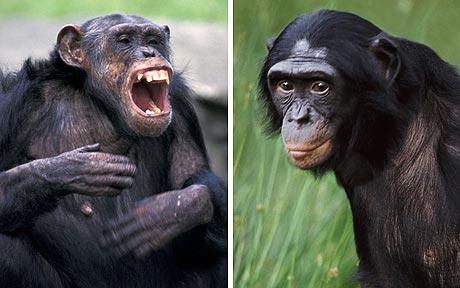
The second are those who want to serve the first group, in the hope that some of the spoils of war fall to them. These are the natural betas. If one observes the natural dominance hierarchies that occur in chimpanzee troops, it is clear that this alpha-beta vertical distinction is a naturally occurring phenomenon in social creatures.

Horizontalism draws its power out of a discontentment with this primitive way of things. Some people naturally have a moral objection to others wielding great amounts of power. Horizontalists tend to think that such a thing is obscene, and that “the people” (i.e. the betas) need to work together to avoid being exploited out of their fair share of the proceeds of their labour.

Horizontalisation probably came about when some early primate realised that the alpha male of their tribe was preventing them from accessing reproductive opportunities by means of extreme jealousy and possessive violence over the tribe’s females, and that if our early primate teamed up with a like-minded they could collectively eliminate the alpha male and thus gain access to those females.

Over time, this created a selection pressure in favour of those males who reacted angrily to other males asserting dominance and control over large amounts of resources. In other words, there was a selective pressure in favour of those who believed in horizontalism.

There are also two types of horizontalists. The first are those who do not themselves think they are the natural inheritors of the top of the dominance hierarchy. These people are similar to the beta males who become verticalists, only they have chosen another strategy. Instead of trying to work with and for the alphas, they aim to supplant them and become the new alphas themselves.

The second are those who promote horizontalisation for idealistic reasons, despite being in the upper half of the dominance hierarchy themselves. These people are often very intelligent and have taken a particularly long-term view, because a long-term view will naturally suggest that one should focus on co-operation rather than competition. These people are the natural nation-builders and philosopher-kings, and are extremely rare.

A verticalist generally has no problem stating that one thing is more valuable than another. For example, they might be comfortable saying that Person A is a great man and that Person B is a piece of shit. A horizontalist, on the other hand, is disinclined to show great respect to Person A and is also disinclined to show great disrespect to Person B. In this sense the verticalists are more masculine and the horizontalists more feminine.

Verticalism differs from the popular conception of right wing in several ways. A verticalist has no problem with a person smoking cannabis, for example, because that doesn’t impact the individual verticalist’s ability to get ahead. Whether or not cannabis is legal doesn’t make it harder or easier for a verticalist to get ahead from their own effort, so they won’t support it for the sake of mere tradition like a conservative, or for the sake of destroying poor and non-white people like a right-winger.

Also, verticalists don’t tend to be either racist or misogynistic. A verticalist doesn’t have a problem with respecting a black man or a woman as long as those people are capable of distinguishing themselves from the plebs by their own merit. In this manner, there is an overlap between verticalism and Luciferianism.

Conversely, horizontalism differs from the popular conception of left wing in that it doesn’t need to posit a new ruling class in the form of any kind of global authority. A horizontalist feels absolutely no need to crate a global hierarchy in which an entity like the United Nations wielded great power over the peoples of the Earth. Horizontalists are fairly anarchistic in that sense.

Furthermore, a horizontalist would likely oppose mass immigration from poorer countries, for the reason that this tends to form an underclass of people who aren’t really a part of the nation, and an overclass of wealthy landowners who benefit handsomely from the cheap labour and increased demand for housing. Horizontalists might therefore have more in common with national socialists than with regular socialists or Marxists.

Alchemically, all of these positions relate to the four masculine elements. The basic verticalist dichotomy can be said to reflect the basic feminine-masculine distinction between clay and iron, between the passive, receptive yin and the active, outgoing yang. The horizontalists are themselves split into the false egalitarians of the silver and the true philosopher-kings of gold who intend to lead humanity out of the brutality of biological dominance hierarchies.

*

If you enjoyed reading this essay, you can get a compilation of the Best VJMP Essays and Articles of 2017 from Amazon for Kindle or Amazon for CreateSpace (for international readers), or TradeMe (for Kiwis).