

Anarcho-Nihilism

There are two popular strains of anarchism that are often conflated. The first accords with the more traditional definition of anarchy as “without rulers”; the second is when a person supports anarchy just because they want to see the world burn. This essay gives a name to this latter tendency, with the intent of making a clear distinction: anarcho-nihilism.

It isn’t easy for most people out there to tell the difference between an anarchistic sentiment against being ruled and anarcho-nihilism.

For one thing, a sentiment against being ruled inevitably brings a person into conflict with the ruling class, who tend to think that they have achieved their position by divine right. The ruling class can usually only hold its position by creating the perception that they are uniquely qualified to rule. Someone who is against being ruled, and someone who just wants to trash everything, are therefore similar in that they both oppose the ruling class.

This means that both usually find themselves socially outcast for not following orders in a sufficiently timely and enthusiastic manner.

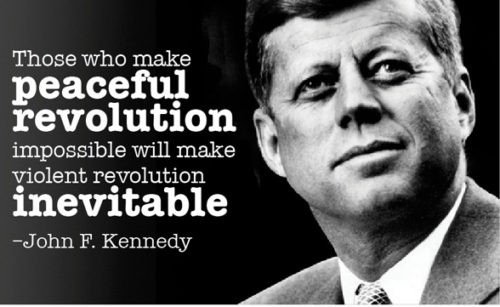
For another thing, both anarchists and anarcho-nihilists accept that there is going to have to be a lot of destruction before this shit can get sorted. The Establishment is well entrenched: they own all the media, all the politicians, and all the lackeys with guns. Their fingers are in every pie, and any efforts to prise them out will be violently resisted, sometimes pre-emptively. There is going to have to be a lot of destruction.

The major difference is that the anarcho-nihilist has no plans for what to do after the destruction phase. That phase – the building and creating phase – is not important to them, in much the same way that neither building nor creating appeal to nihilists. What motivation could one have to build anything when no meaning exists?

A normal anarchist will have thought things through a bit further than just the destruction phase. Indeed, if the ‘anarcho’ prefix denotes the complete destruction of the current system, then the suffix denotes what a person’s preferred next move is. An anarcho-capitalist wants to get rid of the current system so that they can make money, an anarcho-communist wants to get rid of the current system so that they can co-operate, a mutualist wants to get rid of the current system so that they can trade, and an anarcho-homicidalist believes that humans know intuitively how to govern themselves fairly and how to build a society if not impeded by enslavers.

Someone who hasn’t thought things through this far might be an anarcho-nihilist.

Often, an anarcho-nihilist will be driven by a peculiar bitter resentment, sometimes because of a personality disorder. The fact that an immediate shockwave of destruction would cause a tremendous amount of misery is not a drawback to such a person – indeed, it could be the whole reason for why they support it.

The real difficulty with anarcho-nihilists, from an anarchistic perspective, is that no bonds of any kind can be formed with nihilists. In order for people to have a common bond of any kind, they must have at least one belief in common. Someone who believes in nothing is hard to trust – after all, what’s stopping them from turning on you like a wild animal?

Another way of making the distinction is that an intelligent anarchist will strive to find the correct balance of inducing chaos to the establishment and building a new, voluntary and peaceful order. The anarcho-nihilist doesn’t worry about order: they just want chaos and more chaos for the sake of it. There is no order that they will agree to.

The problem with this attitude from a practical point of view is that some laws are in place to contain natural disorder, they just go too far. For instance, a law proscribing a side of the road that traffic has to drive on is hardly tyrannical. The problem arises when you are fined $2,000 for harmlessly crossing the centre line by six inches when there was no oncoming traffic.

Overcoming anarcho-nihilism is extremely difficult, because it is not usually a position taken because of political philosophising – it’s usually a position taken because of a spiritual failure. Therefore, the path out is not obvious.

*

If you enjoyed reading this essay, you can get a compilation of the Best VJMP Essays and Articles of 2017 from Amazon for Kindle or Amazon for CreateSpace (for international readers), or TradeMe (for Kiwis).

VJMP Reads: David Seymour’s Own Your Future V

A Liberal Vision for New Zealand in 2017

This reading carries on from here.

The fourth chapter in Own Your Future is ‘Education’. Seymour opens this essay with a mention of Vanguard Military School, the establishment of which he credits to ACT. This is an “exceptional” story because New Zealand’s education system is “a mess”. Although he writes that no-one begrudges the $12,000,000,000 yearly cost of educating New Zealand’s 800,000 students, many people have problems with the outcome.

New Zealand has a lot of problems because people aren’t literate enough, Seymour says. This is why employers “prefer a stream of immigrants”. There is a long, rambling passage here where Seymour touches on a variety of themes, including having a go at Hekia Parata. Apparently New Zealand is going backwards in PISA rankings. It’s hard to tell who Seymour is blaming for the mess in question.

Without a hint of irony, Seymour writes that “the outcomes have got worse for kids from poorer backgrounds”. Most Kiwis could tell him that the reason for these worsening outcomes were the policies of the Fifth National Government, which raised GST on those kids from poorer backgrounds while cutting other people’s taxes, and cutting services to those same poor.

What Seymour pushes here is the idea of a variety of schools with different cultures, which he believes will better suit the individual needs of the various students than the current “one size fits all” model. It follows from this that the Government is not the best provider of education services, because they don’t tend to tailor things to the individual needs of the citizens.

Much of this section reveals the specifically Auckland-centric focus that ACT has always had, and which leads it to get very, very few votes outside of that city. The logic behind the school zoning system is dissected at length, but this only really applies to Auckland and, to a small extent, Christchurch and Wellington. Perhaps Seymour is writing more as Epsom representative here.

True to form as a politician, Seymour demands that teachers be better trained and better resourced, but doesn’t explain where this money will come from. Despite this budget hole, it’s hard to deny that Seymour has several good points here. The cultures of individual schools are usually too sclerotic to adjust to the changing needs of pupils, so they could be supplemented by Partnership Schools that more specifically meet the needs of their students.

These Partnership Schools would be run more like private schools and could be easily closed down at any time if they were underperforming. Seymour touts this as a major feature, on account of the difficulty with doing so in the public sector. Students would be best served by flexibility in the educator sector, which is an intelligent way of increasing value without spending more money.

*

If you enjoyed reading this essay, you can get a compilation of the Best VJMP Essays and Articles of 2017 from Amazon for Kindle or Amazon for CreateSpace (for international readers), or TradeMe (for Kiwis).

VJMP Reads: David Seymour’s Own Your Future IV

A Liberal Vision for New Zealand in 2017

This reading carries on from here.

The third chapter in Own Your Future is ‘Superannuation and the Gold Card’. This essay starts with a dig at Winston Peters, who was once investigated by the Serious Fraud Office. Seymour doesn’t like the wasteful spending he sees in the Gold Card, especially as many of the recipients of the largesse of it are already millionaires.

Universal super is set to cost us around $20,000,000,000 per year by 2031, Seymour informs us. Here he makes a play for younger voters by having a go at the Baby Boomers. He references the suspicion of the younger generations that they aren’t going to get the same sweet pension deal that their parents got – after all, we didn’t get the same free tertiary education that they got.

He raises the spectre of a Greece-style economic apocalypse happening as a result of a debt spiral triggered by having to pay these lavish pension funds up to and past 2060. It’s hard to deny Seymour’s maths, as it appears to be true that we will soon reach a point where there are only two workers for every pensioner (as opposed to today’s four).

The options, as he sees it, are: raising taxes by about a quarter or raising the retirement age, neither likely to happen because young people don’t vote. Seymour here criticises both John Key and Bill English for lacking the courage to deal with the issue, and makes an entreaty to the young to not become disengaged from politics.

This seems baldly hypocritical, considering that ACT spent all of the last nine years voting alongside the National Party, who are the party that represents all the Baby Boomers. As Dan McGlashan showed in Understanding New Zealand, the vast majority of Baby Boomers vote for National, whose efforts to fuck over the young were eagerly supported, for nine years straight, by all ACT MPs including David Seymour.

National closed down rape crisis centres and gutted mental health funding, leading to New Zealand having the developed world’s highest youth suicide rate, and Seymour supported them all the way, despite that many young people voted ACT in 2014. He does not acknowledge that this may have contributed to the low turnout rate among the young.

True to neoliberal form, Seymour’s solution to this looming pension crisis is to squeeze some extra labour out of the working class, by raising the age of retirement to 67, and soon. No means testing, despite that 25% of people claiming the pension are also either claiming a salary or run their own business (as admitted by Seymour himself) and at that point the chapter abruptly ends.

One realises here that Seymour is primarily trying to win votes from people too young to know anything other than neoliberalism. Old people are too conservative to vote anything other than National or sometimes New Zealand first, and it’s the young and well-heeled (who don’t expect to be reliant on a public pension in old age) who are the most amenable to Seymour’s suggestions here.

*

If you enjoyed reading this essay, you can get a compilation of the Best VJMP Essays and Articles of 2017 from Amazon for Kindle or Amazon for CreateSpace (for international readers), or TradeMe (for Kiwis).

The Solution to the Authoritarian Right Wing is Not the Authoritarian Left but Libertarianism

The answer to right-wing authoritarianism is not more authoritarianism only with a softer face

The Western World is still recoiling at, but fascinated by, the horrors of World War II. Consistent with Francis Fukuyama’s Great Pendulum Theory, we have been looking for solutions to the problems of life that led us into World War II and this has pushed us to the far-left. This essay will argue that the solution to the excesses of the authoritarian right is not authoritarian leftism but libertarianism.

The authoritarian left can be found crying crocodile tears over all kinds of suffering that it blames on the right, in the hope that they can gather more power as a result of the ensuing outrage. Characteristic of the authoritarian left is that they make the same critiques of capitalism and verticalised social structures as the libertarian left, but they offer radically different solutions.

Instead of more freedom for good people, the authoritarian left seeks less freedom for bad people. It sounds like it should lead to similar results, but it doesn’t. Less freedom for good people is one obvious side-effect, but this is considered merely a bit of collateral damage. Those who lose out will understand that such measures were necessary for the sake of the greater good – and if they don’t understand this we will force them to.

Another flaw of the authoritarian left is their bloodlust for punishing those who they consider to have transgressed the moral code. In this sense, the authoritarian left is no less vicious than the authoritarian right, only they purport to brutally punish people to further an agenda of horizontalism instead of one of verticalism. Anyone who tries to elevate one person or group above another is to be ripped down.

Right now, the wet dream of all authoritarian leftists is control of public speech, especially on social media. There is nothing that they would like more than to bring in “hate speech” laws governing social media discourse, so that anyone who expressed a politically incorrect sentiment would be harassed by the Police. Their logic is that if the people were forbidden from expressing certain dangerous ideas then those ideas would become less widespread, thereby dispelling the danger.

The real problem with authoritarian leftism is that the people promoting it are also promoting authoritarian solutions, which tend to mutate back into authoritarian rightism before anyone realises it. As mentioned above, the authoritarian leftists tend to make accurate and fair criticisms of right-wing policy – the problem arises when their recommended response to those criticisms is to centralise more power in their own hands.

The real solution to the problems of the authoritarian right is libertarianism, whether of the left or the right variety. That some on the libertarian left are unwilling to concede this point is a real danger. If the libertarian left is unwilling to co-operate with the libertarian right to oppose authoritarian solutions, they will find the authoritarians co-operating to split the libertarians in half.

Currently, there is a large risk that the extreme, authoritarian right will come back to prominence as a consequence of the social unrest brought about by mass Third World immigration into the West, especially Europe.

The authoritarian left’s solution to this problem is to “stop bigotry” by cracking down on what they deem “hate speech”. Because the dogma has it that all human groups are precisely equal in all ways, any economic disparity between one group and another must come from the malicious efforts of the wealthy group to undermine and impoverish the poor one. Therefore, Third Worlders can only be poor and violent because of prejudice, which must then be stamped out.

The problem with this is, if and when the authoritarian right comes back into power, they will have all these hate speech laws already on the books and a population conditioned to accept gross abuses of state power in the service of some spurious link to a greater good. They might even have – worst of all – a population desperate for change, baying for blood and with hate speech laws on the books. Then it’s a simple matter of adjusting the definition of hate to “speech against nation/race/ruler” and we have another genocide on our hands.

Beating the authoritarian right will require that we intelligently encourage avenues of freedom that take people away from the left-authoritarian/right-authoritarian cycle. If we love freedom more than we love our own delusions that we can perfect the world by force, then we can accept that working towards libertarianism is a worthwhile goal, regardless of whether it’s left or right in form.

This will require that the ruling powers guarantee the cognitive liberty of the people. In particular this means to keep the Internet free, to keep artistic expression unrestricted, to keep the press free and to refuse all punitive forms of drug prohibition.

*

If you enjoyed reading this essay, you can get a compilation of the Best VJMP Essays and Articles of 2017 from Amazon for Kindle or Amazon for CreateSpace (for international readers), or TradeMe (for Kiwis).