

Category: pisstake
Should New Zealand Legalise Cannibalism Out of Respect For Maori Culture?
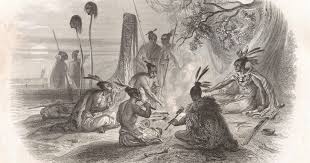
In recent years, people have been asking hard questions about the effects of Western colonisation on the New World. Many moral values that were taken to be universal are now being re-evaluated in the new light of Western oppression. Eventually, New Zealand will need to ask itself: were the British wrong to abolish cannibalism?
In British culture, there is a massive taboo around cannibalism. The act is considered even lower than barbaric, more befitting of an animal than of a human being. Famous cases such as the Sawney Bean family horrify British people even to this day. The taboo can be traced back at least as far as Homer and is universal in the West.
In Maori culture, before British contact, there was no such taboo. Cannibalism was rife. The act of cannibalism was, as it has been all around the world, an extremely effective black magic ritual, in which the cannibal convinced themselves that they had absorbed the power of their victim. This ritual is effective for the simple reason that it increases the ego of the cannibal and makes them more formidable in the realm of iron magic. Moral considerations didn’t come into it.
So a couple of questions have to be asked: if cannibalism was an accepted part of Maori culture (in that it was practiced by many tribes over the whole country), did the British really have the right to suppress that particular cultural expression? And, if they didn’t have that right, are we obligated to re-legalise cannibalism out of respect for Maori culture?
After all, cannibalism may have been an effective method for keeping the tribe strong. Because it was mostly the old, children and those defeated in battle who got eaten, it could be argued that this practice served to keep the Maori genepool free of weakness. If so, who are white people to impose their own moral framework over a useful practice?
The major objection to cannibalism is that it is almost never consensual, and arguably could not ever be with someone of right mind, for the simple reason that it goes against basic self-preservation instincts. Getting cannibalised in New Zealand usually meant that one’s brains were first dashed out with a patu or taiaha, and it’s hard to legalise this for obvious reasons.
Another major objection is that many Maori tribes actually opposed the practice of cannibalism, and were happy to welcome the British settlers, who not only also opposed it but who had muskets to make their opposition count. The Ngati Porou of the author of this piece is one such example. Thus is could be argued that cannibalism was never a universal Maori practice and therefore not an integral part of the culture.
However, these objections have to be considered in the context of modern technology. As Sir Apirana Ngata said: “Ko to ringa ki ngā rakau a te Pāhekā” (“Your hands to the tools of the Pakeha”). Well, now ngā rakau a te Pāhekā include machines that can grow animal flesh in laboratories, and cheaply enough so that a lab-grown steak can be produced for $20. It won’t be long until we can cheaply grow human flesh in a lab.
If human flesh can be grown in a laboratory, this would get around the problem of people having to be killed into order for cannibalism to be possible. This would get around the moral objections so far presented against the legalisation of cannibalism. If there are then no remaining objections to legalising cannibalism, one is forced to conclude that the balance of liberty ought to fall on the side of established precedent.
Because cannibalism has been practiced in these isles for much longer than English has been spoken, it seems natural to conclude that it ought to take precedent over British settler values like not practicing cannibalism. Therefore, the New Zealand Government ought to take action that clearly demonstrates its respect for Maori culture, and make the practice of cannibalism legal.
*
If you enjoyed reading this essay, you can get a compilation of the Best VJMP Essays and Articles of 2017 from Amazon for Kindle or Amazon for CreateSpace (for international readers), or TradeMe (for Kiwis).
Should White People Be Quarantined From Other Races?

Despite decades of public information campaigns fighting racism, the average income of most non-white ethnicities remains lower than the average income of white people in white countries. Because it is axiomatically true that all groups of people are identical in all psychological attributes, we know that this income disparity can only have come about from white people maliciously denying economic opportunities to those groups. This is proof that white people cannot live equitably with other races.
The time has come for the world to ask itself: do we need to protect the innocent races of the world from the infinite evil of the white man? In other words, should we quarantine white people from the rest of the Earth?
White people gave us Adolf Hitler, so it is clear that they are the human personification of evil. Everywhere they go they bring poverty, chaos and misery. The American and Australian continents were booming with wealth and prosperity before the white man came and reduced them to the impoverished hell-holes they are today. Violence was unknown in Africa before the white man set foot there.
To allow the non-white peoples of the world to live freely among white people, as they currently do in the West, is tempting fate. We all know that it’s only a matter of time until the natural viciousness of the white man stirs him into a genocidal bloodlust and he ends up stuffing billions of people into gas chambers. Getting rid of the white man completely is a futile dream, because his vengeful and aggressive nature means that such efforts can only backfire.
What we need to do to protect the innocent races from the evil of the white man is to declare that the white-majority countries in Europe, North America, Australia and New Zealand must remain so for the sake of not provoking a genocidal chimpout. In short, non-white people should not be allowed to live in white countries – for their own sake.
The world needs to accept that white people are too dangerous to expose other people to them, and this is especially true for Muslims and Africans. Immigration of these two groups must be immediately curtailed.
Every time a Muslim slaughters a bunch of people in the West, white people are frothing at the mouth to condemn the Muslim, and seldom make reference to the fact that terror attacks are merely karmic payback for the white man’s historical reign of terror.
Likewise, the fact that black Americans rape white women at a vastly higher rate than white Americans rape black women is evidence that the inherent racism of the white man is so strong, so all-pervading, that not even when he loses his mind in a sexual frenzy does he consider black women worth copulating with. The white man is only capable of viewing the black woman with disgust, in contrast to the warm will to engage that black men express towards white women.
In summary, it should be declared that Europe, North America and Australasia are effectively already lost to the rapacious lust of the white man, and that the risk of physical harm to other races is so great that they must not be allowed to set foot in these areas. Another Holocaust is inevitable, so the current Western intake of refugees and third-world immigrants could be likened to lambs going to the slaughter – are we not obligated to intervene?
The white man is to humans what polar bears are to bears: a ruthless, mindless killer. All of the other races of this Earth only want peace and goodwill. For the sake of the physical safety of those other races, they must be prevented from wandering into countries populated by white people.
*
If you enjoyed reading this essay, you can get a compilation of the Best VJMP Essays and Articles of 2017 from Amazon for Kindle or Amazon for CreateSpace (for international readers), or TradeMe (for Kiwis).
How To Fix All of Cricket’s Problems At Once: Introducing the T0 (T-Zero) Format
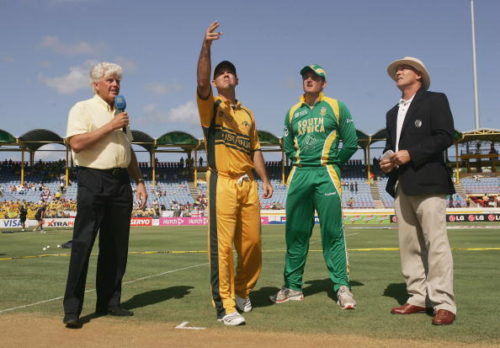
T20s were invented to fill a specific niche in the cricket market. It was believed by some great, visionary minds that cricket fans were turning away from ODIs because of the “boring” middle overs between ten and 40. Apparently these 30 overs had too many balls that resulted in neither a wicket nor a boundary, causing viewers to switch off from a lack of action. This essay proposes that we reduce limited overs cricket by a further 20 overs.
There have been experiments with reducing cricket matches to less than 20 overs, such as the recent T10 tournament in Sharjah. Some brave souls have talked about T5 cricket, but what is being proposed here is the advent of zero-over cricket, hereby dubbed the T0 (pronounced “tee-zero”) format. It’s technically a form of limited-overs cricket in the sense that overs are, indeed, acutely limited.
Many people say that Tests are boring because the result is often a foregone conclusion. Over five days, it’s as likely as anything ever is in sport that the most skilled side wins. This contrasts sharply with soccer, and with T20 cricket, because these sports have a much greater luck component. This luck component means that weaker teams can upset stronger ones more often, making for a much more engaging spectacle.
Why not maximise the thrill of potential upsets by deciding the match at the coin toss?
Purists will likely dismiss the idea at this stage, pointing out that reducing the contest to zero overs also reduces the batting, bowling and fielding components of the game. While this is a fair criticism, it needs to be balanced against the fact that the boring aspects of the game would also be reduced. T0 cricket completely does away with the notion that the players are just going through the motions; every moment of every game would be crucial to the outcome.
In all, there are at least three major reasons to support the expansion of T0 cricket. Each of these reasons solves a major problem with the current state of the longer formats of world cricket.
One of the foremost is that it would enable cricket to be expanded into markets where people have not been able to play because of the expense. Cricket is a fairly expensive sport to play, especially when compared to rugby or soccer, and this puts an upper limit on its market appeal to the poorer demographics of the world. Many interested people just don’t have the spare cash for several bats, balls, a set of pads, box, helmet, thighguard etc.
In T0 cricket teams don’t need anywhere near as much equipment as they need in the longer formats – for some players a uniform would suffice. Moreover, maintenance of that equipment is also reduced to a minimum on account of being used less often than in the longer formats of the game. Limiting the equipment factor will also have the effect of reducing gear envy among teammates.
The effect on wear and tear on the players’ bodies is another problem solved by T0 cricket. England head coach Trevor Bayliss was in the news recently for saying that T20 internationals should be dropped from the schedule to help with player burnout. Bayliss contends that the cricket schedule is so jam-packed nowadays there is no time for players to rest.
T0 cricket takes away the physical exhaustion factor. By minimising the incidence rate of high-risk physical exertions, T0 cricket also minimises the chances of injury or burnout. Also, with awareness growing about the long-term dangers of concussions, mothers of young keen-on-cricket children will be relieved to hear that T0 cricket offers very little risk of players getting hit in the head by a hard, rapidly moving ball. The biggest risk is getting a coin in the eye.
Modern life has a peculiar obsession with equalising conduct between the sexes, and T0 cricket can proudly claim to have solved the gender problem. At the moment, men and women can’t really play cricket together because of the fact that men are much taller and stronger, which provides immense advantages when it comes to bowling a ball fast or swinging a bat hard. The differences are so vast that leagues currently have to be separated by gender.
Many would argue that these gender differences, like the personal differences in height and muscle mass, make the game of cricket inherently unfair. Instead of everyone having a reasonable expectation of being able to pull off a win, the longer forms of cricket reduce batting to a mere contest of strength, timing and hand-eye co-ordination, and bowling to a simple process of repeating a single action with maximum shoulder leverage.
T0 cricket would provide a truly level playing field, as all players would be limited to their own ability to pick which side the coin was going to land on – a tricky skill to master even for the most dedicated or gifted athlete.
In summary, there are a number of reasons to think that this revolutionary proposal could rejuvenate the public’s appreciation for the sport. T0 cricket offers the perfect solution for busy people in our modern world who don’t have copious amounts of time to set aside to watch a match, and is surely the future of our beloved game.
*
If you enjoyed reading this essay, you can get a compilation of the Best VJMP Essays and Articles of 2017 from Amazon for Kindle or Amazon for CreateSpace (for international readers), or TradeMe (for Kiwis).