

Category: cannabis
What Does Julie Anne Genter’s Medicinal Cannabis Bill Actually Say?
With Julie Anne Genter’s Misuse of Drugs (Medicinal Cannabis and Other Matters) Amendment Bill in the Parliamentary Ballot, our ruling class is being forced to consider the question of cannabis law reform. The short of it is that the bill, if enacted, would finally legalise medicinal cannabis in New Zealand, some two decades behind California, Alaska, Oregon and Washington. This article looks at the precise details of the bill.
The striking thing about the bill, on first glance, is its brevity. There are only six sections.
Clause 5 of Genter’s bill means that cannabis will still be illegal – this bill provides for neither the decriminalisation or legalisation of cannabis (with the exception of CBD – see below). However, this clause inserts another clause, 9A, into the Misuse of Drugs Act 1975, which provides for cannabis to be legally grown for medicinal purposes, subject to a “qualifying health condition”.
Clause 4 tells us what a qualifying health condition is. There are four different groups of conditions. The first three are straightforward: any terminal illness, any severe chronic disorder of the immune or nervous system and chronic back or other pain.
The fourth group of conditions is vague, probably deliberately left so. It is “any other medical condition that a medical practitioner certifies may benefit from supplementary plant cannabinoids”. This has the potential to vastly open up the range of conditions that can be treated by medicinal cannabis – but the decision will be made by medical practitioners, not by politicians.
Clause 9A.2 of the amended Misuse of Drugs Act would allow for any patient with a qualifying health condition, or a nominated support person, to “cultivate, administer, supply, or possess medicinal cannabis” for the purpose of the patient’s lawful use. This is the crucial clause, because it essentially makes it fully legal for a sick person to grow their own cannabis at home – which is just about all the medicinal cannabis community ever wanted.
Of interest to many medicinal cannabis users is that Clause 4.1(c) of Genter’s bill will remove the controlled drug status from CBD preparations. This means that the penalties listed in the Misuse of Drugs Act for various schedules of drugs will no longer apply to CBD. Essentially, this ought to make CBD preparations little different to any over-the-counter pharmaceutical that one might buy from a chemist.
This is an entirely reasonable move because CBD has no psychoactive properties – it does not produce the “high” that wowsers and do-gooders are so terrified of. It also will bring New Zealand into line with similar cultures – CBD is a recognised medicine in Britain, for example.
All in all, this bill, if enacted, would represent a stunning victory for the forces of cannabis law reform in New Zealand. It would make it legal for sick people to grow their own medicine at home as long as they can find a doctor to agree that their use of the plant would be medicinal. This will not only greatly liberalise the cannabis laws but does not go so far that it ought to provoke a counter-reaction.
*
Vince McLeod is a former Membership Secretary of the Aotearoa Legalise Cannabis Party and author of the Cannabis Activist’s Handbook.
When Cannabis Becomes Legal, Psychedelics Are Next
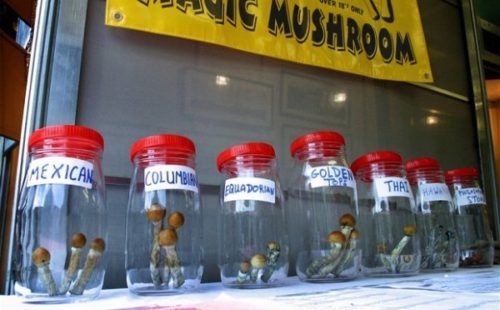
21% of Americans now live in states that have legal recreational cannabis, and an overwhelming majority of them live in states with legal medicinal cannabis. It’s now obvious to every honest person that cannabis is a medicine, and that the recreational positives of it vastly outweigh the negatives. However, even when cannabis law reform wins its inevitable comprehensive victory, it won’t be the end of the struggle for cognitive liberty.
The struggle for cognitive liberty has been waged for several thousand years. It arguably begun when the first ever conversational topic became taboo – perhaps when some alpha male enforced a rule that meant his tribe were forbidden to speak of a certain subject. Since then, the forces of cognitive enslavement have only become more aggressive and more sophisticated.
In the New Zealand of today, we plebs are not even allowed to smoke medicinal flowers such as cannabis, not even if one of us has a severe medical condition that causes them to suffer badly. We’re not allowed to because the deconditioning effect of cannabis means that all of the shameless bullshit and lies that the political class have pumped into our heads for decades would be at risk of getting rejected.
Because the conditioning that enslaves us is profitable to the ruling class – as it makes us compliant, submissive and obedient – it is worth money. It could effectively be considered capital. This means that allowing the population cognitive liberty to question their own psychological enslavement, and the means to achieve this liberty, is a risk to the accumulated wealth of the ruling class.
This is true of cannabis, and is true ten times over for psychedelics.
Ultimate cognitive liberty comes from the complete destruction of the conditioned mind (or programmed mind). The behaviours that have been deliberately programmed into us have, and are intended to have, the ultimate effect of making us unhappy, because there is nothing more profitable than human misery.
This refers to the programmed behaviours that the ruling class force into your head at school, in the workplace, and through the mass media. They do this because your slavery is profitable, and because it allows them to impose a form of order on society that is beneficial to them. For these two reasons, the ruling class opposes the legalisation of drugs that allow cognitive liberty to flourish.
For example, it is known well enough by the people who need to know such things that smoking cannabis makes a person less desiring of, and less attached to, material possessions. This is because it has the effect of reducing suffering, which makes a person less likely to work long hours to save the money necessary to buy the crap that they mistakenly believe will make them happy. So reduced suffering means reduced profits for the ruling class.
Therefore, maximum profitability demands that the cognitive liberty of the people who might question this brainwashing be minimised.
When the Western World was first exposed to the power of psychedelics, we just shat our pants. We were in no way emotionally mature enough to deal with an entheogen that reunited our individual consciousness with that of God. Reuniting one’s consciousness with God is the same as absolution from all suffering, and we were in no way ready for that.
However, now that many of us are mature enough to treat cannabis as what it really is – a deconditioning agent that alleviates psychological suffering – we are starting to become aware that much of the suffering we endure on a daily basis has been forced on us from positions above us on the dominance hierarchy.
This means that the further we can decondition ourselves, the less suffering.
This fact was understood by Kevin Saunders, who is the man behind the recent Californian ballot initiative that seeks to “exempt adults 21 and older from penalties of possessing, selling, transporting, or cultivating psilocybins.” Saying that the ballot is “a natural progression from marijuana legalization,” Saunders relates a personal story of overcoming heroin addiction as a result of the deconditioning effects of the drug.
Psychedelics have incredible potential for alleviating all suffering arising from psychological conditions that are caused by excessive conditioning, in particular anxiety, depression, post-traumatic stress and addiction. Many people are aware of this, though they are currently shunned by the mainstream narrative, which has been set (as mentioned above) by those who profit from the suffering.
Over time, however, the truth will out, and this means that the legalisation of psychedelics is an inevitability.
New Zealand Is Losing Badly From Our Refusal to Legalise Cannabis

With news that the North American cannabis industry grew by 30% in 2016 to reach a total of USD6,700,000,000 worth of sales, savvy investors in North America are scrambling to get a piece of the action. Stats show that the cannabis industry is projected to grow at a compound rate of over 25% until 2021, a faster pace of growth than even the Internet managed during the dotcom era.
New Zealand could easily become one of the world leaders in the cannabis industry. Almost nowhere in the world has the same combination of excellent growing conditions and a passionate and knowledgeable workforce. But, sadly, almost nowhere else in the world has a political class as cowardly and short-sighted as ours.
The New Zealand Government and our business elites constantly stress the importance of innovation for our future economic well-being. We are told everyday that we need to be smart and be one step ahead of our competition. Well, our competition is blazing ahead – 21% of the American population now lives in states where recreational cannabis is fully legal. This equates to over 60 million people.
The 4.7 million people trapped on our archipelago at the bottom of the South Pacific are losing out, and because of the incompetence of our political leadership we are falling further and further behind. Every quarter that passes means that our competition in North America advances their business practices further ahead of ours, meaning that it will be harder and harder for New Zealanders to compete in this market once we are finally allowed to do so.
For example, much of the new investment money flowing into the North American cannabis industry is establishing a capital base that, if we keep sitting on our hands, we won’t be able to compete with.
New technologies such as sensors that precisely measure the environmental conditions inside grow rooms, and computer software that makes adjustments to these conditions for the optimal possible plant growth, are being developed and rolled out in territories where it is legal to do so. New LED lighting technology is making it possible for growers to tailor the precise wavelength frequency of the light in their growing operation to the specific needs of the strain being grown.
These are examples of the kind of innovation that is generating money for people in more enlightened jurisdictions. New Zealanders could be competing with the North Americans for a share of this market, but we’re not allowed to.
We are also falling behind our competition when it comes to knowledge.
This is a double mistake because much of the knowledge of how to best produce a cannabis crop is in the hands of Maoris, who are the most desperate for new economic opportunities. As demonstrated by Hikurangi Enterprises, who have conducted a successful trial for growing hemp, many of the most knowledgeable Kiwis when it comes to cannabis are Maoris, who generally never believed the Government’s bullshit about cannabis anyway.
Ironically, a former Waikato farmer, John Lord, has used the agriculture knowledge that New Zealand excels in to become one of the heavyweights of this burgeoning industry in Colorado. He states openly that if New Zealand legalised cannabis like Colorado did five years ago, it would be worth thousands of jobs to the New Zealand economy (his estimate is 15,000). This is over and above the $400,000,000 we would save every year from costs relating to prohibition.
New Zealand is missing out on a plethora of economic opportunities in the cannabis market for no other reason than that our ruling class is backwards, cowardly and ignorant. It’s a terrible waste.