The Three Orientations of Bravery

Bravery is generally thought of as an ability to maintain calmness and composure in the face of danger, especially in the context of going forward into that danger for the sake of achieving some moral goal. It’s almost univerally thought of as a highly desirable personal quality and usually thought of as a masculine one. Originally bravery referred to physical courage, but, as this essay will show, there are at least three major perspectives that one can take on the concept.

These three perspectives translate into the perspectives of iron, silver and gold if one takes the approach of elementalism or esoteric alchemy. These can be thought of as forms of bravery that evolved from a successful resolution of the challenges that led to the previous form.

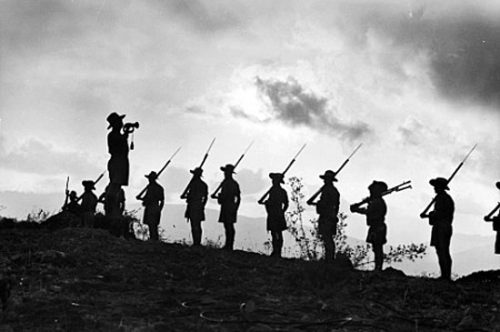
The form of bravery that corresponds to the iron is the simplest and most universally understood of the four orientations. Here the iron responds to upwards – a form of bravery that is oriented up the dominance hierarchy, towards one’s parents, one’s boss or the local king. Here, being brave is a matter of standing up to those who would try and hurt you.

This orientation of bravery is usually understood in a martial sense, and indeed we can see that Mars, which represents iron, gives us the etymological origin to words like ‘martial’. In the context of esoteric alchemy, ‘martial’ means ‘like the iron’ and therefore reflects a sense of being sharp, strong and unyielding.

As a warrior proves his bravery in the arena of iron (by whatever means) and succeeds in keeping dependents safe, he naturally comes to take on a shine, which represents his entry into the arena of silver. He learns that keeping the peace is as much a question of diplomacy as it is a question of beating the shit out of people, and he finds that he no longer needs to orientate himself up so much.

This form of bravery is the form of bravery that goes outwards. In the same way that a given volume of silver can cover more area, when hammered flat, than the same volume of iron, the bravery of the man of silver is that which orients itself over a wide area.

Once a great warrior comes to take responsibility for his tribe and becomes a chief, the next step up the hierarchy of silver is to take responsibility for a wider and wider geographical area. This is natural as long as he continues to shine, because this will cause people from far and wide to seek his judgment and mediation.

The bravery involved here is not so much slaying dragons and more a will to confront the real nature of the physical world and to strive towards its mastery. This means the real nature of the world in terms of its physics, chemistry, mathematics, biology and related disciplines, as well as statecraft.

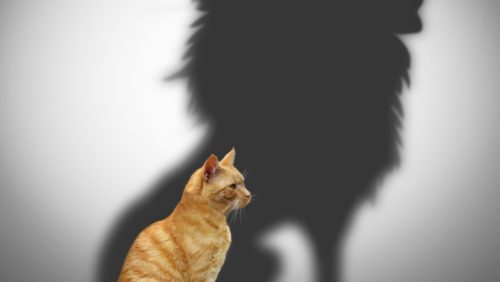
When the man of silver moves beyond his prime years for taking responsibility for his people, he enters the arena of gold. Gold represents the form of bravery that goes inwards. This is like gold because it is the rarest and most precious form of bravery.

A person who orients their bravery inwards learns to make peace with God, which is the hardest thing of all to achieve because this orientation has the fewest biological instincts giving it power. Biological instincts are not generally concerned with bravery in general, because that is a moral orientation – they are concerned with survival and dominance.

One reason why this form of bravery is so rare is that not everyone understands that it takes bravery to truly look within – but it does. It takes a lot of bravery to look into your own soul and to ask yourself if you are truly good or evil, or if such things really exist. It takes incredible bravery to really truly ask yourself if you can be comfortable saying goodbye to all of your attachments with this world upon the moment of your physical death.

The three orientations of bravery, therefore, relate to the challenges that naturally faced people in the historical past as they overcame the dangers of their environment.
Psychedelics Fill The Vacuum Left By The Destruction of Genuine Spirituality

In the West we have no common spiritual tradition. The closest we come is an empty imitation of the old myths and legends of a Middle Eastern tribe of genital mutilators. Where the Buddhists pray for an end to the suffering of all sentient beings and the Hindus know for certain that consciousness survives the death of the physical body, we Westerners are still mutilating the genitals of our baby boys and living in utter terror of the day our vital organs shut down. Luckily, there is historical precedent for solving these problems.

The natural spiritual traditions of Westerners were destroyed by successive waves of Abrahamic invasions, beginning when the Romans made the terrible mistake of taking in Abrahamic refugees. Allowing this evil supremacist tradition into the West had the effect of corrupting those tasked with maintaining these natural spiritual traditions, ending with their replacement by hollow lies.

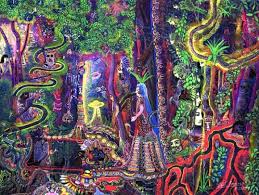
Before the Abrahamists invaded, Europe was rich in folk spiritual practices, with use of the amanita muscaria mushroom in the North and psilocybin mushrooms in the South allowing our forebears to reconnect with God. Not only did the ancients use psychedelics, but they did so frequently and with reverence, like any skilled practitioner would use them today.

The amanita muscaria folklore lives on in our stories about Santa Claus and his reindeer (Santa’s red and white costume represents the mushroom, his rotund build represents its roundness. The reindeer are there because Nordic shamans would potentiate the psychedelic effect of the mushroom by inducing reindeer to eat it and then drinking the animals’ urine).

The ancient Greeks partook in the ceremony at Eleusis once every mushroom season, and they did so with such reverence that to this day no-one is quite sure of precisely what the recipe of the kykeon was. This enabled them to see the world beyond in a way that had up until then been the province of exceptionally gifted shamans.

The Abrahamists destroyed as many of these traditions as they could, as Abrahamists have done everywhere in the world they have set foot, on account of the unique viciousness of that religious tradition. But they could not destroy the mushrooms themselves, no matter how severely they punished their use. And so it was only a matter of time until they lost their grip and the folk spiritual traditions reasserted themselves.

This causes problems, although we don’t realise it because you need a little bit of spirituality to realise it, and we have none left. If one of us does become a little bit spiritual, they tend to realise all of these problems, and this often leads directly to the state of psychological collapse known as psychosis.

Because our culture is rotten with materialism, we have no commonly understood way of recognising when one of us has achieved a state of spiritual insight. Indeed, the usual response appears to mock them for being a “loony”, as if the eternal truth of materialism was so self-evident that only a mentally ill person would even pause to question it.

This is why Westerners who achieve a spiritual breakthrough usually end up with a psychiatric diagnosis in short order. Our culture is so spiritually dead that we cannot recognise spiritual gnosis even when it’s right in front of us. We sneer and jeer at any hint of it.

But knowledge of magic mushroom use (alongside that of LSD) has slowly seeped into the Western consciousness since the 1950s. Thanks to the Internet and what’s left of our culture of intellectual free inquiry, it has been possible for those who have heard the call of the shaman to share their experiences with others, and after much discussion it has become clear that the psychedelic experience and the spiritual experiences of the ancients are much the same thing.

The Church did such a good job of destroying natural spirituality, and they did it for so long, that they are unable to act when it starts to arise again (as it is doing now), because they have forgotten what their enemy even is. This means that knowledge of how to use psychedelics will once again become widespread, and this will once again lead to a spiritual golden age.

*

If you enjoyed reading this essay, you can get a compilation of the Best VJMP Essays and Articles of 2017 from Amazon for Kindle or Amazon for CreateSpace (for international readers), or TradeMe (for Kiwis).

What Armistice Day Could Mean to the Psychonaut

The cessation of conflict that was tearing one apart – whether physically in the form of war or spiritually – is celebrated on Armistice Day

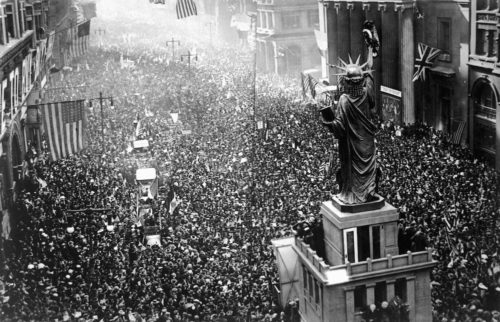
Armistice Day – 11 November – is a celebration that marks the armistice that ended hostilities at the conclusion of World War One. On this day in 1918, soldiers on all sides put down their guns, bringing an end to what had been, until then, by far the most mindless display of human savagery, ruthlessness and murderlust in history. The retrospective sense that it may have been better to not have fought in the first place echoes in the life of the psychonaut.

In the life of an ordinary person one struggles, and fights, and desires, and wins and loses, and always it’s a tremendous battle to satiate the demands of one ego, which yearns to be exalted. And then, if one ever sees the brick wall at the back of the theatre, one laughs because the battling is all so silly when there’s no way for you to ever really lose.

This is a microcosm of the struggle of nations to exalt themselves on the world stage – a struggle which is so bloody that if it ever stops being violent even for a moment we commemorate it almost a century later, in the hope that we never forget the price of peace.

Like the Great War soldier, the psychonaut has to learn how to put down his guns, but in a metaphorical sense. He has to learn how to be open to the world and to reality, to not be afraid of the inevitable, the indescribable, the ineffable or the incomprehensible. His is the path of the shaman, one who sees beyond, and who returns with knowledge that is not accessible from ordinary perspectives.

Putting down one’s guns might mean, spiritually speaking, that one puts down one’s more aggressive egotistic defences and accepts that one will die one day, and therefore that all victories on this earthly plane are fleeting, transitory, and not worth losing one’s dignity over. It’s the kind of realisation that one might just as well get on the battlefield as from a psychedelic.

Believing this means to value peace in one’s life.

Part of this might be to accept the inevitability of the future death of one’s physical body, and thereby to prepare oneself for the profound change to the contents of consciousness that will follow, instead of repressing it, panicking at every mention of it, or denying the magnitude of the chaos that will befall one over the horizon of death.

The vast majority of people, being materialists, can only look at the prospect of the future death of their physical body with whimpering horror, because materialists almost always bear the delusion that the brain generates consciousness and therefore that the death of the brain necessarily means the extinction of that consciousness.

A person who has seen beyond has had cause to put down his guns, because he knows that living a life that expresses an acceptance of the inevitable will cause the environment around him to be more harmonious than it otherwise would have been.

This doesn’t means that the psychonaut must martyr himself on the spot out of guilt. Putting down one’s guns does not imply that one become passive, or submissive, or self-debasing.

It simply means that one stop behaving like a traumatised dog, ever on the ready to lash out in self-defence, and ever vigilant to all possible new threats from any direction. It means to relax, to let go and to forgive. This teaching is in many ways at the core of all religious and spiritual sentiment.

The lesson of Armistice Day is that conflict has a time and place and when those qualities no longer obtain then it’s time for peace. A genuine interest in peace means tuning oneself into a frequency from which conflict does not arise, a place that a Pyrrhonist would all ataraxia, a Luciferian would call apotheosis and a Buddhist would call nirvana.

New Zealand Should Celebrate Halloween on ANZAC Day

Halloween is an autumn festival that recalls the spirits of the dead. There’s no sense in New Zealand celebrating it at the end of spring

All Hallow’s Eve, modernly known as Halloween, is a festival that marks a time of death and dying in the yearly cycle. In some rituals, the dead are invited to partake in the celebrations, either through being summoned by music or remembered in prayer. Commonly, stories are told about people who have passed. All of this makes sense on the Northern Hemisphere calendar, but not so much in New Zealand.

The purpose of the Halloween festival, befitting the harvest, is to remember the dead. This is fitting because it occurs at the end of October, which is near the end of autumn in the Northern Hemisphere, where the leaves have fallen dead from the trees and the nights are quickly becoming longer, colder and darker.

This is why it is associated with graveyards and skeletons and cobwebs and spiders and mummies, and any other symbol of death that one can think of. At the end of October in the Northern Hemisphere it’s closer to the midwinter to come than it is to the midsummer gone, and is only getting darker and colder, which naturally feels like death for those experiencing it.

What is understood by few, in New Zealand at least, is that the old festival schedule represents a deep natural understanding of the connections between the physical and the metaphysical world. Celebrating Halloween near the end of autumn when Nature is dying is the kind of tradition that deepens the connections of people to the natural world and gives their lives meaning.

This means that we in New Zealand shouldn’t celebrate Halloween on the 31st of October, when it’s light until almost 9p.m. and is sometimes as warm as summer (if the winds are blowing from the North or from Australia). Seven weeks before the summer solstice is a time when we should be conducting a fire festival to celebrate the return of light and warmth into the world at the apogee of the yearly solar cycle.

New Zealand already celebrates these natural traditions at the correct time in the yearly solar cycle in the form of ANZAC Day and Guy Fawkes’s Day.

ANZAC Day has become a de facto national festival with an emphasis on the remembrance of the dead and a dawn ceremony – exactly as Halloween was practiced at the end of autumn in old times. On this day we listen to a bugle call that is the same as that our ancestors would have heard a century ago, and we stand in silence to make it as evocative as possible, which symbolically summons those ancestors to stand by our side once again.

Seeing the world as a Great Fractal, this is analogous to how people like us celebrate Halloween in the Northern Hemisphere. It’s also around this day – April 25th – that the trees are either bare or yellow and red as Nature falls into the peak yin part of the cycle.

Guy Fawkes, while not a national holiday, nevertheless involves a public display of fire in a very similar fashion to Beltane in the Northern Hemisphere, or the bonfires of Walborgafton in Uppsala and Walpurgisnacht in Northern Europe. The purpose of the fireworks and bonfires in either case is to celebrate how the Sun itself will soon be lighting up the night as it approaches the zenith of its yearly cycle.

In other words, ANZAC Day and Guy Fawkes’s Day have become the Southern Hemisphere equivalents of Samhain/Halloween and Beltane/Walpurgisnacht respectively. These festivals occur at almost exactly the same times of the seasonal cycle, and feature the same themes of death and fire respectively, but if a person in the Southern Hemisphere was primarily following the calendar they could easily fail to notice this.