The Case For Cannabis: Prohibition Harms Minorities

Cannabis prohibition causes harm across most levels of society, but some bear the brunt more than others. In the Western World, it can be seen that cannabis prohibition has a disproportionately heavy effect on minorities, and there are multiple reasons for this. This article will discuss the need for cannabis law reform from an ethnic rights perspective.

The South African High Court found found in a recent judgment that “the
criminalisation of cannabis […] is certainly characterised by the racist footprints of a disgraceful past.” In other words, the South African authorities are willing to admit that cannabis prohibition was forced on the people of South Africa out of malice.

They found that “it is general knowledge that some sections of the [Black] population have been accustomed for hundreds of years to the use of dagga, both as an intoxicant and in the belief that it has medicinal properties, and do not regard it with the same moral repugnance as do other sections of the population.”

It followed from this that the prohibition of cannabis and the normalisation of alcohol was to put European values first and foremost, and this was mentioned in part of their judgement when they made recreational cannabis legal earlier this year.

Ever since Jamestown – and possibly long before then – European colonialists knew that native peoples had a great susceptibility to alcohol. The American Indians called it ‘firewater’ for the explosively violent behaviour it caused among their kind. Rolling a barrel of rum into an Indian village had a similar effect to rolling a barrel of gunpowder into one.

The science is like this: in Europe, most of the people who could not handle alcohol had been wiped out of the gene pool over thousands of years of exposure. Anyone who chimped out when drunk got killed or put in prison, and thereby failed to reproduce. Consequently, Europeans (much like Middle Easterners) do not lose self-control when drunk at the same rate as peoples who have not had that historical exposure.

The people who conquered the New World did not understand the genetics behind this, but they were well aware of the destabilising effect that alcohol had on native communities. So they passed laws, such as cannabis prohibition, that forbade any alternative to alcohol. This forced the natives away from cannabis and forced them towards drugs that would destroy them.

Laws prohibiting alternatives to alcohol are extremely prejudiced in favour of European people and people of European descent. In terms of the damage it can do to people who don’t have a genetic resistance to it, alcohol is almost a bioweapon, and passing laws that prohibit recreational alternatives to it could rightly be seen as acts of genetic warfare against non-European populations.

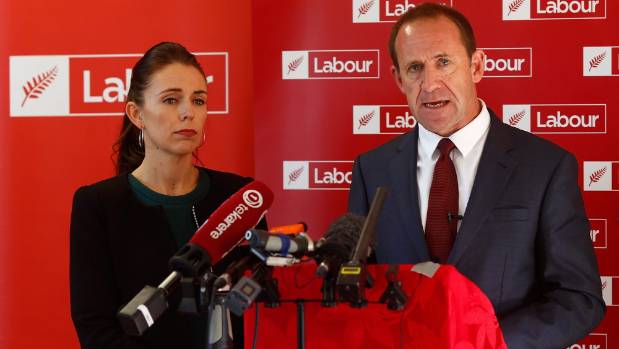
In New Zealand, Maori leaders like to talk about economic reparations and the damage done by colonisation. But never do they talk about the damage done to Maoris by cannabis prohibition.

Maoris have no cultural tradition of alcohol drinking. Unlike Europeans, Polynesians have only been exposed to alcohol for a few centuries. This means that they have not had time to evolve a resistance to the substance, and neither have they had time to make alcohol part of their culture. Alcohol is a foreign substance to the New World, and it’s foreign to the natives here.

As anyone with a clue knows, Maoris love cannabis. Not only do you frequently see Maoris smoking weed at parties, but it’s common to see Maoris in the street wearing Bob Marley t-shirts or with the red-yellow-green of reggae culture somewhere in their clothing. Their love of cannabis is unrepentant – in other words, it’s part of the culture.

The reason for this is simple: not only is cannabis great fun, but Maoris are also aware of the destabilising effect that alcohol has on native communities, and have found that their social recreational drug needs can be met just as well by cannabis as by alcohol (in most cases). Given an even playing field, it’s better to smoke cannabis because it leads to much fewer problems, in particular much less violence.

However, although this behaviour is fair, rational and reasonable, it’s prohibited. There are hundreds of Maoris in prison right now for cannabis offences, even though the prohibition of cannabis has nothing to do with their culture and is something that was forced on them by (some) white people.

It follows, then, that anyone who is truly interested in racial justice in the West must also be in favour of cannabis law reform. This will not only give minorities an alternative to alcohol, instead of having alcohol culture forced on them, but it will remove one possible source of discrimination against those minorities by taking the issue away from Police discretion.

*

This article is an excerpt from The Case For Cannabis Law Reform, compiled by Vince McLeod and due for release by VJM Publishing in the summer of 2018/19.

The Five Acceptances

A previous essay here discussed the Five Rejections of alt-centrism. These are the five core political values held by rival ideologies that are repudiated by alt-centrists. Because alt-centrism is about finding the healthy and correct balance between the fundamental forces of reality, there are also Five Acceptances that mirror these rejections. This essay discusses them.

Alt-centrism accepts from the old right that there needs to be order.

Without order, life is nightmare. Without order we return to the hell of the primeval chaos that existed before civilisation. Nature is indeed red in tooth and claw, and the Great Work of Ages has been to raise us from this chaos through the correct imposition of order. The alt-centre accepts that this work has been done out of good will and that it was necessary.

Order has its own value, because it provides a space in which the mind can think freely. Alt-centrism accepts this. A house can be thought of as a place of order, within the four walls of which people can be free from the elements. The order within our society, likewise, offers free space for people to think and to live.

Alt-centrism accepts from the old left that there needs to be freedom.

Too much order means stagnation. This is not only unacceptable to the human spirit but it also makes us much weaker on account of that the suppressed will resent and fight their suppressors. Order can provide shelter, but it can also be a cage – the alt-centre accepts this.

People have to be free to explore (within good reason) boundaries of sensual and sensual pleasure, of all kinds of music, and of all kinds of consciousness-altering substances. The alt-centre accepts that alternative sexual practices, pornography, drugs and dancing are all legitimate expressions of the human spirit (as long as those participating are doing so consensually). Therefore, the alt-centre accepts that avenues of expression and exploration have to be legal unless there is a very good reason for them not to be.

Alt-centrism accepts from the old centrists that there needs to be a balance between order and chaos.

The alt-centre accepts the need for order, but does not feel obliged to agitate on behalf of more order. The alt-centre accepts the need for chaos, but does not feel obliged to agitate on behalf of more chaos. More precisely, there is a time and place for order and a time and place for chaos, and the alt-centre accepts that flexibility on this question is important for correct decisions to be made.

Major differences arise from the fact that the alt-centre believes that the old centre has struck a cowardly and insipid compromise of values, and that the alt-centre believes that the truly correct balance needs to be struck between other values than the old paradigm suggests. The alt-centrist is more likely to think in terms of materialist vs, non-materialist than in terms of capitalist vs. socialist.

Alt-centrism accepts from the alt-left that inequality is now at unacceptable levels.

The productivity gains of the last 50 years of economic development have not been shared among all social classes. Instead, they have been portioned out according to how much of those gains people have been able to grab by whatever means, whether force or trickery. Labour has never had a lower share of productivity in the West, and capital has never had a greater one. This threatens social cohesion, and needs to be opposed.

The alt-centre agrees that those who derive a financial benefit from the ordering of society need to pay a share of their wealth to ensure that those benefits perpetually arise to the people of the nation. It is accepted that capitalists cannot plunder the world’s natural resources without restraint or censure, because that will lead to there being nothing left for future generations. A balance with nature has to be struck; this is accepted.

Alt-centrism accepts from the alt-right that people have to have things in common in order to have the solidarity necessary to have a society.

This does not imply the need for ethnostates, but it requires a concession that those arguing on behalf of ethnostates have some valid points, based in reality. We know from economic psychology that wealthy people within a country are only willing to pay taxes to the degree that they feel they have something in common with the recipients of those taxes.

Therefore, leftist policies like importing hordes of “refugees” also threaten social cohesion, and should be repudiated so that genuine solidarity can continue to exist among the people. The greater the diversity of a nation, the less solidarity will exist between the groups within that nation, and therefore the less the wealthy are willing to help the poor.

These Five Acceptances represent the feminine expression of alt-centrism. in that they are accepting of and open to what the other ideologies have to offer. This contrasts with the Five Rejections, which are the masculine expression of alt-centrism, and which seek to delineate the boundaries of what is acceptable and what is not.

*

If you enjoyed reading this essay, you can get a compilation of the Best VJMP Essays and Articles of 2017 from Amazon for Kindle or Amazon for CreateSpace (for international readers), or TradeMe (for Kiwis).

How to Tell if You’re Really A Libertarian

The most famous political chart puts everyone into one of four quadrants: authoritarian left and authoritarian right at the top, and libertarian left and libertarian right at the bottom. It’s fashionable to claim to be libertarian, but not everyone who does so really is. This essay looks at how to tell if you’re really a libertarian.

The political consensus of the Western World is still profoundly affected by the horrors of the authoritarian governments of the 20th century.

Authoritarian governments in the form of Nazism and Communism caused the deaths of some 150 million people, directly or indirectly, through a variety of wars and famines. These acts live on in infamy with names such as the Holocaust and Holodomor, the very mention of which summon images of starvation, misery and death.

Since then, it’s been extremely unfashionable to be authoritarian. But it’s still tempting – as tempting as it ever was. The thought that some ideas are not merely great, but so great that they have to be forced on the populace at gunpoint by a government that will kill its own citizens before it will compromise, is one that reoccurs throughout human history. All that’s necessary for it to actually become a reality is a sufficient degree of arrogance, or self-righteousness, on the part of the rulers.

Once a government has enough hubris – and whether they are left or right doesn’t matter here – they will start thinking that the lessons of history don’t apply to them, or that their actions are so righteous that human nature will change in recognition, or that they are uniquely talented and therefore can achieve things that no previous rulers could.

Once this stage is reached, it’s possible for the government to start doing things to people whether they want it or not, instead of helping them get things done in accordance with their own wills, and at that stage the government meets the definition of authoritarian. We have ideas so good they have to be compulsory! is the rallying-cry of the self-righteous authoritarian.

A person who is really a libertarian will stay committed to liberty no matter how tempting the proposal to abandon it might be. They therefore reject the idea that ideas can be so good that the government has to force them on people. Exceptions to this rule are only made in the gravest circumstances – never to try to make the world better, whether the justification be to “put order to things” or for “the greatest good”.

A person who is really a libertarian will reject proposals from both the left and the right if those proposals are too authoritarian, even if they have minor sympathies towards one of the two poles.

They will not (for example) only reject leftist authoritarian ideas, such as raising taxes or making a minority language compulsory for all school children, while accepting any and all right-wing authoritarian ideas, such as starting wars or drug prohibition.

A person who claims to be a left libertarian will happily criticise the left if it does authoritarian things. Many authoritarian leftists have been agitating to remove speaking rights from various conservatives (or even just people labelled “conservative” by the media), a process they refer to as “deplatforming”. This is blatantly authoritarian, so anyone supporting it on the grounds that it furthers leftist interests cannot also claim to be a libertarian.

Not even if they believe that the left is the side of liberty! Being an authoritarian under the guise that one’s authoritarianism ultimately serves libertarian ends is a fail. All psychopathic dictators claim this.

Likewise, a person who claims to be a right libertarian will genuinely be against crony capitalism and genuinely be against the political influence that large corporate interests exert on the legislation. They will refuse to complain only about taxation, and will also complain about corporate welfare and bailouts of inefficient companies.

Because authoritarianism is so unfashionable, many people will try and sneak authoritarian ideas into the discourse under the guise of them being either left or right. If the person they are speaking with is simple enough to equate either left or right eternally with libertarianism, then getting that person to oppose something is as simple as equating it with whichever of the left or right that person associates with authoritarianism.

The left does this with rhetoric about the need to make up for past injustices and for forced equality of outcome, and the right does this by stirring up fear of government and of minorities. Any person who is really a libertarian will reject all of this reasoning, and will remain steadfast to the belief that ideas should not be forced onto others, because justifying authoritarianism from either the left or the right will justify more of it from the other side as well.

*

If you enjoyed reading this essay, you can get a compilation of the Best VJMP Essays and Articles of 2017 from Amazon for Kindle or Amazon for CreateSpace (for international readers), or TradeMe (for Kiwis).

Writing Autism Spectrum Disorder

Autism has gone from being a little-known condition to being a condition that everyone is accused of having, autistic or not. However, just because everyone is aware of autism doesn’t mean that everything they think they know about the condition is accurate. This article looks at how to write believable and realistic characters with autism.

The most characteristic feature of autism is a pronounced difficulty with social interaction, usually coupled with an obsession with certain repeated actions. This difficulty with social interaction is enough to cause immense difficulty in the lives of some autists and the people around them. This goes beyond mere awkwardness, to a point where fundamental communication becomes difficult.

From the perspective of a person with autism, much of the difficulty about living with the conditions comes from an inability to make the intuitive understandings about other people, and their behaviour, that is usually taken for granted. A person without autism (a “neurotypical”) seems to have an almost psychic understanding of how other people think and behave. Social interaction just seems so effortless for such people.

Your protagonist might have difficulty getting along with someone who has autism, on account of that the autistic character doesn’t seem to understand what the protagonist believes to be the rules of social interaction. The protagonist might make jokes that don’t get laughed at, and come to think that the autistic character doesn’t like them, when the problem is a low level of communication.

Then again, your protagonist might get along with an autistic character just fine. Autists can make a lot of sense, in their own way. Often, a person with autism will be capable of observing human interaction without all the pretense and brainwashing, and can arrive at objective, if odd and unconventional, conclusions. These can sometimes be valuable wisdom (and they can sometimes be juvenile truisms).

Viewed from the outside, an autistic character might appear as excessively orderly, to the point of dysfunction. Autists often like to ritualise certain behaviours (much like Obsessive-Compulsive Disorder), to the point where not being able to perform the ritual sometimes creates unbearable anxiety. Their speech can be likewise regimented and repetitive. It’s common for them to compulsively stack objects or line them up.

Moreover, autists often feel solidarity with other neurodiverse people, and vice-versa. Autism is entirely different to, say, schizophrenia, but much of the lived experience of autism is similar to other mental conditions. The social rejection and the anxiety about more rejection, the anxiety, the shame, the frustration, the despair: these are all emotions that mentally ill people tend to experience more than others. An autist might relate strongly to someone who also feel them, even if that person is not autistic.

If your protagonist has autism themselves, you will have to be very careful about how you render their internal dialogue, should you write about them in the first person. A lot of fiction is poorly written because the characters in it have an unrealistically high level of understanding the behaviour of other people. An autistic protagonist will frequently be baffled by the behaviour they encounter. Much of their behaviour will be a complete mystery.

One of the most dramatic things about autism is the emotional consequences of the social difficulties that arise from having the condition. The awkwardness of autism is often mistaken by other people for malice, psychopathy, pedophilia, terrorist intent and all manner of other things. This makes life extremely difficult and can make for a harrowing story (unless your protagonist turns out to be a pedophile or terrorist).

It ought to be easy to engender sympathy from your reader here, because most people are sympathetic to the sense of injustice that comes from undeserved social rejection. Despite that, the other characters might feel like they have good reasons to reject the autistic character. After all, it is hard to tell the difference between social clumsiness and malice sometimes.

Because autism is a spectrum, there are many subclinical versions of it. A character with a subclinical level of autism will be relatable for many – after all, there is no person who has perfectly smooth social interactions all day every day. For them, their autism might be something that just makes life more colourful or interesting.

Autism can increase in severity all the way up to the point where a character with it will just about live in their own world, divorced from the concerns of most of the others. Realistically, a character with severe autism will have a hard time being a major character in your story because their degree of communication impairment will be so severe that no-one else will understand them. More moderate forms could involve a degree of social impairment that can be more or less overcome.

There is reason to believe that small amounts of autism can be helpful in certain occupational fields, especially those that pertain to the imposition of order upon chaos. Therefore, an autist need not be presented as conspicuously mentally ill. They might have found a niche that suits them perfectly, in some job that requires order to be imposed upon chaos. Mechanics and computer engineers are favourites.

*

This article is an excerpt from Writing With The DSM-V (Writing With Psychology Book 5), edited by Vince McLeod and due for release by VJM Publishing in the summer of 2018/19.