If Materialism Is False, Death Is Nothing To Fear

Materialism is such a dominant perspective in today’s culture that we’ve almost forgotten that it is a perspective. The near-universal assumption is that consensual reality is a mindless collection of atoms and molecules, and of temperature and energy, and that the brain generates consciousness. This essay is a reminder that this perspective is just a perspective, and not necessarily the truth.

Thinking logically, it soon becomes apparent that there’s nothing especially rational about adopting the perspective of materialism, although doing so may be temporarily useful for anyone trying to run a scientific experiment.

From an existential perspective, the only thing you know for sure is that you’re conscious. That’s it. Existence precedes essence – this is another way of saying that consciousness precedes the contents of consciousness.

At this point, most people will protest that they are also aware of the material world. This conclusion follows naturally from the assumption that the brain generates consciousness, because once a person has made this assumption it seems natural to think that the brain has developed to become aware of the material world.

But no-one knows for sure that what they are aware of is a material world. A person might be conscious of a perspective that relates to some mental attempt to make sense of the stimuli that they have received from what appears to be a material world, but this is in no way evidence that such a material world exists – the map is not the territory.

Some might argue here that the sensory impressions that impact upon our consciousness are, nonetheless, impressions from the material world, and that we know that our sensory organs have made accurate impressions of this material world because of our successful adaptation to it.

But the worlds that we encounter in our dreams, which can be as real and as detailed as this material world, are evidently not creating impressions on our eyes, because those are closed and we are asleep. From this we can deduce that eyes are not necessary to create an illusion of a material world realistic enough for a consciousness to want to survive in it.

And from this it follows that a material world is itself entirely unnecessary, because consciousness could simply dream one up in its absence and would be unable to tell the difference.

At this point a materialist might continue to object, claiming that although the dreamworld that the dreamer experiences is evidently non-material (despite being equally as real from an existential perspective), the appearance of it is nonetheless created by the brain, wherein it resides.

But at this point the materialist has allowed themselves to become a magical thinker. The belief that consciousness resides in the brain does not follow from any logical process.

Usually the materialist will continue to profess that science will one day prove what the “origin” of consciousness is, and that when it does so this origin will doubtlessly be material, but this line of reasoning is just the mirror opposite of what materialists deride as “the god of the gaps”.

In other words, it’s magical thinking, not rational thinking.

Talking to a materialist about the idea that consciousness itself has generated the contents of consciousness (i.e. it has dreamed up the material world as a particularly convincing delusion) is like talking to a medieval theologian about the idea that man has generated the idea of the Christian god – their basic existential assumptions about reality make a conversation about it essentially impossible.

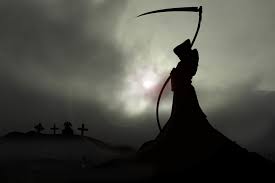
If one refuses to make the assumption that the brain generates consciousness, then there is no reason to believe that the death of the physical body and brain should affect the experience of being conscious. Therefore, it follows that, if the existence of consciousness is not predicated on temporal phenomena, consciousness must be eternal.

And if consciousness is eternal, then all the contents of consciousness are just forms – things that come and go. And your body, being nothing more than some of the contents of your consciousness, is one of those things that comes and goes – but it isn’t you.

Therefore, there is no significant difference between the death of the physical body and any other major change in the contents of consciousness. The death of the physical body might portend a great change in the contents of consciousness, but there is no logical reason to think that this necessitates a change in consciousness itself.

Te Reo With Mnemonics: Entertainment Words

Bar/Pub – tūpapa

An infant picks up a glass of beer at a pub and then drinks it. Looking at his father, the infant sees double – he sees two papas.

celebrate – whakanui(-a)

Through a pair of binoculars, a man watches a bunch of canoeists celebrating something far out at sea. They are the far canoeists.

dance – kanikani

A line of dancers dance the can-can. The crowd boos them and throws tin cans at them.

drunk – haurangi

A man tries to talk to another man but the other man can’t hear him. He says “Sorry, I’m too drunk to talk – it’s affected my hearing.”

entertain – manaaki

A tall man, who is part of an entertaining carnival sideshow, has to duck under an archway, and a woman laughs and says “mind the archway”.

Fun/Recreation – hākinakina

A serial killer attacks a cleaning woman with an axe and laughs maniacally. For recreation he is hacking a cleaner.

The Maori word for recreation – hākinakina – sounds like the English phrase ‘hacking a cleaner’

funny – hangarau

On a giant gallows, a line of corpses are hanging in a row. A person looks at this ghastly scene and starts cackling dementedly as if it is very funny.

laugh – katakata

A cat looks at itself in a mirror (it’s two cats or cat-cat) and starts laughing.

joke – whakakata

A cat drops a mouse in front of an old grandmother and the grandmother shoos the cat away, saying “Fucking cat!” The cat says “It was only a joke.”

party – ngahau

A teenager complains “How can we fix this stereo?” A man smiles and says “With my know-how.” He fixes the stereo, music plays and a party springs to life.

sober – taumauri

A drunk youth complains that he feels dizzy. A nearby friend says “Don’t worry, you’ll be sober tomorrow.”

Spectacle – tirohanga

A child gets offered some food from a hangi, and cries “I’m tired of hangis!” and then throws a tantrum. An onlooking old lady says “What a spectacle.”

*

The above is an excerpt from the upcoming Learn Maori Vocabulary With Mnemonics, by Jeff Ngatai, due to be published by VJM Publishing in the summer of 2017/18.

Te Reo With Mnemonics: Colour Words

black – pango

A ninja, dressed in black, takes a very good look at a black shotgun. Then it discharges – ‘PANG!’

white – tea

Up in the clouds, where everything is white, some of the clouds take the form of two old men drinking tea.

blue – kahurangi

A woman picks up a ringing phone. On the other end of the line, painted in a striking blue colour, is an anthropomorphic car. It is the car who rang.

red – whero

Suddenly a red feral pig bursts out of the bushes and starts wrecking the place.

yellow – kōwhai

A sea of yellow corncobs stretch out to the horizon, a yellow cornfield.

green – kākāriki

An old green car drives past, so old that bystanders can hear creaking noises coming from it. It is a car creaking.

The Maori word for ‘green’ – kākāriki – sounds like the English phrase ‘car creaking’.

brown – parāone

Wearing a brown suit, brown shoes and a brown hat, a giant prawn walks past.

grey – māhinahina

At a Chinese factory, a gigantic grey machine hisses in operation. It is a grey machine in China.

orange – karaka

Two children pull at either end of a giant orange Christmas cracker.

pink – māwhero

[Lit. ‘white-red’] A boy dressed in pink clothing solves some maths equations super fast and is awarded a prize. He is the math hero.

dark – whēuriuri

A man peers into a gloomy forest and then turns to his extremely hairy friend and says “It’s fair eerie, Hairy.”

bright – kanapu

A bird nesting in the canopy of a forest wakes up as the bright sun starts shining over the horizon.

*

The above is an excerpt from the upcoming Learn Maori Vocabulary With Mnemonics, by Jeff Ngatai, due to be published by VJM Publishing in the summer of 2017/18.

Tall Poppy Syndrome Is A Slave Morality

Artistic representations of nationhood in a country with healthy self-confidence (left) are very different to what we get in New Zealand (right)

The Scandinavians call it Jantelagen, Nietzsche called it slave morality, we call it the Tall Poppy Syndrome, but it all amounts to the same thing – a horizontalisation of social attitude that bitterly refuses to give credit where it’s due; a sneering, snivelling resentment that seeks to rip down anyone who distinguishes themselves for any reason.

Unlike us, the Scandinavians and the Continental Europeans are sophisticated enough to appreciate that this is a phenomenon of their culture and are able to consciously work against it. So too do the British recognise that their tolerance of eccentricity has enabled them to produce the geniuses necessary to remain a world power.

The gormless peasants that make up the bulk of the New Zealand populace are yet to comprehend such a thing, however, and so the lawnmower mows on.

So neglected are we down here in the world’s arsehole, so starved of genuine regard from those of other nations that we have gone blind in the darkness and turned on each other.

We should be ashamed for our Tall Poppy Syndrome. It really makes us look like a nation of cucks.

After all, it’s a classic expression of slave morality. Tall Poppy logic is even more resentful than Christianity.

Resentful Christians tell themselves that “the meek shall inherit the Earth” to make themselves feel better about how easily their massively egotistical selves can be made to feel fear and consequently how easily they can be intimidated away from conflict.

The modern Kiwi tells himself something very similar. His byword is “the mediocre shall inherit the Earth.”

In this environment, the worst insult of all is to be a “try-hard”. This is to commit the sin of putting an effort into something, as opposed to the socially approved method of doing a half-arsed job that soon has to be fixed.

The logic appears to be that if anyone did anything properly, then overall standards would soon rise and soon people would be demanding that we did everything properly. And that’s just a hassle.

Therefore it’s better to half-arse everything so that no-one has to feel bad for being incompetent.

This is how we arrived at the Orange Man animation that the television shows us to try and entice us into giving our consent to be ruled by the political class.

Whichever creative agency that invented the Orange Abortion no doubt would have paid due caution to ensuring that the image intended to represent the New Zealand voter didn’t exclude anyone.

Because if it did, they would have resented the shit out of it. We know this because that’s our culture.

Therefore, the New Zealand voter ends up being represented by an amorphous orange blob – one that stirs precisely zero national sentiment in the viewer.

This feeble absence of passion is the inevitable result of a national morality based on resentment. Nobody gets to have anything interesting or do anything interesting.

We have created a culture so boring that our young people would rather cheat death by smoking random chemicals sprayed on dried plant matter purchased from known criminal gangs than partake in society.

A nation so petty that the Government pissing $400,000,000 up the wall every year on the War on Cannabis goes without censure, but a future Green MP defrauding the same Government out of a few hundred dollars to feed a dependent child twenty years ago sparks a national outrage.

It’s time for a radical revaluation of values in New Zealand.