

Category: psychology
Smart and Dumb Are Best Measured Not On One Spectrum, But Two
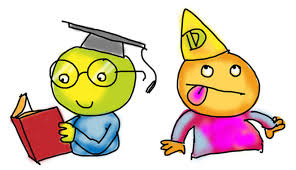
The usual way for people to think about intelligence is as a single spectrum, where we start dumb and – if we’re lucky – grow to become smart. This seems to fit neatly into the dominant thought paradigm, which is that of materialist, empiricist science. This paradigm contends that single-celled organisms evolved to become intelligent and the more intelligent the better.
This is certainly one way of looking at things and it’s a valid perspective. It’s just a little simplistic. Intelligence is so multivariate and nebulous a concept that trying to reduce it to a single number is like trying to rank all of the world’s great works of art along a single scale. It might make some kind of sense, but it’s not really meaningful.
A better way to think about intelligence is that there’s a smart spectrum and there’s a dumb spectrum. The two have some overlap, but it’s minor. These two spectrums have been generally considered to overlap entirely, in that the more dumb a person is the less smart they must be and vice versa, but anyone who has met a decent range of other people in their life will know that this isn’t true.
The most obvious counterpoint to the single spectrum of intelligence argument is the large number of hopeless nerds and autists out there. There is an archetypal absent-minded professor who knows everything about their area of expertise and nothing about any other aspect of life – someone who could lecture a class of a hundred postgraduates but can’t change a lightbulb. Always these people dominate IQ tests, but it’s not as simple as declaring them intelligent.
These people, usually men, exhibit a high reading on the smart spectrum as well as a high reading on the dumb spectrum. So they aren’t intelligent in the same way as people who are high on the smart spectrum and low on the dumb spectrum.
This is not a dig at the university sort. A majority of smart people have made themselves less dumb for the reason that they have realised how much suffering their own dumbness causes and have acted to mitigate it. After all, what other use is being smart in the first place?
Another type of person who exhibits a high reading on both the smart and dumb spectrums is someone who wastes the intelligence they were born with. Being high on the smart spectrum isn’t by itself enough to succeed in life – there are all kinds of personal qualities like perseverance, diligence and honesty to consider.
People who are high on the smart spectrum and low on the dumb spectrum are rare, and are also difficult to recognise. After all, the average person is fairly dumb, and are therefore prone to assume that truly intelligent people are themselves dumb if they disagree with that average person on anything.
In many ways, these people are compelled to hide away, because being high on the smart spectrum isn’t necessarily a good thing, especially if someone else becomes envious of it and wants to challenge you.
Likewise, being low on the smart spectrum isn’t the worst thing either, because as long as one is also low on the dumb spectrum one can often just chip away at goals until they were completed, especially if one has been taught the right methodology. Being high on the smart spectrum can lead to distractions, and can lead to a person becoming impractical.
People low on the dumb spectrum and low on the smart spectrum might be the old-fashioned kind of person who never had a full education available to them, but who is nevertheless wise and not easy to fool. They can’t really fool others because they’re not smart enough to spin bullshit quickly enough, but it’s hard to fool them because they’re not greedy or gullible.
You could find a lot of this sort of person among farmers and agriculturalists, as well as members of traditionalist religions, and especially among old people.
The last sort of person is one who is low on the smart spectrum and high on the dumb spectrum. These people most effectively embody the chaos principle, because they are not as passive as people who are low on the dumb spectrum.
People high on the dumb spectrum have the tendency to do impulsive, mindless and destructive things, but if they’re also low on the smart spectrum they don’t tend to learn from their errors and gladly commit them over and over again. Driving drunk is a classic behavioural expression for a person in this quadrant.
These four personality types can be mapped onto an elementalist framework. The high-smart, low-dumb person can be thought of as gold, the high-smart, high-dumb person can be thought of as silver, the low-smart, low-dumb person can be thought of as iron and the low-smart, high-dumb person can be thought of as clay.
Whichever has the most value depends on what one is trying to achieve. If the important thing is to avoid errors, then the priority is to be low on the dumb spectrum. If the important thing is to be creative and to react quickly to changing environments, then the priority is to be high on the smart spectrum.
*
If you enjoyed reading this essay, you can get a compilation of the Best VJMP Essays and Articles of 2017 from Amazon for Kindle or Amazon for CreateSpace (for international readers), or TradeMe (for Kiwis).
Should New Zealand Legalise Cannibalism Out of Respect For Maori Culture?
In recent years, people have been asking hard questions about the effects of Western colonisation on the New World. Many moral values that were taken to be universal are now being re-evaluated in the new light of Western oppression. Eventually, New Zealand will need to ask itself: were the British wrong to abolish cannibalism?
In British culture, there is a massive taboo around cannibalism. The act is considered even lower than barbaric, more befitting of an animal than of a human being. Famous cases such as the Sawney Bean family horrify British people even to this day. The taboo can be traced back at least as far as Homer and is universal in the West.
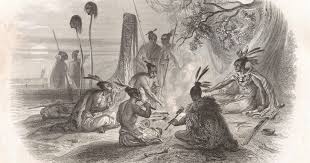
In Maori culture, before British contact, there was no such taboo. Cannibalism was rife. The act of cannibalism was, as it has been all around the world, an extremely effective black magic ritual, in which the cannibal convinced themselves that they had absorbed the power of their victim. This ritual is effective for the simple reason that it increases the ego of the cannibal and makes them more formidable in the realm of iron magic. Moral considerations didn’t come into it.
So a couple of questions have to be asked: if cannibalism was an accepted part of Maori culture (in that it was practiced by many tribes over the whole country), did the British really have the right to suppress that particular cultural expression? And, if they didn’t have that right, are we obligated to re-legalise cannibalism out of respect for Maori culture?
After all, cannibalism may have been an effective method for keeping the tribe strong. Because it was mostly the old, children and those defeated in battle who got eaten, it could be argued that this practice served to keep the Maori genepool free of weakness. If so, who are white people to impose their own moral framework over a useful practice?
The major objection to cannibalism is that it is almost never consensual, and arguably could not ever be with someone of right mind, for the simple reason that it goes against basic self-preservation instincts. Getting cannibalised in New Zealand usually meant that one’s brains were first dashed out with a patu or taiaha, and it’s hard to legalise this for obvious reasons.
Another major objection is that many Maori tribes actually opposed the practice of cannibalism, and were happy to welcome the British settlers, who not only also opposed it but who had muskets to make their opposition count. The Ngati Porou of the author of this piece is one such example. Thus is could be argued that cannibalism was never a universal Maori practice and therefore not an integral part of the culture.
However, these objections have to be considered in the context of modern technology. As Sir Apirana Ngata said: “Ko to ringa ki ngā rakau a te Pāhekā” (“Your hands to the tools of the Pakeha”). Well, now ngā rakau a te Pāhekā include machines that can grow animal flesh in laboratories, and cheaply enough so that a lab-grown steak can be produced for $20. It won’t be long until we can cheaply grow human flesh in a lab.
If human flesh can be grown in a laboratory, this would get around the problem of people having to be killed into order for cannibalism to be possible. This would get around the moral objections so far presented against the legalisation of cannibalism. If there are then no remaining objections to legalising cannibalism, one is forced to conclude that the balance of liberty ought to fall on the side of established precedent.
Because cannibalism has been practiced in these isles for much longer than English has been spoken, it seems natural to conclude that it ought to take precedent over British settler values like not practicing cannibalism. Therefore, the New Zealand Government ought to take action that clearly demonstrates its respect for Maori culture, and make the practice of cannibalism legal.
*
If you enjoyed reading this essay, you can get a compilation of the Best VJMP Essays and Articles of 2017 from Amazon for Kindle or Amazon for CreateSpace (for international readers), or TradeMe (for Kiwis).
Writing the Depressive
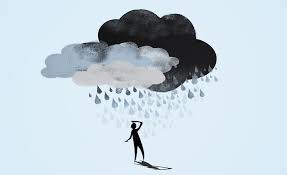
All of us know what it feels like to be sad, but few truly appreciate how it is to be clinically depressed. There’s something about wandering ghost-like through an ashen world of dead feelings that is a challenge to express to those who are full of healthy, natural vigour. This article shares some tips for writing realistic characters who suffer from depression.
Depression (in the sense of a mental illness) is otherwise known as major depressive disorder. To be diagnosed with it, a patient has to meet certain criteria. 21% of the French population have been diagnosed with the condition at some point in their lives, which speaks to its prevalence in the modern world.
There are two obvious approaches here.
The first is to use thoughts. Conveying the innermost thoughts of a character is, in many ways, the ultimate power of the literary medium.
The kind of thoughts that go through the mind of a depressed person tend to be anxiety, sadness and fear. Life not only seems to have no meaning, but seems completely hollow and empty. Even thirty seconds is a sufficiently long time in which to experience some genuine psychological torment, and it seems all-pervasive and never ending.
It’s important to distinguish depression from sadness. Depression is a mental illness, and as such it causes irrational thinking. A bereaved person can tell you that they expect to feel happy again at some point in the future once the shock has worn off; no such expectation exists for the depressive. It seems like it’s going to last forever.
Of those people who have never been depressed, few understand the ways that guilt can eat away at the minds of someone who is. Depression is not like a physical ailment in the sense that one can easily justify taking time off from regular duties to recover. It’s rare that a depressed person has the ability to think clearly enough about their condition to realise that they need a break.
It’s far more common for a depression sufferer to end up consumed by guilt in their every waking moment, thinking about the things they should be doing in the time they are convalescing, and how they are letting people down by being weak. This reveals one of the worst things about depression: the way in which it feels like one is persecuting oneself.
The second obvious approach is to use the reactions of other characters to the depressed one. All mental illnesses have a marked social impact, and depression is no exception.
Depression is a sinister, insidious illness. In many cases, a person with it will not realise that they have it. The protagonist of your story might end up arguing and fighting with people all day because of sourness or irritability caused by the condition, all the while assuming that the fractiousness that caused it was natural and normal.
Some well-meaning friend might tell them that they have depression only to be told to piss off. To a depressed person, a friendly suggestion to “Cheer up” might well be taken as an insult. Constant irritability is as much a part of depression as sadness is, and a story might be best able to evoke this through the social side.
In other cases a person can’t avoid realising they have depression, because other people will continually remind them of that fact. The protagonist of your story might be smarting from constantly being called a “miserable prick”, and this might make them even more depressed. It might cause them to withdraw and plot revenge (or even to seek help – who knows?).
The fear of the loss of social bonds can be evoked here. This is a very powerful, primal instinct that almost everyone can relate to. People don’t enjoy interacting with depressed people, and after a while the rejection may lead to the depressed person deciding that those others would be better off without them.
Note that stories featuring depressed characters don’t need to themselves be depressing. In a way, every story about a depressive is a happy one, because any depressive who is still alive must have been able to find some reason to keep going.
This might be the most interesting part of the entire character. After all, it’s objectively not clear why any of us should keep living, given the uncertain prospects for any happiness in front of us. A depressed person might exhibit a stronger will to live or a more beautiful nature than any other person who did not need to struggle through the condition.
Despite this, the reality of the depression experience is that it is one of the most terrifying and deadly of all illnesses, mental or otherwise. The temptation to take the ultimate step to end the suffering is always present, which makes the experience worse than a horror story in several regards.
*
This article is an excerpt from Writing With The DSM (Writing With Psychology Book 5), edited by Vince McLeod and due for release by VJM Publishing in the summer of 2017/18.