

Could New Zealand Ever Imagine Banning Rugby?

When even men built like this don’t want their kids playing rugby because it’s too violent, you know the sport has a problem

For decades, Kiwis have got used to the idea that wintertime means rugby. Well, we better start getting used to the idea of wintertime meaning soccer, because soon we’re going to have a lot more awareness about the effects of repetitive head injury than we do now, and when we do, there are going to be a lot of shrieking violets trying to get the game they play in heaven banned.

Rugby is popular in New Zealand for two major reasons. The first is that it’s fun as all hell both to play and to watch, the second is that rugby has been an important part of the masonry that cemented white people and Maoris together into a functioning modern culture. For over a century, rugby fields have been the places where Kiwis learned to set aside their racial and class differences and unite of their own free will towards a common goal.

There has always been an undercurrent of concerned mothers, however, who didn’t let their kids play rugby out of fear of head or brain injury. It’s an entirely legitimate concern – rugby is a collision sport, after all, and it’s evident from watching ten minutes of an All Blacks match that not even the best tackling technique in the world is a guarantee that one can avoid head injury entirely.

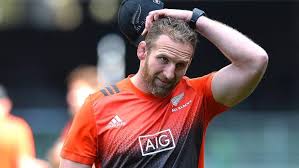
Perhaps most worryingly of all, even the best of the best rugby players in New Zealand are aware of the risks they are taking. Kieran Read has said that he intends to encourage his children into cricket on the grounds that rugby is too dangerous, and Richie McCaw said, post-retirement, that “I don’t miss getting smashed.”

The question is this: what risk of permanent brain injury is considered too much, given the positive physical and social benefits that come from the game? Because if that limit is exceeded, it may be that the responsible thing to do, from the Government’s perspective, is to ban it. After all, New Zealand schools banned Bull Rush with very little sentiment because of head injury concerns, so why couldn’t they do the same for rugby?

Recent studies on NFL players suggest that the incidence rate of brain damage in adult professional collision sports is many times higher than was previously suspected. It seems that, as brain scanning technology continues to improve, we are gathering a more refined appreciation of how vulnerable the brain really is to repeated blunt force trauma.

Rugby is different to American football, of course, because in rugby the tackle is made with the shoulder, whereas in American football tackles are often made with the head in a manner akin to a charging rhinoceros. But that’s merely a difference in degree, not in category. Rugby is still a sport based around putting the ball carrier on the ground through physical force, and this means the risk of head injury can only be minimised, never eliminated.

Already we’ve been able to observe a change in the culture of the sport in recent years. Avoiding head injuries is sometimes prioritised to an absurd degree, highlighted by the incident in the recent Lions tour when a Lions player leapt into the air to catch a loopy pass from halfback Conor Murray, was tackled before he hit the ground, and then was awarded a crucial penalty for having been taken out in the air.

This looks set to get even more extreme. It won’t be long until a professional match has to be stopped part way through because (for example) two tighthead props on one team have both failed head injury assessments.

This column has previously pointed out that the Government never gives rights back to the peasantry; they always take one new right away for every one they give back. Recent discussions about whether to change the cycle helmet laws have been centred around the idea that forcing people to wear a helmet discourages them from cycling. One can be certain that if we get our rights to cycle without a helmet back, pressure will begin to build to have them taken away somewhere else.

We would never argue for the game of rugby union to be banned, at any level. We don’t even support the softening of the game with the repeated TMO checks for suspected head-high tackles. But there are some wowsers and control freaks out there, and we can confidently state that they would happily ban rugby if they thought of the children long enough. It pays to stay one step ahead of them.

*

If you enjoyed reading this essay, you can get a compilation of the Best VJMP Essays and Articles of 2017 from Amazon for Kindle or Amazon for CreateSpace (for international readers), or TradeMe (for Kiwis).

How Terrorism Works

The 2005 London terror attacks killed 52 people; a decade later, the British Police are so intimidated by Islam that they won’t investigate Muslim grooming gangs even when they have raped hundreds of British children

Terrorism often seems senseless to modern, pampered Westerners. Killing for the sake of killing is a long way from our everyday lives of peace and bounty. But terrorism isn’t just killing for the sake of killing – there’s an established calculus behind it, and it works. This article looks at how.

The ultimate reason for committing any act of terror is to induce submission in an enemy population towards the collective that the individual terrorist is a representative of. The idea is that the terrorist does something so horrifically cruel and destructive that the observers of it become afraid of attracting the wrath of the terrorist or his allies, and so become submissive towards them.

The first king learned that submission could be induced by publicly smashing the skulls of his enemies in, and the natural logic of dominance and control that applied thousands of years ago also applies now. For instance, the vast majority of us are submissive towards government representatives because we have observed that governments will spare no cruelty when it comes to getting their will through.

This is no accident; all Western governments have purposefully committed acts of cruelty towards those they claim to be representing, for this is the simplest and most effective way to induce submission. Had they not done so, they would not exist.

The same is true of religions. All Abrahamic religions encourage and promote human rights abuses, whether those be infant genital mutilation, denial of rights to women or homosexuals, the murder of unbelievers or the incarceration of medicinal drug users. Neither is this accidental. All of these cruelties create an impression in the minds of the victims – an impression of the frightful consequences of resisting these people.

The purpose of terrorism, then, is to create an impression that it’s better to go along with the wishes of the collective you represent than to resist them. Therefore, submission means you can get your will through. Every woman burnt at the stake is another woman who doesn’t resist the will of the next priest to come through the village.

In the world of 2018, we can see that repeated acts of Islamic terror in Europe have led to incredible freedom and prosperity for that religion. British Police are so scared of being called Islamophobic that they happily turn a blind eye to thousands of young girls getting raped by Muslim grooming gangs – a phenomenon most recently uncovered in Telford – but they’re more than happy to arrest people for growing medicinal cannabis, knowing they can do so without risk to themselves.

This fear is a direct consequence of Islamic terrorism. In other words, the British Police have been successfully terrorised.

This is how fear and terrorism work, and it’s how the usual way that territories get conquered by foreign invaders, because the locals seldom acquiesce to such a thing without coercion. The British did similar things when they built the Empire, which is what makes it all the more surprising that they don’t resist when it’s being done to them.

Every Islamic terror attack in the West, especially if the attacker dies in the act, makes Westerners ever more impressed by the strong will and faith of Muslim people and ever more willing to bow down to those Muslims rather than stand up to them and risk being killed. The public response to terror attacks is usually horror and condemnation, but the unconscious individual response – especially among individuals who adhere to slave morality – is to be impressed by the bravery and conviction of the killers.

Terrorism bypasses the rational mind and makes its appeal directly to the unconscious. When laid out like this, it’s clear that terrorism is simply a form of iron magic like any other. All successful uses of iron magic induce submission in observers, and broadcasting those terror acts into every household during the evening news is a genius way of amplifying the magic.

All this is lost on the Pastafarians. There have been several cases where individuals have ostensibly had their religious rights denied to them on the grounds that Pastafarianism isn’t a “serious” religion. They all miss the point. A religion counts as a serious one when its followers are willing to slaughter anyone who mocks or disagrees with them. That’s the only way that the rest of us can be forced to take the kind of garbage written in Abrahamic holy scriptures seriously.

Every Westerner instinctively knows, whether they’re willing to admit it or not, that if they stand on a street corner wearing a Bomb Muhammad tshirt mocking the prophet of Islam, pretty soon a Muslim will come and stab or shoot them to death or run them over. So they don’t mock Islam, neither on the street corner nor anywhere else. From the terrorist’s point of view, that’s victory.

*

If you enjoyed reading this essay, you can get a compilation of the Best VJMP Essays and Articles of 2017 from Amazon for Kindle or Amazon for CreateSpace (for international readers), or TradeMe (for Kiwis).
The Four Ways to Impress Another Person

People have historically put a lot of effort into figuring out ways to impress each other

To make an impression on another person is to instill in them a minor sense of awe, which is very useful because it tends to make that person more willing to be helpful. This minor sense of awe, if reflected back upon the awestruck, closely relates to the phenomenon of charisma. The tricky part is that what impresses another person depends on that person’s own level of alchemical development.

Impressing someone at a raw, biological level is fundamentally a matter of strength and natural vigour. This is primarily the basis on which dominance hierarchies are formed among social creatures in nature. Basically, creatures pay respect to any other creature powerful enough to fuck it up. These creatures probably evolved to do so, because the alternative to doing so was often death and therefore a failure to propagate one’s genes.

In an alchemical sense, this responds to the level of clay. In other words, it’s the natural state. People who have not been raised well – i.e. people who have been either neglected or abused as children – tend to not move past this stage. This is also the stage at which prison logic runs. The motto of this stage could be “Might makes right”.

What’s crucial to note here is that a person who is themselves at the level of clay will not and cannot be impressed by a person’s level of silver or gold, because they simply will not be able to perceive those elements. Even perceiving when a person carries significant levels of iron is difficult.

Being strong and vigorous will not impress any mature adult person, of course, for the reason that they only consider it impressive to be strong if one also has that strength under control. Wilding out and demonstrating raw physical dominance by fighting might impress some people, but it won’t impress those of a higher grade.

What will impress people of iron is being strong and having that strength under control. Respect is thus only given to those who are able to impose order upon their own bodies. At this level, it’s common for people to pay respect to people who are good at fighting, but to not respect people who are good at applying their intellects at the expense of martial prowess.

Alchemically, this level of control reflects the presence of iron, which itself implies a heightened degree of order. To have a will of iron is to have the ability to impose one’s will on one’s body no matter what it is telling one to do. The most impressive thing one can do here is to die on the battlefield by charging valiantly into the enemy and making them remember you.

Being strong and having that strength under control isn’t necessarily enough once one starts climbing the social hierarchy. Here, we enter the realm of silver, and here what impresses is not having strength, and not having that strength under control, but having that strength easily under control.

A person of iron will be impressed by the ability to bear great physical trials, but a person of silver will only be impressed if these trials are born with grace. This represents a softening, in the sense that the emphasis is no longer on killing like Rambo but rather preserving one’s humanity under duress.

The captain of a sports team always has to be a bit more of silver than the players under them, and it is on this basis they are judged after the match. Can they take a loss with good grace, and acknowledge the ways in which the opposition were superior? Can they take a win with good grace, and acknowledge that the opposition challenged and tested them despite the scoreline?

If they can do so while smiling, and while physically exhausted after an extended period of strenuous exertion and probably running on adrenaline, then they might impress the man of silver. This sort of behaviour will be considered noble or gentlemanly by any onlooker who are themselves sufficiently cultivated to appreciate it.

Of the fourth way to impress people very little can be said, as is usual for matters pertaining to alchemical gold. In the context of this essay it’s enough to say that it pertains to impressing people – and knowing that one has impressed people – without letting it go to one’s head and becoming egotistical.

In other words, it’s not enough to be strong, and it’s not enough to have that strength under control, and it’s not even enough to have that strength easily under control. If one wants to impress a man of gold, one has to be able to do all that without becoming too impressed by oneself, because it’s there that gold will not be.

This is extremely difficult for a number of reasons. The primary one is that it represents the apotheosis of the philosopher, which is an experience reserved only for the rarest of persons. Another major reason is that the temptations of the ego are evil in every possible application of the concept; they are multifarious enough so that evil can tempt one in any situation.

*

If you enjoyed reading this essay, you can get a compilation of the Best VJMP Essays and Articles of 2017 from Amazon for Kindle or Amazon for CreateSpace (for international readers), or TradeMe (for Kiwis).

Tim Southee, Mike Hesson and the Sunk Cost Fallacy

Matt Henry has a better ODI strike rate with the ball than even Shane Bond, but can’t make the current Black Caps ODI side over players with much worse numbers

A sunk cost is an economic concept that refers to an expense that has been already paid for, so that this expense is irrecoverable. It sounds unremarkable, but sunk costs do funny things to the human brain. The Sunk Cost Fallacy, and a little game theory, may help explain why Mike Hesson refuses to make the hard call and drop Tim Southee for Matt Henry in the Black Caps ODI playing XI.

The Sunk Cost Fallacy is an example of a reasoning error that is commonly made when sunk costs are involved. It refers to when people do something irrational because they have sunk costs (in the form of money, time or energy) into a line of reasoning already.

The common example given is the Concorde project, during which the French and British governments realised that the project would never make economic sense, but which they continued with anyway on the grounds that they didn’t want to waste their sunk cost.

This is a well-known phenomenon in economics because it often leads to horrific waste, particularly when people throw good money after bad in the hope that their initial investment will be recouped (it’s also a well-known phenomenon in poker when players go broke). As far as Mike Hesson is concerned, the same psychological process may be occurring with his obstinate refusal to elevate Matt Henry to the opening bowler’s position alongside Trent Boult.

Southee is only 29 years old, but he has been playing for ages. He debuted as a teenager, and looked incredibly promising with a five-wicket haul and a run-a-ball 77 in a Test against England. Since then, New Zealand Cricket have invested substantial resources in him, giving him every opportunity to take the new ball against all comers. No less an authority than Allen Donald touted Southee as potentially a great swing bowler, but it’s hard to deny the raw numbers.

The numbers argue confidently that Southee is not as good as Henry (in ODIs at least), and probably never has been.

Since the loss to Australia in the final of the 2015 Cricket World Cup, Southee has averaged 42.77 with the ball. He has taken 45 wickets in this time frame at an economy rate of 5.72. Henry has taken 44 wickets at an economy rate of 5.81, which is similar, but has an average of 28.13 thanks to a strike rate of 29.

This is, amazingly, a better strike rate than Shane Bond managed over his career (29.2), and means that Henry has been 50% more likely to take a wicket on any given ball than Southee during this time.

Southee is striking at 44.8 since the last Cricket World Cup, and has not taken four wickets in an innings since then, despite playing in 38 games. Henry has only played in 25 matches since the final loss but has already managed three four-wicket bags and one five-wicket bag in that time – only one of each fewer than Southee has managed in a 132-match career.

In fact, Southee has not managed to get four wickets in an innings one time in the last three years, whereas Henry took four wickets in his last match.

Mike Hesson might be thinking here in terms of potential, in that, theoretically, Southee has the potential to be another Jimmy Anderson. Like Southee, Anderson is also tall, bowls with an open stance and relies on swinging the ball to nick batsmen out. Also like Southee, the Englishman didn’t achieve anything particularly special in his first 132 ODIs, returning an average of 30.18 for his 179 wickets.

But in 43 matches since the start of 2012, Anderson has taken 65 wickets at an average of 23.97. Hesson might be expecting a similar transformation to come over Southee, but it’s also very possible that he has invested so much time and energy in Southee that he sees this investment as a sunk cost that he is compelled to recoup.

A solution that would save everyone’s face would be to demote Southee to third seamer. This would be the best of all worlds for everyone except for Lockie Ferguson, who would then struggle for a starting berth.

The positives are that it would allow Boult and Henry, with the best strike rates, to bowl with the new ball when they are the most effective, and it would allow Southee to utilise his skill set of varied deliveries at the death while minimising his weaknesses of being slow and inaccurate. Southee also has 33 wickets as third seamer, averaging an entirely acceptable 28.18 (compared to over 35 while opening). It seems like a solution whose time has come.

*

If you enjoyed reading this essay, you can get a compilation of the Best VJMP Essays and Articles of 2017 from Amazon for Kindle or Amazon for CreateSpace (for international readers), or TradeMe (for Kiwis).