
How to Detect An Anti-White Bigot

Everyone’s obsessed with making a show of fighting bigotry nowadays. Paradise could have befallen the Earth by now, we are told, if only haters didn’t oppress the disadvantaged. The problem with this attitude is that many anti-white bigots have slipped under the radar in the guise of social justice warriors. As this essay will examine, the easiest way to detect an anti-white bigot is by observing hypocritical double standards.

There’s little reason to be prejudiced against anyone unless you hate them. Hating someone may or may not be justified at any given moment, but an inevitable consequence of hating someone is that you will judge them by high standards, while allowing people you don’t hate to get away with low standards. This reveals itself primarily as hypocrisy.

So one way that anti-white bigots give themselves away is in the explanations they give for individual success. For instance, high achieving Asians or Jews are credited with working hard and being from a culture that values scholastic dedication, but high achieving whites are considered merely the beneficiaries of a white supremacist system.

By itself, that means nothing, but anti-white bigots will also make the claim that low achieving whites have failed morally by not valuing education enough, or because they lacked the discipline to study hard or are naturally just dumb, whereas low achieving blacks and browns have been failed by that same white supremacist system.

An objective person would credit both high-achieving Asians and high-achieving whites with having earned at least some of their personal accomplishments, because even with the easiest of upbringings it takes a lot of will to dedicate oneself to learning. If high Asian or Jewish achievement need not be explained by structural racism or exploitation of dark-skinned people, then there’s no reason to attribute white achievement to such things either.

Either that, or they would excuse the failure of low-achieving whites with the same appeal to social and environmental factors that they appeal to when they excuse the failure of black and brown people. After all, it genuinely is a lot harder to succeed when you face prejudice from society – but low-achieving white people have inevitably encountered as much difficulty on account of class prejudice as equally low-achieving brown and black people have encountered on account of race prejudice.

Another way to detect an anti-white bigot is that they will make accusations of racism when unwarranted – but only if a white person is speaking. If a Malaysian says that Muslims are terrorists because of the troubles in the South, or a Chinese says that Muslims are terrorists because of the troubles in the West, the anti-white bigot will say nothing. But if a white person points out that the Koran condones and encourages terrorism, the anti-white bigot will start the attacks.

By contrast, the anti-white bigots will excuse all manner of racism or bigotry from non-white people. This is especially notable in the case of attitudes to homosexuality or gender equality. Anti-homosexual bigotry is rife among brown and black communities, which is believed to contribute heavily to the high rates of youth suicide in those communities. Anti-white bigots will excuse this, however, by saying that these communities have somehow absorbed the prejudice from white people.

A third way to pick an anti-white bigot is that they will blame all white people for actions that are or were committed by a minority of white people, such as owning slaves, or bombing the Middle East. Related to this that the anti-white bigot will often blame a much larger amount of the world’s suffering on white people than what is fair or reasonable. For instance, it will often be claimed that Africa would be a peaceful and highly technologically advanced society if only white people hadn’t ruined it all.

When one gets down to the bottom of it, if a person claims to hate white people, what they often really mean is either that they hate the white working class (because they look down on them) or they hate the white ruling class (because they have caused so much historical damage). A class prejudice is expressed as a racial prejudice and thereby misunderstood.

A real anti-white bigot will make no distinction. They will still blame middle-class white people for the crude violence, abuse and neglect of the white working-class, and they will still blame working-class white people for the greed and duplicitousness of the white middle-class. Even more tellingly, both will be asked to carry the blame for the historical misdeeds of the white upper classes.

In summary, detecting an anti-white bigot is little different to detecting any other kind of bigot. They will hold the object of their hate (white people) to an unrealistically high moral standard, while allowing those who they don’t hate to be judged by a very low moral standard. The greater the double standard, the greater the prejudice.

*

If you enjoyed reading this essay, you can get a compilation of the Best VJMP Essays and Articles of 2017 from Amazon for Kindle or Amazon for CreateSpace (for international readers), or TradeMe (for Kiwis).

Writing Anorexia Nervosa

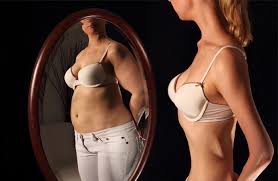
A person with anorexia nervosa can see themselves as hideously fat even while dangerously underweight

Anorexia nervosa (usually just called anorexia) is an eating disorder characterised by an overpowering fear of being fat or of gaining weight. This fear is so all-consuming that it can lead to illness from self-starvation. This article looks at how to write engaging and believable characters with the condition.

The basis of the psychopathology of anorexia is believed to be valuing of thinness. People with anorexia feel that being thin is extremely important, to the extent of it being an obsession. For this reason, anorexia is much more common among women compared to men, and more common among women exposed to fashion media or who have an interest in sport and fitness compared to other women.

More specifically, thinness is considered important because it’s where a person’s sense of self-worth derives from. Thinness is seen as a virtue by anorexics, which is why the condition is so hard to understand for people who don’t have it.

Some might be surprised to hear that anorexia is one of the most deadly of all psychiatric conditions, up there with schizophrenia and major depressive disorder. An unusually low body weight is linked to a wide range of physical ailments, as many elementary bodily functions cannot operate past a certain level of starvation. Even without intending to, it’s common for anorexics to become sick and die as a consequence of lengthy periods of starvation.

If you are writing about a protagonist that suffers from anorexia, their internal dialogue might have a lot of anxiety based around a need to be in control of their body weight. Sometimes such a person will have a ruthless, almost sadistic approach towards their own body. This explains why there is a high degree of comorbidity with Obsessive-Compulsive Disorder. A person with anorexia often becomes extremely particular and fussy about their food and their calorie intake.

Then again, the approach might be more feminine. Instead of a desire to control, having a meal might conjure feelings of fear, almost panic. The sight or smell of food might trigger a reaction similar to that of a person with a phobia encountering their object of fear. It might be enough to also trigger powerful feelings of self-loathing.

Much like psychosis, anorexia tends to come and go in ’bouts’. An episode of anorexia is often triggered by a traumatic life event. It may be that sudden high levels of stress and anxiety result in a desire to compensate for a perceived loss of control.

Anorexia is not a psychotic disorder. A person with it will generally know that they have something amiss about them – but therein lies the difficulty. This reasonable part of the mind struggles incessantly against the part of the mind that commands that one must be thinner no matter what. It might be that the part of the mind that desires thinness above everything is somehow stronger, or more able to assert itself.

The effect that this might have on a protagonist of your story is therefore similar, in many ways, to that of one with depression. Constant feelings of having undermined oneself lead to guilt, personal recrimination, and a loss of confidence in one’s own intelligence, one’s competence or even one’s will to live. As is true of most of the conditions in this book, anorexics tend to have damaged self-esteem.

Like many of the other conditions in this book, it’s believed that anorexia nervosa frequently has an origin in childhood abuse. It might be that this is the reason for why it goes in bouts: dysregulated stress responsivity arising from the trauma leads to extremes of anxiety, and when one of those extremes is reached, a sudden desire for extreme control appears.

The experience of other characters who have a friend or family member suffering from anorexia is usually a difficult one. In many ways, watching someone waste away through anorexia is similar to watching them waste away through a heroin addiction.

This often brings with it a range of feelings that might profoundly affect that character, in particular frustration at not being able to get through to the anorexic about how dangerous their condition is, and guilt about not being able to “do more” for them. Although it’s true that it’s hard to reason with people who have mental illnesses – by definition – it’s still very common for friends and family of people with them to feel guilt about not being able to do more to get them to live a healthy, normal life.

A more distant character who encountered someone with anorexia might get the feeling that the anorexic is uptight and rigid. Anorexia is often associated with a sensitivity to insults and disrespect, as as perfectionism, and a character that demonstrated any of these traits could plausibly develop anorexia or have a past history of it.

*

This article is an excerpt from Writing With The DSM (Writing With Psychology Book 5), edited by Vince McLeod and due for release by VJM Publishing in the summer of 2018/19.
Writing Obsessive-Compulsive Disorder

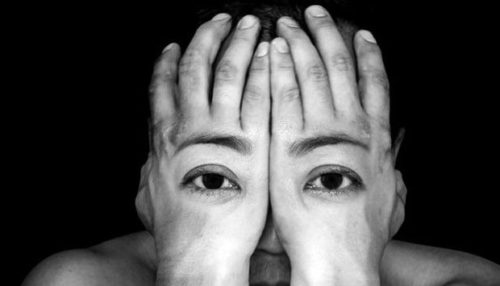
Frequent handwashing can be a sign of a person who is struggling with OCD

Obsessive-Compulsive Disorder (OCD) is characterised by the compulsive and repetitive performing of ritualistic behaviours intended to reduce anxiety. It’s a relatively common condition, and may not be as distressing as some of the others in this book, but a character with it will still be a striking one. This article looks at how to write believable and engaging characters with this condition.

An obsession is a pattern of thoughts that persists despite a conscious effort to get rid of it. These obsessions frequently cause anxiety, especially when they relate to lurid sexual or violent content, as they often do. Some other obsessions can border on the schizophrenic. God and the Devil are frequent subjects for obsessions, especially as pertains to future punishment for some misdeed.

These sort of thoughts can become highly intrusive and maddening in their persistence and the degree they distract from a normal life. If your protagonist has OCD, they might have a distressing interior monologue where anxiety and thoughts of decay and contamination are commonplace. Intrusive thoughts can be just as unpleasant as physical intrusions, especially when they come into the head when you’re trying to sleep or relax.

Compulsions are similar, only they relate to behaviours instead of thoughts. The classic example is compulsive hand washing. Others are compulsively checking that a door is locked, or that a stove is turned off. The person with OCD tends to worry about whether or not something is in correct order and this anxiety increases until that thing can be checked.

A person with OCD will usually be aware that they have a problem. This makes them different to psychotics, narcissists and psychopaths. A character with OCD might not necessarily be an outcast (or at least, not a true outcast), in contrast to the vast majority of characters inspired by this book.

Psychologists talk about a four-factor theory for understanding people with OCD. Essentially this is based on four groups of behaviours. There is a “symmetry” factor, a “forbidden thoughts” factor, a “cleaning” factor and a “hoarding” factor. If the protagonist of your story is or encounters a character with OCD, they will quickly notice one of these groups of behaviours.

The symmetry factor relates to an anxiety-driven compulsion to make everything balance in terms of symmetry. For instance, they might make sure that they take exactly the same number of steps to cross each segment of a repeating pattern of cobblestones. They might also be very fussy about books on a shelf or paintings on the wall lining up perfectly. Every left needs a right and vice-versa.

The forbidden thoughts factor relates to compulsively thinking about things only because one knows one isn’t supposed to. A character with OCD might start having frequently, intrusive, obsessive thoughts about a particular sexual fetish or situation, despite not finding it arousing (more the contrary). Thoughts of incest, pedophilia and homosexuality are all very common here.

Cleaning is probably the best-known of the common symptoms of OCD. The cleaning factor refers to how people with OCD are prone to quickly decide that something is contaminated and needs to be cleaned. For instance, just touching the ground might cause immense anxiety until the OCD sufferer washes their hands. Because there are thousands of potential contamination vectors, people with OCD often end up washing their hands dozens of times a day.

Hoarding is common but not often understood to be a symptom of OCD. Underlying this is often an anxiety about information being lost, and so the hoarder might hoard, for instance, a daily newspaper. The really clinical OCD comes into play when that person doesn’t want to get rid of what they’ve hoarded, even when it becomes a hygiene or fire risk.

It will be easy, if desired, to write sympathetically about a character with OCD. Usually people with the condition are regarded as eccentric rather than malicious. People with OCD don’t tend to take their suffering out on other people, although they can do if those other people prevent them from acting out their compulsions. Hoarding can, of course, lead to malicious behaviour, especially if the space in which the hoarding occurs is contested.

OCD can certainly feel malicious to a person with it, however, especially if the impulsive thoughts don’t give the person any peace. It’s common for impulsive thoughts to come at times that feel especially intrusive, like when trying to sleep or when making love. When this happens for long enough it’s possible to consider that a malevolent demon or entity might be causing them, although this is uncommon.

In contrast to most of the conditions in this book, OCD is not believed to be caused by trauma. The most generally accepted belief is that people with OCD have likely inherited an unusually high genetic propensity towards certain behaviours that were associated with survival in the past, such as checking for dangers and being meticulous about hygiene. A person with OCD is, by this reckoning, usually just hyper-vigilant.

For this reason, a character with OCD is likely to be doing considerably better than the a character with most other conditions described in the book. They might even be in a form of gainful employment where an extremely unusual level of meticulousness and cleanliness were advantages, such as surgeon. Certainly it is more likely that they will have a circle of compassionate friends than people with most other psychiatric conditions.

*

This article is an excerpt from Writing With The DSM (Writing With Psychology Book 5), edited by Vince McLeod and due for release by VJM Publishing in the summer of 2018/19.
Moral Outrage is a Crude Thrill But an Addictive One

It’s evident from the body language of virtue signallers that they exult in the feelings of moral superiority provided by their aggression

It’s possible to become addicted to a wide range of different thrills. Adrenaline, oxytocin, endorphins, dopamine and a slew of other neurotransmitters all create a very specific kind of pleasurable buzz that a person can easily become hooked on. This essay examines the most fashionable addiction in current year: the addiction to moral outrage.

Moral outrage belongs to the class of ego thrills. Within this class are all actions that lead to pleasure on account of letting you think, even if only for a short moment, that you’re better than other people. Belonging to this class are a large number of activities relating to competition and domination.

Alchemically speaking, there are three ways that one person can dominate another person, and these correspond to the three orientations of bravery. One can dominate physically, one can dominate mentally, or one can dominate morally.

Dominating physically is generally looked down upon as an activity befitting children and thugs. Dominating mentally is the obsession of the young adult learning to be a man of silver, and incredible amounts of energy are expended to this end at universities, but most people soon grow out of that.

Dominating morally is where the real self-aggrandisement comes into play, because if this can be achieved then the other forms can be dismissed as less worthy or meaningful. It doesn’t matter if someone dominates you physically or mentally, because you can claim that the act of domination is itself immoral by virtue of being aggressive, and that therefore you, in fact, dominated them where it counts – morally!

As it happens, the modern world gives us plenty of opportunity to get a kick out of moral outrage. So much so that some people may have become clinically addicted to the thrill. Much like smoking cigarettes or snorting cocaine, working oneself into a towering moral fury has a near-immediately gratifying payoff and is therefore more likely to become habitual.

Signs of addiction can be seen in the compulsive bleating of “Racist!” whenever someone criticises a group of people that contains some black or brown individuals. Here, the person getting a buzz off moral outrage doesn’t bother to wait to make sure that the person they’re attacking really is a racist, because that might mean that they don’t get to accuse anyone and so don’t get the buzz.

Other signs include getting outraged at things that are entirely natural, such as the gender pay gap. Taking something that’s clearly the result of female choice and spinning it to make out like there’s a massive anti-female conspiracy to drive down wages is the kind of thing that could get someone a diagnosis of paranoia in other contexts, but when politics are involved no pile of bullshit is too high.

In truth, moral outrage is a form of bullying. It’s a way of running another person down because of their perceived lack of virtue, and this moral shaming is little different to shaming someone for being fat, poor or slovenly. The main distinction is that it is more passive-aggressive than physical bullying.

The driving force behind moral outrage is a combination of slave morality and mob mentality. The slave morality is always a feature because people susceptible to moral outrage have inevitably been told what their morals are, and usually told early enough in life that, by adulthood, they’re convinced their behaviour is natural. The mob mentality, likewise, is always a feature because people need to whip each other up into a frenzy to generate the self-righteousness necessary for a truly gratifying state of moral outrage.

The question then arises: should crude expressions of moral outrage be banned, or at least socially discouraged? It’s possible to combat them by making the virtue signaller look bad themselves.

For instance, virtue signallers shrieking “Racist!” when they hear criticism of Islam could be discouraged by being told how stupid they are for not being able to see the difference between dislike of a religion and dislike of a race. After all, the two concepts are radically different – the first is a meme complex, the second is a gene complex. It could fairly be pointed out that someone unable to tell the difference is pretty thick.

Even better, when someone is aggressively expressing their moral outrage at you, is to ask that person if they think they’re better than you on account of their beliefs. Of course they think they are, which is why they’re outraged in the first place – but if they admit that, they immediately lose their moral high ground on account of confessing to egotism.

*

If you enjoyed reading this essay, you can get a compilation of the Best VJMP Essays and Articles of 2017 from Amazon for Kindle or Amazon for CreateSpace (for international readers), or TradeMe (for Kiwis).