What Would the Average Hourly Wage Be in New Zealand If Wages Had Kept Up With House Prices?

New Zealand is torn by inter-generational tension right now. The young have no hope of finding houses they can afford and the old simply blame them for being too lazy to work hard enough to afford one. However, the numbers show that workers today get a much worse deal than they did 30 years ago. This article looks at what the average wage in New Zealand would be if it had kept pace with the price of houses since the late 1980s.

This graph from the Trading Economics website tracks the increase in the New Zealand Average Hourly Wage over the past 30 years. We can see that the average hourly wage in New Zealand, as of the beginning of 2018, is $31.03. The Reserve Bank of New Zealand website contains many interesting statistics and graphs, many of which can be downloaded from this link. This article will combine both sources.

In March of 2001, the House Price Index (from the RBNZ link above) stood at 700.2. At this time, the average hourly wage was $17.70. So if a person wished to purchase a $300,000 house, suitable for a growing family, they would have to have capital equal to 16,949 hours of work at the average wage.

According to this article by Human Resources Director, Kiwis work an average of 1,762 hours a year (this figure was for 2014, but for cultural reasons this figure does not change much over time). This means that, in March of 2001, buying a house suitable for raising a family in required capital equal to 9.62 years of full-time work at the average wage.

How does that compare to today?

After seventeen years of red-hot growth, the House Price Index now stands at 2480.8. This represents an increase of 254% over those seventeen years, and it means that a $300,000 house in March 2001 now costs $1,062,000 (all growth factors assumed equal). As mentioned above, the average hourly wage in New Zealand has increased from $17.70 in that time to $31.03, which represents an increase of 75%.

In other words, in January of 2018, buying a $1,062,000 house, suitable for raising a family in, requires capital equal to 34,224 hours of working at the average hourly wage. This is equivalent to 19.42 years of work at the average hourly wage.

We can see, then, that when measured in terms of a person’s ability to purchase a house suitable for raising a family in, the average New Zealander is less than half as wealthy as they were only 17 years ago. To have the same house buying power that it had in 2001, an average wage in New Zealand would now have to be $62.65 per hour.

People working in 1989 – when the majority of Baby Boomers would have been in the workforce – had it even better still. In December of 1989 the House Price Index stood at 453.5; the average hourly wage stood at $13.07 in the first quarter of that year.

So our standard family home that cost $300,000 in 2001 cost a mere 64.8% of that price in 1989, whereas the average wage in 1989 was 73.8% of what it was in 2001. Put another way, the average house suitable for raising a family in cost $194,400 in 1989, which represented capital equal to 14,873 hours of labour at the average wage. This was equivalent to a mere 8.44 years of saved labour.

The average house price has gone up 447% over the past 30 years in New Zealand; the average hourly wage has gone up 137% in that time. So to have the same house-buying power as the average New Zealand worker in 1989, a Kiwi in 2018 would have to get paid $71.50 an hour. This would allow them to buy a decent house after saving around 14,000 hours of the average wage, which is the standard of living that the average worker had in 1989.

In summary, the average New Zealand worker has lost almost 60% of the house-buying power of their wage over the past 30 years.

Buying a decent house in 2018 costs savings equal to 19.42 years of work at the average wage; 30 years ago buying an equivalent quality of housing cost savings equal to 8.44 years of work. So if a Kiwi left home at age 18 in 1970 and saved half of their income on the average wage they could own a house by age 35; a Kiwi who left home at age 18 in the year 2000 and saved half of their income on the average wage can’t expect to own one before they turn 57.

Despite tiny relative savings on consumer electronics, it’s obvious that the standard of living for young people is much lower nowadays than it was 30 years ago. The fact that wages haven’t come close to keeping up with housing costs is the main culprit.

*

Dan McGlashan is the man with his finger on the statistical pulse of New Zealand. His magnum opus, Understanding New Zealand, is the complete demographic analysis of the Kiwi people. Available on TradeMe for $35.60.


Writing Illness Anxiety Disorder (Hypochondria)

Lying awake at night worried that you have cancer, despite having no real sign of it, is symptomatic of Illness Anxiety Disorder

Illness Anxiety Disorder is more commonly known as hypochondria. Most people are familiar with the concept of someone who worries so much about imagined illnesses that they cause themselves actual ones, and everyone can relate to feeling fear when faced with uncertainty about a personal medical condition, but despite the familiarity it’s easy to get it wrong. This article looks at believable and realistic ways to portray a character with Illness Anxiety Disorder.

Hypochondria is one of the most common of psychiatric conditions, probably because humans have evolved to be concerned about their health. Getting alarmed about someone you know getting sick makes a lot of sense if you live in a small tribe of about 150 people, while contagious diseases can decimate society. Getting alarmed because you saw something about cancer on television doesn’t make sense, and if this gets bad enough it can become a real problem. .

The disorder is really a gross exaggeration of what would normally be a healthy level of anxiety over one’s physical condition. Instead of maintaining a moderate level of awareness about one’s body, ready to take appropriate measures when necessary, a person with Illness Anxiety Disorder will compulsively check and re-check spots and bumps and marks, and will intently track all rumblings and pains.

Hypochondriasis is believed to be ultimately caused by depression and anxiety, which manifests as an obsession with illness. As with many anxiety-based illnesses, dysregulated stress responsivity as a consequence of early childhood abuse is frequently a factor, although this also commonly arises from a single traumatic shock.

If the protagonist of your story has Illness Anxiety Disorder, this might manifest in ways that are similar to the other anxiety-based and obsessive conditions. They might go to considerable lengths to avoid triggering their condition, such as refusing to visit sick friends or family members. This can quickly cause conflict with the people closest to them, especially if those people think that the hypochondriac is shirking their duties.

A character with Illness Anxiety Disorder is likely to fixate on a particular set of symptoms that they have come to believe is indicative of a medical condition. In fact, they are likely to identify a condition and name it. As could be expected, the availability of Dr. Google to everyone’s home has been tempting for those inclined towards Illness Anxiety Disorder. Many hypochondriacs obsessively research their self-diagnosed condition online.

It’s easy for other characters to become frustrated with a protagonist who has Illness Anxiety Disorder, especially if the hypochondria starts to have an impact on their punctuality or ability to hold an ordinary conversation. It quickly becomes tiresome to listen to a litany of medical complaints every time you see a person, and once other characters start to dread such a thing then they are likely to leave the protagonist on their own.

A protagonist who encounters another character with Illness Anxiety Disorder might find it a great challenge to keep the conversation away from that character’s morbid pre-occupation with death and disease. They might have to make a great effort of will to keep their patience and not become angry. It might also be hard not to tell the hypochondriac to “harden up” or to “get over it”.

As with most of the other conditions in this book, Illness Anxiety Disorder has to cause significant disruption to the life of the character with it before it can qualify as a clinical condition. However, there is a wide range of subclinical forms of hypochondria, such as a preoccupation with various symptoms like everyday pains in the chest, stomach, head or gut. These might be symptomatic of a deeper problem.

Most of the disruption caused by this condition is a consequence of the heavy anxiety it is linked with. This anxiety makes hypochondriacs difficult to get along with, because they are always checking their body functions or fidgeting. The constant need for reassurance that hypochondriacs have is apt to drive their doctor up the wall, let along their partner or caregiver.

Usually, a character with hypochondria will not realise it, at least not initially. Most people are not aware of the extent of physical symptoms that can be produced by simple anxiety and depression, and it’s common to attribute these symptoms to a severe disease instead of psychological origins. It’s possible, then, to use physical symptoms – even if psychosomatic – to foreshadow a general decline in health .

At the end of the day, most of your readers will already know about hypochondria and will have met someone with the condition, even if it was at a subclinical level. It won’t take very many hints for them to realise that a particular character in your story is a hypochondriac. The real challenge, from the perspective of the writer, is to depict such a character realistically and not as a stereotype.

*

This article is an excerpt from Writing With The DSM (Writing With Psychology Book 5), edited by Vince McLeod and due for release by VJM Publishing in the summer of 2018/19.

The Key to Generating Wealth is Artificial Scarcity

Artificially restricting the common property of the masses drives up the price of private holdings of capital

Work hard, and you’ll get rich. All Westerners have been told this since we were small children – and it used to be true. Back in the days when there was natural scarcity, this made sense, because what was lacking was productive capacity. Now that human productive capacity is effectively infinite (at least when it comes to meeting physical demands), economics works on a different basis – that of artificial scarcity.

The definition of artificial scarcity is “the scarcity of items even though either the technology and production, or sharing capacity, exists to create a theoretically limitless abundance”. Many people have noted that the productive capacity already exists on Planet Earth to create a theoretically limitless abundance of most things, and the reason why we don’t already have it is a matter of politics.

Understanding artificial scarcity is a matter of understanding that every financial transaction is a matter of leverage, and that leverage is a matter of the supply of that good or service, and that the supply of any good or service is a function of its scarcity (or of the scarcity of its basic constituents).

Looked at another way, the more scarce a good or service can be made, the more desperate people will become in order to obtain that good or service, which means the purveyor of it has more leverage, and the price of that good or service will therefore increase. Once your own supply of a particular good or service is ensured, profit can be increased by restricting supply of it to everyone else.

Strangling someone to get them to give up their wallet is an example of inducing artificial scarcity, in this case a scarcity of oxygen to the brain. Understanding this extortionate power is key to understanding the whole point.

In a state of Nature, people are free to hunt and gather from the commons to which all land belongs. There is therefore no such thing as artificial scarcity, because all scarcity is natural. Today, however, because everything has been enclosed, fenced off, walled off, there are no longer any commons, and consequently there is a massive artificial scarcity of food, whether game meat or gathered fruits, nuts, berries, mushrooms etc.

This artificial scarcity of food has created immense scope for profits for the land-owning class. The masses who had their land taken must now serve those who took it in order to get enough of that wealth to live. There is such an immense scarcity of land that anyone with an enforceable claim to own it can become rich by simply charging rent, because there will always be someone with a productive enterprise that needs land on which to operate, and they will pay rent.

In other words, the people continue to work the land for sustenance as they always have done, but now that sustenance passes through an intermediary (the landowner) who takes as big of a cut as they see fit (possibly subject to anti-exploitation laws), and leaves the remainder for the workers. Thus it can be seen that artificial scarcity can arise as a form of gangsterism.

Artificial scarcity is usually defended by those who profit from it, and from the sycophantic dogs who are happy to take a slice of that profit in exchange for enforcing it on the masses. To the extent that these two groups hold power in society, artificial scarcity will exist.

Ever since the Industrial Revolution made it cheap to produce everything, those who wished to gain political and economic control over the masses switched the emphasis from helping those masses overcome natural scarcity to imposing upon them artificial scarcity. George Orwell wrote about this in 1984, when he had Emmanuel Goldstein write about how politicians need to destroy surplus production in order to keep the populace under control.

Speaking as the author of The Theory And Practice of Oligarchical Collectivism, Orwell teaches that the main motive for introducing artificial scarcity is political power. If the people have a surplus of goods and services, their standard of living will rise. As their standard of living rises, it becomes increasingly possible for motivated individuals among them to become educated and free-thinking, and, consequently, to become the sort of person who will challenge the control system.

Defending the control system, therefore, requires that the people are impoverished.

An excellent example of artificial scarcity in the modern world relates to housing. The Baby Boomer generation have realised – now that they own all the houses – that by increasing demand for those houses (through mass immigration) while simultaneously decreasing demand for them (such as refusing to build new ones or restricting access to old ones through tricks such as New Zealand’s meth house scam), they can push the younger generations into more desperation and thereby a weaker negotiating position.

Tightening the supply of housing is like tightening the grip around the throat of the young who are desperate for it – which is how the Boomers are now able to extract so much rent.

Cannabis prohibition is another good example. By artificially restricting the people’s access to cannabis, the politicians gave great leverage to their friends in the alcohol and pharmaceutical industries, who had one fewer competitor for monopoly of the recreational drug and medicine markets, respectively. The cannabis laws also have the benefit of primarily destroying black, brown, young, poor and freethinking people, which further entrenches the power hierarchy.

So getting rich isn’t about working hard anymore – it’s about getting your fingers around the throat of someone who does.

*

If you enjoyed reading this essay, you can get a compilation of the Best VJMP Essays and Articles of 2017 from Amazon for Kindle or Amazon for CreateSpace (for international readers), or TradeMe (for Kiwis).

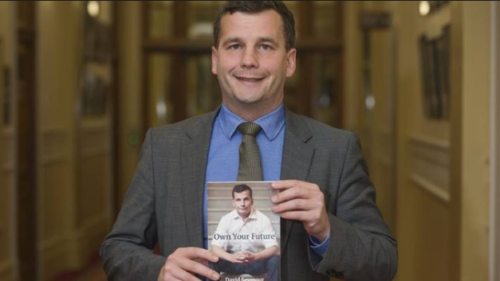
VJMP Reads: David Seymour’s Own Your Future I

A Liberal Vision for New Zealand in 2017

Today, VJMP Reads has a look at Own Your Future, by ACT Party Leader David Seymour. This is a 192-page book of essays published by the ACT Party along the lines of previous ACT Party efforts such as Closing the Gaps and I’ve Been Thinking.

Previous VJM Publishing publications, such as Dan McGlashan’s Understanding New Zealand, tells us some basic facts about the ACT-voting demographic. Although few in number (a mere 13,075 in 2017), they were the wealthiest voter base of any party, as well as the most likely to be born overseas and one of the best educated (along with the Greens). Asians like them the most, white people the next most, and Maoris the least.

We have also seen that people who donate to the ACT Party get the worst return on their investment, with the party gaining 22 votes per $1,000 spent on the 2017 campaign. This compares to 388 votes per $1,000 for Labour, 452 for National and 4,761 for the Aotearoa Legalise Cannabis Party (even the vanity project that was The Opportunities Party managed 62 votes per $1,000 spent).

So who are ACT, in the words of their own leader?

The Introduction runs to sixteen pages, and is worth studying on its own. It starts off by telling the story of the struggles of a wealthy couple to subdivide their land. Hilariously, by the third page there’s already a reference to how, under communism, “people starved by the million”, so it’s already a fair bet at this early stage that the book will be full of far-right-wing American-style libertarianism.

On page 12, Seymour states that he grew up “not rich”, and also states that the first time he realised that the Government might not have our best interests at heart was at age sixteen. Seymour was born in 1983, which would make him around 8 years old at the time of Ruth Richardson’s infamous 1991 Budget, which ripped the heart out of the New Zealand poor. Had it not occurred to him in the aftermath of the social destruction wrought by this that the Government is not on the people’s side, then it can fairly be said that he was unusually privileged, if not actually sheltered.

In fact, the truly sheltered nature of Seymour’s life comes through in lines that would be comic genius in any other context. How else to read “Auckland Grammar is a particularly barbaric place for some kids. I vividly remember one kid getting a tennis ball to the head, it bounced lightly but its power was symbolic”?

Like most men of his time, Seymour is a materialist. He is proud to have supported liberalising the abortion laws. ACT wanted to introduce laws that would make New Zealand a better place, in Seymour’s estimation, hence his support for them. This is stated very matter-of-factly, with no explanation as to why he thought that ACT in particular were best suited to make New Zealand a better place.

Inevitably, Seymour has a go here at the eternal ACT bugbear, the Resource Management Act. He writes that the poorest fifth of New Zealanders spend almost half of their income on housing today, compared to only a quarter of their income 26 years ago. All of the blame for this can be laid at the feet of the RMA, which has strangled the rate of house building. “That’s why people are living in cars and garages.”

The obvious rejoinder to this claim is to point out that New Zealand has the highest rate of immigration of any OECD country. Seymour anticipates this, and writes of the immigration question that opinion is divided between “National’s naivete vs. the racism of New Zealand First.” Like many middle-class white people, Seymour appears to be unaware that New Zealand First’s strongest supporters are Maoris.

Seymour generally doesn’t seem bothered by anti-Maori racism, as shown by his rant about “million after million for various Maori centric projects and separatist legislation”. Racism is, perhaps, only real to Seymour when it prevents wealthy foreigners from immigrating here (after all, as noted above, Maoris don’t vote for the ACT Party).

Going by the introduction, this book seems like the closest thing to a neoliberalist manifesto New Zealand has seen recently. What Seymour appears to be about, fittingly for someone who represents foreign wealth, is freedom for money. He’s not interested in freedom for people. Freedom for people comes incidentally, in so far as those people have money.

One gets the impression that if Seymour could stuff the entire South Island into a giant machine that sorted it out into its constituent minerals for the sake of most efficiently selling it all off to foreign speculators, he would be happy to do so. This book, therefore, promises to be a journey into the mind of an absolutely fanatical die-hard neoliberal.

*

If you enjoyed reading this essay, you can get a compilation of the Best VJMP Essays and Articles of 2017 from Amazon for Kindle or Amazon for CreateSpace (for international readers), or TradeMe (for Kiwis).