
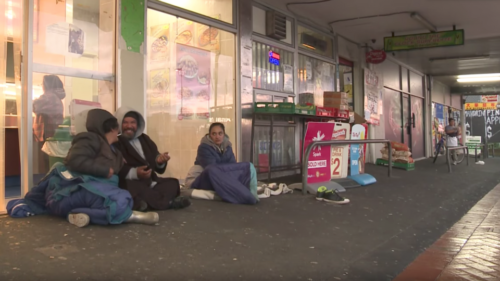
Is It Time to Nationalise Empty, Foreign-Owned Houses in New Zealand?

It isn’t fair that Kiwis sleep on the streets while houses sit empty because their foreign owners are gambling on the New Zealand housing market

As seen by its climbdowns on the TPPA, on medicinal cannabis and on immigration, the Sixth Labour Government lacks courage. This means that the time has come to make some truly bold suggestions. Given that our homelessness crisis has long ago reached critical status, it’s time for a bold solution to the housing shortage. This essay proposes that we nationalise all empty, foreign-owned houses to provide shelter for our own people.

The state of homelessness can be summed up by the fact that there are believed to be 24,000 homeless in Auckland alone. This gives New Zealand by far the worst homelessness rate in the OECD, a list which includes much warmer and poorer countries like Mexico.

Per capita, our homelessness rate is far worse than the second-placed Czech Republic and around twice that of Australia, despite that it’s much easier to be homeless in the Australian climate. It’s gone beyond being a national disgrace, to the point where it is threatening our status as a developed country with a functioning society. It’s time to consider extreme measures.

It’s hard to get an accurate figure on the number of New Zealand homes owned by foreigners. The people making most of the profit off selling them have a vested interest in restricting awareness of, and information about, their activities. However, we can make educated guesses.

A 2016 census revealed that over 8% of Vancouver homes are unoccupied. From the same link, we can see that slightly fewer than 6% of Vancouver homes are both unoccupied and owned by foreigners. So roughly two-thirds of empty homes in Vancouver are also owned by foreign residents.

There are believed to be 33,000 empty houses in Auckland, with others saying 35,000. If two-thirds of those houses are both empty and owned by foreigners, that makes for 22,000 homes – about the same number as there are homeless people in Auckland.

The Vancouver solution so far is to charge a 1% property tax on an annual basis for every Vancouver property left unoccupied. This amounts to $10,000 in taxes for a million-dollar property. Vancouver is infamous for its overheated housing market and perhaps represents an extreme case, but the basic principle is the same as in Auckland: most of these foreigners are speculators who have parked money in real estate for the capital gains, and they have no interest whatsoever in the ability of the locals to find affordable housing.

The question naturally arises: if there are so many foreign residents who are keeping houses empty purely for the sake of making a profit, and so many Kiwis who are going homeless because of the shortage of available housing, why be satisfied with a tiny bit of tax as compensation for the damage done? Why not nationalise empty houses that are owned by foreign residents?

Nationalisation could proceed on the grounds that owning a house in New Zealand and deliberately keeping it empty is a crime, in much the same way as owning a business and refusing to serve a customer on the basis of their race is already a crime.

Deliberately keeping a house empty when there is a housing shortage would therefore be declared to be a crime equivalent to refusing to stop to ascertain injury at the site of a motor vehicle accident. In other words, it would be an action that represented a criminal level of disregard for the well-being of the people of this nation.

The logical punishment would be forfeiture of the property.

After nationalisation, the houses would simply be added to the existing Housing New Zealand stock as an asset on the balance sheet. From there, Housing New Zealand would proceed to treat them as regular state houses, and they would be rented out or apportioned to the needy as was necessary to meet their needs for shelter.

*

If you enjoyed reading this essay, you can get a compilation of the Best VJMP Essays and Articles of 2017 from Amazon for Kindle or Amazon for CreateSpace (for international readers), or TradeMe (for Kiwis).

The Northcote By-Election Result is Fraudulent and Illegitimate

Northcote by-election candidate Dan Bidois was crowned the winner, despite only getting the support of 21% of eligible voters

The reason why our ruling class have the right to rule, so they claim, is because they have the consent of the masses. But the winner of yesterday’s Northcote by-election and newly crowned Member of Parliament, Dan Bidois, did not have the consent of the masses. Therefore, the Northcote by-election result is fraudulent and illegitimate.

19,900 people cast a vote in the Northcote by-election. According to the Northcote Electoral Profile on the Parliamentary Profiles page, there are 49,569 eligible voters in that electorate. This tells us that barely more than 40% of eligible voters chose to participate in the democratic process – something like 30,000 people abstained.

The question then has to be asked: how is the election of Bidois to the House of Representatives legitimate, when fewer than half of eligible voters took part in the election process? If so few people believed that the democratic process was worth participating in, isn’t that sufficient evidence that it has failed, that its claims of legitimacy are fraudulent?

Bidois himself won 10,147 votes in the by-election, which amounts to almost 21% of the eligible voters in Northcote. If no-one cares about the election, how can the winner of it legitimately claim to have any power to rule anyone? Any reasonable person can see that this is absurd. We can’t possibly know what the electorate wants unless we canvas the non-voters.

One candidate, Liam Walsh of Not A Party, ran specifically on the non-vote. His platform was that democracy has failed and is inherently corrupt (hard to deny) and that it would be better for us to scrap it entirely and work together instead of using the democratic system to try and fuck each other over.

After all, as a National MP, Dan Bidois will immediately work towards the further enslavement of the young, the Maori and the working class. Walsh notes that Bidois came second to an empty seat.

One wonders what would happen if those 60% of adults in Northcote who do not feel represented by New Zealand’s peculiar imitation of democracy gave their allegiance to Walsh instead of to the central government.

What if, instead of paying taxes to the IRD to piss up the wall on flag referendums, yacht races, imprisoning medicinal cannabis growers and importing Somali rapists, people paid no taxes, and we had neither flag referendums nor a justice system putting people in cages for growing medicinal plants?

Some might respond that having no democratic government will leave the community unable to solve problems that require collective solutions, but Dan Bidois, with his 21% support, sure as fuck isn’t going to be solving them either. He, like the majority of backbenchers, will stick his nose straight up the arsehole of his party’s leader, in this case Simon Bridges, and he will keep it wedged there as long as the National Party hierarchy is responsible for his meal ticket. As a consequence he will vote to enforce National Party policy and dogma – not the will of the Northcote electorate.

A democratic election that gets 40% turnout cannot claim to return a legitimate ruler. The vast majority of the Northcote electorate did not consent to being represented by Bidois; therefore, his being in the House of Representatives is no more legitimate than it would have been if the CIA had helped him raise an army that seized power through force.

After all, a foreign-backed dictatorship might even gain the consent of more than 21% of the population – assuming it put a sufficiently enlightened person on the throne – which would make it no less legitimate than yesterday’s by-election.

If the democratic process is rejected by a majority of the people, then it’s time to get together and to think up a new political philosophy that adequately represents them. It’s apparent from the fact that New Zealand clings to cannabis prohibition, a policy supported by almost no-one, that the will of the people is not represented by the law enacted by their rulers. This failure to represent the people’s will is evidence that democracy has failed and needs to be superceded.

*

If you enjoyed reading this essay, you can get a compilation of the Best VJMP Essays and Articles of 2017 from Amazon for Kindle or Amazon for CreateSpace (for international readers), or TradeMe (for Kiwis).

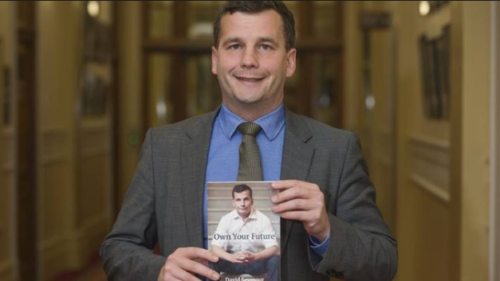
VJMP Reads: David Seymour’s Own Your Future II

A Liberal Vision for New Zealand in 2017

This reading carries on from here.

The first real chapter of Own Your Future is titled ‘Housing’. The degree to which Seymour is out of touch comes through again immediately, when he states a belief that an “ordinary” New Zealand family is one that owns 50ha of land. His maths seems fair when he calculates the deficit of new houses, but it is notable where he lays the blame.

Seymour is willing to appeal to “basic economics” when he points out the factors restricting the supply of housing – in particular red tape – but basic economics does not seem to apply to the demand side of the equation. Following the neoliberal playbook closely, Seymour dismisses entirely the idea that migration could make a contribution to the increase in house prices.

His logic here is curious. New Zealand’s waves of migration “have not caused food prices to double, for example”. He is comfortable with concluding therefore that “there is no evidence that immigration has increased the price of commodities”. It’s certainly an unusually high standard for a variable to need to double a second variable before it can be said to have caused it to increase.

This line of reasoning can be explained by a study conducted by Dan McGlashan, in which he found that Asians voted for the ACT Party at higher rates than anyone else. No doubt Seymour is wary of placing any blame on immigration because that’s how most of his voters got here.

Perhaps through some effort of will, Seymour holds off on mentioning the Resource Management Act until the sixth page of the essay. This is invoked to take all the blame for rising house prices. He points out that, 30 years ago, the bottom 20% of the population paid 27% of their income in rent, whereas now they pay 54%. This is a fair comment but it’s not clear that all of the blame for this necessarily lies with the RMA.

Seymour repeats the claim that only 0.8% of the land area of New Zealand is urbanised, but doesn’t mention how this compares to other countries or who benefits from raising this percentage. How does the average Kiwi benefit from urbanising more of the country for the sake of letting in more immigrants? It isn’t said.

He goes further, pillorying the Greens’ proposal to limit immigration to an increase of 1% of the population every year. Even an immigration rate of 1% is enough to double the population of the country before the end of the century. This is very interesting if one considers that the people of New Zealand have never asked for the Government to increase the population at all, much less double it.

The most striking thing about this essay on housing is that Seymour never refers to the experience of overseas countries that have had similar housing crises. Housing in Sydney, Melbourne and London has increased in price much like Auckland – do they have RMAs constricting the supply of housing? Seymour doesn’t say. What has happened in other jurisdictions that have implemented his suggestions? He doesn’t say.

One gets the feeling from this essay that Seymour is a dedicated supporter of neoliberalism, but does not feel the need to back up his assertions with real-world examples, preferring instead to use rhetoric.

*

If you enjoyed reading this essay, you can get a compilation of the Best VJMP Essays and Articles of 2017 from Amazon for Kindle or Amazon for CreateSpace (for international readers), or TradeMe (for Kiwis).