Two very tall men, wearing numbers 4 and 5, sit in a cafe wearing tikis and drinking coffee. They are wearing the cafe tikis.
Loosehead Prop – pou waho
The camera shows a heavy-set man wearing a number 1 jersey. Behind him, in the crowd, is a man with a foam “We’re No. 1” hand, and he shouts “Wahooo!”
Tighthead Prop – pou roto
A heavy-set man wearing a number 3 jersey floats down to the ground by means of a helicopter rotor sticking out of his jersey.
Blindside Flanker – pou kāpō
A car pulls up at a rugby ground and four men wearing number 6 leap out. The blindside flankers had been carpooling.
Openside Flanker – pou tuwhera
A tooth fairy wearing a number 7 jersey floats down to take place on the side of a scrum.
Halfback – kairau
A short man wearing a number 9 jersey runs through the streets of Cairo, stopping to pick up a ball from the ground and pass it.
The Māori word for halfback – kairau – sounds like the name for the Egyptian capital, Cairo
Forward – pou mua
A scrum is set down, but instead of a forward pack there are eight cows linked together, mooing. Forwards are mooers.
Back – pou muri
A spectator observes the brown skin of the backline and says “Hey, the backs are all Māori!”
Wing – taitapa
A player wearing a number 14 jersey and a necktie waits out on the wing, nervously tapping his tie. He is the tie-tapper.
Centre – topa pū
The player wearing the number 13 jersey finds a dogturd a starts to tape it up to hide it. Someone asks if he’s ready, and he replies “I’ve got to tape a poo.”
First Five-Eighth – topatahi
Wearing a number 10 jersey and waiting for the pass from the halfback is a very tall potato.
Second Five-Eighth – toparua
The player wearing the number 12 jersey has his shorts pulled up as high as they can go. He is wearing a tall pair o’ shorts.
*
The above is an excerpt from the upcoming Learn Maori Vocabulary With Mnemonics, by Jeff Ngatai, due to be published by VJM Publishing in the summer of 2018/19.
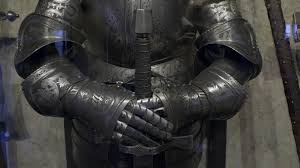
A medieval knight in plate mail armour was the foremost iron magician of his time
A previous essay looked at alchemical silver, silver magic and silver magicians. This essay does the same for alchemical iron, iron magic and iron magicians.
Iron represents the masculine, in contradistinction to the clay of the feminine. It arose as an adaptation to scenarios in which clay was too soft, although like the clay, and unlike the silver and gold, iron is also base. Iron is heavy, like the clay, but unlike the clay it is hard and unyielding. This makes it an ideal substance from which to shape tools – and weapons.
This metaphorical use of iron is everywhere. Iron is used almost universally as a metaphor for men who are firm, determined, strong, protective – the kind of guy who would win the Hawaiian Ironman. This is why a person will say to a young man that he needs to “harden up” if he should adopt an attitude appropriate to war. Ozzy Osbourne, revealing his occult education, described things well in the lyrics of Iron Man, a song about a being that doesn’t seem to be alive and doesn’t seem to think (i.e. it lacks clay, silver and gold).
Iron is best found on the outside, protecting the three softer elements within. This is necessarily the case, except for very simple forms of life, in the biological world, which has evolved to reflect these fundamental principles. In creatures such as crabs, the iron forms an exoskeleton, on the outside. In humans, the iron takes the form of bones and muscles, which serve to protect the clay (in the torso), the silver (in the head) and the gold (the spinal column).
Even on the macro level this is the case – as below, so above. Groups of early proto-humans and even of primates are capable of organising themselves so that strong young men are on the outside, facing other iron magicians in the form of enemy warriors or dangerous creatures, and leaving the women and children on the inside. More notably, it is the instinct of almost every man to step in the way if he observes a physical threat approaching his wife or children.
In some ways, this is a tragic position, and a thankless one. It could also be considered an honourable position that demanded sacrifice, in the sense that it is the duty of a man to protect his wife and children from wild animals and from the elements etc. In this sense, iron is synonymous with masculine strength and virility.
A person who can be described as ‘anaemic’ is one who is physically weak and lethargic, and this condition arises from an absence of iron. So above, so below. A doctor might note that a person’s body lacks iron, but an alchemist might point out that a person’s spirit might also be lacking iron.
The elementary action of iron is to divide. This starts by dividing the clay. A lion that tears up the body of a zebra is essentially acting as iron naturally acts – to divide the clay. Iron is so good at this that it can also divide silver and gold – which is a point long understood by the creatures of silver and gold, who prefer to stay well out of the way of creatures of iron.
Iron magic, therefore, is the magic of dividing, of bringing chaos to order while preserving one’s own order – otherwise known as the art of war. After all, war is little more than maintaining structure while weakening or breaking the structure of the enemy. Indeed, the first time a group of natives saw a firearm discharged in their direction they usually thought it a form of magic.
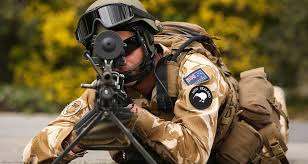
A professional boxer or soldier is an example of a top-class iron magician. The boxer can throw his fists and cause chaos to a their opponent’s physical structure – a soldier does the same but with bullets. In either case, the methodology used to get past to opponent’s defences and take him out with a shot to a vital area is iron magic.
The Conceit of Iron is that might makes right. It’s easily possible for a man of iron to think that, just because he’s capable of beating everyone up if they disagree with him, that he must therefore be the right one to be in charge. The danger of this conceit is that it can reduce human interaction to an essentially chimp-like level, where power is little more than a matter of force.
Iron can clash with clay, and with silver, mostly because of the Conceit of Iron but also for other reasons. The hardness of iron can feel like fire to those it touches, and this can lead to extreme agitation. It’s common for iron to unwittingly cause discord with the softer elements through a lack of subtlety or caution. For its part, iron can easily become paranoid, and afraid of revenge for past brutalities.
Silver can intimidate iron with its brilliance, which is the main way iron loses to the precious elements. Furthermore, silver is not immediately yielding like clay and gold, and this resistance is usually enough to cause iron to think twice. As any seasoned fighter knows, simply having to think twice is often enough to cause a man to lose the will to fight, and in this sense silver magic can trump iron magic.
For fear of counterattack or future reprisals, iron tends to be wary about moving into silver or gold. If iron is capable of learning, it will quickly learn that silver is capable of anticipating its actions and accounting for them. Therefore, risking a direct attack is unlikely unless the silver already looks weak, or tarnished for some reason. It will also quickly learn that attacking gold invites massive reprisals from all quarters.
When it does, silver tends to become very resentful, because they may be forced to harden up in order to deal with the aggressive intrusion (and, in hardening, become more material and therefore less intelligent). Silver likes to think that iron serves it and works according to its direction. When the opposite happens it feels like a violation.
Traditionally speaking, men of iron were associated with the colour blue, because iron swords and armour have a blue tinge. This is the reason why Police forces in Western countries that have followed the Western alchemical tradition have blue uniforms – the Police are the wall of iron between the soft elements of women, children and the elderly ruling class against the criminal element.
*
If you enjoyed reading this essay, you can get a compilation of the Best VJMP Essays and Articles of 2017 from Amazon for Kindle or Amazon for CreateSpace (for international readers), or TradeMe (for Kiwis).
Unlike most of the conditions in this book, Conduct Disorder (CD) is only diagnosed in children and adolescents. As the name implies, people who get diagnosed with it conduct themselves in ways that the clinician considers disorderly, in particular when it comes to respecting the rights of other people. This article looks at how to write believable and interesting characters with the condition.
The most important thing is to distinguish CD from Antisocial Personality Disorder. CD is the developmental precursor to Antisocial Personality Disorder – it can only be diagnosed in those too young to have a diagnosis of Antisocial Personality Disorder (i.e. 18 years of age). It is therefore a developmental condition.
One of the key symptoms of CD is a lower level of fear. This will express itself in a wide variety of ways.
The most notable way that a lower level of fear expresses itself in young people is when it comes to transgressions. A young person has not yet had time to internalise knowledge about the effects that their actions have on other people. They therefore have to learn to be afraid of punishment. This corresponds to Level 1 of Kohlberg’s Scale of Moral Reasoning.
A young person with CD will have a hard time internalising rules about those transgressions, in part because they don’t feel much fear, and so don’t have as much inhibition when primitive impulses towards violence and destruction start playing up on them. Because of this, they regularly violate boundaries relating to other people’s personal space and property.
Another way low levels of fear find expression is in transgressions against one’s own health. Young people already play fast and loose with their health when it comes to having a good time; young people with Conduct Disorder are nihilistically reckless. If the protagonist of your story has Conduct Disorder, chances are that they will be into the booze, weed and pills from their early teenage years.
A character with CD will likely be something of a daredevil. If they are male, they might find themselves drawn to racing motor vehicles or street fighting; if female, to shoplifting and starting trouble between men.
A story with a protagonist who has Conduct Disorder might read like J. D. Salinger’s Catcher in the Rye. Care must be taken here, therefore, not to sound cliched. Anti-hero stories mostly appeal to the same young audience, because they will most readily identify with the spirit of rebellion expressed by such a character. People with Conduct Disorder push the boundaries, for good or ill.
Punk stories, in particular cyberpunk, often feature protagonists who would appear (at least from the authorities’ perspective) to have Conduct Disorder. Young men like John Case of Neuromancer or Jonty Gillespie of The Verity Key are unrepentant criminals, usually because they have to be in order to make a living in the cracks of the edifice of respectable society.
After all, one man’s Conduct Disorder is another man’s righteous rebellion against a tyrannical oppressor. So a character with the condition might be the perfect choice of protagonist if your story involves going up against a large, faceless, totalitarian entity. After all, most of us have a point which, if pushed beyond, we will no longer behave in a co-operative manner.
If a character with CD is pitted against a malicious, evil entity (corporation or government), much of the difficulty in writing your story will come from making that entity unsympathetic enough that the reader readily comes to identify with that character. The more credibly this can be done, the less that character will look like a CD sufferer and more like a righteous hardarse.
Unsurprisingly, Conduct Disorder is highly correlated with all forms of early childhood abuse. A character with the condition might have learned by way of mimicry of their parents that violence and cruelty are perfectly acceptable ways to advance one’s interests, and that fear is for the weak and an invitation to be destroyed.
So if you are writing a character with CD they might not necessarily be a cool, daring and adventurous antihero. Realistically they are more likely to be somewhat brutal. If your protagonist encounters such a character, they might find them intimidating – the class bully, or local street thug.
If your protagonist encounters a character with CD, they could respond in a wide variety of ways, depending on how they themselves are (and their decision will be very revealing to the reader). They might consider that character a cool rebel to be befriended, they might consider them a danger to be avoided, or they might consider them a little brat to be corrected.
Conduct Disorder often occurs at the same time as Attention Deficit Disorder. It’s likely, therefore, that any character with it will have extreme difficulty at school, at work, or with either friends of family. Their life will probably be very chaotic, and will considerable Police or social worker involvement.
New Zealand: plenty of money for guns, no money to feed kids
Many of the decisions made by New Zealand politicians are baffling to the average Kiwi. How can it be possible that we can find $400 million a year to enforce cannabis prohibition, which the people don’t want, but we can’t find $100 million to feed our own children, which the people definitely do want? This essay explains why so many of these decisions are made: New Zealand is not a real country, but a military outpost masquerading as one.
Key to understanding this is understanding the guns and butter model of government spending. Essentially, we can measure the degree to which a government acts as a steward of its people – compared to using them as tools to achieve the economic ambitions of the ruling classes – by measuring how much of the nation’s production is diverted to consumer goods as opposed to military goods.
Understanding this helps explain why our Government would approve a $20 billion military spending bill while rejecting a $100 million proposal to feed hungry New Zealand children.
Why is buying weapons two hundred times more important than feeding our own children?
The answer is grim, and dark. New Zealand isn’t really a country, in the sense that other countries are countries. We’re not an association of families that formed a tribe and then met other tribes to form a clan and then made peace with other clans to form a nation. Most of us just washed up here, many of us without the consent of the people who already lived here.
It’s obvious that New Zealand itself has no need to spend $20 billion on armaments, any more than Iceland does. But to think like this is to commit the error of seeing New Zealand as an actual nation, whose will is that of individual New Zealanders and made manifest through its leaders, like European nations. That isn’t how it is.
The accurate way to conceptualise New Zealand is as an Anglo-American military outpost in the South Pacific, something like a forward operating base for moneyed interests that mostly operate out of the City of London, who have enslaved the New Zealand population by way of a debt-based central banking system.
Most Kiwis don’t understand the geostrategic importance of the archipelago they live on. It’s very easy to look at a static map and think that New Zealand is a long way from anywhere, and therefore that it can’t have much strategic value. This way of thinking reflects a myopia that’s typical of New Zealanders. The truth is much more involved.
Firstly, whoever controls New Zealand controls Australia, in effect, because controlling New Zealand enables one to project force into the East and South of Australia, which is where all the people live. The Japanese Empire realised that landing an expeditionary force in Northern Australia and then marching to Sydney was not practical, and so their Imperial Navy’s invasion plans assumed a prior invasion of New Zealand. It just makes sense.
Secondly, whoever controls Australia controls Asia. This is because Northern Australia serves as a staging ground for the projection of power into South Asia, in particular naval power into the South Asian Sea, which is necessary in order to keep the main sealanes open (and therefore the global economy humming). Given that the Anglo-American Empire already has effective bases in Japan and the Philippines, being able to project power into the Southern South China Sea is the last piece of the puzzle.
Seen like that, it’s obvious why the New Zealand Government would vote for guns sooner than food for its own children. Because New Zealand isn’t a real country, there’s no incentive for the Government to act in the interest of increasing the well-being of its people – the Government doesn’t represent those people. New Zealand is first and foremost a military outpost run by imperial interests, and as such the mental health of its citizens is far from the top priority, as evinced by our OECD-leading homelessness and youth suicide rates.
If growing up poor, scared or traumatised means that a person will be more useful in a military capacity, then that is what the Government will encourage. Inequality correlates positively with psychopathy, with America being the obvious example. The rulers of New Zealand have also calculated that an underclass of poor and desperate people will make it much easier to recruit the necessary numbers for a professional volunteer armed force, and have structured society accordingly.
Hermann Goering once said “Guns will make us powerful; butter will only make us fat.” Understanding this sentiment is the key to understanding the spending decisions of the New Zealand Government.
The New Zealand ruling class is simply not interested in keeping the population in good physical or mental health, which is why nothing is ever done about our suicide rate or housing crisis. All that matters is keeping the population in a state of war readiness in case it should later be necessary to use them to achieve some geopolitical objective.
The cannabis laws follow the same principle. Every idiot knows that it’s worse for the people to have alcohol legal than to have cannabis legal, given the plague of violence, sex crimes and drunk driving deaths that follow in the wake of alcohol use. So why have that legal, while criminalising a recreational alternative that doesn’t make people aggressive, impulsive and violent? The answer is, sadly, because our ruling class wants broken, damaged, fearful and violent people.
Unfortunately for us, the reason why New Zealand is not run along the lines of Switzerland or Japan or even South Korea is because our supposed leaders are beholden to foreign interests. We are not an independent nation, and we will never be, for our independence would pose too great of a threat to the military position of the Anglo-American Empire. Kiwis are, as Dwight Eisenhower put it when he warned us of the Military-Industrial Complex over 55 years ago, hanging from a cross of iron.
*
If you enjoyed reading this essay, you can get a compilation of the Best VJMP Essays and Articles of 2017 from Amazon for Kindle or Amazon for CreateSpace (for international readers), or TradeMe (for Kiwis).