
Why are the Tribal Huk More Effective Than the New Zealand Government?

jamiepink

Frustrated by the feeble responses from local law enforcement to requests for help cleaning out crystal methamphetamine dealers from their community, a street gang made up of mostly underprivileged youths takes the problem into their own hands with immediate and complete success, decommissioning a dozen meth houses within 24 hours. Something from the fringes of a dystopian cyberpunk novel like The Verity Key, set in the 2070s? No – this is the small rural Waikato town of Ngaruawahia, population 5,000, in 2016.

Achieving this was possible because the locations of and locations from which the dealers sold were all known. All it took was a public meeting organised by Tribal Huk President Jamie Pink (pictured above), at which he stated that crystal meth dealers had 24 hours to leave Ngaruawahia or they would be physically removed from the town.

This throwing down of the gauntlet has apparently resulted in a town free of dealers of the drug. The question then becomes: why could the Police not have done this?

The least secret reason is that the Police are the army of the rich, and the residents of Ngaruawahia do not make large tax contributions to the upkeep of the New Zealand Police force. Like all poor communities, therefore, they are of the lowest priority for protection by law enforcement.

Moreover, the rich generally do not have problems with P dealers making offers to their sisters and daughters as the rich drink alcohol.

The main reason, however, is this. The Tribal Huk actually has more community support among the disadvantaged than the New Zealand Police. This is a fact widely known and accepted by the poor whose neighbourhoods house the crystal meth dealers, and is much less understood by the wealthy.

The Police are not considered by the poor to be on their side because they put the poor in prison for cannabis offences, and because they give the poor car fines to keep the roads clear for the rich.

The opposite situation occurs in places where cannabis is not illegal and where the Police are properly funded through adequate taxation, such as the Netherlands. In the Netherlands, cannabis users (the proportion of whom in the population is less than 40% of the New Zealand figure) have no inherent reason to distrust the Police as their possession of cannabis is not a crime.

In New Zealand the Police are like an occupying army if you are a cannabis user. Distrust is the natural consequence of the accumulated fear brought on by the possibility that the Police might aggress against you in the enforcement of cannabis laws.

This community support might be a result of the Tribal Huk’s successful ongoing efforts to feed over 500 Waikato schoolchildren, something that the Ministry of Education has not been able to achieve. The Tribal Huk deliver their sandwiches to 25 different schools within the region.

There are no national food in schools programs in New Zealand because we don’t want to pay taxes to feed other people’s kids. There is not sufficient solidarity in New Zealand for such a thing to be acceptable.

Pink himself, in the article linked above, refers to the link between feeling hungry and feeling angry, something that is obvious to any poor child but is a lesson from another dimension to the crusty, distant old men who make decisions in this country.

Anyone with any sense knows that if you are a hungry child, being told to sit down in a classroom on concentrate on anything other than food is going to make you angry. Few adults could handle such a thing without anger.

And yet, despite a full stomach being absolutely necessary if a child is going to learn anything meaningful from school, the New Zealand Government has failed to provide something as simple as sandwiches.

Perhaps the Tribal Huk should have some Police and Ministry of Education funding diverted their way?

The conclusion appears to be that government works best when there is sincere mutual support with the people it governs, and the precise structure or ideology of that government is, next to this, unimportant.

Another way to put this is that government will only work when there is sufficient solidarity between the people being governed and the people doing the governing, and this is true whether the power structure involves the State or a local street gang.

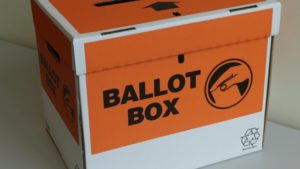
The Solution to Low Voter Turnout is to Have Politicians that Aren’t Cheating, Lying Pieces of Shit

ballot

There were local body elections in New Zealand last week. You probably didn’t know because no-one gives a fuck except for the control freaks that are fighting for power. They care so much about the low turnout that some of them want to make it illegal to not vote.

This means that if you choose not to vote you must either pay a fine or the Police will put you in a cage (and kill you if you resist). This seems extremely aggressive to those of us who do not benefit in any way from voting.

Take, for instance, my personal situation with medicinal cannabis. John Key will not change the cannabis laws and Andrew Little believes that cannabis use causes brain damage. So, no matter who I vote for, I will have a Prime Minister who thinks it’s fair for the Police to come and smash my head in and put me in a cage for using a medicinal plant they don’t approve of.

It’s much better to not vote and, by doing so, withdraw my consent to be governed by a political system that conducts a War on Drugs against its own people. Especially when the only people who have a chance of taking power under this system have already promised to continue this war to destroy people like me.

This I do not only for myself but out of solidarity with all of the people dispossessed by the current New Zealand political system. If my only choices are to give my power to a cheating, lying piece of shit waving a blue flag or a cheating, lying piece of shit waving a red flag, then I will keep my power for myself!

Dr Bryce Edwards, a Massey University politics lecturer and a heavily indoctrinated and brainwashed man, says “[low voter turnout] is a terrible thing. I don’t think there’s really anyone saying lower voter turnout is a good thing”.

Meanwhile, outside of the ivory tower, paedophiles get lighter sentences from the New Zealand “Justice” System than medicinal cannabis growers.

I’m saying that low voter turnout is a good thing, because it is a sign that the population does not consent to the abuses committed against it by the ruling class.

Is it any wonder we’ve lost faith in a political system that gives lighter sentences to paedophiles than it does medicinal cannabis growers? Why should we continue to vote and give our power to the same political system, and to the same clueless old narcissists that brought this atrocious state of injustice about?

Much better to not vote, and in doing so delegitimise the entire system. This is why the control freaks are ultimately afraid of – a population that does not fall for the illusion heavily enough to give away their power to the control freaks.

Not voting doesn’t just mean not voting – it means having the gumption to solve the social problems that politicians exploit to swindle power before that power is swindled. This means looking after vulnerable members of your community before the control freaks start making laws to ban everything that they have not explicitly given permission for.

It means mowing an old person’s lawn. It means smiling at the crazy guy with the haunted look. It means making a donation of time or money to the RSPCA. It means talking honestly with people you know about what’s really going on in the world.

If we all stopped falling for the lies, we could have a world in which the control freaks would dissipate into the gutter like the filth they are.

Black Caps in India 2016: Third Test Preview

holkarstadiumindore

After some doubt, it now looks like the Third Test between the Black Caps and India will proceed as planned, at Indore between 08 and 12 October. For the Black Caps, for whom the series is lost, this match is about putting into practice what has been learned from the first two Tests towards the goal of winning some respectability.

The Black Caps have not been poor on this tour. Far from it. Barring a disastrous Day 3 in the 1st Test and Day 2 in the second, they have been India’s equal.

In Kanpur, the Black Caps looked well ahead at the end of Day 2. In reply to India’s 318 they were 152/1. Day 3 was a disaster, losing 9 wickets for 110 and then letting India get to 159/1 by stumps.

Likewise in Kolkata. The Black Caps had India at 239/7 at the end of Day 1, but a horror Day 2 saw India put on 77 for their last 3 wickets and then get the Black Caps 128/7 at stumps. Although the Black Caps lost by almost 200 runs they did take 20 wickets, which is a good sign for a visiting team in India.

If the Black Caps can get through this third Test without such a horror day they could well win.

There’s a solution to the Martin Guptill problem. It’s called Nathan Astle. The dashing ODI opener was not even considered for a Test opening spot, despite being good enough to score 16 centuries in the shorter format. Astle began his serious Test batting career at 5 and stayed there.

Guptill has been unlucky because positions 3, 4 and 5 have been sewn up for years and so the only realistic option was to open. Now with Brendon McCullum no longer with the side, there is a gap at 5 that Guptill could potentially fill. Not only will an older red ball will behave a lot more like the white ball that he is used to batting against, but he is simply far too talented a batsman to leave out of the side just because he was not a great success as opener.

With a Test average of 25, Henry Nicholls probably hasn’t done enough to cement the No. 5 position, and with several impressive young bats coming through he might not get much of a chance. Nicholls’s technique might be more suited to the opening position, and his 76 against Dale Steyn and Vernon Philander with essentially a new ball in South Africa recently suggests that he has enough potential there to be worth a look.

With Trent Boult fully entrenched as The Black Caps’s premier paceman and with Neil Wagner, who at a bowling average of 29.63 has much better returns, it appears that Tim Southee is now competing with Matt Henry for that third seamer spot.

Matt Henry may rightly be ahead of Tim Southee now. One match with six wickets at 17.50 could be written off as lucky, but anyone watching the Second Test might well have remarked that Henry’s pitch map was much better than Southee’s, forcing the batsman to play much more and without the regular boundary balls.

Tom Latham seems to have difficulty concentrating past a certain point. He is building a Flemingesque record with an average of 38.38, 9 fifties and 5 centuries. Whether or not he can overcome this will determine if he can become a great opener along the lines of Richardson or Turner.

BetFair does not consider the Black Caps to have much of a chance: they are paying $6.20 to win at the exchange, compared to India’s $1.60 (the Draw is $4.60).